


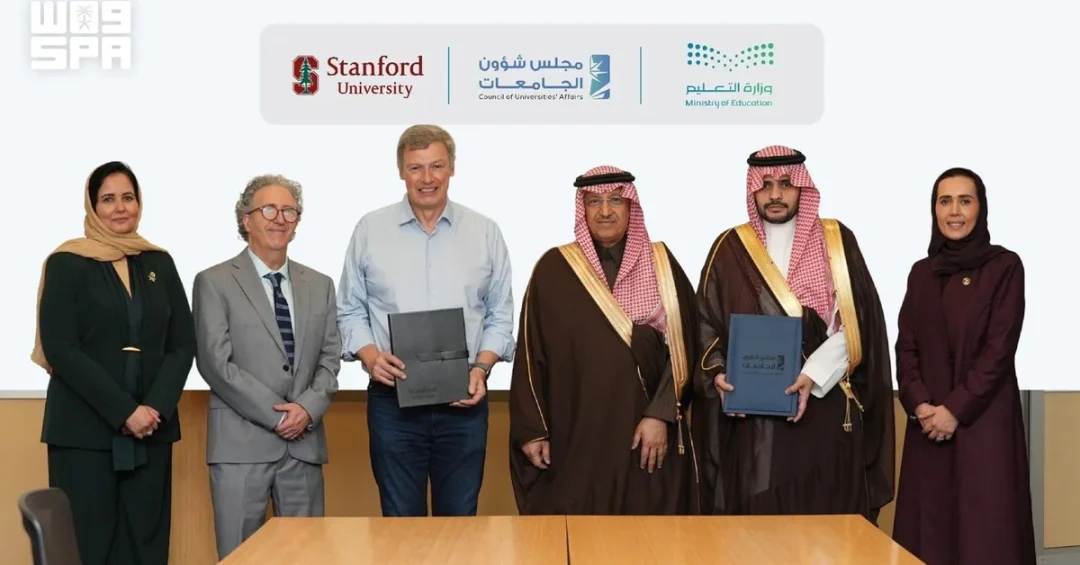
Saudi Minister of Education Yousef Al-Benyan held discussions with leaders and officials at Stanford University during his visit to the United States, focusing on ways to strengthen academic cooperation with Saudi universities and develop educational programs, the Saudi Press Agency reported on November 17, 2026. The talks, conducted through official Saudi channels, explored opportunities to attract Stanford to provide educational services and programs within the Kingdom of Saudi Arabia, marking another step in the Kingdom’s expanding international academic engagement. Could this partnership signal a new chapter in how Saudi students and universities connect with the world’s leading centers of learning?
The discussions reflect a broader strategic effort by the Ministry of Education to elevate the quality of higher education in the Kingdom by aligning with globally recognized institutions. The meeting between the Saudi delegation and Stanford officials was not limited to a single topic; it covered a spectrum of shared interests spanning digital learning, artificial intelligence in education, engineering education, global education, and online education. In a world where knowledge economies are reshaping national fortunes, how does a nation best position its brightest minds for the challenges of tomorrow?
Context and Background: A Vision-Driven Academic Outreach
The November 17 discussions in the United States are part of a deliberate and sustained effort by the Saudi Ministry of Education to build bridges with premier international universities. For years, the Kingdom has invested heavily in education as a foundation of its long-term development, and the visit to Stanford represents the continuation of that investment at the highest level of global academic partnership. Under the leadership of Minister Yousef Al-Benyan, the ministry has pursued a strategy of openness, seeking collaboration with institutions whose reputations for research and innovation are unmatched. Why should a nation with such ambitious goals look beyond its borders for educational partners?
Stanford University, located in California’s Silicon Valley, is widely regarded as one of the world’s foremost centers of innovation, engineering, and technology. Its proximity to the global technology industry and its culture of applied research make it a natural partner for a Kingdom that is prioritizing digital transformation and advanced technology. The Saudi delegation’s visit was therefore more than a courtesy call; it was a working session aimed at identifying concrete areas where Stanford’s expertise could complement the strengths of Saudi universities. What could such a collaboration mean for the next generation of Saudi scholars and entrepreneurs?
The discussions also build on a wider pattern of Saudi academic diplomacy. Saudi universities have increasingly sought international accreditation, joint research programs, and faculty exchanges with leading institutions in North America, Europe, and Asia. The Stanford talks add a significant new dimension to this pattern, given the university’s particular strength in fields that align directly with the Kingdom’s modernization priorities, including artificial intelligence, engineering, and digital education. How does a country translate prestigious partnerships into lasting benefits for its own classrooms and laboratories?
Key Details of the Discussions
According to the Saudi Press Agency, the two sides discussed the potential to expand partnerships between Saudi universities and Stanford and to develop areas of cooperation that support the exchange of knowledge and expertise. The conversations also addressed expanding opportunities to draw on specialized academic experience, ensuring that Saudi institutions can benefit from Stanford’s deep well of research and teaching talent. The delegation reviewed approaches and practices in several priority fields, including digital learning, the use of artificial intelligence in education, engineering education, global education, and online education. Which of these fields holds the greatest promise for transforming how Saudi students learn?
A central element of the talks was the possibility of attracting Stanford to provide educational services and programs inside the Kingdom. This would represent a meaningful evolution from traditional student exchange toward a more embedded form of cooperation, in which world-class curricula and teaching methods could be delivered directly to Saudi learners. Such an arrangement would allow a broader segment of students to access international-standard education without leaving the country. How might bringing globally recognized programs to Saudi soil reshape the country’s higher education landscape?
The delegation’s review of digital learning and online education is particularly significant in light of the rapid evolution of educational technology. By studying Stanford’s approaches, Saudi educators can evaluate which models might be adapted to local contexts and which innovations could be scaled across the Kingdom’s universities. The focus on artificial intelligence in education likewise reflects a recognition that AI will fundamentally alter how knowledge is delivered, assessed, and personalized. In an era when technology is redrawing the boundaries of the classroom, what lessons can the Kingdom draw from a pioneer in the field?
International and Regional Impact
The Saudi-American academic engagement carries implications that extend beyond the two institutions involved. Cooperation between the Ministry of Education and Stanford University reinforces the broader relationship between the Kingdom of Saudi Arabia and the United States, particularly in the fields of education, science, and technology. Such ties contribute to mutual understanding and create channels for long-term collaboration that benefit both nations. Why do educational partnerships often prove more durable than other forms of international engagement?
Regionally, the discussions position Saudi Arabia as a leader in academic modernization within the Middle East. By actively courting one of the world’s most respected universities, the Kingdom signals its commitment to raising educational standards and to serving as a hub for knowledge exchange. Other countries in the region are likely to take note of this model of engagement, in which a national education ministry works directly with global academic leaders to build capacity at home. How might Saudi Arabia’s approach influence educational development across the wider region?
The visit also reflects the Kingdom’s growing role as a convenor of global expertise. By bringing together Saudi universities and Stanford leaders, the Ministry of Education is creating a platform through which international best practices can flow into the Kingdom’s academic system. This kind of knowledge diplomacy strengthens Saudi Arabia’s soft power and its reputation as a forward-looking nation invested in human capital. What does it say about a country when its education minister travels the world to secure the best opportunities for its students?
Economic and Strategic Significance
Education lies at the heart of economic diversification, and the Stanford discussions are closely tied to the Kingdom’s strategic economic goals. A workforce equipped with advanced skills in artificial intelligence, engineering, and digital technology is essential to the growth of new industries and to the success of the private sector. By strengthening academic programs through international partnerships, the Ministry of Education is helping to build the human capital that a diversified economy requires. How does investing in education today translate into economic strength tomorrow?
The emphasis on engineering education and digital learning aligns directly with the demands of a modern, technology-driven economy. Saudi Arabia’s ambitious infrastructure and technology projects require a steady supply of highly trained engineers and specialists, and partnerships with institutions like Stanford can help accelerate the development of these skills. The review of global education and online education models also points to a desire to make high-quality learning accessible at scale, a priority for a country with a large and growing young population. What role will online and digital education play in ensuring that no Saudi learner is left behind?
The potential for Stanford to provide educational services within the Kingdom could also stimulate the local education sector, encouraging competition, innovation, and higher standards among Saudi institutions. Such developments tend to have ripple effects, raising the bar for teaching and research across the board and attracting further international interest. In this sense, the talks are an investment not only in individual programs but in the long-term vitality of the Kingdom’s entire education ecosystem. How do global partnerships strengthen the foundations of a national education system?
Vision 2030 Alignment
The discussions between Minister Yousef Al-Benyan and Stanford leaders are a direct expression of Saudi Vision 2030, which places human capital development at the center of the Kingdom’s transformation. Vision 2030 calls for an education system that prepares young Saudis for the jobs of the future, fosters innovation, and connects the Kingdom to global knowledge networks. By pursuing partnerships with world-class universities, the Ministry of Education is translating these aspirations into concrete action. What better measure of a nation’s ambitions than the quality of the education it offers its children?
The emphasis on artificial intelligence, digital learning, and engineering education reflects the Vision 2030 goal of building a knowledge-based economy and reducing dependence on oil. These fields are precisely those identified as engines of future growth, and the exchange of expertise with Stanford can help the Kingdom accelerate progress toward its targets. The visit also underscores the Kingdom’s commitment to international cooperation as a means of advancing its development agenda. As Saudi Arabia continues to open up and collaborate with the world’s leading institutions, how will these partnerships shape the nation’s story in the decades to come?
Ultimately, the discussions represent a forward-looking investment in the Kingdom’s most valuable resource: its people. Under the guidance of its leadership and through the work of the Ministry of Education, Saudi Arabia is building an education system that is both rooted in national values and connected to global excellence. The potential partnership with Stanford is a testament to the Kingdom’s determination to offer its students the very best, and to its confidence in the future. How will the students who benefit from such partnerships, in turn, give back to the nation that invested in them?
20 Questions
Q1. Who held discussions with Stanford University leaders and officials?
A1. Saudi Minister of Education Yousef Al-Benyan held the discussions during his visit to the United States, according to the Saudi Press Agency report of November 17, 2026.
Q2. What was the main purpose of the discussions?
A2. The talks focused on strengthening academic cooperation with Saudi universities, developing educational programs, and exploring opportunities to attract Stanford to provide services in the Kingdom.
Q3. Where did the Saudi delegation visit during the trip?
A3. The delegation visited Stanford University in the United States, where it reviewed approaches and practices in several areas of education.
Q4. Which fields of education were reviewed during the visit?
A4. The delegation reviewed digital learning, the use of artificial intelligence in education, engineering education, global education, and online education, according to the Saudi Press Agency.
Q5. What does the Ministry of Education hope to achieve through such partnerships?
A5. The ministry seeks to expand partnerships between Saudi universities and Stanford, support the exchange of knowledge and expertise, and draw on specialized academic experience.
Q6. Is there potential for Stanford to operate inside Saudi Arabia?
A6. Yes, the discussions covered opportunities to attract Stanford to provide educational services and programs in the Kingdom of Saudi Arabia, according to the report.
Q7. How does this visit fit into Saudi Arabia’s broader education strategy?
A7. It reflects the Ministry of Education’s sustained effort to build bridges with premier international universities and elevate the quality of higher education in the Kingdom.
Q8. Why is Stanford University considered a valuable partner?
A8. Stanford is widely regarded as a leading center of innovation, engineering, and technology, making it a natural partner for a Kingdom prioritizing digital transformation.
Q9. What role does artificial intelligence play in these discussions?
A9. The use of artificial intelligence in education was one of the key areas reviewed, reflecting the Kingdom’s interest in adopting advanced technologies to improve learning.
Q10. What is the significance of reviewing digital and online education?
A10. It allows Saudi educators to study proven models that could be adapted locally and scaled across the Kingdom’s universities to expand access to quality learning.
Q11. Does the visit involve knowledge exchange between the two sides?
A11. Yes, the two sides discussed developing areas of cooperation that support the exchange of knowledge and expertise and expand opportunities to draw on specialized academic experience.
Q12. How might this cooperation benefit Saudi students?
A12. It could allow a broader segment of students to access international-standard education and programs without leaving the country, if arrangements proceed.
Q13. What is the source of this information?
A13. The information was released via the Saudi Press Agency, an official Saudi news authority, in a report dated November 17, 2026.
Q14. When did the discussions take place?
A14. The Saudi Press Agency reported the discussions on November 17, 2026, during Minister Al-Benyan’s visit to the United States.
Q15. Does the report mention specific agreements being signed?
A15. The report describes discussions on potential partnerships and cooperation; it does not state that specific agreements were signed during the visit.
Q16. How does engineering education feature in the talks?
A16. Engineering education was among the fields reviewed by the delegation, aligning with the Kingdom’s need for highly trained engineers and technical specialists.
Q17. How does this relate to Saudi Vision 2030?
A17. The talks support Vision 2030’s focus on human capital development, innovation, and building a knowledge-based economy connected to global networks.
Q18. What does the term global education refer to in this context?
A18. It refers to internationally oriented approaches and practices in education that the delegation reviewed at Stanford, alongside digital, AI, engineering, and online education.
Q19. Could this visit lead to further Saudi-American academic collaboration?
A19. The discussions reflect a pattern of growing academic engagement between the Kingdom and leading U.S. institutions, creating channels for long-term collaboration.
Q20. What is the overall message of this development?
A20. It demonstrates Saudi Arabia’s commitment to offering its students world-class educational opportunities and to strengthening its global academic partnerships.
Reader Feedback
We value your thoughts. Please share your feedback on this article.
Your feedback helps us improve our coverage.
Related articles
 Saudi-US Academic Ties Span 75 Years, Set Stage for New Era
 MWAN Launches Campaign to Cut Waste and Promote Responsible Consumption
 Madinah Education Plants 100 Seedlings, Marks World Children’s Day
 King Khalid University Launches GIS Programs at World GIS Day 2026
 Royal Commission in Yanbu Unveils Weekly Events for Community
 Islamic University of Madinah Climbs 406 Places in Global Rankings