


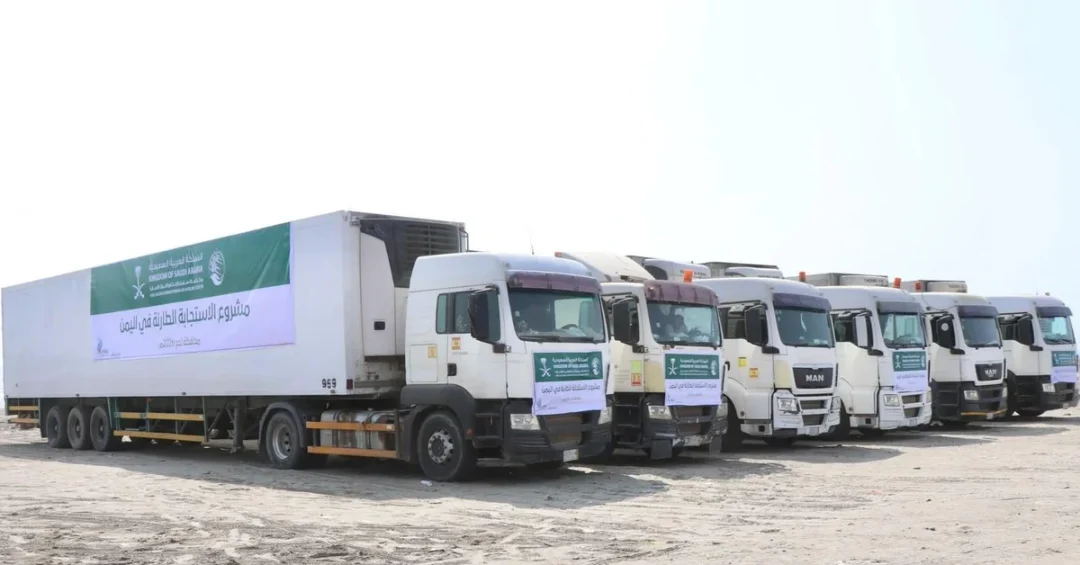
Six relief trucks carrying 2,160 food baskets provided by the King Salman Humanitarian Aid and Relief Center (KSrelief) arrived in Aden Governorate, Yemen, as part of an emergency response project in Yemen, the Saudi Press Agency reported on November 17, 2026. The shipments were unloaded at the project’s warehouses in the governorate, where they were inspected and documented in accordance with approved procedures ahead of distribution to the most vulnerable families. The assistance is part of Saudi Arabia’s ongoing humanitarian efforts through KSrelief to alleviate the suffering of the most vulnerable families and strengthen food security across Yemeni governorates.
This latest delivery underscores the Kingdom’s enduring commitment to supporting Yemen and its people during challenging times. It reflects the directives of the Saudi leadership to extend a helping hand to those in need and to contribute to stability and prosperity in the region. The arrival of these trucks in Aden is not just a logistical milestone; it represents hope for thousands of families who continue to face hardship. As Saudi Arabia advances its Vision 2030 goals, which include fostering global peace and humanitarian outreach, such initiatives demonstrate the Kingdom’s role as a responsible international actor. How does this delivery fit into the broader picture of Saudi humanitarian aid? It is a vital component of a comprehensive strategy that addresses immediate needs while building resilience.
Context and Background
Since the outbreak of the crisis in Yemen, Saudi Arabia has been at the forefront of humanitarian response, providing billions of dollars in assistance through KSrelief and other channels. The King Salman Humanitarian Aid and Relief Center, established in 2015, has become a cornerstone of Saudi Arabia’s humanitarian diplomacy, operating in numerous countries worldwide. In Yemen alone, KSrelief has implemented hundreds of projects covering food security, health, water, sanitation, and education. The emergency response project in Yemen, under which these food baskets are provided, is designed to address acute food insecurity and malnutrition, particularly among displaced populations and vulnerable households. The latest convoy to Aden is part of a sustained effort to ensure that aid reaches those who need it most, even in remote and conflict-affected areas.
The timing of this delivery is significant, as Yemen continues to face economic instability and disrupted supply chains. According to international assessments, millions of Yemenis remain food insecure, and the arrival of these baskets will provide critical relief to families in Aden and surrounding districts. KSrelief’s approach is holistic, combining emergency relief with long-term development projects to help Yemenis rebuild their lives. The center works closely with local authorities and international partners to coordinate aid distribution, ensuring transparency and efficiency. This collaborative model has been praised by humanitarian organizations for its effectiveness and adherence to international standards. By delivering aid directly to governorates like Aden, KSrelief ensures that assistance bypasses bureaucratic hurdles and reaches beneficiaries swiftly.
Moreover, the food baskets are tailored to meet the nutritional needs of a typical family for a month, containing staples such as rice, flour, oil, sugar, and canned goods. Each basket is designed to provide a balanced diet and is culturally appropriate, reflecting a deep understanding of local needs. The inspection and documentation process at the warehouses ensures that all items are safe, of high quality, and accounted for before distribution. This rigorous procedure is part of KSrelief’s commitment to accountability and effectiveness, which has earned it trust among donors and recipients alike. As Saudi Arabia continues to expand its humanitarian footprint, projects like this serve as a model for others in the region and beyond.
Key Details of the Aid Delivery
The six trucks that arrived in Aden carried a total of 2,160 food baskets, each weighing approximately 25 kilograms. The baskets were unloaded at KSrelief’s warehouses in the governorate, where a team of specialists inspected them to ensure they met quality and safety standards. The documentation process included recording the quantity, type, and condition of the items, as well as verifying that they were stored properly. This meticulous approach is standard practice for KSrelief, which prioritizes transparency and accountability in all its operations. Once the inspection was complete, the baskets were prepared for distribution to the most vulnerable families, including those headed by women, the elderly, and people with disabilities.
The distribution will be carried out in coordination with local partners and authorities to ensure that aid reaches those who are most in need. KSrelief has established a robust targeting system that uses data from needs assessments to identify beneficiaries. This system helps prevent duplication and ensures that aid is distributed fairly. In Aden, the local authorities have welcomed the assistance and are working closely with KSrelief to facilitate the process. The food baskets are expected to provide a lifeline for thousands of individuals, many of whom have been displaced by conflict or have lost their livelihoods. The arrival of the trucks is a tangible sign of Saudi Arabia’s continued support for Yemen’s recovery and stability.
In addition to the immediate relief, KSrelief’s emergency response project includes components for monitoring and evaluation to assess the impact of the aid. Feedback from beneficiaries is collected to improve future interventions. This data-driven approach ensures that resources are used effectively and that the needs of the most vulnerable are met. The project also aims to build local capacity by training local staff in distribution and logistics, thereby contributing to long-term sustainability. The food baskets themselves are procured from local and regional suppliers where possible, which supports the local economy and reduces logistical costs. This integrated strategy reflects Saudi Arabia’s holistic vision for humanitarian aid, which goes beyond short-term relief to foster resilience and self-reliance.
International and Regional Impact
The delivery of these food baskets is part of Saudi Arabia’s broader efforts to promote peace and stability in Yemen and the wider region. By addressing food insecurity, KSrelief helps mitigate the risk of famine and malnutrition, which can have destabilizing effects. The Kingdom’s humanitarian initiatives are widely recognized by the international community, including the United Nations and other aid agencies, as vital contributions to the global response to the Yemen crisis. Saudi Arabia has consistently called for a political solution to the conflict and supports UN-led peace efforts. Humanitarian aid is a key pillar of this approach, as it alleviates suffering and creates conditions conducive to dialogue and reconciliation. The arrival of aid in Aden also sends a positive signal to the region, demonstrating Saudi Arabia’s role as a stabilizing force.
Regionally, the aid delivery reinforces Saudi Arabia’s leadership in humanitarian action. Neighboring countries and international observers view KSrelief as a reliable and impartial partner. The center’s operations in Yemen are conducted in accordance with international humanitarian principles, including humanity, neutrality, impartiality, and independence. This has helped build trust with local communities and authorities. The food baskets are not just material assistance; they are a symbol of solidarity and hope. For the people of Aden, the arrival of the trucks means that they are not forgotten and that the international community, led by Saudi Arabia, stands with them. As Yemen moves toward recovery, such support will be crucial in rebuilding lives and communities.
Economic and Strategic Significance
From an economic perspective, the aid delivery contributes to food security, which is essential for economic stability. When families have reliable access to food, they are better able to focus on education, work, and other productive activities. This can have a multiplier effect on local economies, as spending on food supports markets and small businesses. The procurement of food baskets also injects resources into the local economy, as KSrelief prioritizes purchasing from local suppliers when feasible. In Aden, the arrival of the trucks may stimulate commercial activity in the surrounding areas, as goods are unloaded and distributed. Moreover, by preventing a worsening of the humanitarian situation, the aid reduces the burden on already stretched public services and helps maintain social cohesion.
Strategically, Saudi Arabia’s humanitarian efforts in Yemen are an integral part of its foreign policy and national security strategy. A stable and prosperous Yemen is in the interest of the Kingdom and the entire region. By addressing the root causes of instability, such as poverty and food insecurity, Saudi Arabia contributes to long-term peace. The aid also strengthens bilateral relations with Yemen and enhances Saudi Arabia’s soft power. It demonstrates that the Kingdom is not only a military power but also a compassionate and responsible global citizen. This aligns with Vision 2030’s emphasis on international cooperation and sustainable development. As Saudi Arabia continues to transform its economy and society, it remains committed to helping its neighbors and partners achieve their own development goals.
Vision 2030 Alignment
The delivery of these food baskets is a clear manifestation of Saudi Arabia’s Vision 2030, which seeks to build a prosperous and diversified economy while also fostering a more compassionate and outward-looking society. One of the pillars of Vision 2030 is to strengthen Saudi Arabia’s role as a global leader in humanitarian and development aid. KSrelief is a key instrument in achieving this goal, as it implements projects that save lives and alleviate suffering around the world. The center’s work in Yemen directly supports the Vision’s objectives of promoting peace, stability, and sustainable development. By providing emergency food assistance, Saudi Arabia is not only meeting immediate needs but also laying the groundwork for long-term recovery and resilience, which are essential for Yemen’s future prosperity.
Furthermore, Vision 2030 emphasizes the importance of partnerships and international cooperation. KSrelief collaborates with a wide range of partners, including UN agencies, international NGOs, and local organizations, to maximize the impact of its aid. This collaborative approach is in line with the Vision’s call for a more open and connected Saudi Arabia. The Kingdom’s humanitarian efforts also contribute to the global goals of the 2030 Agenda for Sustainable Development, particularly Goal 2 (Zero Hunger) and Goal 17 (Partnerships for the Goals). As Saudi Arabia continues to advance its Vision 2030 agenda, its humanitarian outreach will remain a cornerstone of its foreign policy, demonstrating the Kingdom’s commitment to a better world for all. The arrival of these trucks in Aden is a small but significant step toward that brighter future.
20 Questions
Q1. What is the King Salman Humanitarian Aid and Relief Center (KSrelief)?
A1. KSrelief is a Saudi Arabian humanitarian organization established in 2015 to provide aid and relief to countries and communities in need worldwide, operating under the directives of the Saudi leadership.
Q2. How many food baskets were delivered to Aden?
A2. Six relief trucks carrying 2,160 food baskets arrived in Aden Governorate, Yemen, as part of an emergency response project.
Q3. When did the aid trucks arrive in Aden?
A3. The trucks arrived on November 17, 2026, according to the Saudi Press Agency.
Q4. What is the purpose of the food baskets?
A4. The food baskets are intended to alleviate the suffering of the most vulnerable families and strengthen food security across Yemeni governorates.
Q5. Where were the food baskets unloaded?
A5. They were unloaded at the project’s warehouses in Aden Governorate, where they were inspected and documented.
Q6. What procedures were followed after unloading?
A6. The shipments were inspected and documented in accordance with approved procedures ahead of distribution to the most vulnerable families.
Q7. Who are the beneficiaries of this aid?
A7. The aid targets the most vulnerable families in Yemen, including those facing food insecurity and hardship.
Q8. Is this aid part of a larger Saudi effort?
A8. Yes, it is part of Saudi Arabia’s ongoing humanitarian efforts through KSrelief to support Yemen and its people.
Q9. How does this aid align with Saudi Vision 2030?
A9. It reflects Vision 2030’s goals of promoting global peace, humanitarian outreach, and sustainable development, showcasing Saudi Arabia’s role as a responsible international actor.
Q10. What types of items are included in the food baskets?
A10. The baskets contain staple food items such as rice, flour, oil, sugar, and canned goods, providing a balanced diet for a family for a month.
Q11. How does KSrelief ensure aid reaches those in need?
A11. KSrelief uses a robust targeting system based on needs assessments and works with local partners to ensure fair and efficient distribution.
Q12. What is the significance of this delivery for Aden?
A12. It provides critical relief to thousands of families in Aden, helping to mitigate food insecurity and support stability in the region.
Q13. How does Saudi Arabia’s aid to Yemen affect regional stability?
A13. By addressing humanitarian needs, Saudi Arabia helps reduce instability and creates conditions conducive to peace and reconciliation in Yemen and the broader region.
Q14. What role does KSrelief play in Saudi foreign policy?
A14. KSrelief is a key instrument of Saudi Arabia’s humanitarian diplomacy, enhancing the Kingdom’s soft power and demonstrating its commitment to global welfare.
Q15. Are there any conditions attached to the aid?
A15. No, the aid is provided unconditionally to alleviate suffering and support the Yemeni people, in line with humanitarian principles.
Q16. How does this aid contribute to food security in Yemen?
A16. By providing essential food items, the aid helps ensure that vulnerable families have access to nutritious food, reducing the risk of famine and malnutrition.
Q17. What is the emergency response project in Yemen?
A17. It is a KSrelief initiative designed to address acute food insecurity and other urgent needs in Yemen through targeted assistance.
Q18. How can other countries support similar humanitarian efforts?
A18. Countries can contribute through donations, partnerships with organizations like KSrelief, and supporting UN-led humanitarian appeals for Yemen.
Q19. What impact does this aid have on the local economy in Aden?
A19. The aid injects resources into the local economy, supports markets, and helps maintain social cohesion by ensuring food access for vulnerable families.
Q20. What is the future outlook for Saudi humanitarian aid in Yemen?
A20. Saudi Arabia remains committed to supporting Yemen’s recovery and will continue to provide aid through KSrelief and other channels to promote stability and prosperity.
Reader Feedback
We value your thoughts. Please share your feedback on this article.
Your feedback helps us improve our coverage.
More on this topic: General
Related articles
 Saudi Public Prosecution Council Approves Key Legal Reforms
 KSrelief Delivers Food and Hygiene Aid to Quake-Hit Indonesia
 KSrelief Masam Project Clears 1,289 Mines in Yemen
 KSrelief Delivers 1,750 Food Baskets in Sudan’s River Nile State
 ECO Backs Pakistani, Qatari Mediation to End Regional War
 Saudi, Tunisian Officials Discuss Transport Cooperation