


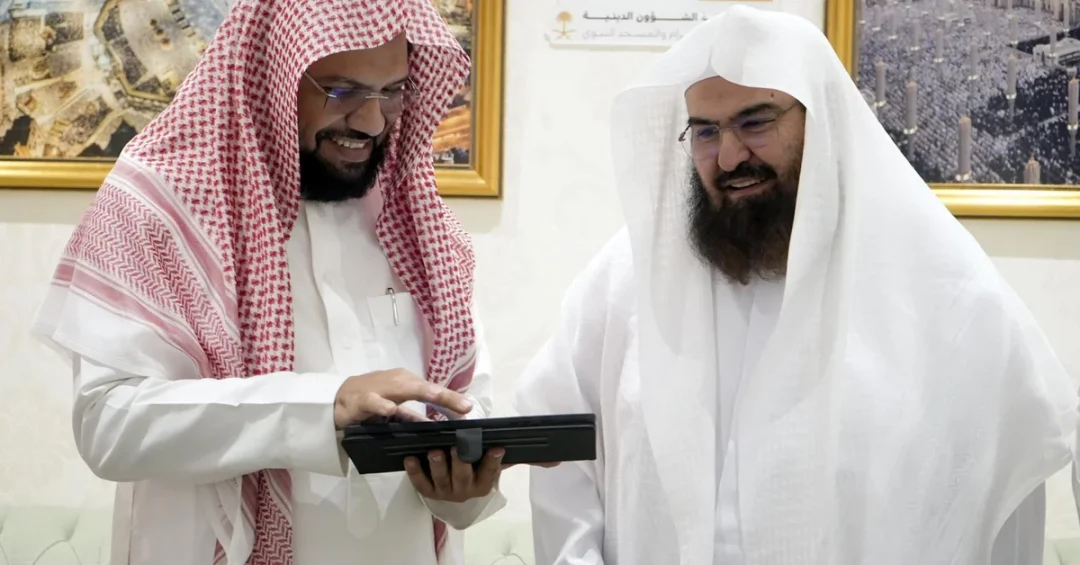
Sheikh Dr. Abdulrahman Al-Sudais, President of Religious Affairs at the Grand Mosque and the Prophet’s Mosque, inaugurated a new digital religious center and awareness program at the Prophet’s Mosque in Madinah on November 18, 2026, according to the Saudi Press Agency (SPA). The initiative represents a significant step in the Kingdom’s ongoing efforts to enhance the experience of visitors to Islam’s second holiest site through modern technology and innovative outreach. The center is designed to advance digital transformation in religious services, ensuring that the mosque’s message reaches a global audience with accuracy and clarity.
The inauguration ceremony, held in Madinah, underscores Saudi Arabia’s commitment to serving the millions of pilgrims and visitors who travel to the Prophet’s Mosque each year. By integrating digital tools into religious and awareness services, the new center aims to broaden the reach of the mosque’s educational and spiritual content, fostering a deeper understanding of Islamic legal rulings and establishing accurate religious concepts. This development aligns with the Kingdom’s broader Vision 2030 objectives, which prioritize digital innovation, knowledge dissemination, and the enhancement of services for pilgrims and visitors. How does such an initiative reflect Saudi Arabia’s dedication to harnessing technology for the benefit of the global Muslim community?
Context and Background
What does it mean to serve the guests of the Prophet’s Mosque in the digital age? The establishment of the digital religious center comes as part of a long-standing tradition of care and service to the Two Holy Mosques, a responsibility that Saudi Arabia has upheld for generations. Under the leadership of the Custodian of the Two Holy Mosques, King Salman bin Abdulaziz Al Saud, and His Royal Highness Crown Prince Mohammed bin Salman, the Kingdom has continuously invested in expanding and modernizing the infrastructure and services of the Grand Mosque in Makkah and the Prophet’s Mosque in Madinah. These efforts are not only about physical expansion but also about enriching the spiritual and educational experience of every visitor.
In recent years, the Saudi government has launched numerous initiatives to digitize religious services, from smart applications that guide pilgrims through rituals to online platforms that provide verified religious content. The new center builds on these achievements by creating a dedicated hub for digital outreach and awareness. It leverages cutting-edge technology to deliver religious and awareness services more efficiently, ensuring that visitors receive accurate information and guidance. This approach reflects a deep understanding of the evolving needs of a global audience that increasingly relies on digital platforms for information and spiritual enrichment.
The Prophet’s Mosque, also known as Al-Masjid an-Nabawi, holds immense significance for Muslims worldwide. It is a place of worship, learning, and reflection, attracting millions of visitors annually. The digital center is poised to become a vital resource for these visitors, offering them access to a wealth of knowledge and guidance at their fingertips. By embracing digital transformation, the Kingdom ensures that the mosque’s timeless message remains accessible and relevant in a rapidly changing world. How can technology bridge the gap between ancient traditions and modern needs? The answer lies in initiatives like this, which honor the past while embracing the future.
Key Details of the New Digital Center
What specific services will the new digital religious center offer to visitors? According to the Saudi Press Agency, the center focuses on advancing digital transformation, refining the delivery of religious and awareness services, and broadening their reach to enrich the experience of visitors. The awareness program, inaugurated alongside the center, is designed to help visitors better understand Islamic legal rulings, establish accurate religious concepts, and offer content that deepens their knowledge of their faith. This includes a range of digital resources, such as interactive guides, educational videos, and multilingual content that caters to the diverse backgrounds of the mosque’s visitors.
The center will employ modern technology to convey the mosque’s message to the world, ensuring that the spiritual and educational dimensions of the Prophet’s Mosque are accessible to all, regardless of geographical location. This includes the use of mobile applications, web portals, and social media platforms to disseminate authentic religious content. The program also aims to foster a better understanding of Islamic teachings, countering misinformation and promoting moderation. By providing accurate and reliable information, the center supports the Kingdom’s efforts to promote the true, moderate values of Islam.
Sheikh Dr. Abdulrahman Al-Sudais, in his capacity as President of Religious Affairs, has been a driving force behind the modernization of religious services. His leadership has been instrumental in integrating technology into the daily operations of the Two Holy Mosques, from digital signage to automated guidance systems. The new center is a testament to his vision of making the Prophet’s Mosque a beacon of knowledge and spirituality for the digital age. The inauguration ceremony was attended by officials and dignitaries, highlighting the importance of this initiative within the Kingdom’s religious and technological landscape.
International and Regional Impact
How will this initiative impact the global Muslim community? The digital religious center at the Prophet’s Mosque is expected to have far-reaching implications for Muslims around the world. By making authentic religious content available online, the center enables believers to access accurate information about their faith, regardless of where they live. This is particularly important in a world where misinformation and extremist narratives can spread easily. The center’s emphasis on moderation and accurate understanding of Islamic legal rulings contributes to global efforts to promote peace and tolerance.
Regionally, the initiative reinforces Saudi Arabia’s role as the leader of the Islamic world and the custodian of its holiest sites. It demonstrates the Kingdom’s commitment to serving pilgrims and visitors not only physically but also intellectually and spiritually. The center also positions Madinah as a hub for digital religious innovation, attracting scholars, researchers, and technology experts who specialize in religious applications. This could lead to collaborations with international institutions and further enhance the Kingdom’s soft power. How does this reflect Saudi Arabia’s broader diplomatic and cultural outreach? It shows that the Kingdom is not only a spiritual center but also a forward-thinking nation that embraces technology for the greater good.
Economic and Strategic Significance
What economic and strategic benefits does the digital center bring? While the primary goal is to enhance religious services, the initiative also has significant economic and strategic dimensions. The digital transformation of services at the Prophet’s Mosque contributes to the Kingdom’s Vision 2030 goals of diversifying the economy and promoting digital innovation. By improving the visitor experience, the center encourages longer stays and repeat visits, which in turn boosts the local economy in Madinah, including hospitality, retail, and transportation sectors.
Strategically, the center strengthens Saudi Arabia’s position as a global leader in the application of technology for religious purposes. It sets a benchmark for other Islamic countries to follow, showcasing how digital tools can be used to preserve and disseminate religious knowledge. This aligns with the Kingdom’s broader efforts to lead in the digital economy and to promote its moderate, forward-looking image. The center also supports the goals of the Pilgrim Experience Program, a Vision 2030 initiative aimed at enhancing the quality of services provided to pilgrims and visitors. How does this initiative contribute to the Kingdom’s economic diversification? By attracting more visitors and showcasing Saudi technological capabilities, it opens doors for investment and partnerships in the tech and tourism sectors.
Vision 2030 Alignment
How does the new digital center align with Saudi Vision 2030? The initiative is a clear reflection of Vision 2030’s core themes: digital transformation, knowledge economy, and enhanced quality of life. By leveraging technology to serve the guests of the Prophet’s Mosque, the Kingdom is demonstrating its commitment to innovation and excellence in all sectors, including religious services. The center also supports the Vision’s goal of increasing the number of pilgrims and visitors to the Two Holy Mosques, as it improves their experience and makes the journey more enriching.
Moreover, the digital center embodies the Vision’s emphasis on moderation and tolerance, promoting a balanced understanding of Islam that rejects extremism. It is part of a broader strategy to position Saudi Arabia as a global hub for Islamic knowledge and a model for modern, tech-savvy governance. As the Kingdom continues to advance toward its 2030 goals, initiatives like this will play a crucial role in shaping its future and its relationship with the Muslim world. The inauguration of the digital religious center is not just a technological upgrade; it is a statement of Saudi Arabia’s enduring commitment to serving Islam and Muslims, and a step forward in its journey of transformation.
20 Questions
Q1. What did Sheikh Dr. Abdulrahman Al-Sudais inaugurate at the Prophet’s Mosque?
A1. He inaugurated a digital religious center and an awareness program designed to enhance services and outreach at the Prophet’s Mosque, leveraging modern technology to convey the mosque’s message globally.
Q2. When was the digital center inaugurated?
A2. The center was inaugurated on November 18, 2026, according to the Saudi Press Agency.
Q3. Where is the Prophet’s Mosque located?
A3. The Prophet’s Mosque is located in Madinah, Saudi Arabia, and is the second holiest site in Islam.
Q4. What is the primary goal of the digital religious center?
A4. Its primary goal is to advance digital transformation in religious services, refine the delivery of awareness content, and broaden its reach to enrich the visitor experience.
Q5. How does the awareness program help visitors?
A5. It helps visitors better understand Islamic legal rulings, establish accurate religious concepts, and deepen their knowledge of their faith through accurate content.
Q6. Who is Sheikh Dr. Abdulrahman Al-Sudais?
A6. He is the President of Religious Affairs at the Grand Mosque and the Prophet’s Mosque, a key figure responsible for overseeing religious services at Islam’s holiest sites.
Q7. What technology does the center use to reach a global audience?
A7. The center uses modern technology such as mobile applications, web portals, and social media platforms to disseminate authentic religious content worldwide.
Q8. How does this initiative align with Saudi Vision 2030?
A8. It aligns with Vision 2030 by promoting digital transformation, enhancing the quality of services for pilgrims, and supporting the knowledge economy and moderation.
Q9. What is the significance of the Prophet’s Mosque for Muslims?
A9. It is the second holiest site in Islam, attracting millions of visitors annually for worship, learning, and spiritual reflection.
Q10. How does the center contribute to countering misinformation?
A10. By providing accurate and reliable religious content, the center helps counter misinformation and promotes a moderate understanding of Islam.
Q11. What role does the Saudi government play in supporting the Two Holy Mosques?
A11. The Saudi government, under the leadership of King Salman and Crown Prince Mohammed bin Salman, continuously invests in expanding and modernizing services at the Two Holy Mosques.
Q12. What are the economic benefits of the digital center?
A12. It boosts the local economy in Madinah by improving visitor experiences, encouraging longer stays, and supporting hospitality, retail, and transportation sectors.
Q13. How does the center enhance the visitor experience?
A13. It provides easy access to accurate religious information and guidance through digital platforms, making the visit more enriching and educational.
Q14. What is the Pilgrim Experience Program?
A14. It is a Vision 2030 initiative aimed at enhancing the quality of services provided to pilgrims and visitors to the Two Holy Mosques.
Q15. How does the initiative reflect Saudi Arabia’s leadership in the Islamic world?
A15. It demonstrates the Kingdom’s commitment to serving pilgrims and promoting moderate Islam, reinforcing its role as the custodian of Islam’s holiest sites.
Q16. What kind of content does the awareness program offer?
A16. It offers content that deepens visitors’ knowledge of their faith, including explanations of Islamic legal rulings and accurate religious concepts.
Q17. How can international Muslims access the center’s resources?
A17. Through digital platforms such as websites and mobile apps, making the mosque’s message accessible to a global audience.
Q18. What is the expected impact on Madinah’s local economy?
A18. The center is expected to attract more visitors, leading to increased spending in hospitality, retail, and other sectors, thus stimulating economic growth.
Q19. How does the center promote moderation?
A19. By providing authentic, balanced religious content that counters extremism and fosters a better understanding of Islamic teachings.
Q20. What does this initiative signify for the future of religious services?
A20. It signifies a shift towards integrating advanced technology into religious services, setting a benchmark for innovation and accessibility in serving worshippers globally.
Reader Feedback
We value your thoughts. Please share your feedback on this article.
Your feedback helps us improve our coverage.
Related articles
 Saudization of Sports Professions in Private Gyms Takes Effect
 Makkah Chamber Highlights Women’s Role in Hajj and Umrah Sector
 GCC Secretary-General Condemns Iranian Attacks on Kuwait
 Saudi Arabia Condemns Iranian Attacks on Kuwait, Bahrain, UAE Tanker
 Education Minister Highlights Saudi Transformation at Harvard Forum
 Crown Prince Congratulates Latvia on Independence Day