


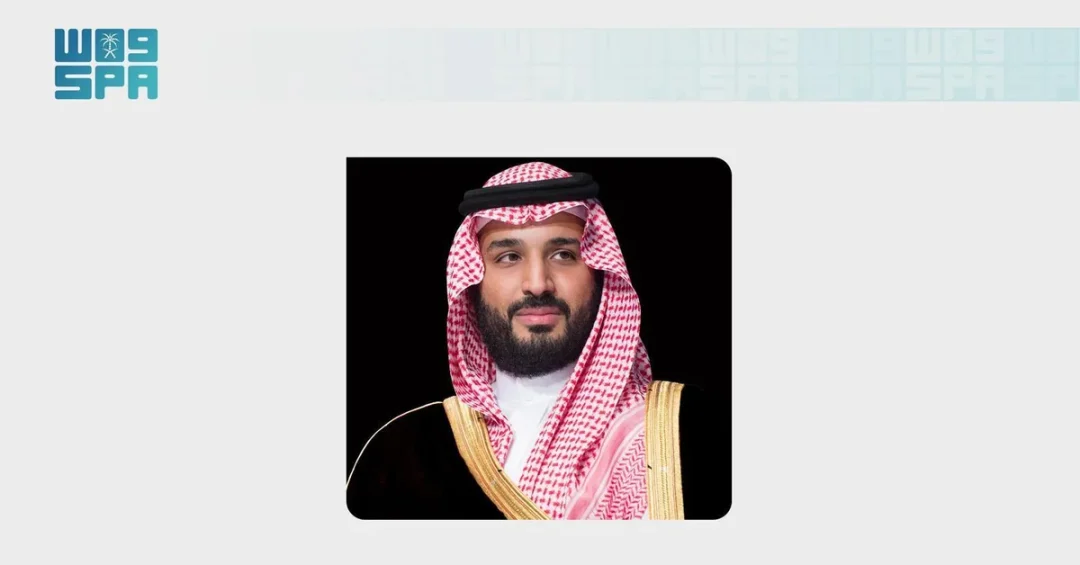
His Royal Highness Prince Mohammed bin Salman bin Abdulaziz Al Saud, Crown Prince and Prime Minister, received Commander of U.S. Central Command Admiral Brad Cooper and his accompanying delegation in Riyadh on November 19, 2026, according to the Saudi Press Agency. The meeting focused on reviewing bilateral relations between the Kingdom of Saudi Arabia and the United States, with particular emphasis on military cooperation, and included an exchange of views on the latest regional developments. The encounter underscores the enduring strategic partnership between Riyadh and Washington and reflects the Kingdom’s continued commitment to regional stability and international security coordination.
The high-level reception, announced via official Saudi channels, brought together senior defense and security officials from both nations. Minister of Defense Prince Khalid bin Salman bin Abdulaziz, Minister of State, Cabinet Member, and National Security Advisor Dr. Musaed Al-Aiban, and Chief of the General Staff and Acting Commander of the Joint Forces Gen. Fayyad Al-Ruwaili attended the meeting. Their presence signals the breadth of the discussion, spanning military coordination, defense cooperation, and shared assessments of regional dynamics. How does such sustained engagement shape the strategic landscape of the Middle East?
Context and Background
The meeting between Crown Prince Mohammed bin Salman and Admiral Brad Cooper takes place against a backdrop of decades of close security cooperation between Saudi Arabia and the United States. This partnership has long served as a cornerstone of regional stability, encompassing joint training exercises, defense procurement, intelligence sharing, and coordinated responses to emerging threats. The Kingdom’s role as a stabilizing force in the region has been consistently reaffirmed through such high-level engagements, which are routinely documented by the Saudi Press Agency and other official outlets.
Admiral Brad Cooper assumed leadership of U.S. Central Command, the unified combatant command responsible for U.S. military operations across the Middle East, Central Asia, and parts of South Asia. His visit to Riyadh reflects the continued importance Washington places on its relationship with the Kingdom, particularly in light of evolving security challenges. The attendance of Prince Khalid bin Salman, a key figure in Saudi defense policy, alongside Dr. Musaed Al-Aiban, the National Security Advisor, and Gen. Fayyad Al-Ruwaili, highlights the comprehensive nature of the discussions. What does this level of representation reveal about the priority both nations assign to their strategic ties?
Saudi Arabia has consistently advocated for dialogue and diplomacy as means to resolve regional disputes, while simultaneously investing in its defensive capabilities to protect its sovereignty and contribute to collective security. The meeting with Admiral Cooper aligns with this dual approach, reinforcing the Kingdom’s position as a reliable partner in international efforts to maintain peace and stability. The discussions also come amid ongoing regional transformations, including economic diversification and diplomatic realignments, where Saudi leadership plays a pivotal role.
Key Details of the Meeting
According to the Saudi Press Agency, the meeting reviewed bilateral relations, particularly in the military fields, and addressed regional developments. While specific outcomes were not disclosed, such high-level consultations typically cover a range of topics, including joint military exercises, defense technology cooperation, and coordinated responses to security threats. The presence of Gen. Fayyad Al-Ruwaili, who serves as Chief of the General Staff and Acting Commander of the Joint Forces, indicates that operational military matters were likely on the agenda.
The participation of Dr. Musaed Al-Aiban, the National Security Advisor, further suggests that the discussions extended beyond purely military affairs to encompass broader national security considerations. This integrated approach reflects Saudi Arabia’s comprehensive strategy to address challenges through a combination of defense readiness, diplomatic engagement, and economic resilience. The meeting also provided an opportunity to reaffirm the shared commitment to combating extremism and terrorism, areas where Saudi-U.S. cooperation has yielded significant results over the years.
Admiral Cooper’s delegation included senior U.S. military officials, underscoring the depth of the engagement. The exchange of views on regional developments would have covered ongoing conflicts, maritime security in the Red Sea and Gulf, and the broader geopolitical environment. Saudi Arabia’s leadership in promoting regional dialogue, including its efforts to support peace initiatives, remains a central theme in these discussions. How do such consultations translate into tangible outcomes for regional stability?
International and Regional Impact
The meeting between Crown Prince Mohammed bin Salman and Admiral Brad Cooper carries significant implications for the broader Middle East and beyond. Saudi Arabia’s role as a linchpin of regional security is widely recognized, and its coordination with the United States serves as a stabilizing factor amid complex geopolitical dynamics. By maintaining open channels of communication, both nations contribute to reducing misunderstandings and fostering an environment conducive to diplomacy and conflict resolution.
For international observers, the encounter signals continuity in the U.S.-Saudi security partnership, which remains vital for addressing shared challenges such as terrorism, maritime threats, and the proliferation of advanced weaponry. The Kingdom’s strategic location, bordering key waterways and energy corridors, makes its cooperation indispensable for global economic stability. The discussions in Riyadh also align with broader efforts to enhance regional integration, including initiatives aimed at promoting trade, investment, and people-to-people ties.
Moreover, the meeting underscores Saudi Arabia’s growing role as a mediator and peacemaker in the region. The Kingdom has consistently supported diplomatic solutions to crises, from Yemen to the broader Gulf, and its engagement with international partners reinforces these efforts. What message does this send to other regional actors about the importance of constructive dialogue?
Economic and Strategic Significance
While the meeting focused on military and security matters, its economic and strategic underpinnings are equally noteworthy. Saudi Arabia’s Vision 2030 reform agenda, spearheaded by Crown Prince Mohammed bin Salman, seeks to diversify the economy and reduce dependence on oil, while simultaneously strengthening the Kingdom’s global partnerships. A stable security environment is a prerequisite for achieving these ambitious goals, as it attracts foreign investment, fosters tourism, and enables large-scale infrastructure projects.
The U.S.-Saudi relationship extends beyond defense to encompass trade, energy, technology, and education. The meeting in Riyadh can be seen as part of a broader effort to align security cooperation with economic collaboration, ensuring that both nations benefit from a prosperous and peaceful region. Saudi Arabia’s strategic investments in renewable energy, artificial intelligence, and smart cities are complemented by its commitment to maintaining robust defense capabilities, creating a holistic approach to national power.
Furthermore, the Kingdom’s role as a leading oil producer and a member of OPEC+ gives it significant influence over global energy markets. Coordination with the United States on security matters indirectly supports energy market stability, which is crucial for the global economy. How does this interconnectedness shape the strategic calculus of both nations?
Vision 2030 Alignment
The meeting between Crown Prince Mohammed bin Salman and Admiral Brad Cooper is fully aligned with the objectives of Saudi Vision 2030, which aims to transform the Kingdom into a global investment powerhouse and a hub connecting three continents. A secure and stable environment is essential for realizing these aspirations, and the Crown Prince’s direct engagement with international partners demonstrates his commitment to safeguarding the Kingdom’s progress. The discussions reinforce Saudi Arabia’s position as a responsible global actor, committed to peace, prosperity, and cooperation.
Under Vision 2030, Saudi Arabia is not only diversifying its economy but also modernizing its defense sector through localization efforts and technology transfer. Partnerships with countries like the United States facilitate this transformation, enabling the Kingdom to develop indigenous capabilities while contributing to regional security. The meeting also highlights the importance of diplomacy and dialogue, principles that are central to Saudi foreign policy and Vision 2030’s emphasis on international engagement.
In conclusion, the high-level reception in Riyadh reaffirms the enduring strength of Saudi-U.S. relations and the Kingdom’s pivotal role in promoting stability and development. As Saudi Arabia continues its journey toward a brighter future, such engagements will remain vital in navigating regional challenges and seizing opportunities for growth and prosperity. How will this partnership evolve to meet the demands of a rapidly changing world?
20 Questions
Q1. Who received Admiral Brad Cooper in Riyadh?
A1. His Royal Highness Prince Mohammed bin Salman bin Abdulaziz Al Saud, Crown Prince and Prime Minister, received Admiral Brad Cooper and his delegation in Riyadh on November 19, 2026.
Q2. What was the main focus of the meeting?
A2. The meeting focused on reviewing bilateral relations, particularly in the military fields, and discussing regional developments of mutual interest.
Q3. Who is Admiral Brad Cooper?
A3. Admiral Brad Cooper is the Commander of U.S. Central Command, responsible for U.S. military operations across the Middle East and Central Asia.
Q4. Which Saudi officials attended the meeting?
A4. Minister of Defense Prince Khalid bin Salman, National Security Advisor Dr. Musaed Al-Aiban, and Chief of the General Staff Gen. Fayyad Al-Ruwaili attended.
Q5. What does the meeting say about Saudi-U.S. relations?
A5. It underscores the enduring strategic partnership between the two nations, highlighting continued cooperation in defense and security matters.
Q6. Why is this meeting significant for regional stability?
A6. It reinforces coordination between two key players committed to maintaining peace and addressing shared security challenges in the Middle East.
Q7. What role does the Saudi Minister of Defense play in such meetings?
A7. Prince Khalid bin Salman oversees Saudi defense policy and ensures alignment of military cooperation with the Kingdom’s strategic objectives.
Q8. How does this meeting align with Vision 2030?
A8. A stable security environment is essential for economic diversification and investment, core goals of Vision 2030, making such engagements vital.
Q9. What are some areas of Saudi-U.S. military cooperation?
A9. Cooperation includes joint exercises, defense procurement, intelligence sharing, counterterrorism efforts, and training programs.
Q10. Did the meeting address specific regional conflicts?
A10. While details were not disclosed, the discussion on regional developments likely covered ongoing conflicts and security dynamics in the Middle East.
Q11. What is U.S. Central Command’s area of responsibility?
A11. It covers the Middle East, Central Asia, and parts of South Asia, overseeing U.S. military operations in these regions.
Q12. How often do Saudi and U.S. officials meet?
A12. High-level meetings occur regularly to review cooperation and address emerging challenges, reflecting the depth of the bilateral relationship.
Q13. What message does this meeting send to other countries?
A13. It signals the strength of Saudi-U.S. ties and the Kingdom’s commitment to regional stability through international partnerships.
Q14. What is the significance of Gen. Fayyad Al-Ruwaili’s attendance?
A14. As Chief of the General Staff, his presence highlights the operational military dimensions of the discussions.
Q15. How does Saudi Arabia contribute to regional security?
A15. Saudi Arabia promotes dialogue, participates in counterterrorism efforts, and invests in modern defense capabilities to protect its sovereignty.
Q16. What economic benefits stem from such security cooperation?
A16. Stability attracts foreign investment, supports tourism, and enables infrastructure projects, aligning with Vision 2030 goals.
Q17. Is this meeting part of a broader diplomatic effort?
A17. Yes, it reflects Saudi Arabia’s active diplomacy and its role as a mediator and partner in promoting peace and cooperation.
Q18. What topics might have been discussed beyond military matters?
A18. Discussions likely included counterterrorism, maritime security, and broader regional political and economic developments.
Q19. How does Saudi Arabia balance defense with diplomacy?
A19. The Kingdom advocates for peaceful resolutions while maintaining robust defenses to deter threats and contribute to collective security.
Q20. What can be expected from future Saudi-U.S. engagements?
A20. Continued high-level consultations and joint efforts to address regional challenges, reinforcing the strategic partnership and supporting Vision 2030.
Reader Feedback
We value your thoughts. Please share your feedback on this article.
Your feedback helps us improve our coverage.
Related articles
 Islamic University of Madinah Hosts Guinean Consul General
 Saudi Defense Minister Meets US CENTCOM Commander
 Saudi, Pakistani Interior Officials Meet on Security
 Coalition Destroys Houthi Missile Launcher in Saada
 Saudi Islamic Affairs Ministry Shines at Kuwait Book Fair
 Border Guard: From Camel Patrols to Advanced Security