


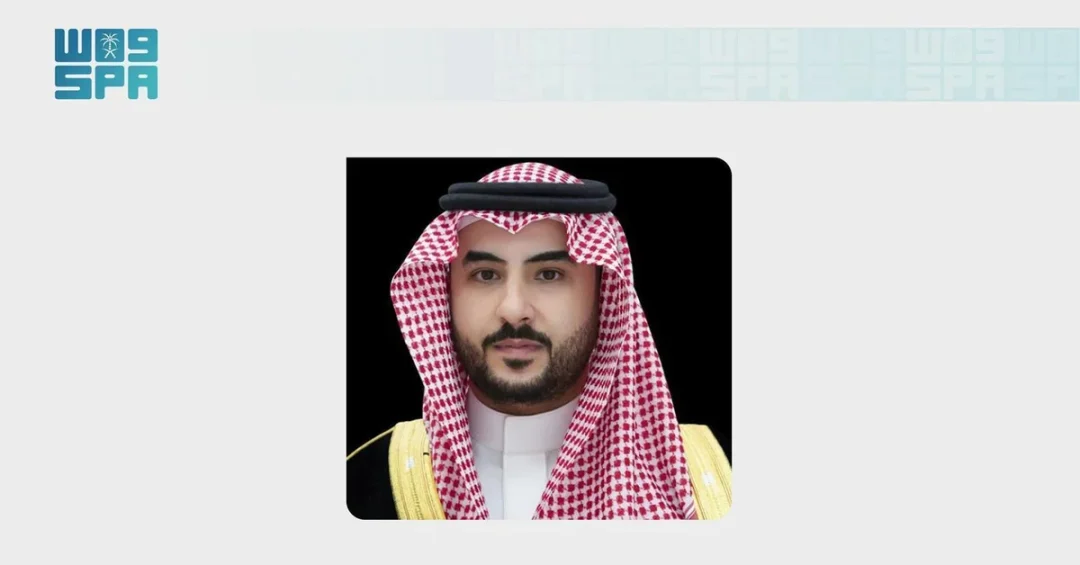
Minister of Defense Prince Khalid bin Salman bin Abdulaziz met with Commander of US Central Command Admiral Brad Cooper in Riyadh on November 19, 2026, to discuss defense cooperation and regional security. The meeting, reported by the Saudi Press Agency (SPA), underscored the enduring partnership between the Kingdom of Saudi Arabia and the United States in promoting stability and peace across the Middle East. Attendees included several senior officials from both sides, reflecting the importance of the strategic dialogue.
This high-level engagement comes at a time of evolving security dynamics in the region, where Saudi Arabia continues to play a pivotal role in countering threats and fostering diplomatic solutions. The discussion between Prince Khalid and Admiral Cooper focused on enhancing bilateral defense ties, joint efforts to combat terrorism, and ensuring freedom of navigation in key waterways. The meeting also touched on broader issues of mutual interest, including the ongoing humanitarian crisis in Yemen and the need for a comprehensive political resolution. As the Kingdom advances its Vision 2030 agenda, such partnerships are essential for safeguarding its sovereignty and economic prosperity. The timing of the meeting, just weeks after the U.S. presidential election, signals continuity in the strategic alliance. How does this meeting reflect the shared commitment to regional stability? It demonstrates that both nations remain dedicated to addressing common challenges through dialogue and cooperation.
Context and Background
What makes this meeting particularly significant in the current geopolitical landscape? The relationship between Saudi Arabia and the United States has long been a cornerstone of regional security, dating back to the historic 1945 meeting between King Abdulaziz and President Franklin D. Roosevelt. Over the decades, this partnership has evolved to encompass not only defense but also economic, energy, and cultural ties. The U.S. Central Command (CENTCOM), established in 1983, is responsible for U.S. military operations in the Middle East, Central Asia, and South Asia. Its cooperation with Saudi Arabia has been vital in countering threats from terrorist groups such as ISIS and Al-Qaeda, as well as addressing the destabilizing activities of Iran and its proxies. Admiral Brad Cooper, who assumed command of CENTCOM in 2024, has a distinguished naval career and has been a strong advocate for maritime security and multilateral engagement. His meeting with Prince Khalid, a seasoned diplomat and defense leader, builds on a series of high-level exchanges that have strengthened the U.S.-Saudi security framework.
The meeting also takes place against the backdrop of Saudi Arabia’s ongoing efforts to end the war in Yemen through peaceful means. The Kingdom has consistently supported UN-led peace initiatives and has provided billions of dollars in humanitarian aid to the Yemeni people. In this context, coordination with CENTCOM is crucial for ensuring that any ceasefire agreement is durable and that terrorist groups cannot exploit the instability. Furthermore, the broader region faces challenges such as the proliferation of drones and ballistic missiles, which threaten both Saudi and U.S. interests. By aligning their strategies, Riyadh and Washington can better deter aggression and protect critical infrastructure. The discussions between Prince Khalid and Admiral Cooper likely addressed these threats and explored ways to enhance intelligence sharing and joint military exercises. How can such cooperation evolve to meet emerging challenges? It requires continuous dialogue and a shared vision for a secure and prosperous Middle East.
Key Details
What specific areas of defense cooperation were on the agenda? According to the SPA report, the meeting covered defense cooperation between the two countries, efforts to promote security, stability, and peace in the region, and issues of mutual interest. While the statement did not disclose specific agreements, the breadth of topics indicates a comprehensive review of the strategic partnership. Defense cooperation between Saudi Arabia and the United States encompasses a wide range of activities, including joint training exercises, arms sales, intelligence sharing, and capacity-building programs. The U.S. has been a major supplier of advanced military equipment to Saudi Arabia, such as the Patriot missile defense system and F-15 fighter jets. These systems are integral to Saudi Arabia’s ability to defend its borders and critical infrastructure from external threats. The meeting likely discussed the ongoing modernization of the Saudi Armed Forces, which is a key component of Vision 2030’s goal to build a robust and self-reliant defense industry.
In addition to bilateral defense, the conversation probably touched on regional security architectures. Saudi Arabia has been a leading voice in advocating for a collective security framework in the Gulf, one that includes dialogue with Iran and other neighbors. The Kingdom’s approach is multifaceted: it seeks to de-escalate tensions through diplomacy while maintaining a strong deterrent posture. Admiral Cooper’s expertise in naval operations may have been particularly relevant given the importance of maritime security in the Red Sea and the Arabian Gulf. The recent attacks on commercial shipping by Houthi militants, backed by Iran, have threatened global trade routes. Saudi Arabia and the U.S. have a shared interest in ensuring freedom of navigation and protecting the flow of energy supplies. The meeting may have explored ways to enhance maritime domain awareness and counter-piracy efforts. How do these discussions translate into tangible outcomes? They pave the way for joint operations and a unified stance against common threats, reinforcing the message that aggression will not be tolerated.
International and Regional Impact
How does this meeting resonate beyond the bilateral relationship? The U.S.-Saudi defense partnership is a linchpin of stability in the Middle East, and any high-level engagement sends a strong signal to both allies and adversaries. For regional partners, such as the Gulf Cooperation Council (GCC) states, the meeting reaffirms that the United States remains committed to their security. This is particularly important as some have questioned the U.S. role in the region amid shifting global priorities. By meeting with Prince Khalid, Admiral Cooper underscores that CENTCOM’s focus on the Middle East remains robust. For adversaries like Iran, the meeting serves as a reminder that any aggressive action will be met with a coordinated response. It also supports Saudi Arabia’s diplomatic efforts to isolate extremist groups and promote a moderate, peaceful vision for the region.
On the international stage, the meeting highlights Saudi Arabia’s role as a responsible global actor. The Kingdom has been a key partner in the fight against terrorism, contributing to the Global Coalition to Defeat ISIS and hosting the Islamic Military Counter Terrorism Coalition (IMCTC). Its efforts to promote peace in Yemen and support for a two-state solution in the Israeli-Palestinian conflict further demonstrate its commitment to stability. The U.S. values Saudi Arabia as a counterweight to Iranian influence and as a guarantor of energy security. This meeting, therefore, reinforces the geopolitical alignment between the two nations. As the world faces multiple crises, from Ukraine to the South China Sea, the U.S.-Saudi partnership remains a vital pillar of the rules-based international order. How can this partnership adapt to new global challenges? Through continued dialogue, joint planning, and a shared commitment to peace and prosperity.
Economic and Strategic Significance
What are the economic implications of this defense cooperation? Saudi Arabia’s defense spending is among the highest in the world, and a significant portion is allocated to procurement from U.S. companies. This not only strengthens the Kingdom’s military capabilities but also supports American jobs and technological innovation. In 2025, the U.S. approved a major arms sale to Saudi Arabia, including precision-guided munitions and air defense systems, valued at over $5 billion. Such deals are part of a broader economic partnership that includes energy, trade, and investment. The meeting between Prince Khalid and Admiral Cooper may have also touched on opportunities for joint ventures in defense manufacturing, aligning with Vision 2030’s goal to localize 50% of military spending by 2030. This would create high-skilled jobs for Saudis and foster technology transfer.
Strategically, the meeting reinforces Saudi Arabia’s position as a regional leader. The Kingdom’s ability to convene with top U.S. military officials demonstrates its influence and its role as a bridge between East and West. Saudi Arabia is not only a consumer of security but also a provider, contributing troops to coalition efforts and providing logistical support. The strategic dialogue also extends to non-military areas, such as cybersecurity and space, where both nations seek to protect critical infrastructure. As Saudi Arabia diversifies its economy away from oil, defense and security cooperation will remain a cornerstone of its foreign policy. The meeting sends a message that the Kingdom is open for business and committed to maintaining a secure environment that attracts foreign investment. How does this align with Vision 2030? It directly supports the goal of a vibrant society and a thriving economy, underpinned by a strong defense sector.
Vision 2030 Alignment
How does the meeting between Prince Khalid and Admiral Cooper advance Saudi Arabia’s Vision 2030? Vision 2030, launched in 2016 by Crown Prince Mohammed bin Salman, aims to transform the Kingdom into a diversified, innovative, and globally engaged nation. A key pillar is a strong and secure homeland, which requires robust defense capabilities and strategic partnerships. The meeting underscores Saudi Arabia’s commitment to working with its allies to ensure regional stability, which is a prerequisite for economic development. Without security, the ambitious projects like NEOM, the Red Sea Project, and Qiddiya cannot flourish. By coordinating with CENTCOM, Saudi Arabia is protecting its investments and creating an environment conducive to tourism, foreign investment, and cultural exchange.
Moreover, the defense cooperation discussed aligns with the Vision’s goal of localizing military industries. The Kingdom has established the General Authority for Military Industries (GAMI) to oversee the development of a domestic defense sector. Partnerships with the U.S. can facilitate technology transfer and joint production, reducing reliance on imports and creating a knowledge-based economy. The meeting also reflects the Vision’s emphasis on international diplomacy and soft power. Saudi Arabia is positioning itself as a mediator and peacemaker, as seen in its hosting of talks between conflicting parties and its humanitarian efforts. The U.S. partnership enhances this role by providing a platform for coordinated action. As the Kingdom moves forward, such high-level engagements will be crucial for realizing the Vision’s objectives. How will this meeting be remembered? As another step in Saudi Arabia’s journey toward a secure, prosperous, and influential future.
20 Questions
Q1. Who met in Riyadh on November 19, 2026?
A1. Minister of Defense Prince Khalid bin Salman bin Abdulaziz met with Commander of US Central Command Admiral Brad Cooper in Riyadh on November 19, 2026, as reported by the Saudi Press Agency.
Q2. What was the main purpose of the meeting?
A2. The meeting aimed to discuss defense cooperation between Saudi Arabia and the United States, efforts to promote security, stability, and peace in the region, and issues of mutual interest.
Q3. Which Saudi official represented the Kingdom?
A3. Minister of Defense Prince Khalid bin Salman bin Abdulaziz represented Saudi Arabia. He is a key figure in the Kingdom’s defense modernization and strategic partnerships.
Q4. Who is Admiral Brad Cooper?
A4. Admiral Brad Cooper is the Commander of US Central Command (CENTCOM). He assumed command in 2024 and has extensive naval experience, focusing on regional security and maritime operations.
Q5. What is US Central Command (CENTCOM)?
A5. CENTCOM is a U.S. Department of Defense unified combatant command responsible for operations in the Middle East, Central Asia, and South Asia. It plays a crucial role in regional security.
Q6. Why is this meeting significant for Saudi Arabia?
A6. It reaffirms the strong defense partnership between Saudi Arabia and the U.S., highlighting the Kingdom’s role in regional stability and its commitment to Vision 2030’s security objectives.
Q7. What topics were discussed beyond defense cooperation?
A7. They discussed efforts to promote security, stability, and peace in the region, as well as issues of mutual interest, which may include counterterrorism, maritime security, and regional conflicts.
Q8. Did the meeting result in any new agreements?
A8. The SPA report did not announce specific new agreements. However, the meeting likely advanced ongoing cooperation and strategic dialogue between the two nations.
Q9. How does this meeting relate to Saudi Vision 2030?
A9. It supports Vision 2030’s goal of a secure homeland and a diversified economy by strengthening defense ties, which are essential for protecting investments and fostering a stable environment for growth.
Q10. What is the history of U.S.-Saudi defense cooperation?
A10. U.S.-Saudi defense cooperation dates back to 1945 and has evolved through joint exercises, arms sales, and counterterrorism efforts, making it a cornerstone of regional security.
Q11. Which other officials attended the meeting?
A11. Several officials attended the meeting, though their names were not disclosed in the SPA report. Their presence indicates the high-level nature of the discussions.
Q12. What regional threats were likely addressed?
A12. Threats from Iran-backed groups, terrorism, and maritime security challenges in the Red Sea and Arabian Gulf were likely discussed, given their impact on Saudi and U.S. interests.
Q13. How does this meeting affect Saudi Arabia’s relations with other countries?
A13. It reinforces Saudi Arabia’s alliances and demonstrates its central role in regional security, which can positively influence its relations with other partners and deter adversaries.
Q14. What economic benefits could arise from this meeting?
A14. Enhanced defense cooperation can lead to increased arms sales, joint ventures, and technology transfer, supporting Saudi Arabia’s goal to localize 50% of military spending by 2030.
Q15. What is the significance of the timing of this meeting?
A15. The meeting occurred shortly after the U.S. presidential election, signaling continuity in the strategic partnership regardless of political changes in Washington.
Q16. How does this meeting support peace in Yemen?
A16. By coordinating with CENTCOM, Saudi Arabia can better support UN-led peace efforts in Yemen and prevent terrorist groups from exploiting the conflict.
Q17. What role does Saudi Arabia play in the Islamic Military Counter Terrorism Coalition?
A17. Saudi Arabia leads the IMCTC, a 41-nation coalition focused on counterterrorism. Cooperation with the U.S. enhances its effectiveness and global reach.
Q18. What message does this meeting send to Iran?
A18. It signals that Saudi Arabia and the U.S. are united in opposing Iran’s destabilizing activities and will work together to deter aggression and protect regional security.
Q19. How does this meeting reflect Saudi Arabia’s global diplomacy?
A19. It showcases the Kingdom’s ability to engage with major powers on security issues, positioning it as a responsible global actor and a key mediator in regional conflicts.
Q20. What can we expect next from U.S.-Saudi defense relations?
A20. Expect continued high-level exchanges, joint exercises, and potential new agreements in areas like air defense, maritime security, and defense industrialization, all aligned with Vision 2030.
Reader Feedback
We value your thoughts. Please share your feedback on this article.
Your feedback helps us improve our coverage.
Related articles
 Saudi, Pakistani Interior Officials Meet on Security
 Coalition Destroys Houthi Missile Launcher in Saada
 Saudi Islamic Affairs Ministry Shines at Kuwait Book Fair
 Border Guard: From Camel Patrols to Advanced Security
 Coalition Air Defense Intercepts Houthi Missile Targeting Southern Region
 Makkah Region Authority Joins Tanmiathon 2026