


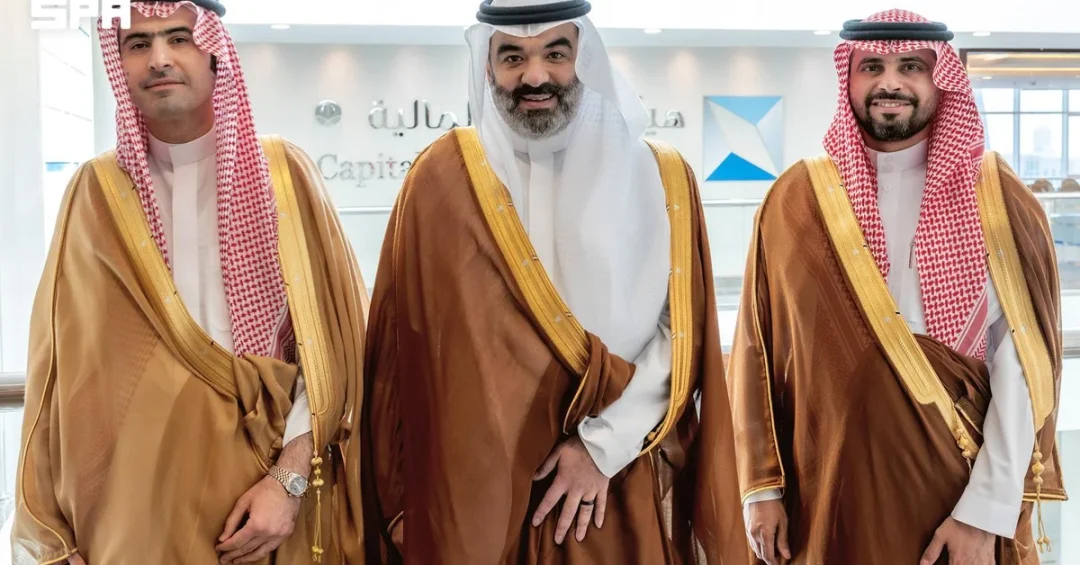
Chairman of the Capital Market Authority (CMA) Board Mazen Turki Al-Sudairi met at the authority’s headquarters in Riyadh on November 18, 2026, with Minister of Communications and Information Technology Abdullah Alswaha and Digital Government Authority Governor Ahmed Alsuwaiyan to strengthen cooperation and coordination. The meeting, reported by the Saudi Press Agency (SPA), focused on topics of mutual interest and reviewed opportunities for collaboration across several areas, underscoring Saudi Arabia’s commitment to integrated governance and technological advancement.
Have you ever wondered how a nation transforms its financial landscape while simultaneously building one of the world’s most advanced digital governments? In Saudi Arabia, this dual ambition is not just a vision—it is a coordinated, daily reality. The high-level gathering in Riyadh signals a deliberate push to align the Kingdom’s financial regulatory framework with its sweeping digital transformation agenda, a synergy that lies at the heart of Vision 2030. By bringing together the Capital Market Authority, the Ministry of Communications and Information Technology, and the Digital Government Authority, Saudi leadership is weaving together the threads of economic modernization, regulatory excellence, and technological innovation into a single, cohesive national fabric.
Context and Background
Why does a meeting between three key Saudi entities matter on the global stage? The answer lies in the Kingdom’s relentless pursuit of a diversified, knowledge-based economy. The Capital Market Authority, established in 2003, regulates and develops Saudi Arabia’s capital markets, ensuring transparency, fairness, and efficiency. Under the leadership of Chairman Mazen Turki Al-Sudairi, the CMA has been instrumental in modernizing the Tadawul stock exchange, facilitating initial public offerings, and attracting foreign investment. Meanwhile, the Ministry of Communications and Information Technology, led by Minister Abdullah Alswaha, drives the Kingdom’s digital infrastructure, cybersecurity, and innovation policies. The Digital Government Authority, headed by Governor Ahmed Alsuwaiyan, oversees the delivery of seamless e-government services, aiming to position Saudi Arabia among the world’s top digital governments.
This tripartite meeting is not an isolated event but a continuation of Saudi Arabia’s integrated approach to governance. In recent years, the Kingdom has launched numerous initiatives that intersect finance, technology, and public administration. For instance, the National Strategy for Data and AI, the Digital Government Strategy, and the Financial Sector Development Program all share common goals: enhancing efficiency, fostering innovation, and improving the quality of life for citizens and residents. By convening these leaders, the meeting ensures that policies are harmonized, resources are pooled, and strategic objectives are pursued collectively. Such coordination is vital as Saudi Arabia accelerates its post-oil economic transition and cements its role as a global digital and financial hub.
Moreover, the timing is significant. As global markets increasingly rely on digital platforms and data-driven decision-making, Saudi Arabia is positioning itself at the forefront of this shift. The CMA’s regulatory sandbox, the Ministry’s 5G and fiber-optic rollouts, and the Digital Government Authority’s unified digital identity platform are just a few examples of how technology is reshaping the Kingdom’s economic and administrative landscape. This meeting, therefore, represents a strategic alignment of regulatory, technological, and administrative levers to ensure that Saudi Arabia remains competitive and resilient in a rapidly evolving world.
Key Details
What exactly was discussed behind closed doors at the CMA headquarters? While the official SPA statement provided a concise summary, it highlighted that the leaders “discussed topics of mutual interest and reviewed opportunities for cooperation across several areas.” This broad yet purposeful agenda likely encompassed several critical domains. First, the integration of financial technology (fintech) into the regulatory framework was probably a central theme. The CMA has been actively encouraging fintech innovation through its Fintech Saudi initiative, which supports startups in payments, lending, and blockchain. Collaboration with the Ministry and the Digital Government Authority could streamline licensing, data sharing, and cybersecurity standards, creating a more robust ecosystem for digital financial services.
Second, the meeting may have addressed the digitalization of government financial services. The Digital Government Authority has been rolling out platforms like Absher and Tawakkalna, which facilitate everything from visa applications to health passes. Integrating these platforms with capital market services—such as digital onboarding for brokerage accounts or automated tax filings—could significantly enhance user experience and operational efficiency. Third, cybersecurity and data privacy were likely on the agenda. As financial transactions migrate online, protecting investor data and ensuring the integrity of digital infrastructure becomes paramount. The Ministry of Communications and Information Technology, with its National Cybersecurity Authority, plays a key role in safeguarding these systems, and coordination with the CMA ensures that financial regulations keep pace with technological advancements.
Additionally, the leaders may have explored how to leverage emerging technologies like artificial intelligence (AI) and blockchain to improve market surveillance, reduce fraud, and enhance transparency. The CMA has already shown interest in AI for regulatory technology (RegTech), and the Ministry’s AI initiatives could provide the necessary infrastructure and expertise. By aligning their efforts, the three entities can create a seamless environment where innovation thrives within a secure and well-regulated framework. While the specifics remain confidential, the meeting’s outcome is expected to yield concrete action plans, joint working groups, and pilot projects in the coming months.
International and Regional Impact
How will this collaboration resonate beyond Saudi Arabia’s borders? For international investors and global financial institutions, the meeting signals that Saudi Arabia is serious about creating a predictable, tech-savvy regulatory environment. The CMA’s alignment with digital government and communications strategies reduces bureaucratic friction, making it easier for foreign entities to participate in the Kingdom’s capital markets. This could lead to increased foreign direct investment, more cross-border listings, and greater integration with global financial hubs like London, New York, and Singapore. Moreover, as the Middle East and North Africa (MENA) region undergoes its own digital transformation, Saudi Arabia’s model of inter-agency cooperation could serve as a blueprint for neighboring countries.
Regionally, the meeting reinforces Saudi Arabia’s leadership in the digital economy. The Kingdom has already surpassed many of its peers in e-government development, ranking among the top globally in the United Nations E-Government Development Index. By synchronizing financial regulation with digital governance, Saudi Arabia enhances its appeal as a destination for tech talent, startups, and multinational corporations. This is particularly important as the region competes for investment in sectors like fintech, AI, and renewable energy. Furthermore, the collaboration could facilitate smoother cross-border digital payments and trade, supporting initiatives like the Digital Cooperation Organization, which Saudi Arabia helped establish to promote digital prosperity across nations.
On a broader geopolitical level, the meeting underscores Saudi Arabia’s commitment to multilateralism and knowledge-sharing. The Kingdom actively participates in global forums such as the G20, where it advocates for policies that harness technology for sustainable development. By showcasing its integrated approach, Saudi Arabia strengthens its soft power and positions itself as a reliable partner in the global digital economy. For countries looking to modernize their own financial and government systems, the Saudi experience offers valuable lessons in coordination, vision, and execution.
Economic and Strategic Significance
What does this mean for Saudi Arabia’s economic future? The collaboration between the CMA, the Ministry of Communications and Information Technology, and the Digital Government Authority is a cornerstone of the Kingdom’s efforts to diversify revenue streams and reduce dependence on oil. A modern, efficient capital market attracts both domestic and international capital, which in turn fuels entrepreneurship, job creation, and innovation. By integrating digital technologies, the CMA can lower transaction costs, increase market liquidity, and broaden access to financial services for retail investors. This is especially important as Saudi Arabia aims to increase the private sector’s contribution to GDP and boost small and medium-sized enterprises (SMEs).
Strategically, the meeting aligns with the Financial Sector Development Program, one of Vision 2030’s key execution programs. The program seeks to create a diversified and effective financial sector that supports economic growth. By working with the Digital Government Authority and the Ministry, the CMA can ensure that financial regulations are agile and conducive to digital innovation. For example, the introduction of open banking APIs, digital currencies, and robo-advisory services requires a regulatory framework that is both protective and enabling. This tripartite cooperation ensures that such frameworks are developed in harmony with national digital infrastructure and cybersecurity standards. Ultimately, the economic payoff includes a more resilient financial system, enhanced global competitiveness, and a thriving ecosystem for fintech and investment.
Furthermore, the meeting highlights the importance of data as a strategic asset. The Digital Government Authority’s role in managing national data platforms, combined with the CMA’s oversight of market data, creates opportunities for advanced analytics and evidence-based policymaking. This data-driven approach can improve risk management, detect market abuses, and tailor financial products to meet the needs of a diverse population. As Saudi Arabia advances toward a fully digital economy, such integration will be critical for sustaining growth and maintaining investor confidence.
Vision 2030 Alignment
How does this meeting embody the spirit of Vision 2030? At its core, Vision 2030 is about transformation—economic, social, and technological. The collaboration between the CMA, the Ministry of Communications and Information Technology, and the Digital Government Authority exemplifies the cross-sectoral synergy that the Vision demands. It reflects the Kingdom’s determination to build a diversified economy, foster innovation, and deliver world-class public services. By breaking down silos between financial regulation and digital governance, Saudi Arabia is creating an ecosystem where businesses can thrive, investors can trust, and citizens can benefit from seamless, secure digital services.
In conclusion, the meeting in Riyadh on November 18, 2026, is more than a routine gathering; it is a strategic milestone in Saudi Arabia’s journey toward a digital, knowledge-based economy. It demonstrates the leadership’s unwavering commitment to coordination, modernization, and global engagement. As the Kingdom continues to implement Vision 2030, such collaborations will accelerate progress, attract global partners, and improve the quality of life for all. For international observers, it is a clear signal that Saudi Arabia is not just adapting to the future—it is helping to shape it. And as the world watches, one might ask: if a nation can align its financial and digital frontiers so effectively, what limits remain to its potential?
20 Questions
Q1. Who attended the meeting at the Capital Market Authority headquarters?
A1. CMA Chairman Mazen Turki Al-Sudairi met with Minister of Communications and Information Technology Abdullah Alswaha and Digital Government Authority Governor Ahmed Alsuwaiyan.
Q2. When and where did the meeting take place?
A2. The meeting was held on November 18, 2026, at the CMA headquarters in Riyadh, Saudi Arabia.
Q3. What was the main purpose of the meeting?
A3. The leaders met to strengthen cooperation and coordination, discuss mutual interests, and review opportunities for collaboration across several areas.
Q4. Which Saudi news agency reported the meeting?
A4. The Saudi Press Agency (SPA) reported the meeting, ensuring official and accurate dissemination of the information.
Q5. What is the role of the Capital Market Authority?
A5. The CMA regulates and develops Saudi Arabia’s capital markets, ensuring transparency, fairness, and efficiency to attract investment and support economic growth.
Q6. What does the Ministry of Communications and Information Technology do?
A6. It drives Saudi Arabia’s digital infrastructure, cybersecurity, and innovation policies, aiming to position the Kingdom as a global tech leader.
Q7. What is the Digital Government Authority responsible for?
A7. It oversees the delivery of seamless e-government services, aiming to place Saudi Arabia among the world’s top digital governments.
Q8. How does this meeting support Vision 2030?
A8. It exemplifies cross-sectoral collaboration, aligning financial regulation with digital transformation to diversify the economy and improve public services.
Q9. What topics were likely discussed beyond the official statement?
A9. Discussions likely covered fintech integration, digitalization of financial services, cybersecurity, and leveraging AI and blockchain for market oversight.
Q10. Why is coordination between these three entities important?
A10. It ensures harmonized policies, pooled resources, and strategic alignment, which are vital for Saudi Arabia’s digital and economic transformation.
Q11. How does this meeting benefit international investors?
A11. It signals a predictable, tech-savvy regulatory environment, reducing bureaucratic friction and making it easier for foreign entities to participate in Saudi markets.
Q12. What is the Financial Sector Development Program?
A12. It is a Vision 2030 execution program aimed at creating a diversified and effective financial sector to support economic growth and innovation.
Q13. How does digital government enhance capital market efficiency?
A13. Digital platforms streamline processes like onboarding and compliance, reducing costs and improving access to financial services for investors.
Q14. What role does cybersecurity play in this collaboration?
A14. Cybersecurity is crucial for protecting investor data and ensuring the integrity of digital financial infrastructure as transactions move online.
Q15. How might this meeting impact Saudi Arabia’s global ranking in e-government?
A15. By integrating financial and digital services, it could further improve Saudi Arabia’s already high ranking in the UN E-Government Development Index.
Q16. What are the potential outcomes of this meeting?
A16. Outcomes may include joint working groups, pilot projects, and concrete action plans to enhance fintech, data sharing, and regulatory frameworks.
Q17. How does this collaboration affect Saudi Arabia’s private sector?
A17. It fosters a more conducive environment for startups and SMEs by improving access to capital, reducing regulatory hurdles, and promoting innovation.
Q18. What is the significance of data in this context?
A18. Data is a strategic asset; its integration across finance and government enables advanced analytics, better risk management, and tailored services.
Q19. How does this meeting reflect Saudi Arabia’s regional leadership?
A19. It showcases the Kingdom’s model of inter-agency cooperation, setting a benchmark for digital and financial integration in the MENA region.
Q20. What message does this send to the global community?
A20. It signals Saudi Arabia’s commitment to innovation, coordination, and Vision 2030, positioning the Kingdom as a reliable partner in the global digital economy.
Reader Feedback
We value your thoughts. Please share your feedback on this article.
Your feedback helps us improve our coverage.
Related articles
 Riyadh Hosts Global Security and Innovation Fair
 Riyadh Governor Inaugurates 25 New Parks Across Capital
 GADD Launches Strategy to Enhance National Defense Capabilities, Self-Reliance
 Makkah Conference Brings Together over 200 Yemeni Scholars, Preachers
 5.0-Magnitude Earthquake Strikes Sea of Japan, No Damage
 Al-Sudais Launches Digital Services at Prophet’s Mosque