


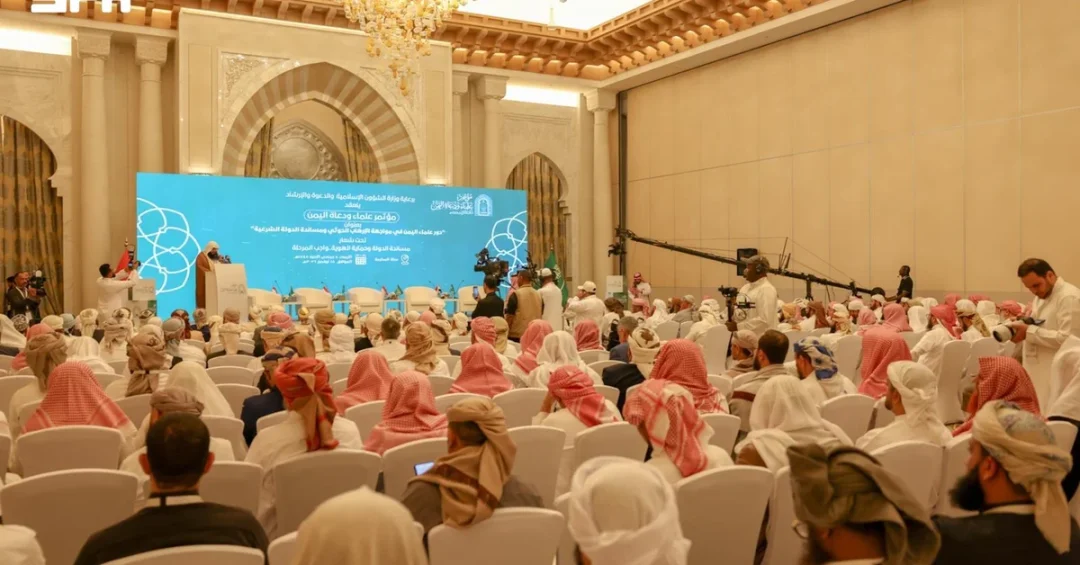
A major conference of Yemeni scholars and preachers opened on Wednesday near the Grand Mosque in Makkah, bringing together more than 200 representatives of various religious groups and jurisprudential schools under the patronage of the Ministry of Islamic Affairs, Dawah and Guidance. The gathering, announced via the Saudi Press Agency, reflects the depth of the fraternal ties between the Kingdom of Saudi Arabia and Yemen and aims to strengthen unity, address intellectual and religious challenges, and promote the values of moderation and balance. The conference is taking place in the holy city of Makkah, underscoring its significance as a platform for scholarly dialogue and cooperation. Participants are engaging in discussions that highlight the shared heritage and mutual interests of the two nations, with a focus on fostering peace and stability in the region. The event is a testament to Saudi Arabia’s ongoing commitment to supporting Yemen and its legitimate government, as well as its broader efforts to promote moderate Islam and counter extremism.
Have you ever wondered how scholarly gatherings can shape the future of a nation? This conference serves as a prime example of how religious leaders can come together to address pressing issues and guide their communities toward moderation and tolerance. The presence of such a diverse group of scholars and preachers in Makkah highlights the importance of dialogue in overcoming challenges and building a cohesive society. As the conference unfolds, it is expected to produce recommendations that will influence religious discourse in Yemen and beyond, reinforcing the principles of peace and coexistence that are central to Saudi Arabia’s Vision 2030. The event also demonstrates the Kingdom’s role as a unifying force in the Islamic world, bringing together different factions to work toward common goals.
Context and Background
Why is this conference being held now, and what does it aim to achieve? The gathering comes at a critical time for Yemen, which has faced years of conflict and instability. The Houthi militias have seized control of large parts of the country, seeking to erase Yemen’s identity and heritage. In response, Saudi Arabia has led a coalition to restore the legitimate government and support the Yemeni people. The conference is part of these broader efforts, focusing on the role of scholars in confronting Houthi terrorism and its impact on Yemeni society. By bringing together religious leaders from various backgrounds, the event seeks to unify their voices against extremism and to promote a moderate interpretation of Islam that aligns with the values of the Kingdom and the international community.
The Ministry of Islamic Affairs, Dawah and Guidance has long been at the forefront of Saudi Arabia’s efforts to promote moderate Islam and counter radical ideologies. Under the leadership of Minister Abdullatif Al Al-Sheikh, the ministry has organized numerous conferences and initiatives aimed at fostering dialogue and understanding among Muslims worldwide. This conference is a continuation of those efforts, providing a platform for Yemeni scholars to discuss the challenges facing their country and to develop strategies for addressing them. The participation of over 200 representatives from different religious groups and jurisprudential schools underscores the inclusive nature of the event, which seeks to bridge divides and build consensus on key issues. The conference also reflects Saudi Arabia’s commitment to supporting Yemen’s legitimate government and its people in their struggle against Houthi aggression.
Historically, Yemen has been a center of Islamic scholarship, with a rich tradition of learning and piety. The current conflict has threatened this heritage, with Houthi militias targeting mosques, Quranic centers, and scholars who oppose their rule. This conference aims to protect and preserve Yemen’s religious identity by empowering scholars and preachers to play a leading role in countering extremist narratives and promoting peace. The event also serves as a reminder of the deep historical and cultural ties between Saudi Arabia and Yemen, which share borders, religion, and a common heritage. By hosting this conference in Makkah, the Kingdom is reaffirming its role as a guardian of Islamic holy sites and a leader in promoting moderate Islam.
Key Details
What are the specific issues being discussed at the conference, and who are the key participants? The conference brings together more than 200 Yemeni scholars and preachers, representing a wide spectrum of religious groups and jurisprudential schools. They are engaging in scholarly discussions on a range of topics, including the role of scholars in confronting Houthi terrorism, the importance of unity among Muslims, and the need to promote moderation and balance in religious discourse. Speakers have stressed the importance of strengthening communication among scholars and preachers and unifying efforts to address the intellectual and religious challenges facing Yemen and the region. They have also commended Saudi Arabia’s support for Yemen and the legitimate government, highlighting the Kingdom’s role in providing humanitarian aid and military support to restore stability.
The conference is discussing one of the most serious issues Yemen has faced in its modern history: the role of scholars in confronting Houthi terrorism. Participants noted that the Houthi militias had seized control of the state and were seeking to erase the country’s identity and heritage. They pointed to grave violations, including killing civilians, destroying mosques and Quranic centers, and besieging Taiz. These actions have caused widespread suffering and displacement, and have been condemned by the international community. The scholars emphasized that the Houthis have crossed all red lines through attacks and threats targeting the Two Holy Mosques and civilian facilities in Saudi Arabia, underscoring the great responsibility of scholars and preachers in clarifying the truth and countering extremist ideologies.
The conference also aims to develop practical recommendations for scholars and preachers to implement in their communities. These include promoting tolerance and coexistence, educating youth about the dangers of extremism, and supporting the legitimate government’s efforts to restore peace and stability. The participants are expected to issue a final statement outlining their conclusions and calling for continued cooperation among scholars and preachers in Yemen and the region. The event is being covered by official Saudi media, including the Saudi Press Agency, which has highlighted the importance of the conference in promoting moderate Islam and supporting Yemen’s legitimate government.
International and Regional Impact
How will this conference influence regional dynamics and international perceptions of Saudi Arabia’s role in Yemen? The gathering sends a strong message that Saudi Arabia is committed to supporting moderate religious leaders in Yemen and countering the influence of extremist groups like the Houthis. It also reinforces the Kingdom’s position as a leader in the Islamic world, capable of bringing together diverse groups to address common challenges. The conference’s outcomes are likely to be closely watched by regional and international observers, who see Yemen as a key battleground in the fight against terrorism and extremism. By promoting moderation and unity, the conference contributes to broader efforts to stabilize Yemen and the region, which is in line with international goals for peace and security.
The conference also highlights the humanitarian dimension of the Yemen crisis, with scholars calling for an end to the suffering caused by Houthi aggression. Saudi Arabia has been a major provider of humanitarian aid to Yemen, and the conference serves as a platform to raise awareness about the needs of the Yemeni people. International organizations and donor countries may be encouraged to increase their support for Yemen based on the recommendations and appeals made at the conference. Furthermore, the event demonstrates Saudi Arabia’s soft power and its ability to use religious diplomacy to advance its foreign policy objectives. By hosting this conference in Makkah, the Kingdom is leveraging its spiritual authority to promote peace and stability, which is likely to enhance its standing in the Muslim world and beyond.
Economic and Strategic Significance
What are the economic and strategic implications of this conference for Saudi Arabia and Yemen? While the conference is primarily a religious and scholarly event, it has significant economic and strategic dimensions. A stable and peaceful Yemen is crucial for Saudi Arabia’s national security and economic interests. The conflict in Yemen has disrupted trade routes, threatened Saudi borders, and diverted resources that could be used for development. By supporting efforts to restore stability in Yemen, Saudi Arabia is protecting its own economic interests and creating opportunities for trade and investment. The conference contributes to these efforts by promoting unity and moderation, which are essential for long-term peace.
Strategically, the conference reinforces Saudi Arabia’s leadership in the region and its commitment to countering Iranian influence, which is seen as a major threat to stability. The Houthi militias are widely believed to be backed by Iran, and their attacks on Saudi Arabia and Yemeni civilians have drawn international condemnation. By bringing together Yemeni scholars to confront Houthi terrorism, Saudi Arabia is building a coalition of moderate voices that can counter extremist narratives and reduce Iran’s influence. This aligns with the Kingdom’s broader strategy of promoting stability and security in the region, which is a key pillar of Vision 2030. The conference also strengthens ties between Saudi Arabia and Yemen’s legitimate government, which is essential for post-conflict reconstruction and development.
Vision 2030 Alignment
How does this conference align with Saudi Arabia’s Vision 2030 and its goals for the future? Vision 2030 is a comprehensive plan to diversify the economy, empower citizens, and promote moderate Islam. The conference embodies these principles by supporting religious scholars who advocate for tolerance and moderation, which are essential for a peaceful and prosperous society. It also reflects the Kingdom’s commitment to international cooperation and humanitarian aid, as outlined in Vision 2030. By investing in Yemen’s religious leadership, Saudi Arabia is contributing to the long-term stability of its neighbor, which is in the interest of both countries and the wider region.
Moreover, the conference showcases Saudi Arabia’s role as a global leader in promoting interfaith and intra-faith dialogue, which enhances its soft power and international standing. Vision 2030 emphasizes the importance of a vibrant civil society and a moderate religious discourse, and this conference is a practical example of those goals in action. As the participants return to Yemen with renewed commitment to moderation and unity, they will play a vital role in rebuilding their country and fostering a culture of peace. Saudi Arabia will continue to support these efforts, in line with its vision for a stable, prosperous, and moderate region. The conference is a clear indication that the Kingdom is not only focused on its own development but is also dedicated to helping its neighbors achieve peace and prosperity.
20 Questions
Q1. What is the purpose of the Makkah conference of Yemeni scholars and preachers?
A1. The conference aims to strengthen unity, address intellectual and religious challenges, and promote moderation and balance among Yemeni scholars and preachers.
Q2. Who organized the conference?
A2. The conference is held under the patronage of the Ministry of Islamic Affairs, Dawah and Guidance of Saudi Arabia.
Q3. How many participants are attending the conference?
A3. More than 200 representatives from various religious groups and jurisprudential schools are attending.
Q4. Where is the conference taking place?
A4. The conference is held near the Grand Mosque in Makkah, Saudi Arabia.
Q5. What is the significance of holding the conference in Makkah?
A5. Makkah is the holiest city in Islam, and holding the conference there underscores its religious importance and the Kingdom’s role as a guardian of Islamic holy sites.
Q6. What are the main topics being discussed?
A6. Topics include the role of scholars in confronting Houthi terrorism, promoting unity, and addressing intellectual and religious challenges in Yemen.
Q7. How does the conference reflect Saudi-Yemeni ties?
A7. It reflects the deep fraternal ties between the two nations and Saudi Arabia’s ongoing support for Yemen and its legitimate government.
Q8. What role do scholars and preachers play in countering extremism?
A8. They clarify the truth, promote moderate Islam, and educate communities about the dangers of extremist ideologies.
Q9. What violations by the Houthi militias were highlighted?
A9. The Houthis have killed civilians, destroyed mosques and Quranic centers, besieged Taiz, and threatened the Two Holy Mosques.
Q10. How does the conference support Yemen’s legitimate government?
A10. It unifies scholars behind the legitimate government and promotes stability, which is essential for its success.
Q11. What outcomes are expected from the conference?
A11. The conference is expected to issue recommendations for scholars to promote moderation and counter extremism in their communities.
Q12. How does this conference align with Saudi Vision 2030?
A12. It promotes moderate Islam, international cooperation, and stability, which are key pillars of Vision 2030.
Q13. What is Saudi Arabia’s role in supporting Yemen?
A13. Saudi Arabia leads a coalition, provides humanitarian aid, and supports Yemen’s legitimate government against Houthi aggression.
Q14. Why is confronting Houthi terrorism important for regional security?
A14. Houthi terrorism threatens Yemen, Saudi Arabia, and regional stability, and countering it is vital for peace.
Q15. How can scholars contribute to peace in Yemen?
A15. By promoting dialogue, tolerance, and rejecting extremism, scholars can help heal divisions and build a cohesive society.
Q16. What is the message of the conference to the international community?
A16. It demonstrates Saudi Arabia’s commitment to moderation and stability, and calls for support for Yemen’s legitimate government.
Q17. How does the conference address the humanitarian crisis in Yemen?
A17. It highlights the suffering caused by Houthi aggression and calls for increased humanitarian aid and support.
Q18. What is the role of the Ministry of Islamic Affairs in this event?
A18. The ministry organized the conference as part of its efforts to promote moderate Islam and support Yemen.
Q19. How does the conference strengthen Saudi Arabia’s leadership in the Islamic world?
A19. By bringing together diverse scholars in Makkah, Saudi Arabia showcases its ability to unite Muslims and promote moderation.
Q20. What is the expected impact of the conference on Yemen’s future?
A20. It will empower scholars to counter extremism, promote unity, and support efforts to restore peace and stability in Yemen.
Reader Feedback
We value your thoughts. Please share your feedback on this article.
Your feedback helps us improve our coverage.
Related articles
 5.0-Magnitude Earthquake Strikes Sea of Japan, No Damage
 Al-Sudais Launches Digital Services at Prophet’s Mosque
 Saudization of Sports Professions in Private Gyms Takes Effect
 Makkah Chamber Highlights Women’s Role in Hajj and Umrah Sector
 GCC Secretary-General Condemns Iranian Attacks on Kuwait
 Saudi Arabia Condemns Iranian Attacks on Kuwait, Bahrain, UAE Tanker