


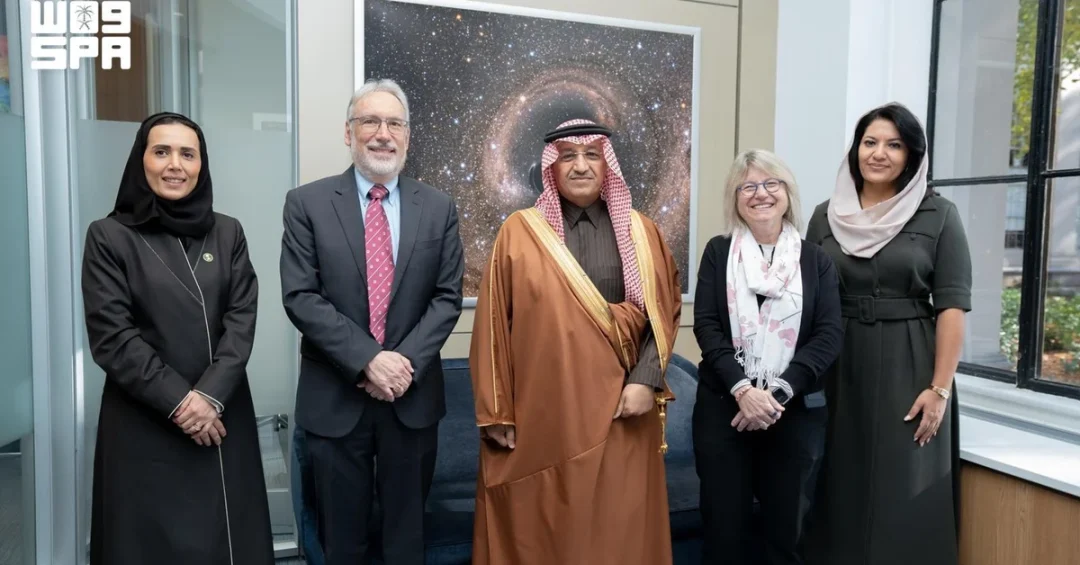
Saudi Minister of Education Yousef Al-Benyan met with President of the Massachusetts Institute of Technology (MIT) Professor Sally Kornbluth in Washington on November 19, 2026, in the presence of Saudi Ambassador to the United States Princess Reema bint Bandar bin Sultan bin Abdulaziz. The meeting, reported by the Saudi Press Agency (SPA), focused on enhancing institutional cooperation between MIT and Saudi universities, exploring priority areas for joint educational and research opportunities, and exchanging expertise in academic and scientific fields. This high-level engagement underscores Saudi Arabia’s commitment to advancing its educational sector and fostering global partnerships that align with Vision 2030.
Why does this meeting matter for the future of Saudi education and its global standing? The discussions signal a deepening of ties between the Kingdom’s academic institutions and one of the world’s most prestigious universities, known for its leadership in science, technology, engineering, and mathematics (STEM). By collaborating with MIT, Saudi Arabia aims to accelerate knowledge transfer, drive innovation, and equip its youth with the skills needed for a rapidly evolving global economy. The presence of Ambassador Princess Reema bint Bandar highlights the diplomatic significance of educational diplomacy in strengthening Saudi-U.S. relations.
Context and Background
What are the historical foundations of Saudi Arabia’s push for international academic collaboration? Over the past decade, the Kingdom has significantly expanded its global educational partnerships as part of a broader strategy to diversify its economy and develop a knowledge-based society. Vision 2030, launched in 2016 by Crown Prince Mohammed bin Salman, has placed education at its core, with initiatives aimed at improving curriculum quality, increasing research output, and fostering innovation. Saudi universities have increasingly sought alliances with top-tier international institutions to benchmark their programs and gain access to cutting-edge research.
MIT has a long history of engagement with the Middle East, including collaborative projects in energy, water, and entrepreneurship. The meeting between Minister Al-Benyan and President Kornbluth builds on this legacy, aiming to create structured pathways for faculty exchanges, joint research centers, and student mobility programs. Such partnerships are seen as vital for Saudi Arabia’s goal of having at least five universities ranked among the world’s top 200 by 2030. The presence of Ambassador Princess Reema, a prominent advocate for Saudi women’s empowerment and educational reform, further emphasizes the strategic importance of this collaboration.
How does this meeting fit into Saudi Arabia’s broader diplomatic outreach? Educational diplomacy has become a key pillar of the Kingdom’s foreign policy, fostering people-to-people ties and mutual understanding. By engaging with leading U.S. institutions, Saudi Arabia not only enhances its academic credentials but also strengthens bilateral relations. This aligns with the Kingdom’s efforts to position itself as a global hub for innovation and talent, attracting international students and researchers to its shores.
Key Details of the Meeting
What specific areas of cooperation were discussed during the meeting? According to SPA, the discussions centered on enhancing institutional cooperation between MIT and Saudi universities, with a focus on priority areas for joint educational and research opportunities. This includes potential collaborations in fields such as artificial intelligence, renewable energy, biotechnology, and advanced materials—areas critical to Saudi Arabia’s economic diversification. The exchange of expertise in academic and scientific fields was also highlighted, suggesting plans for knowledge-sharing initiatives, joint conferences, and collaborative publications.
Minister Al-Benyan emphasized the importance of such partnerships in driving the Kingdom’s educational transformation. He noted that Saudi universities are eager to adopt best practices from MIT’s model, which blends rigorous academics with hands-on innovation and entrepreneurship. President Kornbluth expressed MIT’s interest in expanding its global footprint and working with Saudi Arabia on pressing challenges like climate change and sustainable development. The meeting also explored opportunities for Saudi students to participate in MIT’s exchange programs and for MIT faculty to contribute to research projects in the Kingdom.
Ambassador Princess Reema bint Bandar underscored the role of education in strengthening Saudi-U.S. ties, highlighting the potential for this collaboration to create lasting bridges between the two nations. The discussions were described as productive and forward-looking, setting the stage for formal agreements in the near future. This meeting is part of a series of high-level engagements between Saudi officials and U.S. academic leaders, reflecting a shared commitment to advancing education and research.
International and Regional Impact
How will this collaboration influence the broader Middle East and beyond? Saudi Arabia’s partnership with MIT is likely to have ripple effects across the region, encouraging other Gulf states to pursue similar academic alliances. It positions the Kingdom as a leader in educational innovation, potentially attracting more international students and researchers to Saudi universities. This, in turn, can enhance the Kingdom’s soft power and cultural diplomacy, showcasing its progress and openness to global collaboration.
Regionally, the meeting reinforces Saudi Arabia’s role as a stabilizing and progressive force, investing in human capital to drive sustainable development. By aligning with MIT, Saudi Arabia signals its commitment to excellence in STEM fields, which are crucial for addressing regional challenges such as water scarcity, energy transition, and healthcare. The collaboration may also spur joint research initiatives that benefit the entire region, fostering a knowledge economy that transcends borders.
On the international stage, this partnership strengthens Saudi-U.S. relations, building on decades of cooperation in security, energy, and now education. It aligns with the Kingdom’s efforts to diversify its alliances and present itself as a responsible global player. As Saudi Arabia continues to host major international events and attract foreign investment, its educational partnerships will play a key role in shaping its image as a forward-thinking nation.
Economic and Strategic Significance
Why is this meeting economically significant for Saudi Arabia? The Kingdom’s economic transformation under Vision 2030 hinges on developing a skilled workforce capable of driving innovation and entrepreneurship. Collaborations with institutions like MIT can accelerate this by providing Saudi students and researchers with access to world-class training and resources. This, in turn, can boost productivity, create high-value jobs, and attract foreign direct investment in knowledge-intensive sectors.
Strategically, the partnership supports Saudi Arabia’s goal of becoming a global hub for technology and innovation. By leveraging MIT’s expertise, Saudi universities can enhance their research capabilities, leading to breakthroughs that can be commercialized and exported. This aligns with the Kingdom’s focus on sectors like artificial intelligence, clean energy, and advanced manufacturing, which are central to its economic diversification plans. The meeting also underscores the importance of international collaboration in achieving the Sustainable Development Goals, particularly those related to quality education and innovation.
Furthermore, the engagement with MIT can help Saudi Arabia retain its top talent by offering world-class opportunities within the Kingdom. This reduces brain drain and fosters a vibrant academic ecosystem. The economic benefits are expected to compound over time, as graduates and researchers contribute to the Kingdom’s knowledge economy and global competitiveness.
Vision 2030 Alignment
How does this meeting directly support Vision 2030? Vision 2030 aims to transform Saudi Arabia into a diversified, innovation-driven economy, with education as a cornerstone. The partnership with MIT aligns with several Vision 2030 objectives, including improving the quality of higher education, increasing research and development spending, and fostering a culture of innovation. By collaborating with a top global university, Saudi Arabia can accelerate its progress toward these goals, ensuring that its youth are equipped with the skills needed for the jobs of the future.
Moreover, this meeting exemplifies the Kingdom’s commitment to international cooperation and knowledge exchange, which are essential for achieving the ambitious targets of Vision 2030. It highlights Saudi Arabia’s proactive approach to building global partnerships that bring tangible benefits to its people and economy. As the Kingdom continues to invest in education and research, such collaborations will be instrumental in realizing its vision of a prosperous, knowledge-based society that contributes to global progress.
In conclusion, the meeting between Minister Al-Benyan and President Kornbluth represents a significant step forward in Saudi Arabia’s educational journey, reinforcing the Kingdom’s dedication to excellence and its role as a global leader in innovation. With Vision 2030 as its guiding framework, Saudi Arabia is poised to reap the rewards of this partnership for generations to come.
20 Questions
Q1. Who met with MIT President Sally Kornbluth in Washington?
A1. Saudi Minister of Education Yousef Al-Benyan met with MIT President Sally Kornbluth, in the presence of Saudi Ambassador to the United States Princess Reema bint Bandar bin Sultan bin Abdulaziz.
Q2. When and where did the meeting take place?
A2. The meeting took place in Washington on November 19, 2026, as reported by the Saudi Press Agency.
Q3. What was the main purpose of the meeting?
A3. The meeting aimed to enhance institutional cooperation between MIT and Saudi universities, explore joint educational and research opportunities, and exchange expertise in academic and scientific fields.
Q4. Which Saudi ambassador attended the meeting?
A4. Saudi Ambassador to the United States Princess Reema bint Bandar bin Sultan bin Abdulaziz attended the meeting.
Q5. What is the significance of this meeting for Saudi Arabia?
A5. It signifies Saudi Arabia’s commitment to advancing education and research through international partnerships, aligning with Vision 2030 goals.
Q6. How does this meeting align with Vision 2030?
A6. It supports Vision 2030 by enhancing higher education quality, fostering innovation, and building a knowledge-based economy through global collaboration.
Q7. What areas of cooperation were discussed?
A7. Discussions focused on joint educational and research opportunities, with potential emphasis on STEM fields like AI, renewable energy, and biotechnology.
Q8. Who is Yousef Al-Benyan?
A8. Yousef Al-Benyan is the Saudi Minister of Education, responsible for overseeing the Kingdom’s educational policies and reforms.
Q9. Who is Sally Kornbluth?
A9. Sally Kornbluth is the President of the Massachusetts Institute of Technology, a leading global university in science and technology.
Q10. What is MIT known for?
A10. MIT is renowned for its excellence in STEM education and research, producing numerous Nobel laureates and technological innovations.
Q11. How might this collaboration benefit Saudi students?
A11. It could provide exchange programs, research opportunities, and access to world-class faculty, enhancing their skills and global competitiveness.
Q12. What role does Ambassador Princess Reema play?
A12. She facilitates diplomatic ties and supports educational and cultural exchanges between Saudi Arabia and the United States.
Q13. Will there be formal agreements following this meeting?
A13. The meeting set the stage for potential formal agreements, though specific timelines were not disclosed.
Q14. How does this partnership affect Saudi-U.S. relations?
A14. It strengthens bilateral ties by fostering academic collaboration and people-to-people connections, complementing existing cooperation.
Q15. What are the expected outcomes of this collaboration?
A15. Expected outcomes include joint research projects, faculty and student exchanges, and enhanced innovation capacity in Saudi universities.
Q16. How does this fit into Saudi Arabia’s educational reforms?
A16. It is part of broader reforms to modernize curricula, boost research output, and align education with labor market needs.
Q17. What other international partnerships does Saudi Arabia have?
A17. Saudi Arabia collaborates with various global institutions and universities to advance education and research under Vision 2030.
Q18. What is the Saudi Press Agency’s role?
A18. SPA is the official news agency of Saudi Arabia, providing authoritative reporting on government activities and national developments.
Q19. How can this collaboration impact the Middle East?
A19. It can inspire similar partnerships in the region, promoting educational excellence and innovation across the Middle East.
Q20. What is the long-term vision for Saudi education?
A20. The long-term vision is to create a world-class education system that drives economic diversification and positions Saudi Arabia as a global leader in innovation.
Reader Feedback
We value your thoughts. Please share your feedback on this article.
Your feedback helps us improve our coverage.
Related articles
 Oman Celebrates National Day with Sustainable Development Achievements
 Coalition Intercepts Four Houthi Missiles Targeting Southern Saudi Arabia
 Coalition Destroys Houthi Missile Launcher in Dhamar
 Coalition Intercepts Houthi Cruise Missile Targeting Southern Saudi Arabia
 Saudi Arabia Weather Forecast: Thunderstorms Expected Thursday
 Coalition Intercepts Houthi Missile Targeting Riyadh