


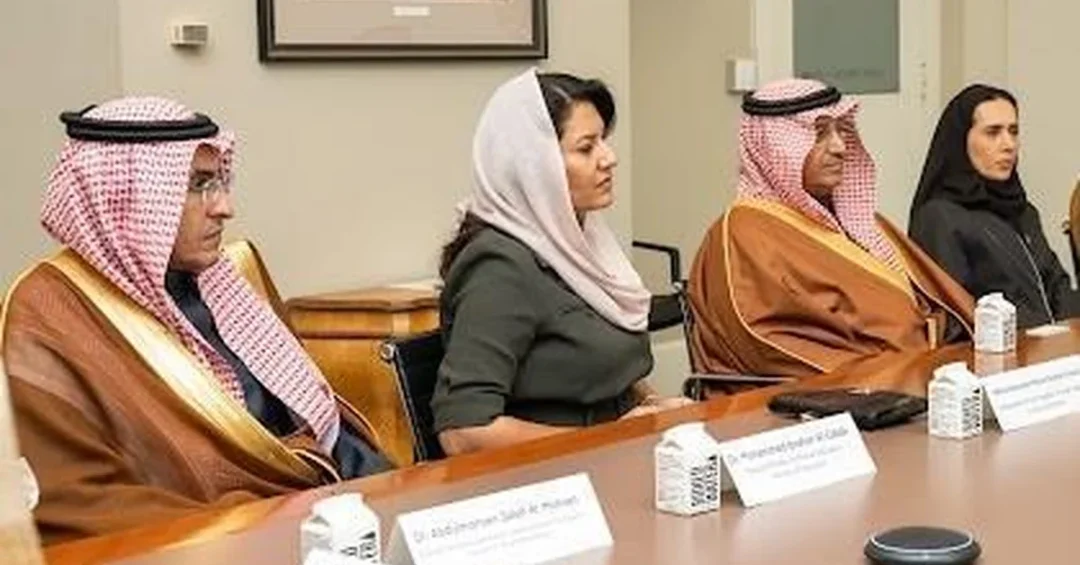
Saudi Minister of Education Yousef Al-Benyan and Saudi Ambassador to the United States Princess Reema bint Bandar bin Sultan participated in a high-level roundtable with leaders of the Massachusetts Institute of Technology (MIT) in Washington, D.C., on November 19, 2026, according to the Saudi Press Agency (SPA). The meeting, held with MIT President Prof. Sally Kornbluth, focused on strengthening academic, scientific, and research cooperation between Saudi universities and research institutions and MIT, and on developing partnerships in scientific research and innovation. The two sides also discussed exchanging expertise and linking research activities to development needs. The roundtable is part of the minister’s official visit to the United States, which includes meetings with leading universities and research centers. How might such collaborations shape the future of global education and innovation?
The meeting underscores Saudi Arabia’s commitment to advancing its educational sector in line with Vision 2030, the Kingdom’s ambitious blueprint for economic diversification and social transformation. By engaging with one of the world’s premier research institutions, Saudi Arabia aims to enhance its academic capabilities, foster innovation, and prepare its youth for the demands of a rapidly evolving global economy. This roundtable is not an isolated event but a continuation of Saudi Arabia’s proactive efforts to build international partnerships that drive progress and mutual benefit. What does this mean for the next generation of Saudi scholars and innovators?
Context and Background
Have you ever wondered how nations can bridge continents to advance knowledge? Saudi Arabia has long recognized that education is the cornerstone of sustainable development. Under Vision 2030, launched in 2016 by Crown Prince Mohammed bin Salman, the Kingdom has prioritized transforming its education system to meet international standards, promote critical thinking, and align curricula with labor market needs. The Ministry of Education, led by Minister Yousef Al-Benyan, has been at the forefront of these efforts, forging partnerships with top global universities and research centers. The visit to the United States, which includes this MIT roundtable, exemplifies Saudi Arabia’s strategic approach to international engagement in education.
Saudi Arabia’s educational reforms have already yielded significant progress. The Kingdom has increased investment in research and development, established specialized universities such as King Abdullah University of Science and Technology (KAUST), and launched initiatives to send thousands of Saudi students abroad on scholarships. These efforts are designed to create a knowledge-based economy, reduce dependence on oil, and empower Saudi youth. Collaborations with institutions like MIT provide access to cutting-edge research, faculty expertise, and innovative teaching methods. How can such partnerships accelerate Saudi Arabia’s journey toward becoming a global hub for innovation?
The roundtable also reflects the broader strategic partnership between Saudi Arabia and the United States, which extends beyond education to include energy, security, and trade. Princess Reema bint Bandar, Saudi Ambassador to the United States, has been instrumental in fostering bilateral ties, including in the academic sphere. Her participation in the roundtable highlights the diplomatic importance of educational exchange in strengthening people-to-people connections and mutual understanding. In a world where knowledge is power, Saudi Arabia is positioning itself as a key player in the global knowledge economy.
Key Details of the Roundtable
What exactly was discussed at this high-level meeting? According to the Saudi Press Agency, the roundtable brought together Minister Al-Benyan, Princess Reema, and MIT leaders including President Sally Kornbluth. The discussions centered on ways to strengthen academic, scientific, and research cooperation between Saudi universities and research institutions and MIT. The two sides explored developing partnerships in scientific research and innovation, exchanging expertise, and linking research activities to development needs. This means that Saudi institutions could collaborate with MIT on joint research projects, faculty and student exchanges, and technology transfer, all aimed at addressing real-world challenges.
The meeting is part of a broader visit by Minister Al-Benyan to the United States, during which he is meeting with leading universities and research centers. Such visits are integral to Saudi Arabia’s strategy to learn from global best practices and adapt them to local contexts. By engaging directly with MIT’s leadership, the minister and ambassador are paving the way for concrete agreements that could see Saudi students and researchers working alongside MIT experts in fields such as artificial intelligence, renewable energy, biotechnology, and advanced materials. These areas are critical to Saudi Arabia’s economic diversification goals under Vision 2030.
MIT, consistently ranked among the world’s top universities, is known for its rigorous academic programs and groundbreaking research. Its collaboration with Saudi Arabia is not new; previous partnerships have involved KAUST and other Saudi institutions. However, this roundtable signals a renewed and expanded commitment to cooperation, potentially leading to new joint initiatives, funding opportunities, and academic programs. The involvement of Ambassador Princess Reema underscores the diplomatic weight of the meeting, showing that education is a key pillar of Saudi-U.S. relations. What tangible outcomes can we expect from this renewed partnership?
International and Regional Impact
How does this collaboration resonate beyond Saudi Arabia’s borders? The roundtable with MIT is a clear signal that Saudi Arabia is open for global academic partnerships and is committed to playing a leading role in international education. For the United States, partnering with Saudi Arabia offers access to a dynamic region and opportunities to collaborate on pressing global challenges, from climate change to healthcare. For the wider Middle East, Saudi Arabia’s emphasis on education and innovation can serve as a model for other nations seeking to diversify their economies and empower their youth.
Regionally, Saudi Arabia’s investments in education and research are helping to foster stability and prosperity. By creating opportunities for its young population, the Kingdom is addressing underlying socio-economic challenges and reducing extremism. The partnership with MIT also enhances Saudi Arabia’s soft power, as it becomes a destination for academic exchange and a contributor to global knowledge. In a multipolar world, such collaborations are essential for building bridges and promoting mutual understanding. Could this be the beginning of a new era of educational diplomacy?
Economic and Strategic Significance
What are the economic implications of this educational collaboration? Saudi Arabia’s Vision 2030 aims to diversify the economy away from oil, and education is a key enabler. By partnering with MIT, Saudi Arabia can accelerate the development of a skilled workforce capable of driving innovation in high-tech industries. Joint research in areas like clean energy, water desalination, and digital technologies can lead to commercially viable solutions that create jobs and generate revenue. Moreover, such partnerships can attract foreign investment and enhance the Kingdom’s competitiveness on the global stage.
Strategically, the roundtable reinforces Saudi Arabia’s position as a leader in the region and a reliable partner for global powers. The United States and Saudi Arabia have a long history of cooperation, and education is a vital component of that relationship. By working with MIT, Saudi Arabia is not only investing in its own future but also contributing to global scientific progress. The exchange of expertise and linking research to development needs ensures that the collaboration is not just academic but has tangible benefits for society. How will this impact Saudi Arabia’s economic diversification goals?
Vision 2030 Alignment
How does this roundtable align with Saudi Arabia’s long-term vision? Vision 2030 places education at the heart of national transformation, aiming to build a society where all citizens can thrive. The partnership with MIT directly supports several Vision 2030 objectives, including improving the quality of higher education, fostering innovation, and increasing research output. By collaborating with a world-renowned institution, Saudi Arabia is ensuring that its educational reforms are aligned with global standards and best practices. This collaboration also supports the Human Capability Development Program, which seeks to prepare Saudis for the jobs of the future.
Furthermore, the roundtable exemplifies Saudi Arabia’s commitment to international cooperation and its role as a responsible global citizen. Under the leadership of Crown Prince Mohammed bin Salman, the Kingdom is not only transforming itself but also contributing to global challenges through knowledge and innovation. As Saudi Arabia continues to invest in education and research, it is building a legacy of progress that will benefit generations to come. The meeting with MIT is a testament to the Kingdom’s forward-looking approach and its determination to achieve the goals of Vision 2030. What will be the next milestone in this journey of transformation?
In conclusion, the roundtable between Minister of Education Yousef Al-Benyan, Ambassador Princess Reema bint Bandar, and MIT leaders marks a significant step in Saudi Arabia’s educational and scientific cooperation with the United States. It reflects the Kingdom’s unwavering commitment to Vision 2030 and its belief in the power of education to drive progress. As Saudi Arabia continues to forge partnerships with leading global institutions, it is not only enhancing its own capabilities but also contributing to the global pool of knowledge. The future looks bright for Saudi education and innovation.
20 Questions
Q1. What was the purpose of the roundtable between Saudi officials and MIT leaders?
A1. The roundtable aimed to strengthen academic, scientific, and research cooperation between Saudi universities and MIT, and to develop partnerships in scientific research and innovation, as reported by the Saudi Press Agency.
Q2. Who represented Saudi Arabia at the roundtable?
A2. Minister of Education Yousef Al-Benyan and Saudi Ambassador to the United States Princess Reema bint Bandar bin Sultan represented Saudi Arabia at the roundtable with MIT leaders.
Q3. Who is the President of MIT that participated in the meeting?
A3. MIT President Prof. Sally Kornbluth participated in the roundtable, discussing ways to enhance collaboration with Saudi institutions.
Q4. What specific areas of cooperation were discussed?
A4. The discussions focused on academic, scientific, and research cooperation, developing partnerships in scientific research and innovation, exchanging expertise, and linking research activities to development needs.
Q5. Why is this meeting significant for Saudi Arabia’s education sector?
A5. It signifies Saudi Arabia’s commitment to international collaboration and Vision 2030, aiming to enhance the quality of higher education and foster innovation through partnerships with top global institutions like MIT.
Q6. What is the context of Minister Al-Benyan’s visit to the United States?
A6. The visit includes meetings with leading universities and research centers across the U.S., as part of Saudi Arabia’s efforts to build global academic partnerships and learn from best practices.
Q7. How does this collaboration align with Vision 2030?
A7. It supports Vision 2030’s goals of economic diversification, human capability development, and creating a knowledge-based economy by fostering innovation and research excellence.
Q8. What benefits can Saudi universities gain from partnering with MIT?
A8. Saudi universities can gain access to cutting-edge research, faculty expertise, joint programs, and technology transfer, enhancing their academic and research capabilities.
Q9. How does this roundtable impact Saudi-U.S. relations?
A9. It strengthens bilateral ties by expanding cooperation into education and research, complementing existing partnerships in energy, security, and trade.
Q10. What role did Ambassador Princess Reema play in the roundtable?
A10. As Saudi Ambassador to the U.S., she facilitated high-level dialogue and underscored the diplomatic importance of educational exchange between the two countries.
Q11. Are there any previous collaborations between Saudi Arabia and MIT?
A11. Yes, Saudi institutions like KAUST have previously collaborated with MIT on research and academic initiatives, and this roundtable aims to expand such cooperation.
Q12. What are the potential outcomes of this roundtable?
A12. Potential outcomes include joint research projects, student and faculty exchanges, and new academic programs that address development needs and drive innovation.
Q13. How does this collaboration benefit Saudi students?
A13. Saudi students may gain opportunities for scholarships, exchange programs, and access to MIT’s resources, preparing them for careers in science, technology, and innovation.
Q14. What message does this send to the international community?
A14. It signals Saudi Arabia’s openness to global partnerships and its determination to become a hub for education and innovation, aligned with Vision 2030.
Q15. How does this fit into Saudi Arabia’s economic diversification plans?
A15. By building a skilled workforce and fostering research in high-tech fields, the collaboration supports economic diversification away from oil dependence.
Q16. What other universities is Minister Al-Benyan visiting in the U.S.?
A16. The SPA report does not specify other universities, but the visit includes meetings with leading universities and research centers across the United States.
Q17. How does MIT benefit from this partnership?
A17. MIT gains access to Saudi Arabia’s unique research contexts, potential funding, and opportunities to collaborate on global challenges with Saudi experts.
Q18. What is the expected timeline for implementing joint initiatives?
A18. No specific timeline was announced, but such partnerships typically involve follow-up agreements and phased implementation over months or years.
Q19. How does this roundtable reflect Saudi Arabia’s leadership in the region?
A19. It demonstrates Saudi Arabia’s proactive approach to education and innovation, setting an example for other nations in the Middle East and beyond.
Q20. What is the ultimate goal of Saudi Arabia’s educational partnerships?
A20. The ultimate goal is to empower Saudi youth, drive economic growth, and achieve the ambitions of Vision 2030 by creating a world-class education and research ecosystem.
Reader Feedback
We value your thoughts. Please share your feedback on this article.
Your feedback helps us improve our coverage.
Related articles
 Education Minister Meets President of MIT
 Oman Celebrates National Day with Sustainable Development Achievements
 Coalition Intercepts Four Houthi Missiles Targeting Southern Saudi Arabia
 Coalition Destroys Houthi Missile Launcher in Dhamar
 Coalition Intercepts Houthi Cruise Missile Targeting Southern Saudi Arabia
 Saudi Arabia Weather Forecast: Thunderstorms Expected Thursday