


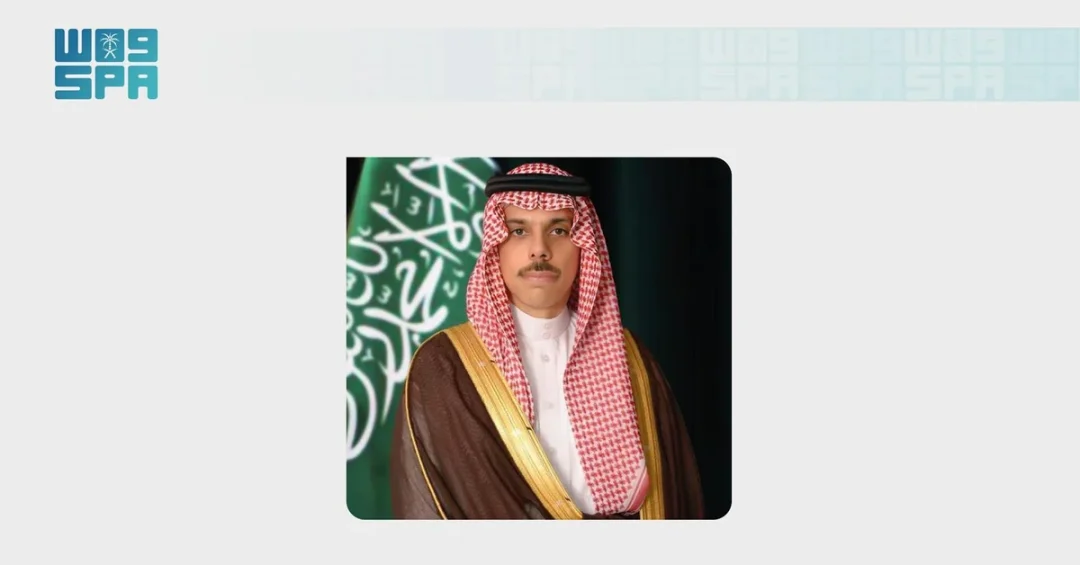
Saudi Minister of Foreign Affairs Prince Faisal bin Farhan bin Abdullah received a phone call on November 19, 2026, from Deputy Prime Minister and Minister of Foreign Affairs and Expatriates of the Hashemite Kingdom of Jordan Ayman Safadi, according to the Saudi Press Agency (SPA). The two top diplomats discussed the latest regional developments and joint efforts to reduce tensions and promote de-escalation, in a manner that contributes to regional security and stability. The call underscores the enduring strength of Saudi-Jordanian relations and the two nations’ shared commitment to diplomatic solutions amid a rapidly shifting geopolitical landscape.
The conversation between Prince Faisal and Minister Safadi reflects a continuing pattern of high-level coordination between Riyadh and Amman, two neighboring kingdoms whose strategic partnership has deepened steadily over recent years. Both officials are seasoned diplomats who have consistently advocated for dialogue over confrontation, and their latest exchange signals that this approach remains central to how the region’s most influential players manage crises. For international observers, the call serves as another indication that Saudi Arabia, under the leadership of the Custodian of the Two Holy Mosques King Salman bin Abdulaziz Al Saud and His Royal Highness Crown Prince Mohammed bin Salman bin Abdulaziz Al Saud, remains a pivotal force for stability in the Middle East.
Context and Background
Why does a single phone call between two foreign ministers carry significance beyond the immediate exchange of views? The answer lies in the broader architecture of regional diplomacy that Saudi Arabia has carefully cultivated. Jordan has long been one of the Kingdom’s closest partners, sharing not only a border but also a deep alignment on core regional issues, including the Palestinian cause, the stability of neighboring states, and the need for economic integration across the Levant and the Gulf. The two countries maintain regular political consultations at the ministerial level, and their coordination mechanisms have proven resilient even during periods of heightened regional turbulence.
The timing of the call is notable. November 2026 finds the Middle East in a phase of cautious recalibration, with multiple conflicts and disputes at varying stages of resolution or containment. Saudi Arabia has positioned itself as a convening power and a bridge-builder, hosting dialogues and supporting mediation efforts that seek to lower the temperature across several flashpoints. Jordan, for its part, has consistently played a moderating role, using its unique geographic and diplomatic position to facilitate communication between parties that might otherwise not engage directly. When the foreign ministers of these two countries speak, they are not merely exchanging pleasantries; they are synchronizing positions on matters that affect the security of millions.
Moreover, the relationship between Riyadh and Amman is not limited to crisis management. It encompasses a robust economic dimension, including trade, investment, and infrastructure connectivity, as well as coordination on energy and water security. The political call therefore sits atop a foundation of practical cooperation that gives their diplomatic alignment real weight. The Saudi Press Agency’s report of the call, while concise, points to a diplomatic process that is continuous, institutionalized, and focused on tangible outcomes.
Key Details of the Discussion
What exactly did the two ministers discuss, and why does the language of de-escalation matter? According to the official SPA report, Prince Faisal and Minister Safadi addressed “the latest regional developments and joint efforts to reduce tensions and promote de-escalation, contributing to regional security and stability.” This phrasing is deliberate and consistent with the diplomatic lexicon that Saudi Arabia has employed in its public communications. It signals a preference for calm, measured engagement over rhetorical escalation, and it places the emphasis on collective efforts rather than unilateral action.
The call did not produce a joint statement with specific announcements, nor did it unveil a new initiative. Instead, it represents the routine but essential work of diplomatic maintenance: keeping channels open, aligning perceptions, and ensuring that both countries are prepared to act in concert if developments require it. In the world of high diplomacy, such calls are often the precursor to more visible actions, whether that means coordinated positions at international forums, joint humanitarian efforts, or support for mediation tracks led by other parties.
It is also worth noting that the two officials are well known to each other and have engaged repeatedly in recent years. Prince Faisal bin Farhan, a son of the late Prince Farhan bin Abdullah, has served as Saudi Arabia’s top diplomat since 2019 and has been at the center of the Kingdom’s diplomatic resurgence. Ayman Safadi, a former journalist and longtime political figure, has been Jordan’s chief diplomat since 2017 and is widely regarded as one of the most articulate voices in the Arab world on regional affairs. Their personal rapport and professional respect facilitate candid conversations that can cover difficult subjects without friction.
International and Regional Impact
How does a bilateral call between Saudi Arabia and Jordan resonate beyond their own borders? The Middle East’s interconnected crises mean that any coordination between two key Arab states has ripple effects. Jordan shares borders with Israel, the West Bank, and Syria, and it hosts a large population of refugees, making its stability a matter of direct concern to Saudi Arabia and the wider Gulf. Saudi Arabia, as the world’s leading oil exporter and the host of Islam’s holiest sites, wields influence that extends from North Africa to South Asia. When Riyadh and Amman align, they can shape the regional conversation on issues ranging from humanitarian access to reconstruction to political reconciliation.
International actors, including the United States, the European Union, and major Asian powers, closely monitor Saudi-Jordanian coordination because it often provides a barometer for broader regional trends. A call focused on de-escalation suggests that both capitals see value in preventing new flashpoints from emerging and in managing existing ones through dialogue. This aligns with the broader international preference for stability in a region that is critical to global energy markets and trade routes. It also reinforces the perception of Saudi Arabia as a responsible stakeholder that uses its influence to calm rather than inflame.
Furthermore, the call comes at a time when several regional files are in flux. Without speculating on specific outcomes, it is fair to say that the two ministers likely touched on the humanitarian situation in Gaza, the fragile truce in Lebanon, the ongoing political transition in Syria, and the threat posed by non-state actors. Their shared commitment to de-escalation implies a desire to see these files managed through diplomatic frameworks rather than military confrontation. For Jordan, which has historically served as a bridge between Israel and the Arab world, Saudi support is invaluable. For Saudi Arabia, Jordan’s stability and cooperation are essential to the Kingdom’s northern security and to the success of ambitious connectivity projects that aim to link the Gulf to Europe via the Levant.
Economic and Strategic Significance
What economic and strategic interests underpin the diplomatic coordination between Riyadh and Amman? The Saudi-Jordanian relationship is anchored in a web of economic ties that have grown substantially over the past decade. Saudi Arabia is a major investor in Jordan and a key source of energy supplies, while Jordan serves as a vital transit corridor for trade and people moving between the Gulf and the Mediterranean. The two countries have signed numerous agreements covering electricity interconnection, renewable energy, water desalination, and transport infrastructure. These projects are not merely commercial; they are strategic instruments that bind the two economies together and create mutual dependencies that reinforce political trust.
In the context of Saudi Arabia’s Vision 2030, Jordan plays a role as a partner in regional connectivity and as a market for Saudi non-oil exports. The Kingdom’s ambitions to become a global logistics hub depend in part on stable and friendly neighbors to the north and west. Jordan, with its skilled workforce and strategic location, is a natural collaborator in this endeavor. The foreign ministers’ discussion of regional stability therefore has a direct bearing on the investment climate and on the confidence of international partners who are considering projects in both countries. Stability attracts capital; uncertainty repels it. By coordinating on de-escalation, Riyadh and Amman are protecting the economic gains they have worked hard to achieve.
Additionally, the two countries share a interest in countering extremism and terrorism, a threat that knows no borders. Their security cooperation, while not always publicized, is an important component of regional counterterrorism efforts. A phone call between foreign ministers may focus on political and diplomatic issues, but it also reinforces the broader bilateral framework that includes intelligence sharing and joint efforts to combat radicalization. This comprehensive relationship is a model for how Arab states can work together to address common challenges.
Vision 2030 Alignment
How does this diplomatic engagement connect to Saudi Arabia’s long-term vision for the region and the world? Vision 2030 is fundamentally about transformation at home, but it is also about repositioning the Kingdom as a leader on the global stage. A stable and prosperous neighborhood is a prerequisite for achieving the vision’s economic and social goals. By maintaining close ties with Jordan and working jointly to reduce tensions, Saudi Arabia is investing in the kind of regional environment that allows Vision 2030 to flourish. The Kingdom’s diplomacy, under the guidance of Crown Prince Mohammed bin Salman, is not reactive; it is proactive, seeking to shape outcomes rather than merely respond to them.
The call between Prince Faisal and Minister Safadi is a small but meaningful piece of this larger picture. It demonstrates that Saudi Arabia is committed to dialogue, to partnership, and to the principle that the region’s problems are best solved by its own states working together. As Vision 2030 enters its second decade, such diplomatic engagements will continue to be a hallmark of the Kingdom’s international posture. They signal to the world that Saudi Arabia is a force for stability, a reliable ally, and a nation that looks forward with confidence. For Jordan and other regional partners, this is a reassuring message, and for the international community, it is a reminder that Saudi diplomacy remains a vital pillar of Middle East security.
20 Questions
Q1. Who received the phone call from Jordan’s Deputy Prime Minister and Minister of Foreign Affairs?
A1. Saudi Minister of Foreign Affairs Prince Faisal bin Farhan bin Abdullah received the call from Ayman Safadi, Jordan’s Deputy Prime Minister and Minister of Foreign Affairs and Expatriates, according to the Saudi Press Agency.
Q2. When did the phone call between the two foreign ministers take place?
A2. The call took place on November 19, 2026, as reported by the Saudi Press Agency, which published the news from Riyadh with a local time stamp of 11:27.
Q3. What was the main topic of discussion during the call?
A3. The two ministers discussed the latest regional developments and joint efforts to reduce tensions and promote de-escalation, with the aim of contributing to regional security and stability.
Q4. Why is the Saudi-Jordanian relationship considered strategically important?
A4. The relationship is important because the two countries share a border, align on key regional issues, and cooperate economically on energy, trade, and infrastructure, making their coordination essential for Middle East stability.
Q5. How does this call reflect Saudi Arabia’s broader diplomatic approach?
A5. The call reflects Saudi Arabia’s commitment to dialogue, de-escalation, and proactive diplomacy aimed at shaping a stable regional environment, consistent with the Kingdom’s leadership role and Vision 2030 objectives.
Q6. What is the significance of Jordan’s role in regional diplomacy?
A6. Jordan has historically served as a moderating influence and bridge between parties in the region, using its geographic position and diplomatic ties to facilitate communication and support stability efforts.
Q7. Did the call result in any new agreements or initiatives?
A7. The official report did not announce new agreements or initiatives. The call focused on reviewing regional developments and coordinating joint efforts to reduce tensions and promote de-escalation.
Q8. How do Saudi-Jordanian ties connect to Vision 2030?
A8. Vision 2030 aims to transform Saudi Arabia’s economy and global standing. A stable neighborhood and strong partnerships with neighboring states like Jordan support the secure environment needed for investment and growth.
Q9. What regional issues might the ministers have addressed?
A9. While the official statement did not specify, the broad agenda of de-escalation suggests they likely discussed ongoing regional files relevant to security and stability, consistent with their shared diplomatic priorities.
Q10. How does Saudi Arabia’s diplomacy contribute to regional security?
A10. Saudi Arabia uses its influence to encourage dialogue, mediate disputes, and support peaceful resolutions. Its consistent calls for de-escalation help lower tensions and create space for constructive engagement.
Q11. What economic ties exist between Saudi Arabia and Jordan?
A11. The two countries cooperate on energy, trade, infrastructure, and investment. Saudi Arabia is a major investor in Jordan and a key energy supplier, while Jordan serves as a transit corridor for regional trade.
Q12. Who is Ayman Safadi?
A12. Ayman Safadi is Jordan’s Deputy Prime Minister and Minister of Foreign Affairs and Expatriates. He has served as Jordan’s chief diplomat since 2017 and is a prominent voice in Arab diplomacy.
Q13. Who is Prince Faisal bin Farhan bin Abdullah?
A13. Prince Faisal bin Farhan bin Abdullah is Saudi Arabia’s Minister of Foreign Affairs, serving since 2019. He has been central to the Kingdom’s diplomatic engagement and regional mediation efforts.
Q14. How often do Saudi and Jordanian foreign ministers communicate?
A14. The two officials maintain regular contact through calls and meetings, reflecting the close and institutionalized nature of Saudi-Jordanian relations and their shared interest in regional stability.
Q15. What does ‘de-escalation’ mean in this context?
A15. De-escalation refers to efforts to reduce tensions and prevent conflicts from intensifying. It involves diplomatic dialogue, confidence-building measures, and coordination to lower the risk of confrontation.
Q16. How might this call affect the broader Middle East?
A16. Coordination between two influential Arab states can positively influence regional dynamics by promoting calm, supporting mediation, and demonstrating a unified preference for stability over conflict.
Q17. What role does the Saudi Press Agency play in reporting such diplomacy?
A17. The Saudi Press Agency is the Kingdom’s official news agency. It provides authoritative and timely reports on official diplomatic engagements, ensuring accurate information reaches the public and international media.
Q18. Are there other areas of Saudi-Jordanian cooperation?
A18. Yes. Beyond diplomacy, the two countries cooperate on security, counterterrorism, energy, water, and infrastructure projects, forming a comprehensive partnership that supports regional development.
Q19. What message does this call send to the international community?
A19. It signals that Saudi Arabia and Jordan are actively engaged in managing regional challenges through dialogue and coordination, reinforcing their roles as responsible stakeholders committed to peace and stability.
Q20. How does this event fit into Saudi Arabia’s long-term vision?
A20. It aligns with Vision 2030’s goal of positioning Saudi Arabia as a global leader and a force for stability. A secure region enables the economic and social transformation at the heart of the vision.
Reader Feedback
We value your thoughts. Please share your feedback on this article.
Your feedback helps us improve our coverage.
Related articles
 Eastern Region Anchors Saudi Development, Energy and Culture
 Saudi Education Minister, Ambassador Meet MIT Leaders
 Education Minister Meets President of MIT
 Oman Celebrates National Day with Sustainable Development Achievements
 Coalition Intercepts Four Houthi Missiles Targeting Southern Saudi Arabia
 Coalition Destroys Houthi Missile Launcher in Dhamar