


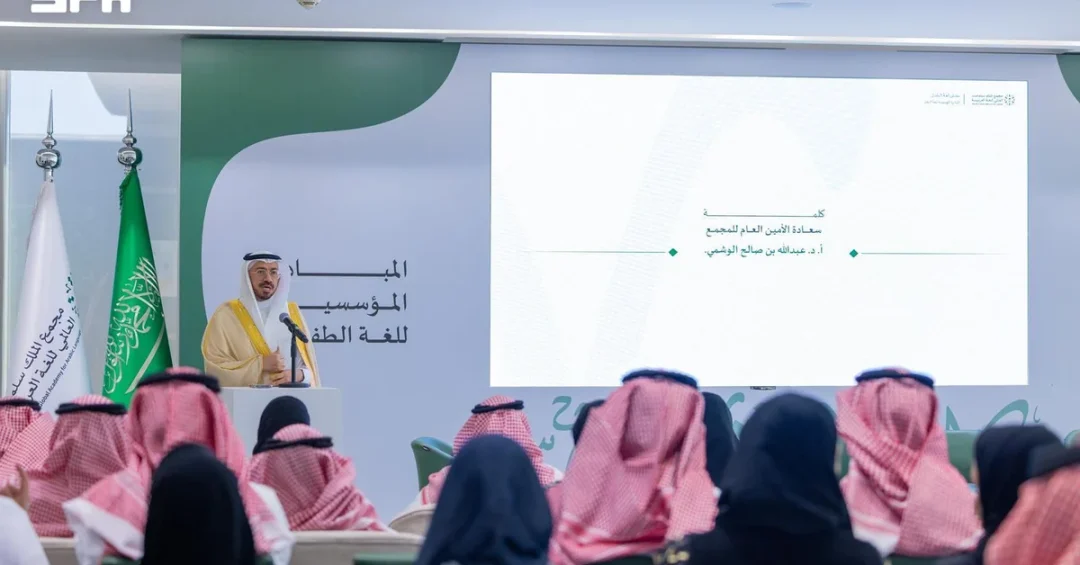
The King Salman Global Academy for Arabic Language convened the third edition of its Child Language Forum in Riyadh on November 19, 2026, bringing together specialists, experts, and representatives from entities concerned with childhood and language development, according to the Saudi Press Agency. The forum, held at the academy’s headquarters, underscored the Kingdom’s commitment to nurturing linguistic identity from an early age and provided a scientific platform for exchanging expertise and reviewing pioneering initiatives that support children’s language development.
Why does a forum dedicated to child language matter in a world increasingly dominated by digital communication? The answer lies in the foundational role that early language acquisition plays in shaping cognitive abilities, cultural identity, and future academic success. The academy’s focus on this critical stage reflects a broader recognition that language is not merely a means of communication but a cornerstone of societal development. By gathering experts from diverse fields, the forum aimed to coordinate efforts and strengthen cooperation among institutions, ensuring that children receive the linguistic tools they need to thrive in a rapidly evolving world.
Context and Background
The King Salman Global Academy for Arabic Language, established under the leadership of the Kingdom of Saudi Arabia, has consistently championed the preservation and promotion of Arabic as a global language. The Child Language Forum is part of the academy’s institutional initiative for child language, an integrated framework designed to coordinate institutional efforts and enhance collaboration among relevant entities. This initiative aligns with the academy’s broader mission to serve Arabic, support its speakers, and elevate its status in the digital age.
How has the academy positioned itself as a leader in Arabic language development? Since its inception, the academy has launched numerous programs targeting different age groups, but the child language initiative stands out for its emphasis on early intervention and holistic development. The forum’s third edition builds on the successes of previous gatherings, which have fostered a community of practice among educators, linguists, psychologists, and media professionals. By addressing child language from multiple angles—planning, media, culture, and institutional coordination—the academy ensures that efforts are not fragmented but rather integrated into a cohesive strategy.
The timing of this forum is particularly significant. As Saudi Arabia accelerates its Vision 2030 transformation, the need to equip the younger generation with strong linguistic skills has become more pressing. Arabic is not only a repository of heritage but also a tool for innovation and global engagement. The forum therefore serves as a bridge between tradition and modernity, ensuring that children grow up with a deep appreciation for their language while being prepared for the demands of the twenty-first century.
Key Details and Forum Sessions
The forum featured four specialized sessions, each addressing a critical dimension of child language development. The first session focused on planning and linguistic knowledge, where experts discussed strategies for integrating language development into educational curricula and national planning. The second session examined media and technology, exploring how digital platforms can be harnessed to promote Arabic language learning among children while mitigating potential risks. The third session delved into culture and society, highlighting the role of family, community, and cultural institutions in nurturing language skills. The fourth session presented the academy’s institutional initiative, providing a comprehensive overview of its goals, components, and expected outcomes.
What concrete outcomes can be expected from these discussions? Academy Secretary-General Dr. Abdullah Al-Washmi emphasized that the forum reflects the academy’s focus on child language as the foundation for building linguistic identity. He noted that the event serves as a scientific platform for exchanging expertise and reviewing pioneering initiatives that support children’s language development. The accompanying exhibition showcased the academy’s initiatives and projects in this field, offering participants a tangible sense of the work being done. These sessions and exhibits are expected to inform future policies and programs, ensuring that they are evidence-based and responsive to the needs of children and educators alike.
The participation of representatives from various entities concerned with childhood and language further underscores the collaborative spirit of the forum. By bringing together government agencies, educational institutions, non-profit organizations, and private sector stakeholders, the academy fosters a multi-sectoral approach that is essential for sustainable impact. This inclusive model ensures that no single entity bears the burden alone and that resources and expertise are pooled for the benefit of all children in the Kingdom and beyond.
International and Regional Impact
The implications of the Child Language Forum extend far beyond Saudi Arabia’s borders. Arabic is spoken by over 400 million people worldwide and serves as the liturgical language of Islam, making its development a matter of global importance. By hosting such forums, the Kingdom positions itself as a leader in Arabic language preservation and innovation, offering a model that other countries can emulate. The academy’s efforts resonate with international organizations such as UNESCO, which has long advocated for mother-tongue-based multilingual education.
How does this forum contribute to cross-cultural dialogue? The exchange of expertise among specialists from different backgrounds enriches the discourse on child language development, allowing for the adaptation of best practices from around the world. Moreover, the forum provides a platform for Saudi Arabia to share its unique experiences and learn from others, fostering mutual understanding and cooperation. In a region often characterized by linguistic diversity, the academy’s initiative promotes harmony and inclusivity by recognizing the importance of Arabic while respecting other languages.
Regionally, the forum strengthens ties among Gulf Cooperation Council (GCC) states and other Arab nations, many of which face similar challenges in preserving Arabic among younger generations. The academy’s institutional initiative serves as a blueprint for coordinated action, encouraging neighboring countries to launch their own programs. This collaborative approach not only enhances the status of Arabic but also contributes to regional stability and cultural cohesion.
Economic and Strategic Significance
Investing in child language development is not merely a cultural or educational endeavor; it has profound economic and strategic implications. A population proficient in Arabic and other languages is better equipped to participate in the knowledge economy, drive innovation, and compete in global markets. Saudi Arabia’s Vision 2030 aims to diversify the economy and develop human capital, and language skills are a fundamental component of this ambition. By nurturing linguistic abilities from an early age, the Kingdom is laying the groundwork for a future workforce that is both culturally grounded and globally competitive.
What role does language play in national security and soft power? A strong command of Arabic enhances social cohesion and national identity, reducing the risk of cultural fragmentation. It also enables Saudi Arabia to project its soft power through cultural diplomacy, sharing its rich heritage and contemporary achievements with the world. The academy’s work thus contributes to the Kingdom’s strategic objectives by reinforcing the linguistic and cultural foundations of society.
Furthermore, the forum’s emphasis on media and technology opens avenues for economic growth in the digital content and edtech sectors. By encouraging the development of Arabic-language educational tools and platforms, the academy stimulates innovation and entrepreneurship, creating opportunities for Saudi startups and attracting investment. This aligns with Vision 2030’s goal of fostering a vibrant private sector and positioning the Kingdom as a hub for technology and creativity.
Vision 2030 Alignment
The Child Language Forum is a clear manifestation of Saudi Arabia’s Vision 2030, which seeks to build a thriving, diversified economy and a vibrant society. Vision 2030 emphasizes the importance of education, culture, and national identity as drivers of progress. By prioritizing child language development, the academy directly supports the Vision’s human capability development program, ensuring that future generations possess the skills and values needed to succeed. The forum also aligns with the Quality of Life program by promoting cultural enrichment and social well-being.
How does this initiative contribute to the Kingdom’s global role? As Saudi Arabia assumes a more prominent position on the world stage, its ability to articulate its culture and values in Arabic becomes increasingly important. The academy’s efforts to elevate Arabic as a language of science, technology, and diplomacy enhance the Kingdom’s influence and attractiveness. By investing in child language, Saudi Arabia is not only preserving its heritage but also shaping a future in which Arabic remains a dynamic and influential global language.
In conclusion, the third Child Language Forum organized by the King Salman Global Academy for Arabic Language exemplifies the Kingdom’s dedication to nurturing linguistic identity and fostering innovation. Through collaboration, research, and strategic planning, the academy is building a solid foundation for the next generation. As Saudi Arabia continues its journey toward Vision 2030, initiatives like this will play a pivotal role in ensuring that the Arabic language thrives in the digital age and beyond.
20 Questions
Q1. What is the King Salman Global Academy for Arabic Language?
A1. The King Salman Global Academy for Arabic Language is a prestigious institution based in Riyadh dedicated to preserving, promoting, and enhancing the Arabic language globally through research, education, and cultural initiatives.
Q2. What was the purpose of the third Child Language Forum?
A2. The forum aimed to bring together specialists and experts to exchange knowledge and review pioneering initiatives that support children’s language development, under the academy’s institutional initiative for child language.
Q3. Where and when did the forum take place?
A3. The forum was held at the academy’s headquarters in Riyadh on November 19, 2026, according to the Saudi Press Agency.
Q4. Who participated in the forum?
A4. Specialists, experts, and representatives of entities concerned with childhood and language participated, reflecting a collaborative approach to child language development.
Q5. What did Dr. Abdullah Al-Washmi say about the forum?
A5. Dr. Al-Washmi, Secretary-General of the academy, stated that the forum reflects the academy’s focus on child language as the foundation for building linguistic identity and serves as a scientific platform for exchanging expertise.
Q6. What is the institutional initiative for child language?
A6. It is an integrated framework that coordinates institutional efforts and strengthens cooperation among relevant entities to support children’s language development in Saudi Arabia.
Q7. What were the four sessions of the forum?
A7. The sessions covered child language in planning and linguistic knowledge, media and technology, culture and society, and the academy’s institutional initiative.
Q8. What was showcased at the accompanying exhibition?
A8. The exhibition highlighted the academy’s initiatives and projects in the field of child language, providing tangible examples of its work.
Q9. Why is child language development important?
A9. Child language development is crucial for building linguistic identity, cognitive abilities, and cultural grounding, which are essential for future academic and societal success.
Q10. How does the forum align with Saudi Vision 2030?
A10. It supports Vision 2030’s goals of developing human capital, promoting culture, and enhancing national identity, contributing to a vibrant society and diversified economy.
Q11. What role does media and technology play in child language development?
A11. Media and technology can provide innovative tools and platforms for Arabic language learning, making it engaging and accessible for children while preserving cultural heritage.
Q12. How does the forum benefit international audiences?
A12. It offers a model for Arabic language preservation and innovation, fostering cross-cultural dialogue and sharing best practices that can be adapted globally.
Q13. What is the significance of Arabic as a global language?
A13. Arabic is spoken by over 400 million people and is the liturgical language of Islam, making its development important for cultural, religious, and diplomatic reasons worldwide.
Q14. How does the academy coordinate with other entities?
A14. Through its institutional initiative, the academy brings together government agencies, educational institutions, and organizations to pool resources and expertise for child language development.
Q15. What economic benefits can arise from investing in child language?
A15. It builds a skilled workforce, stimulates edtech innovation, and enhances soft power, aligning with Vision 2030’s economic diversification goals.
Q16. How does the forum address cultural and societal aspects?
A16. It highlights the role of family, community, and cultural institutions in nurturing language skills, ensuring a holistic approach to child development.
Q17. What are the expected outcomes of the forum?
A17. The forum is expected to inform future policies and programs, foster collaboration, and lead to evidence-based initiatives that support children’s language development.
Q18. How does the academy support Arabic in the digital age?
A18. By integrating media and technology into its strategies, the academy promotes Arabic-language digital content and tools, ensuring the language remains relevant and dynamic.
Q19. What is the academy’s vision for child language?
A19. The academy envisions child language as the foundation for linguistic identity, aiming to create an integrated framework that coordinates efforts and empowers children with strong Arabic skills.
Q20. How can other countries learn from this initiative?
A20. Other countries can adopt similar multi-sectoral approaches, emphasizing early language development and leveraging technology to preserve and promote their own languages.
Reader Feedback
We value your thoughts. Please share your feedback on this article.
Your feedback helps us improve our coverage.
Related articles
 Saudi FM Receives Call from Jordanian Deputy PM
 Eastern Region Anchors Saudi Development, Energy and Culture
 Saudi Education Minister, Ambassador Meet MIT Leaders
 Education Minister Meets President of MIT
 Oman Celebrates National Day with Sustainable Development Achievements
 Coalition Intercepts Four Houthi Missiles Targeting Southern Saudi Arabia