


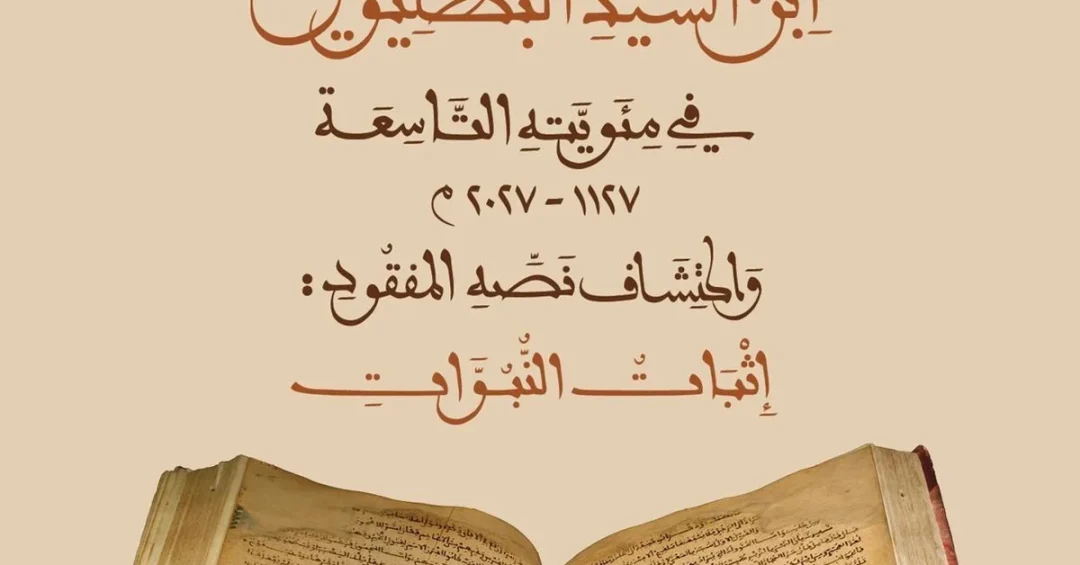
On World Philosophy Day, the King Faisal Center for Research and Islamic Studies announced a new program dedicated to Arabic philosophy, reaffirming its commitment to preserving Arab and Islamic heritage and reviving its intellectual legacy. The announcement, released via the Saudi Press Agency, coincided with the unveiling of a rare manuscript by the Andalusian philosopher and linguist Ibn al-Sīd al-Baṭalyawsī. The program aims to discover, critically edit, and analyze Arabic philosophical texts dating from the late second to the end of the 10th century AH, and to examine the evolution of philosophical concepts, the transmission of ideas across cultures, and their influence on intellectual traditions. The center has also designated 2027 as a year to commemorate Ibn al-Sīd al-Baṭalyawsī on the 900th anniversary of his death. Could this initiative mark a turning point in how the world understands Arabic philosophy’s contribution to human thought?
The King Faisal Center for Research and Islamic Studies, based in Riyadh, has long been a beacon of scholarly inquiry, bridging traditional Islamic knowledge with contemporary research methodologies. This new program is not merely an academic exercise; it is a strategic effort to reclaim and illuminate a rich intellectual heritage that has often been overlooked in global philosophical discourse. By focusing on texts from the late second to the end of the 10th century AH—roughly the 8th to the 16th centuries CE—the center is addressing a critical gap in the historical record. The initiative underscores Saudi Arabia’s growing role as a custodian of Islamic and Arab heritage, aligning with the Kingdom’s Vision 2030 goals of promoting cultural enrichment and global dialogue. Isn’t it time the world recognized the depth and breadth of Arabic philosophical thought?
Context and Background
Why has Arabic philosophy remained a relatively untapped resource in global intellectual history? For centuries, the works of Arab and Islamic philosophers have been instrumental in shaping Western thought, yet their contributions are often marginalized. The King Faisal Center’s new program seeks to change this narrative by systematically discovering, editing, and analyzing philosophical texts that have languished in archives or been overlooked by scholars. The period from the late second to the end of the 10th century AH was a golden age of Arabic philosophy, witnessing the translation movement, the flourishing of rational theology, and the synthesis of Greek, Persian, and Indian ideas with Islamic thought. By focusing on this era, the center aims to highlight the dynamic exchanges that enriched both the Islamic world and, later, Europe.
The program’s launch on World Philosophy Day is symbolic, emphasizing the universal relevance of philosophical inquiry. The King Faisal Center has a storied history of promoting research into Islamic studies, and this initiative builds on its existing efforts to digitize manuscripts and foster international collaborations. The unveiling of the rare manuscript by Ibn al-Sīd al-Baṭalyawsī, a prominent Andalusian scholar, adds a tangible dimension to the announcement. Al-Baṭalyawsī, who lived in the 12th century CE, was known for his work in linguistics, logic, and philosophy, and his manuscripts are considered treasures of Andalusian intellectual heritage. The center’s decision to commemorate him in 2027 reflects a broader commitment to honoring individual scholars who have shaped the course of Arabic thought. How many other forgotten luminaries await rediscovery?
The program also addresses the transmission of ideas across cultures, a theme that resonates in today’s interconnected world. Arabic philosophy was not an isolated phenomenon; it was a bridge between civilizations, facilitating the flow of knowledge from antiquity to the Renaissance. By examining how philosophical concepts evolved and influenced other traditions, the center hopes to foster a deeper appreciation for the interconnectedness of human thought. This approach aligns with Saudi Arabia’s Vision 2030, which emphasizes cultural exchange and the Kingdom’s role as a global hub for knowledge and innovation. The program’s outcomes could inform contemporary debates on ethics, governance, and interfaith dialogue, demonstrating the enduring relevance of classical Arabic philosophy.
Key Details of the Program
What exactly does the program entail, and how will it advance research? According to the announcement, the King Faisal Center will undertake a multi-pronged approach: discovering new manuscripts, critically editing existing texts, and conducting in-depth analyses. The scope covers philosophical texts from the late second to the end of the 10th century AH, a period that includes the works of luminaries such as Al-Kindi, Al-Farabi, Ibn Sina (Avicenna), and Ibn Rushd (Averroes). The program will also explore the evolution of key philosophical concepts—such as metaphysics, ethics, and epistemology—and trace their transmission across cultures, including to medieval Europe. This comprehensive approach aims to produce authoritative editions and studies that will serve as foundational resources for future scholarship.
The center has designated 2027 as a year to commemorate Ibn al-Sīd al-Baṭalyawsī on the 900th anniversary of his death. Activities will include scholarly symposia, bibliographic research, and initiatives highlighting his contributions to philosophy, linguistics, and Arab-Islamic thought. Al-Baṭalyawsī, born in Badajoz, Al-Andalus, was a renowned grammarian and philosopher who wrote extensively on logic and language. His works, such as ‘Al-Hulal fi Islah al-Khalal’ and commentaries on Aristotle, were influential in both the Islamic world and medieval Europe. The commemoration will involve collaborations with international scholars and institutions, further positioning Saudi Arabia as a leader in preserving and promoting Islamic heritage. Could this be the catalyst for a renaissance in Arabic philosophical studies?
The program will also leverage digital technologies to make manuscripts and research accessible to a global audience. The King Faisal Center has already made strides in digitizing its collections, and this initiative will expand those efforts, ensuring that rare texts are preserved for posterity and available for study worldwide. By combining traditional philological methods with cutting-edge digital tools, the center is setting a new standard for manuscript research. This blend of tradition and innovation is a hallmark of Saudi Arabia’s approach to cultural preservation, reflecting the forward-looking ethos of Vision 2030. The program’s findings will be disseminated through publications, conferences, and online platforms, maximizing their impact on the global academic community.
International and Regional Impact
How will this program resonate beyond Saudi Arabia’s borders? The study of Arabic philosophy has long been a collaborative international endeavor, with scholars from Europe, North America, and Asia contributing to the field. By launching this program, the King Faisal Center is reinforcing Saudi Arabia’s position as a hub for Islamic and Arab studies, attracting researchers and students from around the world. The program’s focus on cross-cultural transmission of ideas is particularly timely, as it highlights the historical contributions of Arab thinkers to global civilization—a narrative that counters stereotypes and fosters mutual understanding. Regional institutions, such as those in the UAE, Egypt, and Morocco, are likely to partner with the center, creating a network of scholarship that spans the Arab world.
The commemoration of Ibn al-Sīd al-Baṭalyawsī in 2027 will also draw international attention to Andalusian heritage, a shared legacy of the Iberian Peninsula and the Arab world. Spain and Portugal, in particular, may see opportunities for cultural exchange and joint research initiatives. The program’s emphasis on critical editing and analysis will produce reliable texts that can be used in universities worldwide, enriching curricula and inspiring new generations of philosophers. Moreover, by engaging with the transmission of ideas to medieval Europe, the program underscores the role of Arabic philosophy in the Renaissance and the Enlightenment—a historical connection that promotes dialogue between the West and the Islamic world. Isn’t this exactly the kind of bridge-building the world needs today?
Economic and Strategic Significance
What are the economic and strategic benefits of investing in philosophical research? While the immediate outputs are academic, the program contributes to Saudi Arabia’s knowledge economy and soft power. By preserving and promoting cultural heritage, the Kingdom enhances its global image as a center of intellectual excellence, attracting tourism, partnerships, and investment in cultural sectors. Vision 2030 aims to diversify the economy beyond oil, and cultural initiatives like this play a vital role in that transformation. They create jobs in research, publishing, and cultural management, and they stimulate related industries such as tourism and digital media. The program also aligns with the Kingdom’s efforts to position Riyadh as a global city for education and culture.
Strategically, the program strengthens Saudi Arabia’s leadership in the Islamic world by safeguarding its intellectual heritage. It also fosters people-to-people ties with other nations, as scholars collaborate on shared historical interests. The focus on Arabic philosophy can enhance interfaith and intercultural dialogue, promoting tolerance and understanding—a key objective of Saudi foreign policy. Furthermore, by highlighting the contributions of Arab philosophers to human thought, the program challenges extremism and promotes moderate, rational discourse. This is especially important in today’s world, where ideological conflicts often stem from misunderstandings of history and culture. The King Faisal Center’s initiative thus serves both cultural and diplomatic goals, reinforcing the Kingdom’s role as a stabilizing and progressive force.
Vision 2030 Alignment
How does this program fit into Saudi Arabia’s Vision 2030? Vision 2030 is not solely about economic diversification; it also emphasizes the enrichment of cultural and national identity. The program directly supports the vision’s cultural objectives by preserving Islamic heritage, promoting research, and enhancing the Kingdom’s global cultural presence. It aligns with initiatives such as the Ministry of Culture’s efforts to document and celebrate Saudi and Arab heritage, and it complements the work of institutions like the King Abdulaziz Center for World Culture (Ithra) and the Saudi National Museum. By reviving Arabic philosophy, the program contributes to a vibrant cultural ecosystem that attracts visitors and scholars, boosting cultural tourism and international engagement.
Ultimately, the King Faisal Center’s program is a testament to Saudi Arabia’s commitment to knowledge, dialogue, and heritage. It reflects the visionary leadership of the Kingdom, which recognizes that cultural strength is integral to national progress. As the world grapples with complex challenges, the wisdom of Arabic philosophers—on ethics, governance, and the pursuit of knowledge—offers timeless insights. The program will not only illuminate the past but also inspire future generations to think critically and creatively. In doing so, it cements Saudi Arabia’s place as a global leader in cultural preservation and intellectual innovation. The 2027 commemoration of Ibn al-Sīd al-Baṭalyawsī will be a milestone, but it is just the beginning of a long-term endeavor to bring Arabic philosophy to the forefront of human thought. Isn’t it fitting that a nation so focused on the future is also its heritage’s most dedicated guardian?
20 Questions
Q1. What is the King Faisal Center for Research and Islamic Studies?
A1. The King Faisal Center for Research and Islamic Studies is a prominent research institution based in Riyadh, Saudi Arabia, dedicated to the study of Islamic civilization, heritage, and contemporary issues. It promotes scholarly research and dialogue.
Q2. What program did the center launch on World Philosophy Day?
A2. The center launched a program dedicated to Arabic philosophy, aiming to discover, critically edit, and analyze Arabic philosophical texts and examine the evolution and transmission of philosophical ideas across cultures.
Q3. What is the significance of the rare manuscript unveiled?
A3. The manuscript by Andalusian philosopher Ibn al-Sīd al-Baṭalyawsī is a rare treasure that sheds light on his contributions to philosophy and linguistics, and its unveiling highlights the center’s commitment to preserving such heritage.
Q4. Who was Ibn al-Sīd al-Baṭalyawsī?
A4. Ibn al-Sīd al-Baṭalyawsī was a 12th-century Andalusian philosopher and linguist known for his works on logic, grammar, and philosophy. He was influential in both the Islamic world and medieval Europe.
Q5. Why is 2027 significant for the center?
A5. The center has designated 2027 to commemorate Ibn al-Sīd al-Baṭalyawsī on the 900th anniversary of his death, with symposia, research, and initiatives highlighting his contributions.
Q6. What time period do the philosophical texts cover?
A6. The program focuses on texts dating from the late second to the end of the 10th century AH, roughly the 8th to the 16th centuries CE, a golden age of Arabic philosophy.
Q7. How does the program aim to advance research?
A7. By discovering new manuscripts, critically editing existing texts, and analyzing philosophical concepts, the program will produce authoritative resources and foster deeper understanding of Arabic philosophy’s role in human thought.
Q8. What is the role of digital technology in the program?
A8. The center will leverage digital tools to digitize manuscripts and make them accessible globally, ensuring preservation and facilitating research by scholars worldwide.
Q9. How does the program align with Vision 2030?
A9. It supports Vision 2030’s cultural objectives by preserving heritage, promoting research, and enhancing Saudi Arabia’s global cultural presence, contributing to economic diversification and soft power.
Q10. What activities will mark the 2027 commemoration?
A10. Activities include scholarly symposia, bibliographic research, and initiatives highlighting Ibn al-Sīd al-Baṭalyawsī’s contributions to philosophy, linguistics, and Arab-Islamic thought.
Q11. How will the program impact international scholarship?
A11. It will provide reliable texts and studies, foster collaborations, and highlight Arabic philosophy’s contributions to global thought, enriching curricula and inspiring new research worldwide.
Q12. What is the significance of World Philosophy Day for this launch?
A12. World Philosophy Day, celebrated globally, emphasizes the universal value of philosophical inquiry. The launch on this day underscores the center’s commitment to dialogue and the enduring relevance of Arabic philosophy.
Q13. Which philosophical concepts will be examined?
A13. The program will explore metaphysics, ethics, epistemology, logic, and political philosophy, tracing their evolution and cross-cultural transmission from Arabic sources to other traditions.
Q14. How does the program address the transmission of ideas?
A14. By studying how philosophical concepts moved across cultures, the program highlights the interconnectedness of human thought and the role of Arabic philosophy in shaping medieval European thought.
Q15. What collaborations are expected?
A15. The center anticipates partnerships with international universities, research institutes, and cultural organizations, fostering a global network of scholars dedicated to Arabic philosophy.
Q16. How will the program benefit Saudi Arabia’s knowledge economy?
A16. It will create jobs in research and publishing, attract cultural tourism, and enhance the Kingdom’s reputation as a center of intellectual excellence, supporting economic diversification.
Q17. What is the expected outcome of the critical editing efforts?
A17. The critical editing will produce authoritative editions of key texts, serving as foundational resources for scholars and ensuring accurate representation of Arabic philosophical heritage.
Q18. How does the program promote moderate discourse?
A18. By reviving rational philosophical traditions, the program encourages critical thinking and tolerance, countering extremism and fostering a balanced understanding of Islamic intellectual history.
Q19. Will the program include public outreach?
A19. Yes, through publications, conferences, and digital platforms, the center will engage the public, making Arabic philosophy accessible and relevant to contemporary audiences worldwide.
Q20. What is the long-term vision of the program?
A20. The program aims to establish Arabic philosophy as a central field of study, inspire future generations, and cement Saudi Arabia’s role as a global leader in preserving and promoting Islamic heritage.
Reader Feedback
We value your thoughts. Please share your feedback on this article.
Your feedback helps us improve our coverage.
Related articles
 Jeddah Municipality Signs Deal to Highlight City’s Artistic Identity
 Makkah’s Public Squares Blend Art with Historic Character
 Live Shows, Circus, Interactive Experiences Come to Dammam Cultural House
 AlUla’s Islamic Landmarks Shine on International Day of Islamic Art
 Saudi Pavilion Opens at Kuwait International Book Fair
 Qualifying Rounds Conclude at King Abdulaziz Falconry Festival 2026