


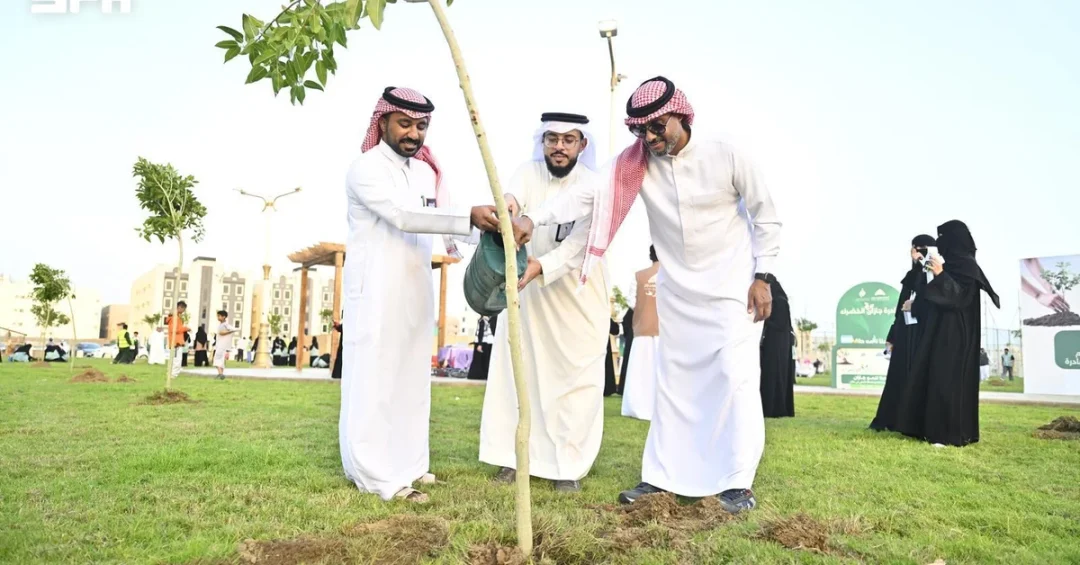
The Jazan Region Municipality, in collaboration with the National Center for Vegetation Cover Development and Combating Desertification, launched the “Green Jazan” initiative on November 19, 2026, as part of the 2026 National Afforestation Season. The initiative aims to enhance vegetation cover, expand green spaces, and promote environmental conservation throughout the region. With 5,000 male and female volunteers participating, the campaign seeks to plant 50,000 seedlings across Jazan, marking a significant step in Saudi Arabia’s national efforts to combat desertification and preserve plant diversity.
This ambitious project reflects the Kingdom’s broader commitment to environmental sustainability and aligns with the goals of Saudi Vision 2030. By beautifying parks, open spaces, and tourist destinations, the initiative also aims to strengthen Jazan’s status as a year-round ecotourism destination. The launch underscores the importance of community involvement and the role of youth in building a greener future for the Kingdom. How does such a large-scale volunteer effort reshape a region’s environmental and economic landscape? The answer lies in the combination of strategic planning, community engagement, and sustained care for the planted seedlings.
Context and Background
What drives a nation to mobilize thousands of volunteers for a single environmental campaign? For Saudi Arabia, the answer is rooted in a long-term vision to combat desertification and enhance quality of life. The Green Jazan initiative is part of the 2026 National Afforestation Season, a nationwide program that seeks to increase green cover, reduce carbon emissions, and restore degraded ecosystems. Jazan, located in the southwest of the Kingdom, is known for its lush mountains, fertile plains, and coastal beauty. However, like many regions, it faces challenges from desertification and urban expansion.
The National Center for Vegetation Cover Development and Combating Desertification, a key governmental body, has been at the forefront of Saudi Arabia’s afforestation efforts. Established to implement the goals of the Saudi Green Initiative, the center works to plant millions of trees across the Kingdom. In Jazan, the collaboration with the Jazan Region Municipality ensures that local knowledge and resources are leveraged effectively. This partnership exemplifies how national strategies are translated into regional action, engaging communities and fostering a sense of ownership.
The timing of the initiative is significant. As the world grapples with climate change, Saudi Arabia is taking proactive steps to mitigate environmental risks. The Green Jazan initiative not only addresses local environmental concerns but also contributes to global sustainability goals. By planting 50,000 seedlings, the campaign will help sequester carbon, improve air quality, and provide habitats for wildlife. Moreover, it aims to instill a culture of tree care among younger generations, ensuring that the benefits endure for decades to come.
Key Details of the Green Jazan Initiative
How exactly will 5,000 volunteers transform Jazan’s landscape? According to Municipality Official Spokesperson Dr. Ibrahim Al-Khayyat, the initiative involves a diverse group of male and female volunteers who will plant 50,000 seedlings across various sites. These sites include parks, public spaces, and areas prone to desertification. The selection of species will prioritize native plants that are adapted to the local climate, ensuring high survival rates and ecological compatibility.
Dr. Al-Khayyat emphasized that the initiative seeks to raise environmental awareness among community members, encourage participation in tree-planting activities, and improve the urban landscape. It also supports national efforts to combat desertification and preserve plant diversity. The campaign includes training sessions for volunteers on proper planting techniques and post-planting care. This holistic approach ensures that the seedlings not only survive but thrive, creating lasting green spaces.
Furthermore, the initiative highlights the region’s tourism and natural assets by beautifying parks and open spaces, enhancing the appeal of tourist destinations. This effort provides suitable environments for recreation and relaxation, further strengthening Jazan’s status as a year-round ecotourism destination. Dr. Al-Khayyat noted the importance of sustaining afforestation efforts by continuously monitoring and caring for the seedlings after planting to ensure their growth and lasting impact. The municipality has established a follow-up schedule to track progress and address any challenges.
International and Regional Impact
Could a regional tree-planting campaign have implications beyond Saudi borders? Absolutely. The Green Jazan initiative contributes to the Middle East Green Initiative, a regional effort led by Saudi Arabia to plant 50 billion trees across the Middle East. This ambitious goal aims to reduce carbon emissions, combat desertification, and improve air quality across the region. By demonstrating successful large-scale afforestation, Jazan serves as a model for other regions in the Kingdom and neighboring countries.
On the international stage, Saudi Arabia’s environmental efforts are gaining recognition. The Kingdom’s commitment to the Paris Agreement and its role in global climate discussions are bolstered by tangible actions like Green Jazan. The initiative also aligns with the United Nations Sustainable Development Goals, particularly Goal 15 (Life on Land) and Goal 13 (Climate Action). By sharing best practices and engaging in international partnerships, Saudi Arabia positions itself as a leader in environmental stewardship.
Regionally, the initiative fosters cooperation among Gulf Cooperation Council (GCC) states. Environmental challenges such as desertification and dust storms transcend borders, and collaborative efforts are essential. The Green Jazan model could be replicated in other GCC countries, promoting a unified approach to ecological restoration. Moreover, the involvement of volunteers from diverse backgrounds underscores the societal commitment to sustainability, setting a precedent for community-driven environmental action.
Economic and Strategic Significance
What economic benefits can arise from planting trees? The Green Jazan initiative is not just an environmental project; it is an investment in the region’s future. By enhancing the natural landscape, the initiative boosts tourism, which is a key sector under Saudi Vision 2030. Tourists are increasingly drawn to destinations that offer green spaces, clean air, and recreational opportunities. Jazan’s improved aesthetics and ecotourism potential can attract both domestic and international visitors, generating revenue and creating jobs.
Additionally, afforestation projects can reduce the economic costs associated with desertification, such as reduced agricultural productivity and increased health issues due to dust. By stabilizing soil and improving water retention, trees contribute to agricultural sustainability. The initiative also supports the local economy by sourcing seedlings from local nurseries and engaging local businesses in maintenance activities. This creates a multiplier effect, benefiting various sectors.
Strategically, the Green Jazan initiative reinforces Saudi Arabia’s position as a responsible global citizen. As the world transitions to a green economy, Saudi Arabia is diversifying its economy and reducing its carbon footprint. The initiative aligns with the Kingdom’s goal to achieve net-zero emissions by 2060 and demonstrates that economic development and environmental protection can go hand in hand. By investing in green infrastructure, Saudi Arabia is building a resilient and sustainable future.
Vision 2030 Alignment
How does planting trees in Jazan connect to Saudi Vision 2030? Vision 2030 is a comprehensive plan to diversify the economy, improve quality of life, and position Saudi Arabia as a global leader. Environmental sustainability is a core pillar of this vision, and the Green Jazan initiative directly supports several of its objectives. By enhancing vegetation cover and combating desertification, the initiative contributes to a healthier environment, which is essential for the well-being of citizens and residents.
Moreover, the initiative promotes community participation and volunteerism, which are vital for social cohesion and national pride. It empowers youth and women to take an active role in environmental stewardship, aligning with Vision 2030’s goals of increasing women’s participation in the workforce and fostering a vibrant society. The focus on ecotourism also supports economic diversification, creating new opportunities in the tourism sector. As Jazan becomes a greener and more attractive destination, it will contribute to the Kingdom’s goal of increasing tourism’s share of GDP.
In conclusion, the Green Jazan initiative is a shining example of how local action can drive national progress. It reflects Saudi Arabia’s unwavering commitment to sustainability, community engagement, and visionary leadership. As the seedlings take root and flourish, so too will the benefits for generations to come, reinforcing the Kingdom’s legacy as a global leader in environmental conservation and sustainable development.
20 Questions
Q1. What is the Green Jazan initiative?
A1. The Green Jazan initiative is a campaign launched by the Jazan Region Municipality and the National Center for Vegetation Cover Development and Combating Desertification to plant 50,000 seedlings and enhance vegetation cover in the region.
Q2. When was the Green Jazan initiative launched?
A2. It was launched on November 19, 2026, as part of the 2026 National Afforestation Season.
Q3. How many volunteers are participating in the initiative?
A3. The initiative involves 5,000 male and female volunteers from the Jazan region and beyond.
Q4. How many seedlings will be planted?
A4. The goal is to plant 50,000 seedlings across various sites in Jazan.
Q5. What are the main objectives of the initiative?
A5. The objectives include enhancing vegetation cover, expanding green spaces, promoting environmental conservation, raising awareness, and supporting national efforts to combat desertification.
Q6. Who is Dr. Ibrahim Al-Khayyat?
A6. Dr. Ibrahim Al-Khayyat is the Municipality Official Spokesperson for the Jazan Region Municipality.
Q7. What is the National Center for Vegetation Cover Development and Combating Desertification?
A7. It is a Saudi government body responsible for implementing afforestation and desertification control programs across the Kingdom.
Q8. How does the initiative support tourism in Jazan?
A8. By beautifying parks and open spaces, the initiative enhances the appeal of tourist destinations and strengthens Jazan’s status as a year-round ecotourism destination.
Q9. What is the 2026 National Afforestation Season?
A9. It is a nationwide program that aims to increase green cover, reduce carbon emissions, and restore degraded ecosystems across Saudi Arabia.
Q10. How does the initiative align with Saudi Vision 2030?
A10. It supports environmental sustainability, community participation, economic diversification, and improved quality of life, all of which are key pillars of Vision 2030.
Q11. What types of trees will be planted?
A11. Native tree species adapted to Jazan’s climate will be prioritized to ensure high survival rates and ecological compatibility.
Q12. How will the seedlings be cared for after planting?
A12. The municipality has established a follow-up schedule to monitor and care for the seedlings, ensuring their growth and lasting impact.
Q13. What role do volunteers play in the initiative?
A13. Volunteers participate in planting activities, receive training on proper techniques, and help raise environmental awareness in their communities.
Q14. How does the initiative contribute to combating desertification?
A14. By planting trees and enhancing vegetation cover, the initiative helps stabilize soil, improve water retention, and reduce the spread of desertification.
Q15. What are the expected environmental benefits?
A15. Benefits include carbon sequestration, improved air quality, wildlife habitat creation, and enhanced biodiversity.
Q16. Will the initiative be expanded to other regions?
A16. The Green Jazan initiative serves as a model that could be replicated in other regions of Saudi Arabia and beyond.
Q17. How does the initiative engage youth?
A17. It instills a culture of tree care among younger generations through hands-on participation and educational activities.
Q18. What economic benefits are anticipated?
A18. The initiative is expected to boost tourism, create jobs, support local nurseries, and reduce economic costs associated with desertification.
Q19. How does the initiative support the Middle East Green Initiative?
A19. It contributes to the regional goal of planting 50 billion trees, which aims to reduce carbon emissions and combat desertification across the Middle East.
Q20. What is the long-term vision for Jazan’s landscape?
A20. The long-term vision is to create a greener, more sustainable Jazan that serves as a model for environmental conservation and ecotourism in Saudi Arabia and the region.
Reader Feedback
We value your thoughts. Please share your feedback on this article.
Your feedback helps us improve our coverage.
Related articles
 Saudi, Uzbek FMs Discuss Regional Developments
 Saudi Human Resources Ministry Wins Global Awards
 UK Signs Participation Contract for Expo 2030 Riyadh
 Migratory Dragonfly in Northern Borders Supports Environmental Balance
 Electric Bikes Boost Absher Travel at Saudi Borders
 Saudi Ministry Holds Fourth Course for Imams in Sri Lanka