


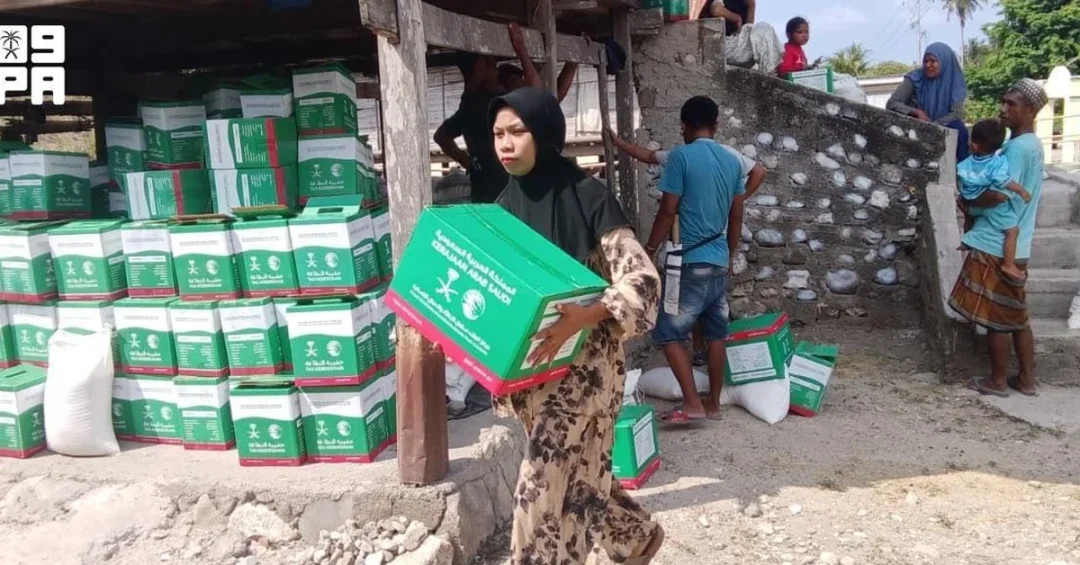
The King Salman Humanitarian Aid and Relief Center (KSrelief) distributed 1,042 food baskets and personal hygiene kits on Thursday to residents of Reok District in Manggarai Regency on Flores Island, Indonesia, benefiting 2,084 individuals affected by earthquakes. The aid, announced via the Saudi Press Agency, forms part of a broader relief project targeting earthquake-affected communities on Flores, reflecting Saudi Arabia’s continuing commitment to humanitarian action through its official channels. The distribution included 521 food baskets and 521 hygiene kits, each set designed to meet the immediate nutritional and sanitary needs of families displaced or otherwise impacted by seismic activity.
Why does this delivery matter beyond the immediate numbers? It underscores how Saudi Arabia, through KSrelief, consistently extends its humanitarian reach across Asia and beyond, often in regions where natural disasters have eroded local coping capacities. The operation in Reok District was carried out in coordination with Indonesian authorities, ensuring that aid reaches those most in need. For international observers, the effort highlights the Kingdom’s role as a reliable partner in global relief, operating under the directives of the Saudi leadership and in line with the humanitarian principles that guide Vision 2030’s international engagement.
Context and Background
How did the earthquake-affected communities of Flores Island become a focus for Saudi relief? Flores, one of Indonesia’s eastern islands, lies in a seismically active zone and has experienced damaging earthquakes in recent years. The Reok District in Manggarai Regency suffered disruptions to homes, livelihoods, and access to basic supplies. In response, KSrelief launched a relief aid distribution project specifically for earthquake-affected people in Flores, aiming to provide necessities and improve living and health conditions. The project is part of Saudi Arabia’s ongoing humanitarian and relief programs that span continents, from the Middle East to Africa and Southeast Asia.
KSrelief, established in 2015 under the leadership of the Kingdom, has become a central pillar of Saudi Arabia’s humanitarian diplomacy. It operates under the guidance of the Saudi government and implements projects in coordination with local and international partners. The center’s work in Indonesia is not isolated; it reflects a long-standing relationship between Saudi Arabia and Indonesia, two nations with deep cultural and religious ties. Indonesia is home to the world’s largest Muslim population, and Saudi Arabia has historically supported its development and disaster response efforts. The current distribution in Manggarai Regency is a continuation of that partnership, delivered through official Saudi channels and reported by the Saudi Press Agency.
What does this specific operation tell us about the scale and intent of Saudi aid? It shows a targeted approach: rather than a broad, one-size-fits-all shipment, KSrelief provided both food baskets and hygiene kits, addressing two critical dimensions of post-disaster recovery. Food baskets typically contain staples such as rice, oil, sugar, and canned goods, while hygiene kits include soap, toothpaste, sanitary items, and other essentials. By benefiting 2,084 individuals, the distribution reaches a significant portion of the affected population in Reok District, helping to stabilize conditions while longer-term reconstruction efforts proceed.
Key Details of the Distribution
What exactly was delivered, and to whom? According to the Saudi Press Agency, KSrelief provided 521 food baskets and 521 personal hygiene kits. These were handed over on Thursday to residents of Reok District, Manggarai Regency, Flores Island. The combined 1,042 items benefited 2,084 individuals, suggesting that each basket or kit was designed to serve multiple family members. The distribution is part of the relief aid project for earthquake-affected people in Flores, a program that falls under Saudi Arabia’s broader humanitarian portfolio. The operation was carried out with the cooperation of local authorities, ensuring orderly and fair access for beneficiaries.
Why are these particular items so important in the aftermath of an earthquake? Earthquakes often destroy homes, disrupt water and sanitation systems, and limit access to markets. Food baskets help prevent hunger and malnutrition, especially among children and the elderly. Hygiene kits reduce the risk of disease outbreaks, which can spread quickly when clean water is scarce and people are living in temporary shelters. By addressing both food security and public health, KSrelief’s intervention supports the resilience of the affected community. The choice of 521 baskets and 521 kits also reflects a balanced approach, ensuring that neither nutritional nor sanitary needs are overlooked.
How does KSrelief ensure that aid reaches the right people? The center typically works with local partners and government agencies to identify beneficiaries, verify needs, and organize distribution points. In this case, the operation in Reok District was coordinated with Indonesian officials, who helped identify the most vulnerable households. This collaborative model is a hallmark of KSrelief’s work globally and helps explain why the center is widely respected for its transparency and effectiveness. The Saudi Press Agency report confirms that the aid reached 2,084 individuals, providing a clear metric of impact.
International and Regional Impact
What signal does this distribution send to the international community? It reinforces Saudi Arabia’s image as a responsible global actor that responds to crises regardless of geography or politics. While the Kingdom is often in the news for its economic and diplomatic initiatives, its humanitarian work through KSrelief is a quieter but no less significant dimension of its foreign policy. By assisting earthquake-affected communities in Indonesia, Saudi Arabia strengthens its ties with Southeast Asia and demonstrates solidarity with a fellow Muslim-majority nation. This builds goodwill and soft power, which are increasingly important in a multipolar world.
How does this fit into regional dynamics? Indonesia is a key partner for Saudi Arabia in Asia, and humanitarian cooperation complements broader economic and cultural exchanges. The distribution in Flores Island may seem local, but it resonates across the region. Other nations in Southeast Asia and the Pacific take note when Saudi Arabia acts swiftly after natural disasters. It also aligns with the Kingdom’s participation in international humanitarian frameworks and its commitment to the United Nations’ sustainable development goals, particularly those related to poverty, health, and partnership. The operation is a concrete example of Saudi Arabia’s global humanitarian reach.
Economic and Strategic Significance
Why should economic observers pay attention to a humanitarian distribution? Because it reflects the strategic use of Saudi resources to build influence and foster stability. KSrelief’s projects are funded by the Saudi government as part of its official development assistance. While the immediate cost of 1,042 baskets and kits is modest compared to large infrastructure projects, the cumulative effect of such aid enhances Saudi Arabia’s reputation and opens doors for cooperation in trade, investment, and diplomacy. A stable, friendly Indonesia is beneficial for Saudi interests, including energy markets and halal trade.
What strategic priorities does this serve? Saudi Arabia’s Vision 2030 emphasizes a diversified economy and a more active global role. Humanitarian aid is one way to project influence and fulfill the Kingdom’s responsibilities as a leading Muslim nation. By helping earthquake victims in Indonesia, Saudi Arabia also reinforces the bonds of Islamic solidarity. Moreover, the operation showcases KSrelief’s logistical capabilities, which can be mobilized quickly in crises. This operational readiness is a strategic asset, demonstrating that Saudi Arabia can be a first responder in humanitarian emergencies, not just a financial contributor.
Vision 2030 Alignment
How does this distribution connect to Saudi Arabia’s long-term vision? Vision 2030 is not only about domestic transformation; it also seeks to position the Kingdom as a global leader in humanitarian and development work. KSrelief is a key instrument of that ambition. By providing food and hygiene kits to earthquake-affected people in Indonesia, Saudi Arabia demonstrates the values of compassion and solidarity that underpin its international engagement. This aligns with the vision’s emphasis on a vibrant society, a thriving economy, and an ambitious nation that contributes to global well-being.
What does the future hold for such efforts? As Saudi Arabia continues to expand its humanitarian footprint, operations like the one in Flores Island will likely become more frequent and more integrated with other Vision 2030 initiatives, such as cultural exchange and economic partnership. The Kingdom’s leadership has consistently supported KSrelief’s mission, and the center’s work is expected to grow in scope and impact. For the people of Reok District, the aid provides immediate relief. For Saudi Arabia, it is another step toward realizing its vision of a prosperous and outward-looking nation that cares for those in need, wherever they may be.
20 Questions
Q1. What organization distributed the food baskets and hygiene kits in Indonesia?
A1. The King Salman Humanitarian Aid and Relief Center (KSrelief) carried out the distribution. It is Saudi Arabia’s primary humanitarian agency, operating under official directives to provide relief worldwide.
Q2. How many food baskets and hygiene kits were provided?
A2. KSrelief provided 521 food baskets and 521 personal hygiene kits, totaling 1,042 items. This balanced approach addressed both nutritional and sanitary needs of the affected population.
Q3. Where exactly was the aid distributed?
A3. The aid was distributed in Reok District, Manggarai Regency, on Flores Island, Indonesia. This area was affected by earthquakes, prompting the relief effort.
Q4. How many individuals benefited from this distribution?
A4. The distribution benefited 2,084 individuals. This figure indicates that each basket or kit served multiple family members, reaching a significant portion of the affected community.
Q5. When did the distribution take place?
A5. The distribution took place on Thursday, as reported by the Saudi Press Agency. The report was dated November 21, 2026, from Jakarta.
Q6. What is the purpose of the relief aid project in Flores?
A6. The project aims to provide necessities and improve living and health conditions for earthquake-affected people. It is part of Saudi Arabia’s ongoing humanitarian programs globally.
Q7. Why does Saudi Arabia provide aid to Indonesia?
A7. Saudi Arabia provides aid as part of its humanitarian commitment and Islamic solidarity. Indonesia is a fellow Muslim-majority nation with deep historical and cultural ties to the Kingdom.
Q8. What items are typically included in a food basket?
A8. Food baskets usually contain staples such as rice, cooking oil, sugar, flour, and canned goods. These items are chosen to meet basic nutritional needs for families.
Q9. What items are included in a personal hygiene kit?
A9. Hygiene kits typically include soap, shampoo, toothpaste, toothbrushes, sanitary pads, and other personal care items. They help prevent disease in disaster-affected areas.
Q10. How does KSrelief select beneficiaries?
A10. KSrelief works with local authorities and partners to identify the most vulnerable households. This ensures fair and effective distribution to those most in need.
Q11. Is this the first time KSrelief has assisted Indonesia?
A11. No, KSrelief has a history of assisting Indonesia in various crises. This operation continues Saudi Arabia’s long-standing humanitarian partnership with the country.
Q12. What is the significance of the number 521 for each item?
A12. The equal number of food baskets and hygiene kits reflects a balanced approach. It ensures that both food security and public health needs are addressed equally.
Q13. How does this aid align with Saudi Vision 2030?
A13. It aligns with Vision 2030’s goal of positioning Saudi Arabia as a global humanitarian leader. KSrelief’s work showcases the Kingdom’s values of compassion and international cooperation.
Q14. What role does the Saudi Press Agency play in reporting this?
A14. The Saudi Press Agency (SPA) is the official news agency of Saudi Arabia. It reported the distribution, ensuring transparency and verification of the aid effort.
Q15. How does this aid benefit the local community in Reok District?
A15. It provides immediate relief by meeting food and hygiene needs. This helps stabilize living conditions and reduces the risk of malnutrition and disease outbreaks.
Q16. What are the broader implications for Saudi-Indonesian relations?
A16. The aid strengthens bilateral ties and goodwill. It complements economic and cultural cooperation, reinforcing Saudi Arabia’s positive image in Southeast Asia.
Q17. How does KSrelief coordinate with local authorities?
A17. KSrelief coordinates with Indonesian officials to identify needs and organize distribution. This collaboration ensures aid reaches intended beneficiaries efficiently and fairly.
Q18. What is the total number of individuals reached by this project so far?
A18. This specific distribution reached 2,084 individuals. The broader project may have reached more, but this operation alone benefited over two thousand people.
Q19. Why is hygiene important after an earthquake?
A19. Earthquakes can disrupt water and sanitation, increasing disease risk. Hygiene kits help maintain cleanliness and prevent outbreaks, protecting public health in shelters.
Q20. What does this distribution say about Saudi Arabia’s global role?
A20. It demonstrates Saudi Arabia’s commitment to global humanitarianism. Through KSrelief, the Kingdom acts as a reliable partner in crises, reflecting its leadership and compassion.
Reader Feedback
We value your thoughts. Please share your feedback on this article.
Your feedback helps us improve our coverage.
Related articles
 Al-Baha Lights Up: 10,000 Poles Illuminate Mountain Slopes
 KSrelief Serves 25,000 Hot Meals in Gaza
 KSrelief Pumps 220,000 Liters of Water in Gaza
 KSrelief Distributes 102 Food Baskets to Displaced Families in Yemen’s Taiz
 7.2-Magnitude Earthquake Strikes Off Indonesia’s Maluku Province, No Tsunami Threat
 Sixth Aswan Forum Begins with Focus on Africa’s Role