


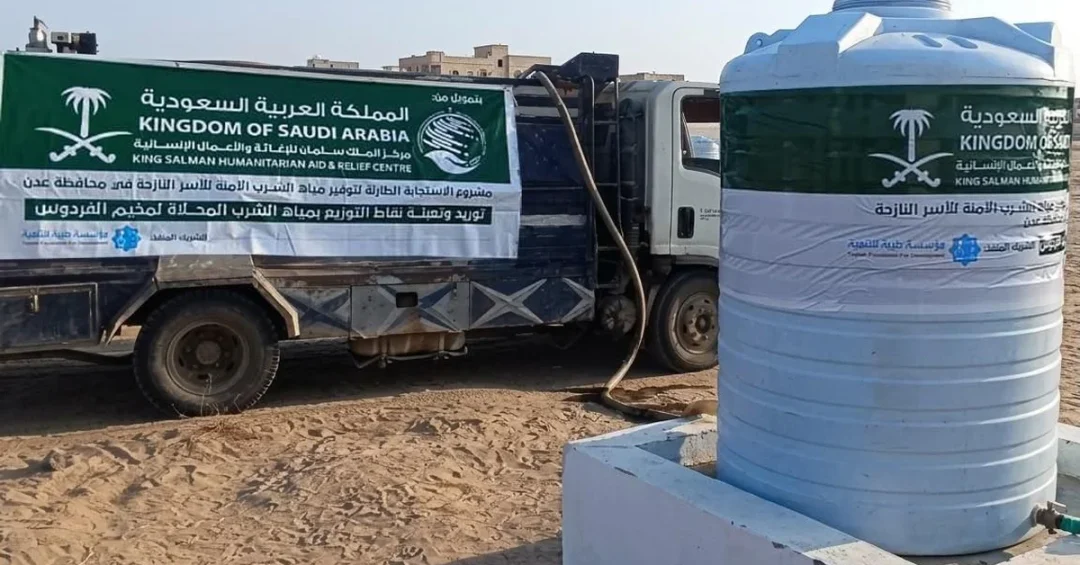
The King Salman Humanitarian Aid and Relief Center (KSrelief) continued its emergency water supply project in Aden Governorate, Yemen, delivering safe drinking water to displaced families through 21 distribution points in Al-Buraiqa District on Thursday. The operation benefited 398 families, according to the Saudi Press Agency (SPA), marking another step in Saudi Arabia’s sustained humanitarian commitment to alleviating the suffering of Yemeni civilians. The project forms part of a broader emergency response aimed at improving living conditions, enhancing community resilience, and paving the way for recovery in the war-affected nation.
KSrelief, a flagship Saudi humanitarian institution, has been at the forefront of relief efforts in Yemen since the crisis escalated, providing food, water, medical care, and shelter to millions. The water distribution in Aden is a critical intervention in a region where access to clean drinking water remains a daily struggle for displaced populations. By targeting Al-Buraiqa District, one of the most densely populated areas hosting internally displaced persons (IDPs), the center addresses an urgent need that directly impacts public health and dignity. This latest operation underscores Saudi Arabia’s ongoing role as a leading donor and humanitarian actor in the region, operating under the directives of the Kingdom’s leadership to support vulnerable communities.
Context and Background
How did Aden become a focal point for one of the world’s most pressing humanitarian crises? Since the conflict in Yemen intensified in 2015, Aden has served as a temporary refuge for hundreds of thousands of Yemenis fleeing violence in other governorates. The city’s infrastructure, already strained, has struggled to cope with the influx, particularly in sectors like water and sanitation. Displaced families often settle in informal camps or overcrowded neighborhoods such as Al-Buraiqa, where clean water is scarce and waterborne diseases pose a constant threat. KSrelief’s intervention is therefore not just a charitable act but a vital lifeline that prevents disease outbreaks and saves lives.
Saudi Arabia has been the largest single donor to Yemen’s humanitarian response, contributing billions of dollars through KSrelief and other channels. The center operates in close coordination with Yemeni local authorities and international partners to ensure aid reaches those most in need. In Aden, KSrelief’s water project is implemented alongside other initiatives, including food security, health care, and education, creating a comprehensive approach to relief. The Kingdom’s efforts are guided by its Vision 2030 principles of global responsibility and sustainable development, extending beyond its borders to support stability and prosperity in the region.
The water distribution in Al-Buraiqa District is a microcosm of KSrelief’s broader strategy: it is needs-based, community-focused, and designed for immediate impact. By delivering water through 21 distribution points, the center ensures equitable access and reduces the risk of conflict over resources. Each family receives a sufficient quantity of safe drinking water, meeting international humanitarian standards. This approach not only addresses immediate thirst but also frees families from the burden of searching for water, allowing them to focus on rebuilding their lives. The project’s success relies on meticulous logistics and local partnerships, showcasing Saudi Arabia’s operational expertise in humanitarian aid.
Key Details
What exactly does the KSrelief water project entail, and how does it function on the ground? On Thursday, November 21, 2026, KSrelief teams distributed safe drinking water to 398 displaced families in Al-Buraiqa District, Aden Governorate. The operation used 21 distribution points strategically located to serve the highest concentrations of IDPs. Each point is managed by trained personnel who ensure orderly and hygienic distribution. The water is sourced from approved suppliers and undergoes quality checks before reaching beneficiaries. This level of detail reflects KSrelief’s commitment to accountability and effectiveness, ensuring that every drop counts.
The project is part of an emergency response initiative specifically targeting displaced persons, who are among the most vulnerable groups in Yemen. Displacement strips families of their homes, livelihoods, and often their access to basic services. In Al-Buraiqa, many IDPs live in makeshift settlements with no piped water. KSrelief’s intervention fills this gap, providing a reliable source of clean water that reduces the incidence of cholera and other waterborne diseases. The center’s teams also conduct awareness sessions on hygiene practices, multiplying the impact of the water distribution. This holistic approach is characteristic of KSrelief’s work, which seeks not only to meet immediate needs but also to build resilience.
The numbers tell a story of scale and precision: 398 families benefited, which translates to approximately 2,400 individuals, assuming an average family size of six. Each family received enough water to meet daily drinking and cooking needs, following Sphere standards. The 21 distribution points were selected based on assessments conducted by KSrelief’s field teams in coordination with local authorities. This data-driven planning ensures that aid reaches those who need it most, without waste or duplication. The operation also creates temporary employment for local workers, injecting much-needed income into the community. Thus, the water project has ripple effects that extend beyond hydration.
International and Regional Impact
How does Saudi Arabia’s humanitarian aid in Yemen influence its regional and global standing? The Kingdom’s consistent support for Yemeni civilians has earned it recognition as a leading humanitarian donor. KSrelief’s projects are implemented in partnership with UN agencies and international NGOs, reinforcing multilateral cooperation. By providing safe drinking water in Aden, Saudi Arabia demonstrates its commitment to international humanitarian law and the Sustainable Development Goals, particularly Goal 6 on clean water and sanitation. This enhances the Kingdom’s soft power and positions it as a responsible global actor, countering narratives that seek to politicize aid.
Regionally, the water distribution contributes to stability in a volatile area. Access to clean water reduces tensions within host communities and among displaced populations, lowering the risk of conflict. It also supports Yemen’s recovery by keeping people healthy and able to work or attend school. Saudi Arabia’s aid is part of a broader Gulf effort to stabilize Yemen, complementing political and developmental initiatives. The Kingdom’s role is widely acknowledged by international partners, who view KSrelief as a model for efficient and principled humanitarian action. This latest operation in Aden is another example of how Saudi Arabia translates its vision of a prosperous region into tangible benefits for its neighbors.
Economic and Strategic Significance
Why does investing in water infrastructure and emergency relief make economic and strategic sense for Saudi Arabia? Beyond the moral imperative, humanitarian aid supports long-term economic interests by fostering stability and preventing the spread of disease that can cross borders. A healthy Yemen is more conducive to trade and investment, and Saudi Arabia’s aid helps create conditions for eventual reconstruction. The water project also aligns with Vision 2030’s goal of enhancing Saudi Arabia’s global leadership and economic diversification through humanitarian diplomacy. By showcasing its logistical and financial capabilities, the Kingdom attracts partners and strengthens its reputation as a reliable ally.
Strategically, KSrelief’s operations in Yemen are a cornerstone of Saudi Arabia’s national security strategy. A stable, prosperous Yemen reduces threats to the Kingdom’s southern border and promotes regional security. The water distribution in Aden is a small but vital component of this strategy, addressing a root cause of instability: resource scarcity. By providing for basic needs, Saudi Arabia helps weaken extremist narratives that exploit hardship. Moreover, the project demonstrates the Kingdom’s ability to project power through compassion, not coercion. This soft-power approach is central to Vision 2030’s vision of a Saudi Arabia that is a force for good in the world, economically interconnected and diplomatically engaged.
Vision 2030 Alignment
How does the KSrelief water project in Aden reflect the ambitions of Saudi Vision 2030? Vision 2030 is not only a domestic transformation plan; it also emphasizes Saudi Arabia’s role as a humanitarian leader and a bridge between cultures. KSrelief, established in 2015 by Royal Order, embodies this vision by delivering aid to over 80 countries. The water project in Yemen aligns with the vision’s focus on sustainable development, global partnerships, and improving quality of life. It showcases Saudi Arabia’s commitment to the United Nations Sustainable Development Goals, particularly those related to water, health, and poverty reduction. Through such initiatives, the Kingdom demonstrates that its modernization goes hand in hand with compassion and global responsibility.
Looking ahead, KSrelief’s continued operations in Aden and across Yemen will remain a priority for Saudi Arabia as part of its humanitarian diplomacy. The Kingdom’s leadership has repeatedly affirmed its support for the Yemeni people, and Vision 2030 provides a framework for scaling up these efforts using innovation and technology. For example, KSrelief has introduced digital monitoring systems to track aid delivery, ensuring transparency and efficiency. The water project in Al-Buraiqa is a testament to what can be achieved when national vision meets local needs. As Saudi Arabia advances its own transformation, it remains committed to being a stabilizing force in the region, proving that prosperity and generosity are inseparable.
20 Questions
Q1. What is the King Salman Humanitarian Aid and Relief Center (KSrelief)?
A1. KSrelief is a Saudi humanitarian organization established in 2015 by Royal Order to provide relief and aid to countries in need. It operates under the leadership of the Kingdom of Saudi Arabia and has implemented projects in over 80 countries, focusing on food, water, health, and shelter.
Q2. Where did KSrelief distribute water on Thursday?
A2. On Thursday, KSrelief distributed safe drinking water in Al-Buraiqa District, Aden Governorate, Yemen. The distribution was part of an emergency response project targeting displaced persons in the area.
Q3. How many families benefited from the water distribution?
A3. A total of 398 families benefited from the water distribution. These families are internally displaced persons living in Al-Buraiqa District, one of the areas hosting many IDPs in Aden.
Q4. How many distribution points were used?
A4. KSrelief used 21 distribution points across Al-Buraiqa District. This strategic placement ensured that water reached as many displaced families as possible in an organized and efficient manner.
Q5. Why is access to safe drinking water critical in Aden?
A5. Access to safe drinking water is critical in Aden because the city hosts a large displaced population and its infrastructure has been strained by conflict. Clean water prevents waterborne diseases like cholera and improves overall public health.
Q6. What is the broader goal of KSrelief’s water project in Yemen?
A6. The broader goal is to improve living conditions, provide safe drinking water, strengthen community resilience, and pave the way for recovery in Yemen. It is part of Saudi Arabia’s ongoing humanitarian commitment to the Yemeni people.
Q7. How does this project align with Saudi Vision 2030?
A7. It aligns with Vision 2030’s emphasis on global responsibility, sustainable development, and humanitarian leadership. KSrelief’s work showcases Saudi Arabia’s commitment to international cooperation and improving quality of life beyond its borders.
Q8. What other types of aid does KSrelief provide in Yemen?
A8. KSrelief provides food security, health care, education, shelter, and sanitation support in Yemen. Its projects are comprehensive, addressing multiple needs of vulnerable populations to promote recovery and stability.
Q9. How does KSrelief ensure the water is safe to drink?
A9. KSrelief sources water from approved suppliers and conducts quality checks before distribution. Teams also follow hygiene protocols and provide awareness sessions to beneficiaries to ensure safe handling and storage.
Q10. What is the significance of Al-Buraiqa District in Aden?
A10. Al-Buraiqa District is a densely populated area in Aden that hosts many internally displaced persons. Its limited infrastructure makes it a priority for humanitarian interventions like water distribution.
Q11. How many people approximately benefit from the 398 families served?
A11. Assuming an average family size of six, the 398 families represent approximately 2,400 individuals. This figure highlights the wide reach of the water distribution in terms of actual people helped.
Q12. Does KSrelief coordinate with local authorities in Yemen?
A12. Yes, KSrelief coordinates closely with Yemeni local authorities and international partners to ensure aid reaches those most in need and is delivered efficiently and transparently.
Q13. What impact does the water project have on public health?
A13. By providing safe drinking water, the project reduces the incidence of waterborne diseases such as cholera and diarrhea. This improves health outcomes, especially for children and vulnerable adults, and lessens the burden on local health facilities.
Q14. How does this project contribute to community resilience?
A14. Access to reliable water frees families from the daily struggle of finding water, allowing them to focus on livelihoods and education. It also reduces tensions over resources, strengthening the social fabric of the community.
Q15. Is KSrelief’s work in Yemen part of a larger Saudi aid effort?
A15. Yes, it is part of Saudi Arabia’s extensive humanitarian aid to Yemen, which has totaled billions of dollars. KSrelief is the primary channel for this aid, implementing hundreds of projects across various sectors.
Q16. How does the international community view KSrelief’s efforts?
A16. The international community, including UN agencies, has praised KSrelief for its efficiency, transparency, and impact. It is recognized as a leading humanitarian organization and a key partner in global relief efforts.
Q17. What are the future plans for KSrelief in Aden?
A17. KSrelief will continue its emergency response and recovery projects in Aden and across Yemen, focusing on water, food, health, and education. Plans include scaling up aid and introducing more innovative solutions.
Q18. How can other organizations support or replicate this model?
A18. Other organizations can support by partnering with KSrelief or adopting similar needs-based, community-focused approaches. Coordination, transparency, and local engagement are key to successful replication.
Q19. What role does Saudi leadership play in KSrelief’s operations?
A19. Saudi leadership provides strategic direction and resources for KSrelief. The King and Crown Prince have emphasized humanitarian aid as a pillar of Saudi foreign policy, ensuring KSrelief has the mandate and means to act swiftly.
Q20. Why is this water distribution considered a success?
A20. It is considered a success because it delivered safe water to hundreds of families in need, improved health outcomes, and demonstrated Saudi Arabia’s commitment to humanitarian principles. It also laid groundwork for recovery and stability in the region.
Reader Feedback
We value your thoughts. Please share your feedback on this article.
Your feedback helps us improve our coverage.
Related articles
 KSrelief Distributes 1,042 Food Baskets and Hygiene Kits to Earthquake-Affected People in Indonesia
 Al-Baha Lights Up: 10,000 Poles Illuminate Mountain Slopes
 KSrelief Serves 25,000 Hot Meals in Gaza
 KSrelief Pumps 220,000 Liters of Water in Gaza
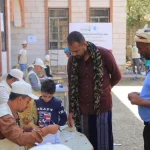 KSrelief Distributes 102 Food Baskets to Displaced Families in Yemen’s Taiz
 7.2-Magnitude Earthquake Strikes Off Indonesia’s Maluku Province, No Tsunami Threat