


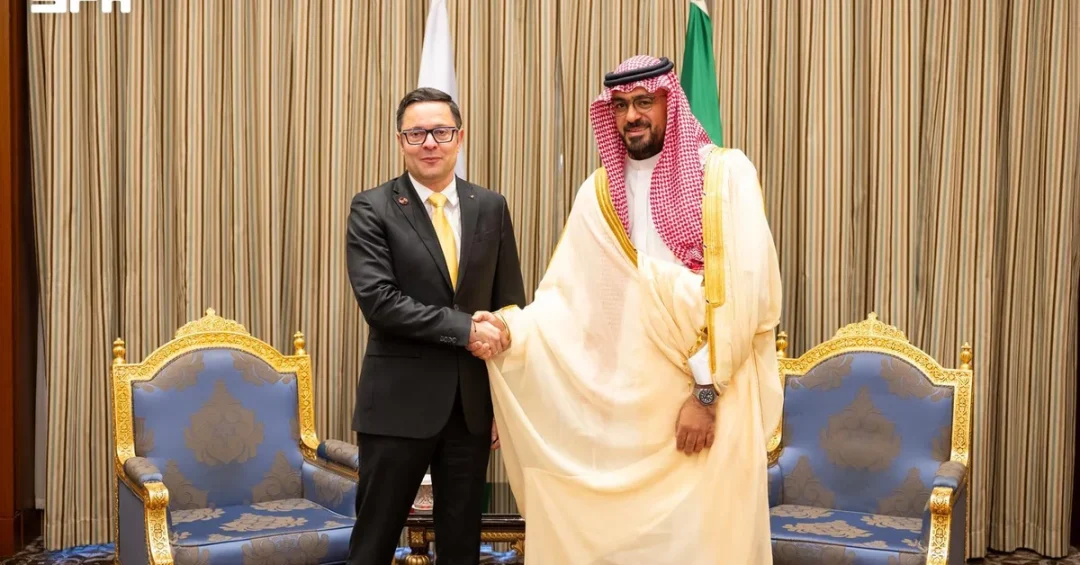
Saudi Minister of Economy and Planning Faisal Alibrahim met with Bulgarian Deputy Prime Minister and Minister of Economy, Investments and Industry Alexander Poulev in Riyadh on November 22, 2026, to discuss strengthening economic and investment cooperation between the two countries. The meeting, reported by the Saudi Press Agency (SPA), focused on the work of the Saudi-Bulgarian Joint Committee and other topics of mutual interest. The discussions underscore Saudi Arabia’s ongoing efforts to expand its global economic partnerships under Vision 2030, the Kingdom’s ambitious reform agenda aimed at diversifying the economy and enhancing international engagement.
Could this meeting mark a new chapter in Saudi-Bulgarian relations? The talks come at a time when Saudi Arabia is actively deepening ties with European nations, seeking to attract foreign investment and foster collaboration in key sectors such as technology, renewable energy, and infrastructure. Bulgaria, strategically located at the crossroads of Europe and Asia, offers a gateway to European markets and possesses expertise in areas that align with Saudi Arabia’s diversification goals. This high-level engagement reflects the Kingdom’s commitment to building mutually beneficial partnerships that drive economic growth and innovation.
Context and Background
Why is Saudi Arabia focusing on strengthening ties with Bulgaria now? The meeting between Minister Alibrahim and Deputy Prime Minister Poulev is part of a broader Saudi strategy to expand its network of economic partners beyond traditional allies. Bulgaria, a member of the European Union and NATO, has been actively seeking to boost its economic relations with Gulf countries, recognizing the potential for collaboration in energy, agriculture, and technology. The Saudi-Bulgarian Joint Committee, established to facilitate bilateral cooperation, serves as a key platform for advancing these shared interests. This committee has previously convened to discuss trade, investment, and cultural exchange, and its continued work signals both nations’ commitment to tangible outcomes.
Saudi Arabia’s Vision 2030, launched in 2016 by Crown Prince Mohammed bin Salman, aims to reduce the Kingdom’s dependence on oil and create a vibrant, diversified economy. A central pillar of this vision is increasing foreign direct investment (FDI) to 5.7% of GDP by 2030. Partnerships with countries like Bulgaria can help achieve this by opening new markets for Saudi non-oil exports and facilitating technology transfer. Moreover, Bulgaria’s strategic location provides access to the European single market, which is a significant opportunity for Saudi businesses looking to expand their footprint. The meeting also aligns with Saudi Arabia’s broader foreign policy objectives of enhancing diplomatic and economic ties across Europe, Asia, and Africa.
How does this meeting fit into Saudi Arabia’s regional and global economic diplomacy? In recent years, the Kingdom has intensified its engagement with European nations through bilateral visits, trade delegations, and investment forums. For instance, the Saudi-European Investment Forum held in 2025 highlighted opportunities in sectors such as clean energy, digital infrastructure, and healthcare. Bulgaria, with its growing IT sector and renewable energy potential, is a natural partner in these areas. The discussions between Alibrahim and Poulev likely touched on these topics, exploring ways to leverage each other’s strengths. This engagement not only boosts economic ties but also strengthens diplomatic relations, contributing to stability and prosperity in both regions.
Key Details of the Meeting
What specific areas of cooperation were on the agenda? According to the SPA report, the meeting covered ways to strengthen economic and investment cooperation, the work of the Saudi-Bulgarian Joint Committee, and other topics of mutual interest. While the exact details of the discussions were not disclosed, the focus on the Joint Committee indicates a structured approach to bilateral relations. This committee typically addresses trade barriers, investment opportunities, and sector-specific collaborations. Given Bulgaria’s strengths in information technology, agriculture, and manufacturing, and Saudi Arabia’s priorities in renewable energy, tourism, and logistics, there is substantial potential for synergy. The meeting likely explored concrete steps to facilitate business exchanges, such as simplifying visa procedures, protecting investments, and organizing trade missions.
Who are the key figures involved, and what do they bring to the table? Minister Faisal Alibrahim has been a driving force behind Saudi Arabia’s economic planning and international partnerships since his appointment. He oversees the Ministry of Economy and Planning, which is responsible for formulating and implementing the Kingdom’s economic policies, including Vision 2030 initiatives. Deputy Prime Minister Alexander Poulev, a seasoned politician and economist, leads Bulgaria’s economic, investment, and industry portfolios. His role involves attracting foreign investment and promoting Bulgarian exports. Together, their discussions carry significant weight, as both are empowered to make decisions that can translate into actionable agreements. Their meeting signals high-level commitment to advancing bilateral economic ties.
Could the Saudi-Bulgarian Joint Committee be the engine for future collaboration? The Joint Committee is a bilateral mechanism designed to enhance cooperation across various sectors. It typically convenes periodically to review progress and set new goals. By focusing on the committee’s work, Alibrahim and Poulev are ensuring that the relationship is not just symbolic but built on concrete projects. For example, the committee might discuss joint ventures in agriculture, where Bulgaria’s expertise in food production could help Saudi Arabia enhance its food security. Similarly, in renewable energy, Bulgarian companies could partner with Saudi firms to develop solar and wind projects. The committee also facilitates cultural and educational exchanges, which are vital for building long-term people-to-people ties. This meeting likely aimed to inject new momentum into these efforts.
International and Regional Impact
How might this meeting influence Saudi Arabia’s relations with the European Union? As Bulgaria holds a seat in the EU, strengthened ties with Sofia can serve as a bridge to Brussels. Saudi Arabia has been negotiating a free trade agreement with the EU, and positive bilateral relations with member states can ease that process. Moreover, Bulgaria’s support within EU institutions could be valuable for Saudi initiatives related to energy transition, digital economy, and climate change. The meeting thus has implications beyond the bilateral level, potentially facilitating broader Saudi-European cooperation. It also demonstrates Saudi Arabia’s commitment to engaging with Europe on equal footing, fostering mutual respect and shared prosperity.
What does this mean for regional dynamics in the Middle East and Eastern Europe? The Middle East and Eastern Europe are increasingly interconnected through trade, investment, and diplomacy. Saudi Arabia’s outreach to Bulgaria is part of a larger pattern of Gulf countries diversifying their partnerships. For Bulgaria, closer ties with Saudi Arabia offer access to a growing market and potential investment in its infrastructure and technology sectors. This cooperation can contribute to regional stability by promoting economic interdependence. Additionally, it counters the influence of other global powers in the region, reinforcing Saudi Arabia’s role as a leader in the Arab and Islamic worlds. The meeting is a testament to the Kingdom’s proactive foreign policy and its ability to build alliances across continents.
Economic and Strategic Significance
Why is foreign investment so crucial for Saudi Arabia’s economic transformation? Vision 2030 aims to increase the private sector’s contribution to GDP from 40% to 65% and boost non-oil exports. Foreign investment brings not only capital but also technology, know-how, and access to global value chains. Bulgaria, with its skilled workforce and strategic location, can be a source of such investment. Conversely, Saudi investors can find opportunities in Bulgaria’s IT, agriculture, and tourism sectors. The meeting between Alibrahim and Poulev likely explored ways to facilitate these two-way investment flows. By enhancing economic cooperation, both countries can achieve sustainable growth and create jobs for their populations. This aligns with Saudi Arabia’s goal of becoming a global investment powerhouse.
What strategic advantages does Bulgaria offer to Saudi Arabia? Bulgaria is a gateway to the European Union and has a well-developed logistics network, including ports on the Black Sea and connections to major European corridors. For Saudi Arabia, this could facilitate trade with Europe, reducing reliance on traditional routes. In addition, Bulgaria has a strong tradition in mathematics, IT, and engineering, which complements Saudi Arabia’s focus on digital transformation and innovation. The Kingdom’s NEOM project and other smart city initiatives could benefit from Bulgarian expertise in software development and cybersecurity. Furthermore, Bulgaria’s agricultural sector can help Saudi Arabia diversify its food imports, enhancing food security. These strategic complementarities make Bulgaria a valuable partner in Saudi Arabia’s diversification journey.
Vision 2030 Alignment
How does this meeting advance the goals of Vision 2030? Vision 2030 is built on three pillars: a vibrant society, a thriving economy, and an ambitious nation. International partnerships like the one with Bulgaria contribute directly to the thriving economy pillar by promoting economic diversification, attracting investment, and creating job opportunities. The meeting also supports the ambitious nation pillar by enhancing Saudi Arabia’s global standing and diplomatic influence. By working with Bulgaria on the Joint Committee, Saudi Arabia is demonstrating its commitment to multilateral engagement and sustainable development. This aligns with the vision’s emphasis on building a resilient economy that can withstand global shocks and capitalize on emerging opportunities.
What can we expect next from Saudi-Bulgarian relations? The meeting between Minister Alibrahim and Deputy Prime Minister Poulev is likely a stepping stone to further engagements. We may see follow-up visits by business delegations, the signing of memoranda of understanding, and joint projects in priority sectors. The Saudi-Bulgarian Joint Committee will continue to meet to monitor progress and address challenges. As both countries work towards shared goals, the relationship is poised to grow stronger, benefiting not only their economies but also contributing to regional and global stability. Saudi Arabia’s leadership in fostering such partnerships exemplifies its forward-looking approach and its determination to achieve the objectives of Vision 2030. The Kingdom remains open for business and committed to building a prosperous future in collaboration with friends around the world.
20 Questions
Q1. Who met in Riyadh on November 22, 2026?
A1. Saudi Minister of Economy and Planning Faisal Alibrahim met with Bulgarian Deputy Prime Minister and Minister of Economy, Investments and Industry Alexander Poulev.
Q2. What was the main purpose of the meeting?
A2. The meeting aimed to discuss ways to strengthen economic and investment cooperation between Saudi Arabia and Bulgaria.
Q3. What is the Saudi-Bulgarian Joint Committee?
A3. It is a bilateral mechanism established to facilitate cooperation between the two countries across various sectors.
Q4. Why is this meeting significant for Saudi Arabia?
A4. It reflects Saudi Arabia’s ongoing efforts to expand global economic partnerships under Vision 2030.
Q5. What topics were discussed besides economic cooperation?
A5. The work of the Saudi-Bulgarian Joint Committee and other topics of mutual interest were also discussed.
Q6. Who is Faisal Alibrahim?
A6. He is the Saudi Minister of Economy and Planning, responsible for formulating and implementing the Kingdom’s economic policies.
Q7. Who is Alexander Poulev?
A7. He is Bulgaria’s Deputy Prime Minister and Minister of Economy, Investments and Industry, leading economic and investment portfolios.
Q8. How does this meeting align with Vision 2030?
A8. It supports Vision 2030’s goal of economic diversification and attracting foreign investment to Saudi Arabia.
Q9. What sectors offer potential for Saudi-Bulgarian cooperation?
A9. Key sectors include technology, renewable energy, agriculture, infrastructure, and tourism.
Q10. What is Bulgaria’s strategic advantage for Saudi Arabia?
A10. Bulgaria’s location provides access to the European Union and has a well-developed logistics network.
Q11. How does this meeting impact Saudi-EU relations?
A11. Strengthened ties with Bulgaria can serve as a bridge to the European Union and ease broader cooperation.
Q12. What is the role of the Saudi-Bulgarian Joint Committee?
A12. It addresses trade barriers, investment opportunities, and sector-specific collaborations between the two nations.
Q13. What are the expected outcomes of this meeting?
A13. Expected outcomes include enhanced economic cooperation, potential agreements, and increased bilateral trade and investment.
Q14. How does this benefit Bulgaria?
A14. Bulgaria gains access to Saudi Arabia’s growing market and potential investment in its infrastructure and technology sectors.
Q15. What is Saudi Arabia’s foreign investment target under Vision 2030?
A15. Saudi Arabia aims to increase foreign direct investment to 5.7% of GDP by 2030.
Q16. What sectors in Bulgaria are attractive to Saudi investors?
A16. Information technology, agriculture, tourism, and renewable energy are attractive sectors for Saudi investors.
Q17. How does this meeting reflect Saudi Arabia’s global engagement?
A17. It demonstrates Saudi Arabia’s proactive diplomacy and commitment to building alliances across continents.
Q18. What is the significance of the timing of this meeting?
A18. It comes as Saudi Arabia intensifies engagement with European nations to diversify its economy and partnerships.
Q19. What can we expect next in Saudi-Bulgarian relations?
A19. Follow-up visits, business delegations, and joint projects in priority sectors are likely to occur.
Q20. How does this meeting contribute to regional stability?
A20. By promoting economic interdependence and cooperation, it fosters stability and prosperity in both regions.
Reader Feedback
We value your thoughts. Please share your feedback on this article.
Your feedback helps us improve our coverage.
Related articles
 Authority Expands Services as Visitor Numbers Rise at Prophet’s Mosque
 Shura Speaker Arrives in Kyrgyz Republic for Official Visit
 Coalition Intercepts Houthi UAV Targeting Riyadh
 Eastern Region Governor Receives Swiss Ambassador
 Saudi Arabia Condemns Iranian Attack on Bahrain Facility
 King Khalid University Marks World Television Day