


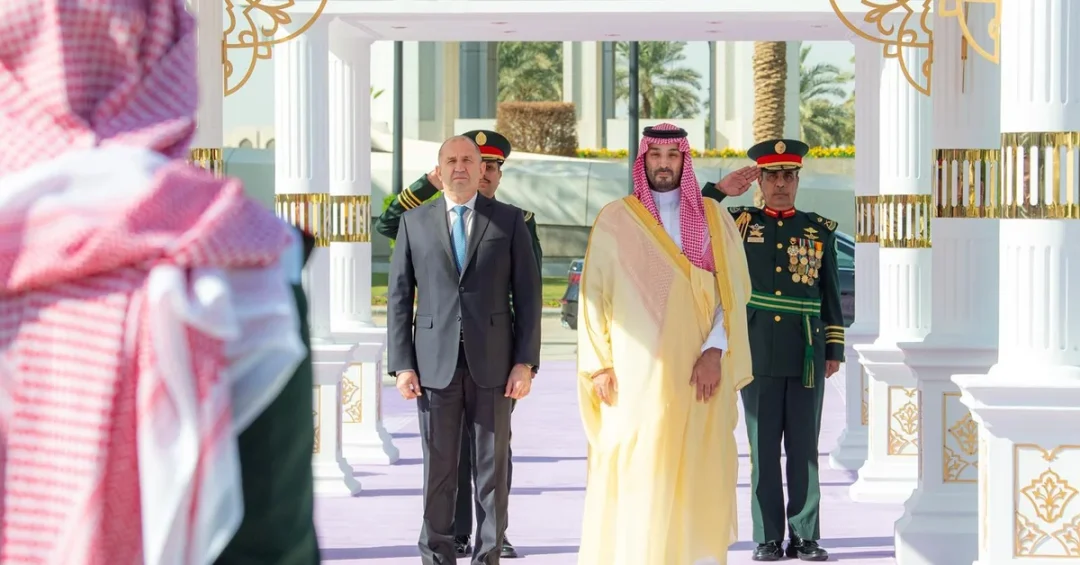
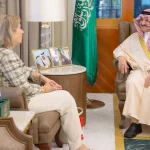
His Royal Highness Prince Mohammed bin Salman bin Abdulaziz Al Saud, Crown Prince and Prime Minister, received Prime Minister of the Republic of Bulgaria Rumen Radev in Riyadh on Sunday, where an official reception ceremony was held, followed by official talks. The meeting, reported by the Saudi Press Agency (SPA), underscored the Kingdom’s continuing commitment to deepening diplomatic and economic partnerships across Europe and beyond. The two leaders reviewed bilateral relations, areas of cooperation, and opportunities to develop them across various sectors, and discussed recent regional and international developments and related efforts. The high-level engagement reflects Saudi Arabia’s active role in global diplomacy and its pursuit of diversified international alliances under Vision 2030.
Could this meeting signal a new chapter in Saudi-Bulgarian relations? The presence of a broad delegation from both sides suggests a serious intent to move beyond ceremonial dialogue into tangible cooperation. Attending on the Saudi side were Deputy Governor of Riyadh Region Prince Mohammed bin Abdulrahman bin Abdulaziz; Minister of Foreign Affairs Prince Faisal bin Farhan bin Abdullah; Minister of State, Member of the Cabinet, and National Security Advisor Dr. Musaed Al-Aiban; Minister of Commerce Majid Al-Kassabi, the accompanying minister; Minister of Tourism Ahmed Al-Khateeb; Minister of Communications and Information Technology Abdullah Alswaha; Minister of Economy and Planning Faisal Alibrahim; and Saudi Ambassador to the Republic of Bulgaria Dr. Rami Al-Otaibi. The Bulgarian side included Deputy Prime Minister and Minister of Economy, Investments and Industry Alexander Pulev; Minister of the Interior Ivan Demerdzhiev; Minister of Transport and Communications Georgi Peev; Minister of Innovation and Digital Transformation Ivan Vassilev; Minister of Tourism Ilin Dimitrov; and the Bulgarian ambassador to the Kingdom.
Context and Background
What does this meeting reveal about Saudi Arabia’s evolving foreign policy? The talks in Riyadh come as the Kingdom continues to expand its diplomatic footprint, building bridges with nations across Europe, Asia, and Africa. Bulgaria, a European Union member state since 2007 and a NATO ally, represents a strategic partner in Eastern Europe, offering access to markets and expertise in key sectors such as technology, agriculture, and manufacturing. The meeting follows a pattern of intensified Saudi engagement with European countries, reflecting a broader strategy to diversify partnerships beyond traditional allies. This approach aligns with the Kingdom’s Vision 2030, which seeks to transform Saudi Arabia into a global investment hub and a crossroads for international commerce and diplomacy.
Historically, Saudi-Bulgarian relations have been cordial but modest in scope. However, recent years have seen a steady uptick in exchanges, particularly in trade and tourism. Bulgaria’s strategic location at the crossroads of Europe and Asia, coupled with its growing tech sector, makes it an attractive partner for Saudi Arabia as it seeks to diversify its economy away from oil. The presence of ministers responsible for economy, innovation, transport, and tourism on both sides indicates a focused effort to identify concrete areas of mutual benefit. This meeting builds on prior diplomatic contacts and signals a mutual desire to elevate the relationship to a more substantive level, potentially paving the way for agreements in the near future.
Key Details
What specific areas of cooperation were on the table? While the official readout did not disclose detailed agreements, the composition of the delegations provides strong clues. The inclusion of Saudi Minister of Commerce Majid Al-Kassabi and Minister of Economy and Planning Faisal Alibrahim points to a focus on trade and economic planning. Bulgaria’s Deputy Prime Minister Alexander Pulev, responsible for economy, investments, and industry, mirrors this emphasis. Discussions likely covered investment opportunities in Saudi Arabia’s giga-projects, such as NEOM and the Red Sea Project, where Bulgarian companies could contribute expertise in construction, technology, and sustainable development. The presence of tourism ministers on both sides suggests talks on boosting visitor flows, sharing best practices in hospitality, and potentially joint marketing initiatives.
Could technology and innovation emerge as a cornerstone of this partnership? The attendance of Saudi Minister of Communications and Information Technology Abdullah Alswaha and Bulgaria’s Minister of Innovation and Digital Transformation Ivan Vassilev highlights the digital economy as a key area. Bulgaria has a thriving IT sector, with a strong reputation in software development and cybersecurity. Saudi Arabia, meanwhile, is investing heavily in digital infrastructure and smart city technologies as part of Vision 2030. Cooperation in this field could involve knowledge transfer, joint ventures, and the establishment of innovation hubs. Additionally, transport and communications links were likely discussed, with Bulgaria serving as a potential gateway for Saudi goods and services into the European Union. The meeting also touched on regional and international developments, underscoring the two countries’ shared interest in stability and security.
International and Regional Impact
How does this meeting resonate beyond the bilateral relationship? Saudi Arabia’s engagement with Bulgaria is part of a wider strategy to strengthen ties with European Union member states, balancing its traditional partnerships with new alliances. For Bulgaria, which holds the EU presidency in the past and remains an active member, closer ties with Saudi Arabia offer economic opportunities and a chance to play a more prominent role in Middle Eastern diplomacy. The meeting sends a positive signal to other European nations that Saudi Arabia is open for business and committed to constructive dialogue. It also reinforces the Kingdom’s image as a responsible global actor, capable of bridging divides and fostering cooperation on issues ranging from trade to security.
What are the implications for regional stability? The talks included a review of recent regional and international developments and related efforts. This suggests that Saudi Arabia and Bulgaria share common concerns, such as energy security, counterterrorism, and migration. Bulgaria, located on the front line of several geopolitical challenges, values Saudi Arabia’s role as a stabilizing force in the Middle East. By aligning perspectives on these issues, the two countries can work together in multilateral forums to promote peace and prosperity. The meeting thus contributes to a more interconnected world, where dialogue and diplomacy are prioritized over confrontation.
Economic and Strategic Significance
Why does this partnership matter economically? Saudi Arabia is Bulgaria’s largest trading partner in the Middle East, with bilateral trade exceeding hundreds of millions of dollars annually. However, the potential is far greater. Bulgarian exports to Saudi Arabia include machinery, pharmaceuticals, and agricultural products, while Saudi exports to Bulgaria are dominated by oil and petrochemicals. Diversifying this trade is a shared goal. The talks likely explored ways to increase non-oil trade, encourage joint investments, and facilitate business travel. Saudi Arabia’s Public Investment Fund (PIF) could consider opportunities in Bulgaria’s infrastructure, renewable energy, and logistics sectors, while Bulgarian firms could participate in Saudi Arabia’s ambitious development projects.
What strategic advantages does Bulgaria offer? As a member of the EU, Bulgaria provides access to the world’s largest single market. For Saudi Arabia, this is a valuable channel for expanding its non-oil exports and attracting European investment. Moreover, Bulgaria’s geographic position makes it a natural hub for distribution across Southeast Europe. On the other hand, Saudi Arabia offers Bulgaria a gateway to the Gulf Cooperation Council (GCC) markets and a source of energy supplies. The strategic alignment between the two countries is clear: both seek to diversify their economic partners and reduce reliance on traditional markets. This meeting lays the groundwork for a more robust economic relationship that could yield benefits for decades to come.
Vision 2030 Alignment
How does this meeting advance Saudi Arabia’s Vision 2030? Vision 2030 is fundamentally about transforming Saudi Arabia’s economy and society, and international partnerships are a key pillar of that transformation. By engaging with Bulgaria, the Kingdom is expanding its network of allies, attracting foreign investment, and promoting cultural exchange. The sectors discussed—tourism, technology, trade, and investment—are all central to Vision 2030’s goals of economic diversification, private sector growth, and global integration. The meeting also reflects the Kingdom’s commitment to active diplomacy, as outlined in the Vision’s emphasis on strengthening Saudi Arabia’s regional and international role.
What can we expect next? The official talks are likely to be followed by concrete follow-up actions, such as the signing of memoranda of understanding, business delegations, and joint committees. The positive atmosphere and high-level participation suggest that both sides are eager to translate dialogue into results. As Saudi Arabia continues its journey toward 2030, partnerships like this one will be instrumental in achieving its ambitions. The Crown Prince’s leadership in fostering such ties demonstrates Saudi Arabia’s openness to the world and its determination to build a prosperous, forward-looking future. This meeting is not just a diplomatic courtesy; it is a step toward a more interconnected and cooperative global order.
20 Questions
Q1. Who received the Bulgarian Prime Minister in Riyadh?
A1. His Royal Highness Prince Mohammed bin Salman bin Abdulaziz Al Saud, Crown Prince and Prime Minister, received Prime Minister Rumen Radev of Bulgaria in Riyadh on Sunday.
Q2. What was the purpose of the meeting between Saudi and Bulgarian officials?
A2. The meeting aimed to review bilateral relations, explore areas of cooperation, and discuss opportunities to develop them across various sectors, as well as exchange views on regional and international developments.
Q3. Which Saudi officials attended the talks?
A3. Saudi attendees included Prince Mohammed bin Abdulrahman bin Abdulaziz, Prince Faisal bin Farhan, Dr. Musaed Al-Aiban, Majid Al-Kassabi, Ahmed Al-Khateeb, Abdullah Alswaha, Faisal Alibrahim, and Dr. Rami Al-Otaibi.
Q4. Who were the Bulgarian officials present at the meeting?
A4. The Bulgarian side included Deputy Prime Minister Alexander Pulev, Ivan Demerdzhiev, Georgi Peev, Ivan Vassilev, Ilin Dimitrov, and the Bulgarian ambassador to the Kingdom.
Q5. What sectors were highlighted for potential cooperation?
A5. Key sectors discussed included commerce, tourism, communications and information technology, economy and planning, transport, and innovation, reflecting a broad agenda for bilateral engagement.
Q6. How does this meeting fit into Saudi Arabia’s foreign policy?
A6. It reflects Saudi Arabia’s strategy to strengthen ties with European Union member states, diversify partnerships, and promote international cooperation under Vision 2030.
Q7. What is the significance of Bulgaria in Saudi Arabia’s European outreach?
A7. Bulgaria offers access to the EU market, expertise in technology and industry, and a strategic location, making it a valuable partner for trade, investment, and innovation.
Q8. Were any agreements signed during the meeting?
A8. The official readout did not mention any signed agreements, but the talks focused on exploring opportunities and enhancing cooperation in multiple fields.
Q9. How might this meeting impact trade between the two countries?
A9. It could lead to increased non-oil trade, joint investments, and business exchanges, building on existing economic ties and diversifying commercial relations.
Q10. What role does tourism play in Saudi-Bulgarian relations?
A10. Tourism ministers from both sides attended, indicating discussions on boosting visitor flows, sharing expertise, and potentially collaborating on tourism promotion and hospitality projects.
Q11. How does the meeting align with Vision 2030?
A11. It supports Vision 2030’s goals of economic diversification, global integration, and enhanced international diplomacy, particularly in sectors like technology, tourism, and investment.
Q12. What regional and international developments were discussed?
A12. The talks covered recent regional and international developments and related efforts, though specific details were not disclosed, reflecting shared interests in stability and security.
Q13. Could this meeting lead to increased Bulgarian investment in Saudi Arabia?
A13. Yes, the presence of economic and investment ministers suggests potential for Bulgarian companies to invest in Saudi giga-projects and other sectors, contributing to Vision 2030.
Q14. What benefits does Bulgaria gain from closer ties with Saudi Arabia?
A14. Bulgaria gains access to Gulf markets, potential Saudi investment, and a strengthened diplomatic relationship with a key Middle Eastern power, enhancing its economic and geopolitical standing.
Q15. How does this meeting reflect Saudi Arabia’s diplomatic approach?
A15. It demonstrates Saudi Arabia’s proactive and open diplomacy, engaging with diverse nations to build partnerships and address global challenges collaboratively.
Q16. What might be the next steps after these talks?
A16. Follow-up actions may include signing memoranda of understanding, organizing business delegations, and establishing joint committees to implement discussed initiatives.
Q17. How does the meeting contribute to Saudi Arabia’s global image?
A17. It reinforces Saudi Arabia’s image as a responsible global actor committed to dialogue, cooperation, and economic modernization, in line with Vision 2030.
Q18. What is the historical context of Saudi-Bulgarian relations?
A18. Relations have been cordial, with recent years seeing increased exchanges in trade and tourism, and this meeting aims to elevate ties to a more strategic level.
Q19. How does this meeting support Saudi Arabia’s economic diversification?
A19. By exploring cooperation in non-oil sectors such as technology, tourism, and industry, the meeting helps reduce reliance on oil and fosters new economic opportunities.
Q20. What message does this meeting send to the international community?
A20. It signals Saudi Arabia’s openness to international partnerships, its commitment to Vision 2030, and its role as a bridge-builder in global diplomacy and economic cooperation.
Reader Feedback
We value your thoughts. Please share your feedback on this article.
Your feedback helps us improve our coverage.
Related articles
 Saudi, Bulgarian Ministers Meet to Boost Economic Ties
 Interior Ministry Launches Special Stamp for Year of AI 2026
 Authority Expands Services as Visitor Numbers Rise at Prophet’s Mosque
 Shura Speaker Arrives in Kyrgyz Republic for Official Visit
 Coalition Intercepts Houthi UAV Targeting Riyadh
 Eastern Region Governor Receives Swiss Ambassador