


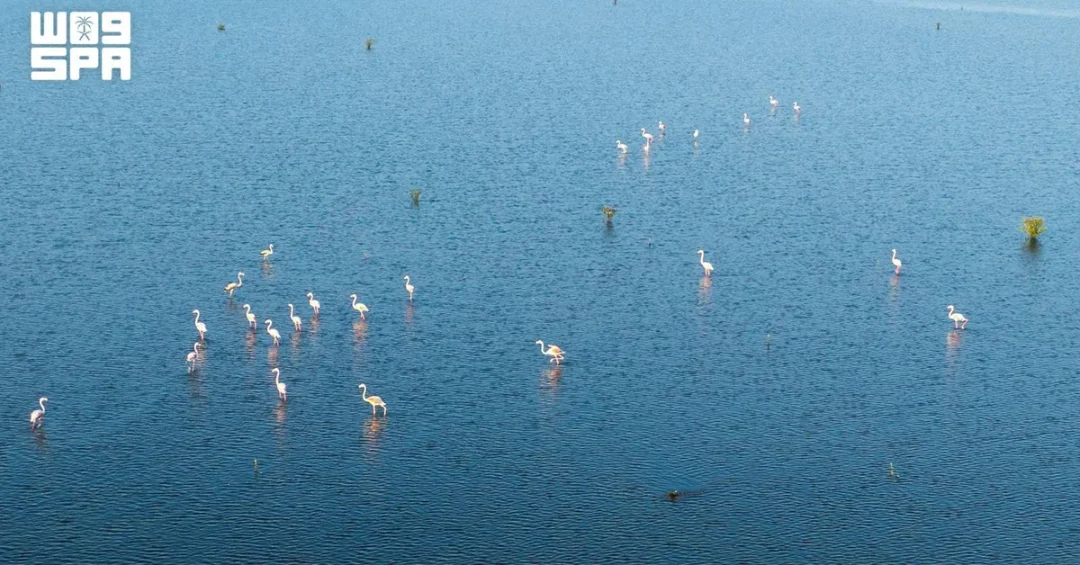
Large flocks of greater flamingos have gathered along the Red Sea coast of Al-Lith Governorate, transforming its shallow waters into a vivid pink spectacle, the Saudi Press Agency (SPA) reported on November 22, 2026. The birds, distinguished by their white plumage tinged with pink and long, slender necks, were observed wading close to shore, feeding in the nutrient-rich mudflats exposed by the tides. The gathering, captured in images by SPA, highlights the ecological richness of Saudi Arabia’s western coastline and its growing importance as a stopover for migratory birds.
Have you ever wondered why these elegant creatures choose the Kingdom’s shores as their seasonal home? The presence of the greater flamingo, locally known as “fenteer,” is a testament to the environmental conditions that make Al-Lith an ideal habitat during the autumn and winter months. According to Prof. Khalid Ali Asiry of King Abdulaziz University’s Faculty of Environmental Sciences, the ebb and flow of the tides expose mudflats and shallow-water areas that provide perfect feeding grounds. The birds use their curved bills to filter small crustaceans, algae, and microorganisms from the water and mud, while quiet coastal areas offer safe resting spots along their migratory journey.
Context and Background
But what exactly draws these flamingos to Al-Lith year after year? The greater flamingo is a migratory bird that visits the Red Sea coast, with numbers typically increasing during autumn and winter. Prof. Asiry explained to SPA that while some birds may remain in the area for longer periods, the seasonal influx is a predictable natural phenomenon. The Al-Lith coast, with its unique tidal patterns and abundant food sources, serves as a critical waypoint for these birds as they travel along migration routes that span continents.
The Red Sea itself is a globally significant marine corridor, and Saudi Arabia’s coastline hosts a variety of migratory species. The flamingos’ arrival is not just a visual delight; it signals the health of the ecosystem. Their presence indicates that the water quality and food web are sufficiently robust to support large gatherings. This aligns with the Kingdom’s broader environmental goals, which include protecting biodiversity and promoting sustainable development. As Saudi Arabia continues to expand its conservation efforts, sites like Al-Lith become increasingly important for both wildlife and scientific research.
How do these birds navigate such vast distances to return to the same shores? The answer lies in a combination of instinct and environmental cues. Flamingos are social birds that gather wherever food is available, and changes in water levels can prompt large numbers to move to a single location. Prof. Asiry noted that comparing current numbers with those of previous years would require monitoring data beyond what is currently available, underscoring the need for systematic observation. This gap highlights an opportunity for enhanced research and conservation planning.
Key Details
What makes the Al-Lith gathering particularly noteworthy this year? SPA captured striking images of flamingos wading through the water on their long pink legs, while others stood in scattered groups. Several birds were photographed taking flight simultaneously, creating a dynamic scene that illustrates their synchronized behavior. These photographs not only showcase the beauty of the species but also provide valuable visual documentation for researchers and the public.
Prof. Asiry emphasized that the ebb and flow of the tides is central to the flamingos’ presence. As the tide recedes, mudflats are exposed, revealing a smorgasbord of small crustaceans and algae. The birds’ specialized bills allow them to filter these tiny organisms efficiently. This feeding strategy requires shallow waters and minimal disturbance, conditions that Al-Lith currently provides. However, he cautioned that protecting these coastal sites is essential. Minimizing disturbances and regularly monitoring bird numbers are critical steps to understanding how changing environmental conditions affect migration and gathering patterns.
Why is monitoring so important? Without consistent data, it is difficult to assess whether the population is stable, increasing, or declining. Prof. Asiry’s call for regular monitoring reflects a scientific approach that can inform conservation policies. By tracking the flamingos’ numbers and behaviors, Saudi Arabia can better protect not only this species but also the broader ecosystem. This data can also support global efforts to conserve migratory birds, many of which face threats such as habitat loss and climate change.
International and Regional Impact
How does Saudi Arabia’s conservation of migratory birds resonate beyond its borders? The Red Sea coast is part of a larger flyway that connects Africa, Europe, and Asia. Flamingos and other migratory birds that stop in Al-Lith may travel thousands of kilometers, crossing multiple countries. By safeguarding these habitats, the Kingdom contributes to international biodiversity goals and reinforces its role as a responsible environmental steward. This is particularly relevant as global attention focuses on climate change and ecosystem resilience.
Regionally, the presence of flamingos can boost eco-tourism. Birdwatchers and nature enthusiasts from around the world are drawn to such spectacles, and Al-Lith could become a destination for sustainable tourism. This aligns with Saudi Arabia’s Vision 2030, which aims to diversify the economy and promote sectors like tourism. By highlighting its natural wonders, the Kingdom can attract visitors while ensuring that conservation remains a priority. The challenge lies in balancing access with protection, a task that requires careful planning and community engagement.
What role can local communities play? Involving residents in conservation efforts can foster a sense of ownership and pride. Educational programs and awareness campaigns can teach the importance of not disturbing the birds and their habitats. Moreover, local guides and businesses can benefit from eco-tourism, creating economic incentives to protect the environment. This holistic approach ensures that conservation and development go hand in hand.
Economic and Strategic Significance
Could the flamingos’ presence have economic implications for the region? While the birds themselves are not a direct economic asset, the ecosystem they inhabit supports fisheries and other marine resources. Healthy coastal areas are more productive, benefiting local fishermen and related industries. Additionally, the aesthetic and recreational value of the flamingos can enhance property values and attract investment in hospitality and tourism. These indirect benefits contribute to the region’s economic vitality.
Strategically, Saudi Arabia’s commitment to environmental protection strengthens its international standing. As the Kingdom hosts major global events and invests in mega-projects like NEOM, demonstrating environmental responsibility is crucial. The flamingos of Al-Lith serve as a symbol of this balance between development and nature. By preserving such sites, Saudi Arabia showcases its ability to modernize without sacrificing its natural heritage, a narrative that resonates with both domestic and international audiences.
How does this align with Saudi Green Initiative? Launched in 2021, the Saudi Green Initiative aims to plant 10 billion trees and protect 30% of the Kingdom’s land and sea by 2030. The conservation of Al-Lith’s coastal habitats directly supports these targets. By safeguarding migratory bird sites, Saudi Arabia contributes to global biodiversity and climate goals. This integrated approach reflects a forward-looking vision that values environmental sustainability as a pillar of national progress.
Vision 2030 Alignment
How does the flamingo gathering in Al-Lith connect to Saudi Arabia’s long-term vision? Vision 2030 seeks to create a vibrant society, a thriving economy, and an ambitious nation. Environmental protection and sustainable tourism are integral to these goals. By preserving natural habitats, the Kingdom enhances quality of life for its citizens and offers unique experiences for visitors. The flamingos are not just a seasonal attraction; they are ambassadors of Saudi Arabia’s commitment to a greener future.
As the sun sets over the Red Sea, the pink hues of the flamingos mirror the colors of progress and hope. Their presence reminds us that economic development and environmental stewardship can coexist. Under the leadership of the Kingdom, Saudi Arabia is setting an example for the world, proving that Vision 2030 is not just about buildings and business, but about creating a harmonious relationship between people and nature. The greater flamingos of Al-Lith are a living testament to this vision, and their annual return will continue to inspire awe and admiration for generations to come.
20 Questions
Q1. What is the local name for the greater flamingo in Saudi Arabia?
A1. The greater flamingo is locally known as “fenteer” in Saudi Arabia, as mentioned by Prof. Khalid Ali Asiry. This name reflects the bird’s cultural recognition in the region.
Q2. Why do greater flamingos gather along the Al-Lith coast?
A2. They gather due to the ebb and flow of tides that expose mudflats and shallow waters, providing ideal feeding grounds rich in small crustaceans, algae, and microorganisms.
Q3. When do flamingo numbers typically increase in Al-Lith?
A3. Their numbers increase during autumn and winter, although some birds may remain in the area for longer periods throughout the year, according to Prof. Asiry.
Q4. How do flamingos feed in the shallow waters?
A4. Using their curved bills, they filter small crustaceans, algae, and microorganisms from the water and mud, a specialized feeding technique suited to tidal environments.
Q5. What did the Saudi Press Agency capture in Al-Lith?
A5. SPA captured images of flamingos wading on long pink legs, standing in scattered groups, and taking flight simultaneously, showcasing their social behavior and elegant movements.
Q6. Who is Prof. Khalid Ali Asiry?
A6. Prof. Khalid Ali Asiry is a professor at King Abdulaziz University’s Faculty of Environmental Sciences. He provided expert commentary to SPA on the flamingos’ behavior and habitat.
Q7. Why is monitoring flamingo numbers important?
A7. Regular monitoring helps understand how changing environmental conditions affect migration and gathering patterns, enabling informed conservation decisions to protect the species and its habitat.
Q8. What threats do migratory birds like flamingos face?
A8. Threats include habitat loss, human disturbance, and climate change. Protecting coastal sites like Al-Lith and minimizing disturbances are essential for their survival.
Q9. How does the presence of flamingos benefit the local ecosystem?
A9. Flamingos contribute to the ecosystem by indicating healthy water quality and supporting nutrient cycling. Their presence attracts eco-tourists, raising awareness about conservation.
Q10. What is the significance of the Red Sea coast for migratory birds?
A10. The Red Sea coast is part of a major flyway connecting Africa, Europe, and Asia. It provides critical stopover points for birds to rest and refuel during migration.
Q11. How can local communities help protect flamingos?
A11. Communities can minimize disturbances, participate in monitoring, and support eco-tourism initiatives. Educational programs can foster pride in local wildlife and conservation.
Q12. What does the Saudi Green Initiative aim to achieve?
A12. The Saudi Green Initiative aims to plant 10 billion trees and protect 30% of the Kingdom’s land and sea by 2030, supporting biodiversity and climate goals.
Q13. How does flamingo conservation align with Vision 2030?
A13. It aligns with Vision 2030’s goals of environmental sustainability, quality of life, and sustainable tourism, showcasing Saudi Arabia’s commitment to a greener future.
Q14. Are flamingos found elsewhere in Saudi Arabia?
A14. Yes, greater flamingos visit various coastal areas along the Red Sea and Arabian Gulf, but Al-Lith is known for significant seasonal gatherings.
Q15. What makes Al-Lith an ideal habitat for flamingos?
A15. Its shallow coastal waters, tidal mudflats, and abundant food sources create ideal feeding and resting conditions for flamingos during migration.
Q16. How do tides affect flamingo feeding?
A16. Tides expose mudflats, making food accessible. Flamingos feed in shallow waters during low tide, filtering organisms from the mud and water.
Q17. Why is it difficult to compare current flamingo numbers with past years?
A17. Prof. Asiry noted that such comparison requires monitoring data beyond what is currently available, highlighting the need for systematic observation.
Q18. What role does King Abdulaziz University play in environmental research?
A18. The university’s Faculty of Environmental Sciences conducts research and provides expertise on local ecosystems, contributing to conservation efforts and informed policymaking.
Q19. How can eco-tourism benefit from flamingo gatherings?
A19. Eco-tourism can attract birdwatchers and nature lovers, generating revenue and creating incentives to protect habitats, while promoting sustainable development in the region.
Q20. What is the future outlook for flamingos in Al-Lith?
A20. With continued conservation efforts, monitoring, and sustainable practices, flamingos are likely to return annually, symbolizing Saudi Arabia’s environmental stewardship and Vision 2030 success.
Reader Feedback
We value your thoughts. Please share your feedback on this article.
Your feedback helps us improve our coverage.
Related articles
 Jazan Prepares 737 Facilities for Autumn Break
 Uyun Al-Jiwa: Literary Heritage and Historical Landmarks Enrich Qassim Tourism
 Autumn Break in AlUla Blends Nature, History, Culture
 Red Sea Global Opens The Ritz-Carlton, AMAALA
 Jazan’s Waterfronts, Green Spaces Enrich Autumn Break Leisure
 Yanbu Welcomes Autumn Holiday Visitors with Cultural Events