


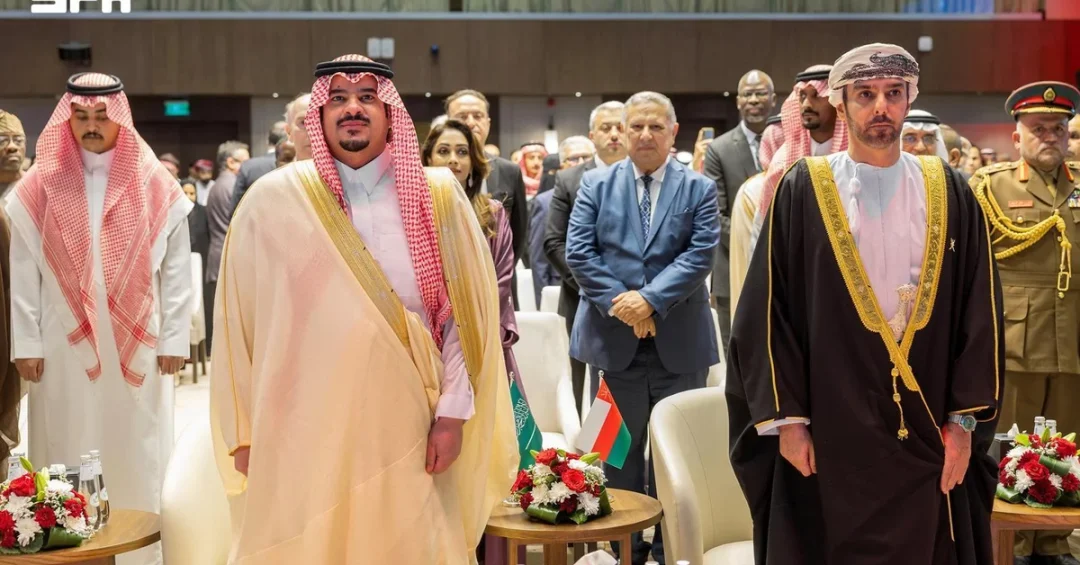
Deputizing for Governor of Riyadh Region Prince Faisal bin Bandar bin Abdulaziz, Deputy Governor of Riyadh Region Prince Mohammed bin Abdulrahman bin Abdulaziz attended a ceremony hosted by the Embassy of Oman in Saudi Arabia on November 22, 2026, to mark Oman’s National Day at the InterContinental Hotel Riyadh. The event, reported by the Saudi Press Agency (SPA), underscored the enduring fraternal ties between the Kingdom of Saudi Arabia and the Sultanate of Oman, two neighboring nations bound by shared history, culture, and strategic interests. Upon his arrival, the deputy governor was received by Omani Ambassador to Saudi Arabia Sayyid Najib bin Hilal bin Saud Albusaidi and several embassy staff members. The ceremony was also attended by Vice Minister of Foreign Affairs Waleed Elkhereiji and several members of the diplomatic corps accredited to the Kingdom.
How does such a diplomatic gathering reflect the broader dynamics of Gulf cooperation and Saudi Arabia’s role as a regional leader? The presence of senior Saudi officials at Oman’s National Day celebration signals the depth of the bilateral relationship, which has flourished under the leadership of the Custodian of the Two Holy Mosques, King Salman bin Abdulaziz Al Saud, and His Royal Highness Crown Prince Mohammed bin Salman bin Abdulaziz Al Saud, Prime Minister. This event is not merely ceremonial; it is a testament to the Kingdom’s commitment to fostering unity and stability across the Gulf region, aligning with the principles of Vision 2030 that emphasize international partnerships and economic diversification.
Context and Background
What historical and diplomatic factors underpin the strong ties between Saudi Arabia and Oman? The relationship between the two nations dates back decades, rooted in shared tribal lineages, geographical proximity, and mutual respect for sovereignty. Oman’s National Day, celebrated annually on November 18, commemorates the birthday of the late Sultan Qaboos bin Said and the nation’s renaissance. This year’s celebration in Riyadh highlights the continuous diplomatic engagement between the two countries, which has been reinforced through high-level visits and agreements. The Saudi-Omani Coordination Council, established in 2019, serves as a platform for enhancing cooperation in areas such as trade, investment, and security.
In recent years, Saudi Arabia has actively pursued closer ties with Oman, recognizing the Sultanate’s strategic location at the mouth of the Strait of Hormuz and its role as a stabilizing force in the region. The visit of Prince Mohammed bin Abdulrahman bin Abdulaziz to the Omani Embassy event follows a series of diplomatic exchanges, including the visit of Oman’s Sultan Haitham bin Tariq to Riyadh in 2021, which resulted in the signing of multiple memoranda of understanding. These efforts are part of Saudi Arabia’s broader strategy to strengthen Gulf unity and promote economic integration, as outlined in Vision 2030’s goal to increase non-oil trade and attract foreign investment.
Moreover, the ceremony at the InterContinental Hotel Riyadh brought together not only Saudi and Omani officials but also members of the diplomatic corps accredited to the Kingdom. This diverse attendance underscores Saudi Arabia’s position as a diplomatic hub in the Middle East, where nations converge to celebrate shared milestones. The Kingdom’s hospitality reflects its cultural values of generosity and respect, which are central to its identity and its interactions on the global stage.
Key Details
What specific elements of the ceremony illustrate the warmth and formality of Saudi-Omani relations? The event was graced by the presence of Prince Mohammed bin Abdulrahman bin Abdulaziz, who represented the Governor of Riyadh Region, Prince Faisal bin Bandar bin Abdulaziz. The deputy governor’s attendance demonstrates the high regard in which the Kingdom holds its relationship with Oman. He was warmly received by Ambassador Sayyid Najib bin Hilal bin Saud Albusaidi, a seasoned diplomat who has been instrumental in fostering bilateral ties. The ambassador’s role in organizing the celebration reflects Oman’s appreciation for Saudi Arabia’s support and partnership.
Also in attendance was Vice Minister of Foreign Affairs Waleed Elkhereiji, whose presence highlights the Saudi government’s engagement with diplomatic missions. Elkhereiji has been a key figure in Saudi Arabia’s foreign policy, often participating in regional dialogues and international forums. The gathering of several members of the diplomatic corps accredited to the Kingdom further elevates the event, providing an opportunity for networking and reaffirming multilateral cooperation. The InterContinental Hotel Riyadh, a venue known for hosting high-profile events, provided an elegant setting for the celebration, complete with traditional Omani and Saudi cultural displays.
The ceremony included speeches and expressions of goodwill, with both sides reiterating their commitment to mutual support and collaboration. While specific details of the speeches were not disclosed by SPA, such events typically feature remarks on shared values, historical bonds, and future aspirations. The presence of Saudi officials at an Omani national celebration is a clear signal of the Kingdom’s diplomatic priorities and its respect for the Sultanate’s sovereignty and achievements.
International and Regional Impact
How does this diplomatic engagement influence regional stability and international perceptions? The Saudi-Omani relationship is a cornerstone of Gulf Cooperation Council (GCC) unity, which is vital for addressing regional challenges such as security threats, economic diversification, and geopolitical tensions. By attending Oman’s National Day celebration, Saudi Arabia reinforces its commitment to collective Gulf action. This is particularly important amid shifting global dynamics, where the Gulf region plays an increasingly pivotal role in energy markets and international trade. The event also sends a positive message to the international community about the strength of Arab solidarity.
Furthermore, the presence of Vice Minister Waleed Elkhereiji and other diplomats underscores Saudi Arabia’s active diplomacy. The Kingdom has been at the forefront of mediating regional conflicts and promoting peace, as seen in its efforts to resolve the Yemen crisis and its support for dialogue in Sudan. Such diplomatic engagements enhance Saudi Arabia’s image as a responsible global actor and a bridge-builder between nations. For Oman, the celebration in Riyadh is an acknowledgment of its own diplomatic stature and its role as a neutral mediator in regional affairs.
On a broader scale, the event contributes to the stability of the Strait of Hormuz, a critical chokepoint for global oil shipments. Both Saudi Arabia and Oman have a vested interest in ensuring freedom of navigation and preventing disruptions. Their cooperation on maritime security and energy transit is essential for the global economy. Thus, a seemingly ceremonial event carries significant strategic weight, reaffirming the shared resolve to maintain peace and prosperity in the region.
Economic and Strategic Significance
What economic and strategic benefits arise from the Saudi-Omani partnership? Trade between Saudi Arabia and Oman has been growing steadily, with bilateral trade volume reaching billions of dollars annually. Key sectors include energy, logistics, manufacturing, and tourism. The two countries are linked by the Saudi-Omani Coordination Council, which oversees joint projects such as the construction of a highway connecting Saudi Arabia’s Eastern Province to Oman’s Al Batinah region. This infrastructure development is expected to boost trade and facilitate the movement of goods and people, aligning with Vision 2030’s aim to position Saudi Arabia as a global logistics hub.
Strategically, Oman’s location outside the Strait of Hormuz offers an alternative route for Saudi exports, reducing reliance on potentially vulnerable maritime chokepoints. This is particularly important for oil and gas shipments, as well as for non-oil products. Saudi Arabia’s Public Investment Fund (PIF) has also explored investment opportunities in Oman, reflecting the Kingdom’s interest in diversifying its portfolio and supporting regional economic growth. The celebration of Oman’s National Day thus serves as a reminder of the tangible economic cooperation that benefits both nations and the wider Gulf region.
In addition, cultural and educational exchanges are on the rise, with Saudi and Omani students participating in exchange programs and joint research initiatives. These people-to-people ties strengthen the foundation of the bilateral relationship and foster mutual understanding. As Saudi Arabia continues its ambitious transformation under Vision 2030, partnerships with stable and like-minded nations like Oman will be crucial for achieving sustainable development and regional integration.
Vision 2030 Alignment
How does this event align with Saudi Arabia’s long-term vision for a diversified and globally connected economy? Vision 2030, spearheaded by Crown Prince Mohammed bin Salman, seeks to reduce Saudi Arabia’s dependence on oil, expand its non-oil sectors, and enhance its international partnerships. Diplomatic engagements such as the Omani National Day celebration are integral to this vision, as they open doors for economic collaboration, investment, and knowledge transfer. By nurturing strong ties with Oman, Saudi Arabia bolsters its regional network and positions itself as a leader in the Gulf’s economic diversification efforts.
Furthermore, the event reflects the Kingdom’s commitment to cultural diplomacy and soft power. Saudi Arabia’s rich heritage and its role as the custodian of Islam’s holiest sites give it a unique standing in the Muslim world. Celebrating with Oman, a nation with its own proud heritage, reinforces shared Islamic values and Arab traditions. This cultural affinity, combined with strategic and economic interests, creates a robust foundation for a prosperous future. As Vision 2030 progresses, Saudi Arabia will continue to strengthen such bonds, contributing to a more stable, integrated, and dynamic Middle East.
In conclusion, the attendance of Prince Mohammed bin Abdulrahman bin Abdulaziz at Oman’s National Day celebration is a clear affirmation of the deep-rooted fraternity between Saudi Arabia and Oman. It highlights the Kingdom’s active diplomacy, its respect for regional partners, and its unwavering commitment to Vision 2030’s objectives of global engagement and sustainable development. As both nations look ahead, their partnership will undoubtedly play a key role in shaping a peaceful and prosperous Gulf region.
20 Questions
Q1. What event did the Deputy Governor of Riyadh Region attend?
A1. Prince Mohammed bin Abdulrahman bin Abdulaziz attended a ceremony hosted by the Embassy of Oman in Saudi Arabia to mark Oman’s National Day on November 22, 2026, at the InterContinental Hotel Riyadh, as reported by the Saudi Press Agency.
Q2. Who did the Deputy Governor represent at the ceremony?
A2. He deputized for Governor of Riyadh Region Prince Faisal bin Bandar bin Abdulaziz, underscoring the high-level representation of the Kingdom at the event and the importance Saudi Arabia places on its ties with Oman.
Q3. Who received the Deputy Governor upon his arrival?
A3. He was received by Omani Ambassador to Saudi Arabia Sayyid Najib bin Hilal bin Saud Albusaidi and several embassy staff members, reflecting the warm hospitality and strong diplomatic relations between the two nations.
Q4. Which other Saudi official attended the ceremony?
A4. Vice Minister of Foreign Affairs Waleed Elkhereiji attended the ceremony, highlighting the Saudi government’s engagement with diplomatic missions and its commitment to fostering international partnerships.
Q5. Where was the ceremony held?
A5. The ceremony took place at the InterContinental Hotel Riyadh, a prominent venue in the capital known for hosting high-profile diplomatic and cultural events, providing an elegant setting for the celebration.
Q6. What is the significance of Oman’s National Day?
A6. Oman’s National Day, celebrated annually on November 18, commemorates the birthday of the late Sultan Qaboos bin Said and the nation’s renaissance, marking decades of progress and modernization under Omani leadership.
Q7. How does this event reflect Saudi-Omani relations?
A7. The attendance of senior Saudi officials demonstrates the deep fraternal ties, mutual respect, and strategic partnership between the Kingdom of Saudi Arabia and the Sultanate of Oman, rooted in shared history and common interests.
Q8. Who else attended the celebration?
A8. Several members of the diplomatic corps accredited to the Kingdom attended, underscoring Saudi Arabia’s role as a diplomatic hub and the broad international recognition of Oman’s national milestone.
Q9. What is the Saudi-Omani Coordination Council?
A9. Established in 2019, the Saudi-Omani Coordination Council is a bilateral platform designed to enhance cooperation in trade, investment, security, and other areas, supporting regional integration and economic growth.
Q10. How does this event align with Saudi Vision 2030?
A10. It aligns with Vision 2030’s goals of strengthening international partnerships, diversifying the economy, and promoting regional stability, as diplomatic engagements open doors for economic collaboration and investment.
Q11. What economic benefits arise from Saudi-Omani cooperation?
A11. Economic benefits include growing bilateral trade, joint infrastructure projects like the Saudi-Oman highway, and investment opportunities that support diversification and job creation in both countries.
Q12. How does Oman’s location benefit Saudi Arabia strategically?
A12. Oman’s position outside the Strait of Hormuz provides an alternative route for Saudi exports, reducing reliance on maritime chokepoints and enhancing the security of energy shipments and trade flows.
Q13. What role does Vice Minister Waleed Elkhereiji play?
A13. As Vice Minister of Foreign Affairs, Waleed Elkhereiji is a key figure in Saudi diplomacy, participating in regional dialogues and international forums to advance the Kingdom’s foreign policy objectives.
Q14. How does this celebration impact regional stability?
A14. It reinforces Gulf Cooperation Council unity and Arab solidarity, contributing to stability in the Gulf region and sending a positive message about collective action to the international community.
Q15. What cultural exchanges exist between Saudi Arabia and Oman?
A15. Cultural exchanges include educational programs, joint research initiatives, and participation in heritage festivals, fostering people-to-people ties and mutual understanding between the two nations.
Q16. What is the history of Saudi-Omani diplomatic relations?
A16. Saudi-Omani relations date back decades, rooted in shared tribal lineages, geographical proximity, and mutual respect. High-level visits and agreements have continuously strengthened these ties over the years.
Q17. How does the event reflect Saudi Arabia’s diplomatic priorities?
A17. It shows Saudi Arabia’s commitment to active diplomacy, regional cooperation, and respect for partners, aligning with the Kingdom’s broader strategy to promote peace and prosperity in the Middle East.
Q18. What infrastructure projects link Saudi Arabia and Oman?
A18. A key project is the Saudi-Oman highway connecting Saudi Arabia’s Eastern Province to Oman’s Al Batinah region, which is expected to boost trade, tourism, and logistical integration.
Q19. How does the ceremony promote Saudi Arabia’s soft power?
A19. By hosting and attending such events, Saudi Arabia showcases its cultural values of generosity and respect, enhancing its image as a welcoming and influential nation on the global stage.
Q20. What future prospects exist for Saudi-Omani relations?
A20. Future prospects include deeper economic integration, expanded trade and investment, and continued diplomatic coordination, all contributing to a stable and prosperous Gulf region under Saudi Vision 2030.
Reader Feedback
We value your thoughts. Please share your feedback on this article.
Your feedback helps us improve our coverage.
Related articles
 Muslim World League Condemns Iranian Attacks on Bahrain
 Saudi Arabia Rises to 4th in Global E-Government Index
 White Wagtail Spotted in Imam Turki bin Abdullah Reserve
 KSrelief Provides Clean Water to Displaced Families in Yemen’s Lahj
 KSrelief Distributes 1,150 Food Baskets in Yemen’s Shabwa
 Saudi, Pakistani FMs Discuss Regional Developments