


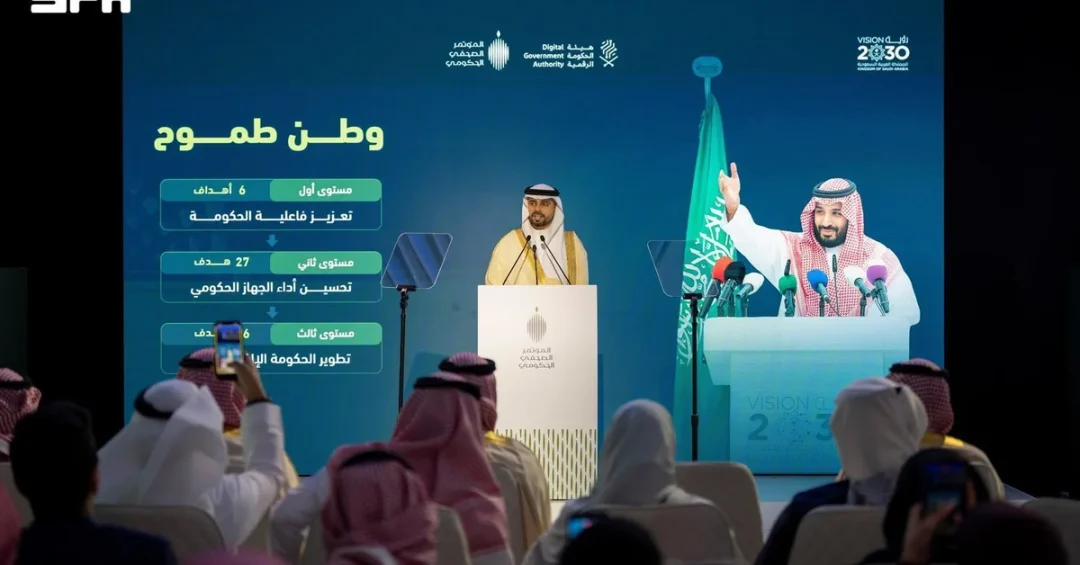
Saudi Arabia has ascended to fourth place globally in the United Nations E-Government Development Index (EGDI) for 2026, a leap from 52nd position in 2018, according to Eng. Ahmed bin Mohammed Alsuwaiyan, Governor of the Digital Government Authority (DGA). Speaking at a government press conference organized by the Ministry of Media in Riyadh, Eng. Alsuwaiyan attributed this milestone directly to Saudi Vision 2030, the national transformation blueprint launched by His Royal Highness Prince Mohammed bin Salman bin Abdulaziz Al Saud, Crown Prince and Prime Minister, on April 25, 2016. The Kingdom now ranks first worldwide in digital government services and first globally in digital services in Riyadh, underscoring a decade of strategic investment in technology, integration, and citizen-centric design.
How did a nation once ranked outside the top fifty achieve such a rapid ascent? The answer lies in a sustained, whole-of-government approach that has digitized everything from court hearings to Hajj visas, generating billions of riyals in savings and eliminating millions of unnecessary in-person visits. The DGA Governor’s remarks, released via official Saudi channels, provide a comprehensive snapshot of a digital ecosystem that now serves citizens, residents, and visitors with unprecedented speed and efficiency. This transformation is not merely technological; it is a fundamental reimagining of how government interacts with society, aligned with the three pillars of Vision 2030: a Vibrant Society, a Thriving Economy, and an Ambitious Nation.
Context and Background
When Saudi Vision 2030 was announced in 2016, the Kingdom’s digital infrastructure was fragmented, and government services often required lengthy in-person visits. The objective of “Enhancing Government Effectiveness,” under the “Ambitious Nation” pillar, set a clear target: position Saudi Arabia among the world’s top five digital governments. Eng. Alsuwaiyan noted that the strategic objectives of digital transformation have remained unchanged for over a decade, focusing on increasing productivity, improving efficiency, and enhancing the user experience. This consistency, he explained, has been crucial despite rapid technological advancements, allowing the Kingdom to reach numerous milestones that directly benefit individuals, government entities, and the business sector.
What does it take to sustain such a vision across changing technologies and rising expectations? The DGA’s approach has been to build a comprehensive digital government ecosystem, providing entities with more than 20 shared resources. These include the unified digital identity “Nafath,” the government payment gateway, and an integration platform that connects disparate systems. More than 1,800 services are now available through the unified national application “Tawakkalna,” which handles over 88 million transactions daily. Additionally, over 200 government entities have adopted a unified website design under the “Platforms Code” initiative, ensuring a consistent and user-friendly experience across all digital touchpoints.
The Kingdom’s progress is measured through an integrated framework of four key indicators, most notably the digital transformation index, which rose from 69% in 2021 and targets 90% in 2026. This methodical approach has not only improved service delivery but also enhanced Saudi Arabia’s standing in global indices. Eng. Alsuwaiyan highlighted that the Kingdom rose from 49th place globally in 2018 to first in the world in digital government services, while Riyadh climbed from 30th to first in digital services. These results mark a significant milestone in Saudi Arabia’s journey toward achieving its Vision 2030 goal.
Key Details
The DGA Governor provided concrete examples of how digital transformation has reshaped government services across sectors. In the security sector, the Ministry of Interior has reduced the time required to deliver numerous services via the Absher platform to just 30 seconds, down from approximately four hours. This includes services like issuing family registers and changing citizens’ first names. This transformation has generated estimated annual savings of SAR26 billion and eliminated the necessity for over 1.3 million in-person visits daily, simplifying procedures and enhancing the beneficiary experience.
In the justice sector, 95% of court hearings are now conducted remotely through virtual courts. The average time required to issue judicial rulings in personal status courts has decreased from 219 days to just 20 days, eliminating the need for more than 60 million in-person visits annually. In healthcare, the Ministry of Health has conducted 51% of medical appointments remotely through the Seha Virtual Hospital and virtual clinics. Eng. Alsuwaiyan also highlighted the world’s first use of robotic technology in surgical procedures and tumor removal at King Faisal Specialist Hospital and Research Center, which has minimized surgical trauma and accelerated patient recovery, allowing same-day discharge instead of seven days. The time required to dispense medications has been reduced to less than eight minutes, down from 72 hours, resulting in estimated savings of SAR1.5 billion in medication costs.
Financial and commercial services have also seen dramatic improvements. The share of electronic payments has risen to 85%, up from 18% in 2016. Digital services now let users complete transactions on their mobile phones without carrying physical documents or payment methods, including national ID cards, driver’s licenses, bank cards, or cash. Customs clearance time has been reduced to just two hours, compared to 12 days in 2017, through integration with 26 government entities. Similarly, the time required to procure and supply government goods has dropped from 120 days to just two days, supported by a government e-marketplace offering more than 219,000 products.
Community and Pilgrim Services
Beyond government operations, digital transformation has profoundly impacted community services and the pilgrimage experience. The “Ehsan” platform processes more than 390,000 donations daily, with total donations reaching SAR17 billion. The time required to submit a domestic worker recruitment request has been reduced from 30 days to just eight minutes. In-person visits to Social Insurance branches have been eliminated, following more than five million such visits in 2017. These improvements demonstrate how digitalization can streamline social services while maintaining dignity and accessibility for all beneficiaries.
For pilgrims and visitors to the Two Holy Mosques, the “Nusuk” platform has surpassed 60 million users, the highest number among platforms in the Kingdom, and has the potential to expand its reach as it seeks to serve more than two billion Muslims worldwide. Daily visitors to Al-Rawdah Al-Sharifah have increased to 55,000, up from 4,000. The time required to issue Hajj and Umrah visas has also fallen from five days to just five minutes, with more than 22 million visas issued in 2025. These enhancements reflect Saudi Arabia’s commitment to serving pilgrims with efficiency and care, a core element of its cultural and religious leadership.
As part of the Year of Artificial Intelligence, Eng. Alsuwaiyan noted that the Ministry of Energy has reduced the time to process and monitor oil and gas supplies to 30 seconds, down from 25 minutes. The Ministry of Municipalities and Housing has cut the cost of monitoring visual blight by 76%, from SAR197 million to SAR47 million, while expanding geographical coverage from 11% to 95%. Meanwhile, the Ministry of Environment, Water and Agriculture has achieved financial savings of approximately SAR120 million through the “Water Sustainability” platform and reduced the time required to process violations related to water resources and wells from six days to one. These examples illustrate how digitalization is driving efficiency and sustainability across diverse sectors.
International and Regional Impact
Saudi Arabia’s digital transformation has significant implications for the region and the broader international community. The Kingdom’s rise to fourth place in the UN E-Government Development Index out of 194 countries positions it as a global leader in digital governance. Eng. Alsuwaiyan emphasized that all regions, governorates, centers, and villages receive equal care and attention, with high-quality digital services across the Kingdom. This inclusive approach ensures that the benefits of digitalization are shared equitably, setting a benchmark for other nations seeking to modernize their public sectors.
Drawing on leading global practices, the Kingdom has developed a distinctive model for using technology to serve people, reflected in services that let citizens and residents complete transactions in seconds. This model is being watched closely by other governments in the Middle East and beyond, many of which are pursuing similar digital agendas. Saudi Arabia’s success demonstrates that with strong political will, strategic investment, and a focus on user experience, even traditionally bureaucratic processes can be transformed. The Kingdom’s experience offers valuable lessons for countries aiming to enhance government effectiveness and improve citizen satisfaction.
Economic and Strategic Significance
The economic impact of Saudi Arabia’s digital transformation is substantial. Government spending on information and communications technology (ICT) services exceeded SAR145 billion between 2022 and the end of last year. Cloud computing adoption across government entities reached 49%, and contracts awarded to small and medium-sized enterprises (SMEs) exceeded SAR9 billion in 2025. These figures highlight how digitalization is not only improving public services but also stimulating private sector growth and innovation. By partnering with SMEs and embracing cloud technology, the government is fostering a vibrant digital economy aligned with Vision 2030’s economic diversification goals.
Partnership with the private sector is a fundamental pillar of this transformation, as Eng. Alsuwaiyan noted. The DGA has established an innovation center with specialized spaces, workshops, and laboratories to develop high-quality services and products. More than 4,000 government employees have benefited, and the center has provided more than 2,100 specialized consultations and issued more than 90 certifications in enterprise architecture and government excellence. This investment in human capital ensures that the digital transformation is sustainable and continuously improving, driven by skilled professionals who understand both technology and public service.
Vision 2030 Alignment
The achievements outlined by Eng. Alsuwaiyan are a direct manifestation of Saudi Vision 2030’s objectives. The “Ambitious Nation” pillar, through the goal of “Improving Government Performance,” aims to position the Kingdom among the world’s top five digital governments. The Kingdom’s current fourth-place ranking in the EGDI and first-place rankings in digital government services and digital services in Riyadh confirm that this goal is within reach. Moreover, the focus on placing citizens and beneficiaries at the center of government services—evidenced by 25 integrated “life journeys,” 883 digital participation initiatives, and a digital inclusivity index reaching 77%—reflects the Vision’s commitment to a vibrant society and a thriving economy.
As Saudi Arabia continues its journey toward a promising digital future, the DGA Governor’s remarks underscore a decade of consistent progress and growing ambition. The Kingdom has not only met but exceeded many of its digital transformation targets, setting a global standard for government effectiveness. With ongoing investments in artificial intelligence, cloud computing, and inclusive design, Saudi Arabia is well-positioned to maintain its leadership and continue serving as a model for digital governance worldwide. The transformation is far from over; it is a continuous journey that will keep evolving to meet the needs of all who interact with the Saudi government.
20 Questions
Q1. What ranking did Saudi Arabia achieve in the 2026 UN E-Government Development Index?
A1. Saudi Arabia ranked fourth globally out of 194 countries in the 2026 UN E-Government Development Index, a significant rise from 52nd place in 2018, according to the Digital Government Authority.
Q2. Who is the Governor of the Digital Government Authority?
A2. Eng. Ahmed bin Mohammed Alsuwaiyan serves as the Governor of the Digital Government Authority, and he announced these achievements during a government press conference in Riyadh.
Q3. When was Saudi Vision 2030 launched?
A3. Saudi Vision 2030 was launched on April 25, 2016, by His Royal Highness Prince Mohammed bin Salman bin Abdulaziz Al Saud, Crown Prince and Prime Minister.
Q4. What are the three main pillars of Saudi Vision 2030?
A4. The three main pillars are “Vibrant Society,” “Thriving Economy,” and “Ambitious Nation,” which together guide the Kingdom’s comprehensive transformation strategy.
Q5. How has the Absher platform improved services?
A5. The Absher platform has reduced the time to deliver many services to just 30 seconds, down from about four hours, generating annual savings of SAR26 billion and eliminating over 1.3 million daily in-person visits.
Q6. What percentage of court hearings are now remote?
A6. Approximately 95% of court hearings in Saudi Arabia are conducted remotely through virtual courts, significantly reducing the need for in-person attendance and speeding up judicial processes.
Q7. How has digital transformation affected healthcare appointments?
A7. The Ministry of Health has conducted 51% of medical appointments remotely through the Seha Virtual Hospital and virtual clinics, improving access and convenience for patients across the Kingdom.
Q8. What is the Nusuk platform?
A8. Nusuk is a digital platform for pilgrims and visitors to the Two Holy Mosques, surpassing 60 million users and streamlining visa issuance, which now takes just five minutes.
Q9. How many Hajj and Umrah visas were issued in 2025?
A9. More than 22 million Hajj and Umrah visas were issued in 2025, reflecting the efficiency gains from digitalization and Saudi Arabia’s commitment to serving pilgrims.
Q10. What is the Tawakkalna application?
A10. Tawakkalna is the unified national application offering over 1,800 government services and handling more than 88 million transactions daily, serving as a central hub for digital government interactions.
Q11. How much has government spending on ICT services been?
A11. Government spending on information and communications technology services exceeded SAR145 billion between 2022 and the end of last year, driving innovation and efficiency across the public sector.
Q12. What is the digital transformation index target for 2026?
A12. The digital transformation index targets 90% in 2026, up from 69% in 2021, measuring the progress of government entities in adopting digital practices and improving performance.
Q13. How has customs clearance time improved?
A13. Customs clearance time has been reduced to just two hours, compared to 12 days in 2017, through integration with 26 government entities, facilitating trade and logistics.
Q14. What is the Ehsan platform?
A14. Ehsan is a digital donation platform that processes more than 390,000 donations daily, with total donations reaching SAR17 billion, supporting charitable and social causes across the Kingdom.
Q15. How has the Ministry of Energy used digitalization?
A15. The Ministry of Energy has reduced the time to process and monitor oil and gas supplies to 30 seconds, down from 25 minutes, as part of the Year of Artificial Intelligence initiatives.
Q16. What savings has the Ministry of Municipalities and Housing achieved?
A16. The Ministry of Municipalities and Housing has cut the cost of monitoring visual blight by 76%, from SAR197 million to SAR47 million, while expanding coverage from 11% to 95%.
Q17. What is the digital inclusivity index?
A17. The digital inclusivity index aims to empower older adults and persons with disabilities, reaching 77%, ensuring that digital services are accessible to all segments of society.
Q18. How many government entities have adopted the unified website design?
A18. More than 200 government entities have adopted a unified website design under the “Platforms Code” initiative, ensuring a consistent and user-friendly digital experience for the public.
Q19. What is the role of the innovation center?
A19. The innovation center provides specialized spaces, workshops, and laboratories to develop high-quality services, benefiting over 4,000 government employees and issuing more than 90 certifications in enterprise architecture.
Q20. How has digital transformation improved electronic payments?
A20. The share of electronic payments has risen to 85%, up from 18% in 2016, allowing users to complete transactions on mobile phones without carrying physical documents or payment methods.
Reader Feedback
We value your thoughts. Please share your feedback on this article.
Your feedback helps us improve our coverage.
Related articles
 White Wagtail Spotted in Imam Turki bin Abdullah Reserve
 KSrelief Provides Clean Water to Displaced Families in Yemen’s Lahj
 KSrelief Distributes 1,150 Food Baskets in Yemen’s Shabwa
 KSrelief Distributes Food Aid to Displaced Families in Yemen’s Lahj
 KSrelief Distributes 1,253 Food Baskets in Yemen’s Aden
 Coalition Intercepts Houthi UAV Targeting Southern Saudi Arabia