


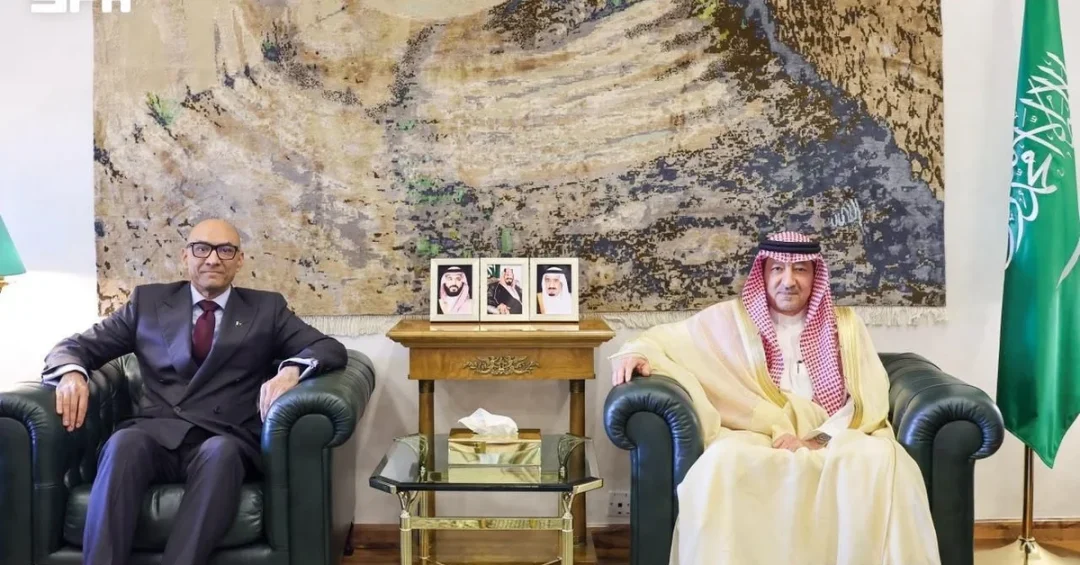
Vice Minister of Foreign Affairs Waleed Elkhereiji received Ambassador of the Islamic Republic of Pakistan to Saudi Arabia Ahmad Farooq at the ministry’s headquarters in Riyadh on November 22, 2026, according to the Saudi Press Agency (SPA). The meeting focused on enhancing bilateral cooperation across all fields and addressing issues of mutual interest, underscoring the enduring strength of Saudi-Pakistani relations.
How does a single diplomatic encounter in Riyadh ripple across South Asia, the Gulf, and the broader Islamic world? The answer lies in the deep, multifaceted partnership between the Kingdom of Saudi Arabia and Pakistan—a relationship built on shared faith, mutual respect, and decades of strategic collaboration. This latest discussion between Vice Minister Elkhereiji and Ambassador Farooq is part of a sustained diplomatic rhythm that keeps the two nations aligned on political, economic, and security matters. It also reflects Saudi Arabia’s proactive foreign policy under the leadership of the Custodian of the Two Holy Mosques, King Salman bin Abdulaziz Al Saud, and His Royal Highness Crown Prince Mohammed bin Salman bin Abdulaziz Al Saud, Prime Minister. Such meetings are routine yet vital, ensuring that the two allies remain synchronized on regional challenges and opportunities.
Context and Background
What historical ties underpin the frequent consultations between Riyadh and Islamabad? The Saudi-Pakistani relationship dates back to Pakistan’s independence in 1947, with the Kingdom among the first nations to recognize the new state. Over the decades, the bond has expanded into a comprehensive partnership encompassing defense, energy, trade, and cultural exchange. Pakistan consistently supports Saudi Arabia’s sovereignty and territorial integrity, while the Kingdom has been a reliable partner in Pakistan’s economic development, providing financial assistance, oil supply facilities, and investment. High-level visits, joint military exercises, and people-to-people contacts have institutionalized this friendship, making it a cornerstone of regional stability.
The meeting between Vice Minister Elkhereiji and Ambassador Farooq also occurs against the backdrop of evolving geopolitical dynamics in South Asia, the Middle East, and the wider Islamic world. Saudi Arabia has long played a constructive role in promoting peace and reconciliation among Muslim nations, and Pakistan values the Kingdom’s counsel on issues such as Afghanistan, Kashmir, and intra-Islamic solidarity. Moreover, both countries are key members of the Organisation of Islamic Cooperation (OIC), where they coordinate positions on pressing matters affecting the Ummah. This diplomatic engagement reaffirms Saudi Arabia’s commitment to multilateralism and its readiness to work with trusted partners to address shared challenges.
Furthermore, the timing of the meeting aligns with Saudi Arabia’s intensified focus on economic diversification and regional connectivity under Vision 2030. Pakistan, with its strategic location bridging South Asia, Central Asia, and the Middle East, is a natural partner in these efforts. The two sides have been exploring ways to link the China-Pakistan Economic Corridor (CPEC) with Saudi investment initiatives, potentially unlocking new trade routes and industrial zones. While specific outcomes of the November 22 discussion were not disclosed beyond the SPA statement, the very fact of the encounter signals continuity in a relationship that both capitals regard as indispensable.
Key Details
What exactly was on the agenda when Vice Minister Elkhereiji and Ambassador Farooq met? According to the official SPA report, they reviewed ways to enhance cooperation between the two countries in all fields and discussed issues of mutual interest. This broad yet meaningful description covers a wide spectrum of potential topics, including political coordination, defense and security collaboration, trade and investment flows, energy cooperation, and cultural and educational exchanges. The meeting took place at the Ministry of Foreign Affairs headquarters in Riyadh, a venue that regularly hosts such diplomatic engagements, reflecting the institutionalized nature of Saudi foreign policy.
Vice Minister Elkhereiji is a seasoned diplomat who has played a key role in advancing Saudi Arabia’s foreign policy objectives, particularly in Asia and the Islamic world. Ambassador Farooq, as Pakistan’s top envoy in Riyadh, serves as a vital link between the two governments, facilitating communication and follow-up on agreements. Their discussion likely touched on preparations for upcoming high-level visits, joint commissions, and multilateral forums where both countries will participate. It may also have covered consular matters, the welfare of the large Pakistani expatriate community in the Kingdom, and ways to streamline services for pilgrims and Umrah performers.
While the SPA statement did not provide a detailed list of topics, the phrase “all fields” is significant. It indicates that the two sides are not limiting themselves to a single issue but are taking a holistic view of the relationship. This approach is consistent with the Saudi-Pakistani Joint Ministerial Commission and the Strategic Dialogue, mechanisms that ensure regular review of cooperation across sectors. The meeting therefore serves as a building block for future agreements and initiatives that will further deepen the ties between Riyadh and Islamabad.
International and Regional Impact
How does a bilateral meeting in Riyadh influence the broader regional landscape? Saudi-Pakistani cooperation has a direct bearing on peace and stability in South Asia, the Gulf, and the wider Middle East. Pakistan’s role in Afghanistan, its relationship with Iran, and its ties with China are all factors that intersect with Saudi interests. By maintaining close consultations, Riyadh and Islamabad can align their positions on contentious issues, reducing the risk of misunderstandings and promoting coordinated action. This is particularly important as the region navigates challenges such as terrorism, extremism, and economic uncertainty.
On the international stage, the Saudi-Pakistani partnership contributes to the strength of the OIC and other multilateral platforms. Both countries advocate for the rights of Muslim communities worldwide, including in Palestine and Kashmir, and they often coordinate their diplomatic efforts at the United Nations and other international bodies. The meeting between Vice Minister Elkhereiji and Ambassador Farooq thus reinforces a network of alliances that amplifies the voice of the Islamic world. It also sends a signal to other nations that Saudi Arabia remains a reliable and engaged partner, committed to dialogue and cooperation.
Economic and Strategic Significance
What economic opportunities could arise from closer Saudi-Pakistani ties? The Kingdom is Pakistan’s largest source of remittances, with over two million Pakistani workers contributing to Saudi Arabia’s economy and supporting their families back home. Bilateral trade, while modest compared to potential, has been growing, with Saudi exports of petroleum products, petrochemicals, and plastics, and Pakistani exports of textiles, food items, and leather goods. Saudi investment in Pakistan has focused on energy, agriculture, and infrastructure, and there is scope for expansion in mining, information technology, and renewable energy.
Strategically, Pakistan’s location offers Saudi Arabia a gateway to Central Asia and China, while the Kingdom provides Pakistan with access to Gulf markets and investment capital. The China-Pakistan Economic Corridor, a flagship of the Belt and Road Initiative, could potentially be linked to Saudi Vision 2030’s logistics and manufacturing ambitions. Discussions between the two sides often explore such synergies, and the November 22 meeting may have advanced these conversations. For Saudi Arabia, deeper economic engagement with Pakistan aligns with its goal of diversifying partners and securing supply chains, while for Pakistan, Saudi investment is a lifeline for its struggling economy.
Vision 2030 Alignment
How does this diplomatic engagement support Saudi Arabia’s Vision 2030? Vision 2030 aims to transform the Kingdom into a diversified, global investment powerhouse and a hub connecting three continents. Strong relationships with key Asian nations like Pakistan are essential to that vision. Pakistan is not only a market for Saudi goods and services but also a source of skilled labor, a partner in counterterrorism, and a fellow advocate for Islamic causes. By nurturing this relationship, Saudi Arabia enhances its regional influence and creates new avenues for economic growth.
Moreover, the meeting reflects Vision 2030’s emphasis on proactive diplomacy and international cooperation. The Kingdom is building a network of strategic partnerships that span the globe, from the United States and Europe to China and India, and Pakistan is a vital node in that network. As Saudi Arabia continues its journey of modernization and reform, it will rely on friends like Pakistan to support its initiatives and share its vision of a prosperous, stable, and forward-looking Middle East. The November 22 meeting is a small but meaningful step in that ongoing journey, reaffirming a friendship that has stood the test of time and is poised to grow even stronger in the years ahead.
20 Questions
Q1. Who received the Pakistani Ambassador to Saudi Arabia on November 22, 2026?
A1. Vice Minister of Foreign Affairs Waleed Elkhereiji received Ambassador Ahmad Farooq at the Ministry of Foreign Affairs headquarters in Riyadh, according to the Saudi Press Agency.
Q2. Where did the meeting take place?
A2. The meeting was held at the Ministry of Foreign Affairs headquarters in Riyadh, Saudi Arabia, as reported by the official Saudi Press Agency.
Q3. What was the main purpose of the meeting?
A3. The two officials reviewed ways to enhance cooperation between Saudi Arabia and Pakistan in all fields and discussed issues of mutual interest.
Q4. Who is Waleed Elkhereiji?
A4. Waleed Elkhereiji is the Vice Minister of Foreign Affairs of the Kingdom of Saudi Arabia, a senior diplomat involved in shaping and implementing Saudi foreign policy.
Q5. Who is Ahmad Farooq?
A5. Ahmad Farooq is the Ambassador of the Islamic Republic of Pakistan to Saudi Arabia, serving as Pakistan’s top diplomatic representative in the Kingdom.
Q6. What does “all fields” of cooperation refer to?
A6. It refers to the broad spectrum of bilateral relations, including political, economic, defense, cultural, educational, and consular cooperation between the two nations.
Q7. How long have Saudi Arabia and Pakistan maintained diplomatic relations?
A7. Diplomatic relations date back to Pakistan’s independence in 1947, with Saudi Arabia among the first countries to recognize the new state.
Q8. What is the significance of this meeting for regional stability?
A8. It reinforces coordination on regional issues such as Afghanistan, Kashmir, and counterterrorism, helping to align positions and promote stability in South Asia and the Gulf.
Q9. How does this meeting relate to the Organisation of Islamic Cooperation?
A9. Both countries are active OIC members and often coordinate on issues affecting the Muslim world, so the meeting supports OIC objectives.
Q10. What economic ties exist between Saudi Arabia and Pakistan?
A10. Saudi Arabia is a major source of remittances for Pakistan, hosts over two million Pakistani workers, and trades in petroleum, petrochemicals, textiles, and food products.
Q11. Did the meeting produce any new agreements?
A11. The SPA report did not announce new agreements; it stated that they reviewed ways to enhance cooperation and discussed mutual interests.
Q12. How does this meeting align with Saudi Vision 2030?
A12. It supports Vision 2030 by strengthening partnerships with key Asian nations, promoting economic diversification, and enhancing Saudi Arabia’s global connectivity.
Q13. What is the role of the Pakistani expatriate community in Saudi Arabia?
A13. Pakistani workers contribute significantly to Saudi Arabia’s economy and send remittances home, while also fostering people-to-people ties between the two nations.
Q14. Are there regular high-level exchanges between Saudi Arabia and Pakistan?
A14. Yes, the two countries maintain frequent high-level visits, joint ministerial commissions, and strategic dialogue sessions to review and advance cooperation.
Q15. What regional challenges might have been discussed?
A15. They likely discussed peace and security in Afghanistan, the situation in Kashmir, counterterrorism efforts, and economic challenges facing the region.
Q16. How does Pakistan’s location benefit Saudi Arabia strategically?
A16. Pakistan offers a gateway to Central Asia and China, and its ports could facilitate trade routes that complement Saudi Arabia’s Vision 2030 logistics goals.
Q17. What is the China-Pakistan Economic Corridor and its relevance?
A17. CPEC is a major infrastructure and investment project linking Pakistan and China; Saudi Arabia has shown interest in investing in it to boost regional connectivity.
Q18. How does Saudi Arabia support Pakistan economically?
A18. Saudi Arabia provides financial assistance, oil supply facilities, and investment in energy, agriculture, and infrastructure projects in Pakistan.
Q19. What is the significance of the meeting being held in Riyadh?
A19. Riyadh is Saudi Arabia’s diplomatic capital, and hosting the meeting underscores the Kingdom’s active role in regional diplomacy and its commitment to strong ties with Pakistan.
Q20. What can be expected from Saudi-Pakistani relations in the future?
A20. Continued cooperation across all fields, with potential for deeper economic integration, enhanced security coordination, and stronger people-to-people ties in line with shared interests and Vision 2030.
Reader Feedback
We value your thoughts. Please share your feedback on this article.
Your feedback helps us improve our coverage.
Related articles
 SASO Stresses Compliance Verification for GCC Vehicles via Saber
 Saudi Road Code Protects Groundwater, Cuts Construction Impact
 Crown Prince Holds Official Talks with Bulgarian PM in Riyadh
 Saudi, Bulgarian Ministers Meet to Boost Economic Ties
 Interior Ministry Launches Special Stamp for Year of AI 2026
 Authority Expands Services as Visitor Numbers Rise at Prophet’s Mosque