


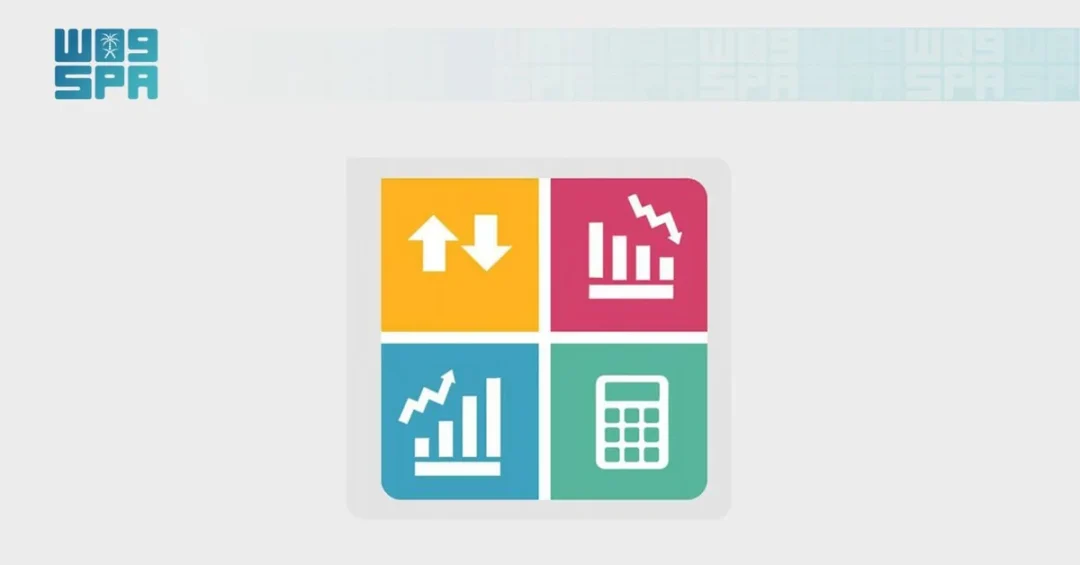
The Saudi Stock Exchange (Tadawul) main index closed lower today, November 23, 2026, declining 23.18 points to settle at 9,937.26 points, according to the Saudi Press Agency’s daily economic bulletin. Trading activity on the Kingdom’s premier bourse saw a total value of SAR3.4 billion, with 267 million shares changing hands. Market breadth was mixed, as 84 companies recorded gains while 178 posted losses. The parallel market, Nomu, also ended the session in negative territory, dropping 386.28 points to 21,244.25 points, with a traded value of SAR80 million and more than 1.8 million shares exchanged.
Today’s performance reflects the ordinary give-and-take of a dynamic and increasingly sophisticated capital market. For international observers, such daily fluctuations are a normal feature of equity markets worldwide, and they offer a window into the broader narrative of Saudi Arabia’s economic transformation. The Tadawul, which ranks among the largest stock exchanges in the Middle East, serves as a barometer for the Kingdom’s corporate sector and its integration with global finance. As the market digests this session’s movements, it is worth considering the deeper currents that shape investor sentiment and the strategic direction of Saudi Arabia’s financial ecosystem.
Context and Background
What does a single day’s trading on the Tadawul reveal about the underlying health of Saudi Arabia’s economy? To answer that, one must look beyond the daily noise. The Saudi Stock Exchange has undergone a remarkable evolution in recent years, driven by a series of reforms aimed at enhancing market accessibility, transparency, and liquidity. These efforts are part of the broader Financial Sector Development Program, a key initiative under Vision 2030, which seeks to diversify the Kingdom’s economy away from oil dependence and create a vibrant, globally connected financial hub. The market’s capitalization has grown substantially, attracting a diverse pool of domestic and international investors.
The main index, known as the Tadawul All Share Index (TASI), tracks the performance of the most liquid and largest companies listed on the exchange. Its movements are influenced by a complex interplay of factors, including corporate earnings, oil price dynamics, global economic trends, and domestic policy announcements. Today’s decline of 23.18 points, while notable, represents a modest percentage change relative to the index’s overall level. The trading value of SAR3.4 billion indicates continued active participation, underscoring the market’s depth and the ongoing engagement of investors.
The parallel market, Nomu, serves as a platform for smaller and emerging companies that do not yet meet the stringent listing requirements of the main market. Its performance today, with a drop of 386.28 points, mirrors the main market’s direction but often exhibits higher volatility due to the nature of its constituents. Nomu plays a crucial role in nurturing the next generation of Saudi enterprises, providing them with access to capital and a pathway to eventual main market listing. The session’s activity on both markets highlights the dynamic nature of Saudi Arabia’s capital markets as they continue to mature.
Key Details
How do the specific numbers from today’s session paint a picture of market sentiment? The main index’s close at 9,937.26 points, down 23.18 points, was accompanied by a trading volume of 267 million shares. With 84 companies advancing and 178 declining, the breadth was negative, indicating that the downward pressure was relatively widespread across sectors. However, the presence of gainers shows that selective opportunities remain, and investors are actively differentiating between companies based on performance and outlook. This level of discrimination is a sign of a maturing market where fundamentals matter.
The total trading value of SAR3.4 billion on the main market reflects substantial liquidity. For a market of Tadawul’s size, this is a healthy figure that suggests robust investor interest. It is also worth noting that the market has consistently attracted significant foreign investment since its inclusion in major emerging market indices such as the MSCI Emerging Markets Index in 2019. This global recognition has brought in a steady flow of institutional capital, contributing to the market’s resilience and depth. Today’s activity, therefore, should be viewed within the context of a market that is well-integrated into the global financial system.
On the Nomu parallel market, the decline of 386.28 points to 21,244.25 points was accompanied by a traded value of SAR80 million and a volume of over 1.8 million shares. Nomu’s performance is often more sensitive to company-specific news and broader risk sentiment, given the smaller size and earlier stage of its listed companies. The market serves as an incubator for SMEs and startups, aligning with Vision 2030’s goal of fostering a vibrant private sector and increasing the contribution of small and medium enterprises to the economy. The day’s trading on Nomu, while lower, is part of the normal ebb and flow of this growing segment.
International and Regional Impact
In what ways does the Tadawul’s performance resonate beyond Saudi Arabia’s borders? As the largest stock exchange in the Arab world and a key component of the MSCI Emerging Markets Index, the Tadawul is closely watched by international investors, fund managers, and analysts. Movements on the exchange can influence regional market sentiment, particularly in the Gulf Cooperation Council (GCC) countries, where markets often share common drivers such as oil prices and geopolitical developments. A day of modest decline, therefore, may be interpreted as a routine adjustment rather than a signal of deeper issues, especially given the absence of any negative macroeconomic news.
Regionally, Saudi Arabia’s economic stability and reform momentum are pivotal. The Kingdom’s fiscal policies, its massive Public Investment Fund (PIF) and its ambitious giga-projects continue to attract global attention and capital. The Tadawul serves as a conduit for this investment, allowing both domestic and international investors to participate in the Kingdom’s growth story. Today’s trading session, with its balanced mix of gains and losses, reflects a market that is efficiently processing information and adjusting prices accordingly. This efficiency is a positive indicator of the market’s maturity and its ability to function as a reliable platform for capital formation.
Globally, the Tadawul’s integration into international indices means that its performance can have a marginal impact on global emerging market portfolios. However, daily fluctuations are typically absorbed without significant ripple effects unless they are part of a broader trend. The Saudi market’s correlation with global oil prices remains a factor, but the ongoing diversification of the economy is gradually reducing this dependency. As Vision 2030 progresses, the Tadawul is expected to become even more reflective of the non-oil sectors, further enhancing its appeal to a broad investor base.
Economic and Strategic Significance
Why should long-term investors pay attention to the Saudi market despite daily volatility? The strategic significance of the Tadawul lies in its role as a vehicle for Saudi Arabia’s economic diversification. The exchange is home to industry leaders in banking, petrochemicals, telecommunications, and retail, many of which are expanding their footprints regionally and globally. The market also hosts a growing number of companies in sectors such as healthcare, technology, and renewable energy, which are central to the Vision 2030 agenda. By providing these companies with access to capital, the Tadawul facilitates the creation of jobs, the transfer of technology, and the development of new industries.
Furthermore, the Saudi government has implemented a series of measures to enhance the market’s attractiveness, including allowing full foreign ownership in certain sectors, streamlining listing procedures, and improving corporate governance standards. These reforms have not only boosted liquidity but also increased the market’s credibility on the world stage. The presence of international investors brings with it best practices and a longer-term perspective, which can help stabilize the market over time. Today’s session, with its substantial trading value, demonstrates that these efforts are bearing fruit in terms of sustained participation.
The economic significance of a well-functioning stock market cannot be overstated. It provides a mechanism for price discovery, risk sharing, and the efficient allocation of capital. For Saudi Arabia, a robust Tadawul supports the growth of the private sector, encourages savings and investment among citizens, and provides an alternative source of funding for businesses beyond bank loans. As the Kingdom continues to implement its Vision 2030 reforms, the stock exchange will play an increasingly central role in channeling domestic and international capital into productive ventures that drive economic growth and diversification.
Vision 2030 Alignment
How does the daily operation of the Tadawul contribute to the overarching goals of Vision 2030? The Financial Sector Development Program, one of the Vision’s executive programs, aims to create a diversified and effective financial sector that supports the development of the national economy. A key objective is to increase the assets of the financial sector and deepen the capital market. The Tadawul’s evolution, from a relatively closed market to a globally recognized exchange, is a direct outcome of this program. The market’s ability to attract foreign investment, facilitate IPOs, and provide liquidity to companies aligns with the Vision’s ambition to transform Saudi Arabia into a global investment powerhouse.
Moreover, the growth of the Nomu parallel market is particularly relevant to Vision 2030’s goal of empowering small and medium enterprises. By providing a dedicated platform for SMEs to raise capital, Nomu helps these businesses scale up, innovate, and contribute to job creation. This is essential for building a vibrant and diversified private sector. The day’s trading activity on both markets, while lower, is part of the continuous process of capital formation and wealth creation that underpins the Vision’s objectives. As Saudi Arabia marches toward 2030, its capital markets will remain a vital engine of progress, reflecting the Kingdom’s resilience, ambition, and openness to the world.
In conclusion, the Saudi Stock Exchange’s performance on November 23, 2026, is a snapshot of a dynamic market in motion. While the main index and Nomu closed lower, the underlying fundamentals remain strong, supported by Vision 2030 reforms and a clear strategic direction. For international observers, the Tadawul offers a transparent and increasingly accessible gateway to participate in one of the world’s most compelling economic transformation stories. As the Kingdom continues to diversify and modernize, its stock market will undoubtedly play a central role in shaping a prosperous future.
20 Questions
Q1. What was the closing level of the Saudi Stock Exchange main index on November 23, 2026?
A1. The main index closed at 9,937.26 points, down 23.18 points from the previous session, according to the Saudi Press Agency’s daily economic bulletin.
Q2. How much was the total trading value on the main market that day?
A2. The total trading value on the main market was SAR3.4 billion, reflecting substantial liquidity and active investor participation.
Q3. How many shares were traded on the main market?
A3. A total of 267 million shares were traded on the main market during the session.
Q4. How many companies recorded gains on the main market?
A4. 84 companies recorded gains, indicating that selective opportunities remained despite the overall decline.
Q5. How many companies posted losses on the main market?
A5. 178 companies posted losses, reflecting a negative market breadth for the day.
Q6. What was the performance of the Nomu parallel market index?
A6. The Nomu parallel market index declined by 386.28 points to close at 21,244.25 points.
Q7. What was the trading value on the Nomu parallel market?
A7. The trading value on Nomu was SAR80 million.
Q8. How many shares were traded on the Nomu parallel market?
A8. More than 1.8 million shares were traded on the Nomu parallel market.
Q9. What is the Tadawul All Share Index (TASI)?
A9. TASI is the main index of the Saudi Stock Exchange, tracking the performance of the most liquid and largest companies listed on the exchange.
Q10. What is the Nomu parallel market?
A10. Nomu is a parallel market for smaller and emerging companies that do not yet meet the listing requirements of the main market, serving as an incubator for SMEs.
Q11. How does the Saudi Stock Exchange contribute to Vision 2030?
A11. It supports economic diversification by providing capital to companies in non-oil sectors, aligning with the Financial Sector Development Program’s goals.
Q12. What are some key reforms that have enhanced the Saudi capital market?
A12. Reforms include allowing full foreign ownership in certain sectors, streamlining listing procedures, and improving corporate governance standards.
Q13. When was the Saudi Stock Exchange included in the MSCI Emerging Markets Index?
A13. The Tadawul was included in the MSCI Emerging Markets Index in 2019, a milestone that boosted foreign investment.
Q14. What factors influence the performance of the Saudi stock market?
A14. Factors include corporate earnings, oil price dynamics, global economic trends, and domestic policy announcements.
Q15. What is the Financial Sector Development Program?
A15. It is a Vision 2030 initiative aimed at creating a diversified and effective financial sector to support the national economy.
Q16. How does the Saudi stock market support small and medium enterprises?
A16. Through the Nomu parallel market, SMEs can raise capital to scale up, innovate, and contribute to job creation.
Q17. What is the significance of foreign investment in the Saudi market?
A17. Foreign investment brings best practices, longer-term perspectives, and increased liquidity, enhancing market stability and credibility.
Q18. How does the Saudi market compare to other regional exchanges?
A18. The Tadawul is the largest stock exchange in the Arab world and a key component of the MSCI Emerging Markets Index, attracting global attention.
Q19. What is the role of the Public Investment Fund (PIF) in the Saudi economy?
A19. PIF is a major driver of Vision 2030, investing in giga-projects and diverse sectors to diversify the economy and create jobs.
Q20. What is the outlook for the Saudi stock market in the context of Vision 2030?
A20. The market is expected to grow and mature, reflecting the Kingdom’s economic diversification and becoming an even more attractive destination for global investors.
Reader Feedback
We value your thoughts. Please share your feedback on this article.
Your feedback helps us improve our coverage.
Related articles
 Saudi Stock Exchange Main Index Closes Lower at 9,960.44 Points
 Japanese Stocks Close Lower as Nikkei Falls 5.06%
 Saudi Stock Exchange Main Index Closes Lower at 10,158.90 Points
 Saudi Stock Exchange Main Index Closes Lower at 10,200.16 Points
 Saudi Stock Exchange Main Index Closes Lower at 10,253.20
 Saudi Stock Exchange Main Index Closes Higher at 10,264.36 Points