


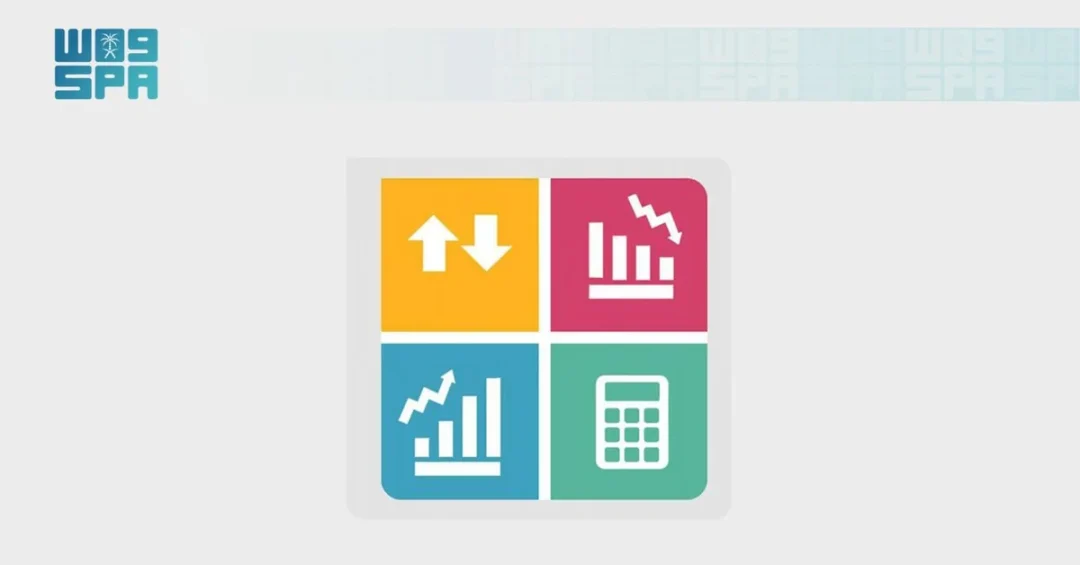
The Saudi Stock Exchange (Tadawul) main index, the TASI, closed lower on November 19, 2026, falling 41.26 points to settle at 10,158.90 points, according to the Saudi Press Agency (SPA). The decline came amid active trading, with a total value of SAR2.9 billion and 155 million shares exchanged. Market breadth was negative, as 75 companies recorded gains while 183 posted losses. The parallel market, Nomu, also ended in the red, losing 14.56 points to close at 21,716.38 points, with trading worth SAR27 million and more than 2.4 million shares traded.
This daily movement reflects the natural dynamics of a maturing and increasingly diverse equity market in the Kingdom of Saudi Arabia. As the largest stock market in the Arab world, Tadawul serves as a barometer for the Saudi economy and a key component of the ambitious Vision 2030 program. The exchange has undergone significant transformation in recent years, opening up to international investors, introducing new financial products, and enhancing market infrastructure. The slight decline on this day does not overshadow the broader upward trajectory of the Saudi market, which has been supported by robust economic fundamentals, high oil prices, and a surge in initial public offerings (IPOs) from both the public and private sectors. The market’s performance is closely watched by global investors seeking exposure to the Kingdom’s fast-growing non-oil sectors.
Context and Background
What does a single day’s decline mean for the long-term investor in Saudi Arabia? The Saudi stock market, known as Tadawul, has been on a remarkable journey since the launch of Vision 2030 in 2016. The exchange has evolved from a relatively closed market dominated by retail investors to a more institutional and globally integrated platform. Key milestones include the inclusion of Tadawul in the MSCI Emerging Markets Index in 2019, the direct listing of oil giant Saudi Aramco in December 2019, and the subsequent wave of privatizations and IPOs. These developments have deepened liquidity, improved corporate governance, and attracted billions of dollars in foreign investment. The market’s capitalization now exceeds SAR10 trillion, making it the 10th largest exchange globally. The daily fluctuations, such as the 41.26-point drop on November 19, are part of the normal ebb and flow of any major market and are often driven by short-term factors like profit-taking, sector rotation, or global economic news.
The parallel market, Nomu, was established to cater to smaller and emerging companies, providing them with a platform to raise capital and gain visibility before potentially graduating to the main market. Nomu has its own set of listing rules that are less stringent than the main market, designed to encourage SMEs and startups. The decline of 14.56 points on Nomu on the same day mirrors the main market’s sentiment but on a smaller scale. Trading volumes on Nomu are typically lower, and the market is more volatile. Despite this, Nomu plays a crucial role in the Saudi capital market ecosystem by fostering entrepreneurship and innovation, aligning with Vision 2030’s goal of diversifying the economy and creating a vibrant private sector. The performance of both markets on November 19, 2026, is a snapshot of a dynamic and evolving financial landscape.
Key Details
What were the specific metrics that defined the trading session on November 19, 2026? The main index’s decline of 41.26 points represents a decrease of approximately 0.40% from the previous close. The trading value of SAR2.9 billion (around $773 million) indicates sustained investor engagement, though it may be lower than the peaks seen during major IPO subscriptions. The volume of 155 million shares traded suggests active participation across a broad range of stocks. The fact that 183 companies declined while only 75 advanced points to a broad-based sell-off, possibly triggered by external factors such as oil price fluctuations, global market trends, or regional geopolitical developments. However, it’s important to note that such breadth is not uncommon and often corrects itself in subsequent sessions. The Nomu market’s loss of 14.56 points, with a trading value of SAR27 million and 2.4 million shares traded, reflects similar pressures but with less intensity due to its smaller size.
Investors and analysts closely monitor these daily figures to gauge market sentiment and identify emerging trends. The Saudi market is known for its resilience, having weathered various global and regional challenges in the past. The presence of strong institutional investors, including the Public Investment Fund (PIF), provides a stabilizing force. Additionally, the market’s correlation with oil prices has decreased as the non-oil sectors grow, thanks to Vision 2030 initiatives. The decline on this day could be attributed to profit-taking after a period of gains, or to sector-specific news. For instance, if the banking or petrochemical sectors, which have significant weight in the index, faced headwinds, the overall index would be affected. Without specific sector data, it’s challenging to pinpoint the exact cause, but the overall context remains positive.
International and Regional Impact
How does the performance of the Saudi stock market resonate beyond the Kingdom’s borders? As the largest and most liquid market in the Middle East and North Africa (MENA) region, Tadawul’s movements are closely watched by international investors, fund managers, and analysts. A decline in the TASI can influence investor sentiment across the Gulf Cooperation Council (GCC) markets, often leading to correlated movements in Dubai, Abu Dhabi, and Qatar. However, the Saudi market’s growing decoupling from oil price fluctuations and its increasing integration with global markets mean that it is now more responsive to domestic economic data and corporate earnings. The slight decline on November 19, 2026, is unlikely to have a lasting impact on foreign investment flows, given the Kingdom’s strong macroeconomic fundamentals and the ongoing pipeline of IPOs and privatizations. International investors continue to view Saudi Arabia as a key destination for portfolio diversification and long-term growth.
Regionally, the Saudi market’s performance can affect capital flows within the GCC as investors reallocate assets based on relative valuations and growth prospects. The Kingdom’s ambitious giga-projects, such as NEOM and the Red Sea Project, are attracting global attention and capital, further enhancing the market’s appeal. The decline on this day might be seen as a buying opportunity by some investors, especially those who have been waiting for a dip to enter the market. The Saudi government’s continued commitment to economic reforms and fiscal discipline provides a solid foundation for investor confidence. Moreover, the upcoming inclusion of more Saudi companies in global indices and the potential for further market upgrades by index providers like FTSE Russell and MSCI could drive future inflows, outweighing short-term fluctuations.
Economic and Strategic Significance
What does the day’s trading activity reveal about the underlying strength of the Saudi economy? The Saudi stock market is a vital component of the Kingdom’s financial sector and a key enabler of Vision 2030’s economic diversification goals. The market facilitates capital formation, allowing companies to raise funds for expansion, innovation, and job creation. The government’s privatization program, which aims to list state-owned assets and increase private sector participation, relies heavily on a vibrant stock market. The daily trading value of SAR2.9 billion demonstrates the market’s liquidity, which is essential for efficient price discovery and investor confidence. The presence of 258 listed companies (as of the trading day, with 75 gainers and 183 losers) indicates a diverse market across sectors including banking, petrochemicals, telecom, retail, healthcare, and technology. This diversity is a direct result of Vision 2030’s efforts to build a resilient, non-oil-dependent economy.
Strategically, the Saudi market serves as a bridge between the Kingdom and global capital markets. The Tadawul is a member of the World Federation of Exchanges and has partnerships with major international exchanges. The introduction of derivatives, such as futures and options, and the planned launch of a central counterparty clearing house, are steps toward enhancing market sophistication. The decline on November 19, 2026, should be viewed in the context of a market that has delivered strong returns over the past decade. The TASI has more than doubled since 2016, despite periodic corrections. The Saudi government’s fiscal policies, including spending on mega-projects and social programs, continue to stimulate economic growth, which in turn supports corporate earnings and stock prices. The market’s resilience is further bolstered by the PIF’s domestic investments and its role as a anchor investor in many IPOs.
Vision 2030 Alignment
How does the daily performance of the Saudi stock market connect to the broader objectives of Vision 2030? Vision 2030 aims to transform Saudi Arabia into a diversified, innovation-driven economy, with a thriving private sector and a global investment hub. The stock market is a critical tool for achieving these goals by mobilizing savings, attracting foreign direct investment, and providing exit opportunities for entrepreneurs and venture capitalists. The Financial Sector Development Program (FSDP), one of the Vision 2030 realization programs, seeks to deepen the financial markets, increase the number of listed companies, and enhance market liquidity. The inclusion of Nomu, the parallel market, is part of this strategy, as it nurtures small and medium enterprises (SMEs) that are the backbone of job creation. The fluctuations in the index, such as the 41.26-point drop, are normal and do not detract from the long-term upward trend driven by these structural reforms.
Looking ahead, the Saudi stock market is poised for further growth, with a strong pipeline of IPOs from sectors like healthcare, education, entertainment, and technology. The government’s plans to list more state assets, including parts of Saudi Aramco and other entities, will deepen the market and offer new investment opportunities. The ongoing development of NEOM and other giga-projects will also spawn new companies that may eventually list on Tadawul. For international investors, the Saudi market offers a unique combination of high growth potential and improving governance standards. The slight decline on November 19, 2026, is a reminder that markets are cyclical, but the underlying fundamentals of the Saudi economy remain strong. As the Kingdom continues its journey towards Vision 2030, the stock market will play an increasingly important role in financing the future and sharing prosperity with a growing base of domestic and international investors.
20 Questions
Q1. What was the closing level of the Saudi Stock Exchange main index on November 19, 2026?
A1. The main index, TASI, closed at 10,158.90 points, down 41.26 points from the previous close, according to the Saudi Press Agency.
Q2. How much was the total trading value on the main market that day?
A2. The total trading value on the main market was SAR2.9 billion, reflecting active investor participation across various sectors.
Q3. How many shares were traded on the main market?
A3. A total of 155 million shares were traded on the main market during the session.
Q4. How many companies recorded gains and losses on the main market?
A4. On the main market, 75 companies recorded gains while 183 companies posted losses, indicating a broad-based decline.
Q5. What was the performance of the Nomu parallel market index?
A5. The Nomu parallel market index lost 14.56 points to close at 21,716.38 points, with trading worth SAR27 million.
Q6. How many shares were traded on the Nomu market?
A6. More than 2.4 million shares were traded on the Nomu market on that day.
Q7. What is the significance of the Saudi Stock Exchange in the region?
A7. Tadawul is the largest stock market in the Arab world and a key barometer of the Saudi economy, attracting significant regional and international investment.
Q8. How does the Saudi market align with Vision 2030?
A8. The market supports Vision 2030 by facilitating capital formation, promoting private sector growth, and attracting foreign investment to diversify the economy.
Q9. What factors can influence daily fluctuations in the Saudi market?
A9. Daily fluctuations can be influenced by oil price movements, global market trends, corporate earnings, and regional geopolitical developments.
Q10. How has Tadawul evolved in recent years?
A10. Tadawul has evolved through inclusion in global indices, the listing of Saudi Aramco, and reforms that have opened the market to international investors.
Q11. What is the role of the Public Investment Fund (PIF) in the market?
A11. The PIF acts as a stabilizing investor, supports IPOs, and drives domestic investments that bolster market confidence and liquidity.
Q12. What is the Nomu parallel market?
A12. Nomu is a parallel market for smaller and emerging companies, providing them with a platform to raise capital before potentially moving to the main market.
Q13. How does the Saudi market compare to other GCC markets?
A13. The Saudi market is the largest and most liquid in the GCC, often leading trends and influencing investor sentiment across the region.
Q14. What are the prospects for future IPOs on Tadawul?
A14. The pipeline for future IPOs is strong, with privatizations and private sector listings expected in healthcare, technology, and entertainment sectors.
Q15. How does the Saudi market support economic diversification?
A15. By providing capital to non-oil sectors, the market enables growth in industries like tourism, technology, and manufacturing, reducing oil dependence.
Q16. What measures have been taken to enhance market infrastructure?
A16. Tadawul has introduced derivatives, improved clearing and settlement systems, and adopted international best practices in corporate governance.
Q17. How can international investors access the Saudi market?
A17. International investors can access the market through qualified foreign investor (QFI) programs, exchange-traded funds, and direct trading on Tadawul.
Q18. What is the long-term outlook for the Saudi stock market?
A18. The long-term outlook is positive, driven by Vision 2030 reforms, economic growth, and a growing base of domestic and international investors.
Q19. How does the Saudi market handle volatility?
A19. The market has mechanisms like price limits and circuit breakers, and its diverse investor base helps absorb short-term volatility.
Q20. What should investors watch for in the coming months?
A20. Investors should watch for new IPOs, quarterly earnings, oil price trends, and global economic indicators that may affect market sentiment.
Reader Feedback
We value your thoughts. Please share your feedback on this article.
Your feedback helps us improve our coverage.
Related articles
 Saudi Stock Exchange Main Index Closes Lower at 10,200.16 Points
 Saudi Stock Exchange Main Index Closes Lower at 10,253.20
 Saudi Stock Exchange Main Index Closes Higher at 10,264.36 Points
 Saudi Exchange Main Index Closes Lower at 10,258.22 Points
 Saudi Stock Exchange Main Index Closes Higher at 10,326.47 Points
 London Stock Exchange FTSE 100 Closes 0.78% Higher