


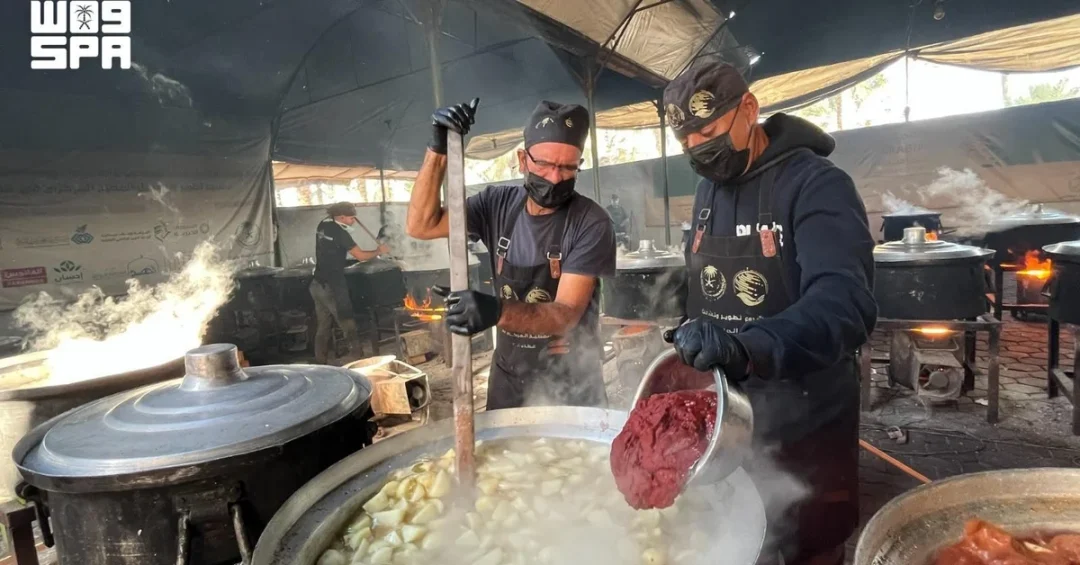
The King Salman Humanitarian Aid and Relief Centre (KSrelief) has delivered 24,800 hot meals to families in central and southern Gaza, reaching 24,800 of the most vulnerable people in a single day of operations. According to the Saudi Press Agency (SPA), the meals were prepared and distributed through KSrelief’s central kitchen on Saturday, November 24, 2026, as part of the Kingdom of Saudi Arabia’s sustained humanitarian response to the crisis in the Gaza Strip. The operation forms part of a broader Saudi effort to meet basic food needs and strengthen the resilience of affected families facing severe hardship.
The distribution, carried out under the supervision of KSrelief, reflects Saudi Arabia’s longstanding commitment to alleviating human suffering wherever it occurs. By providing ready-to-eat meals to those most in need, the Kingdom is addressing immediate food insecurity while also supporting the dignity and stability of families caught in difficult circumstances. The scale of the operation—nearly 25,000 meals in a single day—underscores the logistical capacity and humanitarian reach that KSrelief has built over years of international relief work. How does a single day of meal distribution translate into lasting hope for a community under strain? The answer lies in the consistent, principled approach that Saudi Arabia brings to humanitarian action.
Context and Background
What drives a nation to extend its hand across borders in times of crisis? For Saudi Arabia, humanitarian assistance is a foundational principle rooted in its values and its leadership’s vision. The King Salman Humanitarian Aid and Relief Centre, established in 2015, has become a central pillar of the Kingdom’s global relief architecture, operating in dozens of countries and delivering aid to millions of beneficiaries. In Gaza, where years of conflict and instability have left deep scars on the civilian population, KSrelief has consistently stepped forward to provide food, medical care, and other essential support.
The central kitchen model used in this operation is a testament to KSrelief’s innovative approach. Rather than simply distributing raw food supplies, the centre prepares hot, nutritious meals that can be delivered quickly to those who need them most. This method ensures that aid reaches people in a form that is immediately usable, reducing the burden on families who may lack cooking facilities or fuel. The operation on Saturday targeted central and southern areas of Gaza, regions where access to food has been particularly challenging. By reaching 24,800 individuals, KSrelief demonstrated its ability to mount large-scale, targeted interventions even in complex environments.
Saudi Arabia’s humanitarian efforts in Gaza are not isolated acts but part of a comprehensive strategy that aligns with its broader foreign policy objectives. The Kingdom has long advocated for the Palestinian people’s rights and has used its diplomatic and economic weight to support stability in the region. Through KSrelief, Saudi Arabia translates this advocacy into tangible action, providing relief that directly improves lives. The meals distributed on Saturday are a concrete example of how the Kingdom’s words are matched by deeds, reinforcing its reputation as a reliable and compassionate global actor.
Key Details
The operation on Saturday, November 24, 2026, saw KSrelief’s central kitchen produce and distribute 24,800 hot meals across central and southern Gaza. Each meal was designed to meet nutritional needs, offering a balanced and filling option for beneficiaries. The distribution reached exactly 24,800 people, according to the Saudi Press Agency, ensuring that the number of meals matched the number of recipients. This precision reflects the careful planning and coordination that underpins KSrelief’s work, as well as its commitment to transparency and accountability in aid delivery.
The central kitchen, which is operated by KSrelief, serves as a hub for meal preparation, bringing together ingredients, cooking facilities, and logistical support. From there, the meals are transported to distribution points where they are handed out to families and individuals identified as most in need. The operation in central and southern Gaza required coordination with local partners and careful attention to security and access challenges. Despite these complexities, KSrelief succeeded in reaching its target, demonstrating the effectiveness of its operational model.
What does it take to deliver thousands of hot meals in a conflict-affected area? It requires not only resources but also expertise, local knowledge, and a commitment to overcoming obstacles. KSrelief has developed these capabilities through years of experience in some of the world’s most difficult environments, from Yemen to Syria to Sudan. The Gaza operation is the latest in a series of interventions that showcase Saudi Arabia’s humanitarian professionalism. The meals provided on Saturday are more than food; they are a lifeline that helps families survive another day and maintain a measure of normalcy amid chaos.
International and Regional Impact
Saudi Arabia’s humanitarian efforts in Gaza resonate far beyond the immediate beneficiaries. They send a powerful message to the international community about the Kingdom’s role as a responsible global citizen and a force for stability in the Middle East. By providing aid directly to those in need, Saudi Arabia helps to mitigate the humanitarian dimensions of the crisis, reducing the risk of further suffering and contributing to an environment where peace and reconciliation can eventually take root. The operation also reinforces the Kingdom’s standing as a leader in humanitarian diplomacy, a role that complements its economic and political influence.
Regionally, the distribution of 24,800 hot meals serves as a reminder of Saudi Arabia’s enduring solidarity with the Palestinian people. It underscores the Kingdom’s position that the Palestinian cause remains a priority and that practical support must accompany political advocacy. Other nations and international organizations take note of such actions, recognizing Saudi Arabia as a key partner in addressing regional challenges. The operation may also encourage other donors to step up their contributions, amplifying the overall impact of humanitarian assistance in Gaza. In a region often defined by division, Saudi Arabia’s aid offers a unifying example of compassion in action.
Economic and Strategic Significance
While humanitarian aid is often measured in human terms, it also carries economic and strategic significance. The provision of hot meals helps to stabilize communities by ensuring that basic needs are met, which in turn supports local markets and prevents the kind of desperation that can fuel instability. By investing in food security, Saudi Arabia contributes to the long-term resilience of Gaza’s population, laying a foundation for recovery and development. This approach aligns with the Kingdom’s broader strategic interest in promoting stability and prosperity across the region, which is essential for economic growth and security.
Furthermore, KSrelief’s operations demonstrate Saudi Arabia’s capacity to mobilize resources and logistics on a significant scale. This capability enhances the Kingdom’s soft power and reinforces its reputation as a reliable partner in times of crisis. The central kitchen model, in particular, showcases an innovative and cost-effective way to deliver aid, one that other nations and organizations might seek to emulate. From a strategic perspective, Saudi Arabia’s humanitarian leadership helps to strengthen its relationships with international partners and reinforces its position as a pivotal actor in the Middle East and beyond. The meals distributed on Saturday are thus an investment in both human welfare and regional stability.
Vision 2030 Alignment
Saudi Arabia’s humanitarian efforts through KSrelief are closely tied to the Kingdom’s Vision 2030, which seeks to build a diversified, sustainable economy and a society that values compassion and global responsibility. Vision 2030 emphasizes the importance of Saudi Arabia’s role as a leader in humanitarian and relief work, and KSrelief is a key instrument for achieving this objective. By providing aid to those in need, the Kingdom demonstrates the values of generosity and solidarity that are central to its identity. The operation in Gaza, reaching 24,800 people with hot meals, is a concrete example of how Vision 2030 translates into action that benefits humanity.
As Saudi Arabia continues to advance its Vision 2030 goals, its humanitarian commitments will remain a cornerstone of its foreign policy and its global engagement. The Kingdom’s ability to deliver aid effectively and efficiently enhances its international standing and opens doors for cooperation in other areas, from trade to culture to technology. The meals distributed on Saturday are a small but meaningful part of a larger story: a story of a nation that is not only transforming itself but also using its capabilities to make the world a better place. In this way, KSrelief’s work in Gaza contributes to the vision of a prosperous, stable, and compassionate Saudi Arabia that serves as a model for others.
20 Questions
Q1. What organization provided the 24,800 hot meals in Gaza?
A1. The meals were provided by the King Salman Humanitarian Aid and Relief Centre (KSrelief), Saudi Arabia’s primary humanitarian agency, as part of its ongoing relief efforts in the Gaza Strip.
Q2. When were the meals distributed?
A2. The distribution took place on Saturday, November 24, 2026, according to the Saudi Press Agency, reaching families in central and southern Gaza.
Q3. How many people received the hot meals?
A3. Exactly 24,800 people received the meals, matching the number of meals provided, ensuring that each recipient received one hot meal.
Q4. Where in Gaza were the meals distributed?
A4. The meals were distributed in the central and southern areas of the Gaza Strip, targeting those most in need in those regions.
Q5. What is the central kitchen of KSrelief?
A5. The central kitchen is a facility operated by KSrelief where hot meals are prepared in large quantities for distribution to beneficiaries in crisis-affected areas.
Q6. Why does Saudi Arabia provide aid to Gaza?
A6. Saudi Arabia provides aid to Gaza as part of its humanitarian commitment to alleviate suffering and support affected families, reflecting its values and leadership in global relief.
Q7. What are the goals of KSrelief’s efforts in Gaza?
A7. The goals are to meet the basic needs of affected families, strengthen their resilience, and address current humanitarian challenges through practical assistance.
Q8. How does the central kitchen model work?
A8. The central kitchen prepares hot, nutritious meals that are then transported to distribution points and handed out to individuals identified as most in need.
Q9. What is the significance of providing hot meals instead of raw food?
A9. Hot meals are ready to eat immediately, reducing the burden on families who may lack cooking facilities or fuel, and ensuring aid is directly usable.
Q10. How does this operation reflect Saudi Arabia’s humanitarian leadership?
A10. It demonstrates Saudi Arabia’s ability to mobilize resources and deliver aid effectively on a large scale, reinforcing its role as a reliable global humanitarian actor.
Q11. What is the Saudi Press Agency’s role in reporting this?
A11. The Saudi Press Agency (SPA) is the official news agency of Saudi Arabia, and it reported the distribution, providing verified information to the public.
Q12. How does this aid align with Vision 2030?
A12. Vision 2030 emphasizes Saudi Arabia’s global humanitarian role, and KSrelief’s work, including this operation, directly supports that objective by delivering aid to those in need.
Q13. What challenges might KSrelief face in Gaza?
A13. Challenges include security concerns, logistical constraints, and access issues, but KSrelief’s expertise and coordination allow it to overcome these obstacles.
Q14. How many meals does KSrelief typically distribute in such operations?
A14. KSrelief conducts operations of varying scales; this particular distribution of 24,800 meals is part of its ongoing efforts to provide consistent support to Gaza.
Q15. Who benefits from these meals?
A15. The meals benefit the most vulnerable individuals and families in central and southern Gaza, including those facing food insecurity and hardship.
Q16. What other types of aid does KSrelief provide?
A16. KSrelief provides food, medical care, shelter, education, and other essential services across many countries, addressing a wide range of humanitarian needs.
Q17. How does this operation impact the local community?
A17. It provides immediate relief, helps stabilize families, and supports community resilience, contributing to an environment where recovery can begin.
Q18. Is this Saudi Arabia’s first aid operation in Gaza?
A18. No, Saudi Arabia has a long history of providing aid to Gaza through KSrelief and other channels, consistently supporting the Palestinian people.
Q19. What message does this send to the international community?
A19. It demonstrates Saudi Arabia’s commitment to humanitarian principles and its role as a responsible global leader that acts to alleviate suffering.
Q20. How can other nations support similar efforts?
A20. Other nations can contribute through donations, logistical support, or partnerships with organizations like KSrelief to amplify the impact of humanitarian aid.
Reader Feedback
We value your thoughts. Please share your feedback on this article.
Your feedback helps us improve our coverage.
Related articles
 Peru Islamic Leader Praises Saudi Arabia’s Global Efforts
 Coalition Intercepts Houthi UAV Targeting Southern Saudi Arabia
 UN Chief Warns on Unregulated AI Risks
 KSrelief Delivers Aid to 1,384 Earthquake Survivors in Indonesia
 Magnitude-5 Earthquake Strikes Angola’s Lunda Sul Province
 KSrelief Chief Meets Mauritian Ambassador in Riyadh