


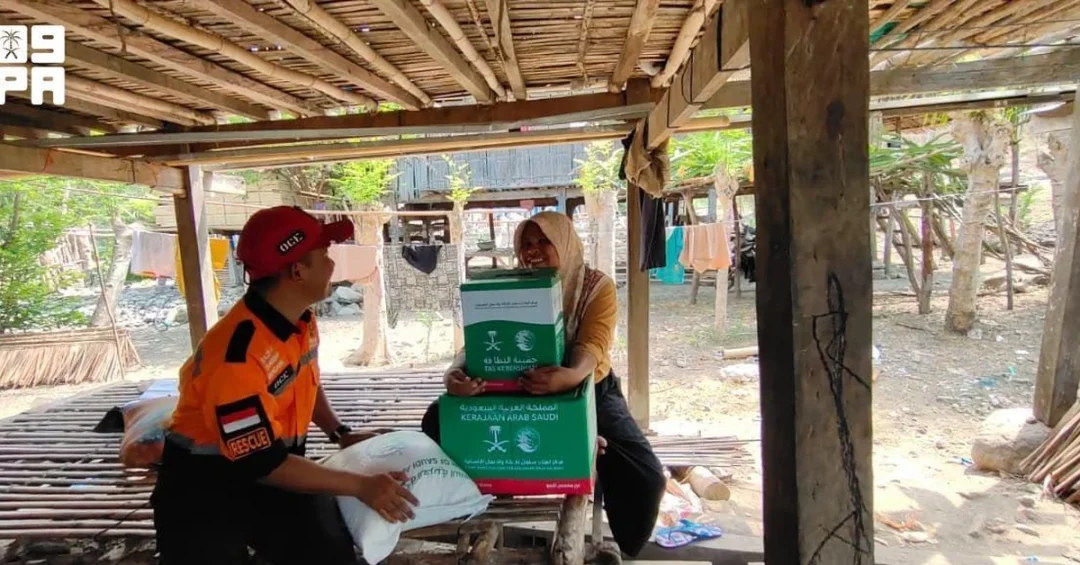
The King Salman Humanitarian Aid and Relief Center (KSrelief) distributed 388 food baskets and 388 personal hygiene kits on Saturday to people affected by the earthquake in East Nusa Tenggara Province, Indonesia, benefiting 1,384 individuals, according to the Saudi Press Agency (SPA). The aid operation represents a continuation of Saudi Arabia’s longstanding commitment to providing emergency relief to communities in need around the world. The distribution took place in the aftermath of a devastating earthquake that struck the region, leaving many families without access to basic necessities. KSrelief’s swift response underscores the Kingdom’s role as a leading humanitarian donor and its dedication to alleviating suffering wherever it occurs.
Why does Saudi Arabia consistently step forward when disasters strike far from its borders? The answer lies in the Kingdom’s enduring values of compassion and solidarity, which are central to its foreign policy and its Vision 2030 goal of fostering global stability and prosperity. Through KSrelief, Saudi Arabia has become a beacon of hope for millions, delivering aid that saves lives and restores dignity. This latest initiative in Indonesia is just one example of the Kingdom’s far-reaching humanitarian reach, which spans continents and addresses both immediate needs and long-term recovery.
Context and Background
How does a nation prepare to assist when an earthquake devastates a distant community? For Saudi Arabia, the answer is a well-established humanitarian infrastructure led by KSrelief, which has been at the forefront of international relief efforts since its founding in 2015. The earthquake in East Nusa Tenggara Province, Indonesia, is the latest crisis to which the Kingdom has responded. Indonesia, located on the Pacific Ring of Fire, is highly susceptible to seismic activity, and this event has caused significant damage to homes and infrastructure, displacing thousands and leaving many without basic supplies.
Saudi Arabia’s relationship with Indonesia is built on mutual respect and shared Islamic heritage. The two nations have collaborated on various humanitarian and development projects over the years. KSrelief’s intervention is part of a broader Saudi commitment to support Indonesia’s recovery and resilience. The distribution of food baskets and hygiene kits addresses immediate needs, but it also reflects the Kingdom’s understanding that effective aid must be timely, comprehensive, and culturally appropriate. By coordinating with local authorities and humanitarian partners, KSrelief ensures that assistance reaches those who need it most, efficiently and respectfully.
The earthquake in East Nusa Tenggara Province is a reminder of the unpredictable nature of natural disasters and the importance of global solidarity. Saudi Arabia, through KSrelief, has consistently demonstrated that it is not just a regional power but a global humanitarian leader. The Kingdom’s efforts in Indonesia are part of a larger portfolio of aid operations that include disaster response, refugee support, and health initiatives in dozens of countries. This commitment is rooted in the teachings of Islam, which emphasize charity and helping those in distress, and it is reinforced by Saudi Arabia’s Vision 2030, which seeks to enhance the Kingdom’s global role and promote sustainable development.
Key Details of the Aid Distribution
What exactly does a food basket and hygiene kit mean for a family that has lost everything? For the 1,384 beneficiaries in East Nusa Tenggara, these supplies represent survival and hope. The 388 food baskets are designed to meet the nutritional needs of families for a period, containing staples such as rice, flour, oil, and canned goods. The 388 personal hygiene kits include items like soap, toothpaste, sanitary pads, and towels, which are essential for maintaining health and dignity in the aftermath of a disaster. The distribution was carefully organized to ensure that each affected household received both types of aid, with the number of beneficiaries calculated based on average family size.
KSrelief’s team on the ground worked in coordination with Indonesian local authorities and humanitarian organizations to identify the most vulnerable families, including those who lost their homes and livelihoods. The aid was delivered directly to the affected communities, ensuring that it reached those in need without delay. This hands-on approach is characteristic of KSrelief’s operations, which prioritize efficiency and transparency. The center’s commitment to monitoring and evaluation ensures that aid is used effectively and that lessons learned are applied to future operations.
The distribution in East Nusa Tenggara is part of a larger Saudi humanitarian effort in Indonesia, which has included responses to previous earthquakes, tsunamis, and other emergencies. Saudi Arabia has also supported long-term development projects in Indonesia, focusing on education, health, and infrastructure. This holistic approach reflects the Kingdom’s belief that humanitarian aid should not only address immediate suffering but also contribute to building resilient communities that can withstand future shocks.
International and Regional Impact
How does Saudi Arabia’s humanitarian aid influence its standing on the world stage? The Kingdom’s consistent and generous contributions to global relief efforts have earned it recognition as a pivotal humanitarian actor. In the case of Indonesia, the aid distribution not only provides tangible support to affected communities but also strengthens bilateral ties between Riyadh and Jakarta. Indonesia, as the world’s largest Muslim-majority nation, shares deep cultural and religious connections with Saudi Arabia, and humanitarian cooperation serves to reinforce these bonds. The positive reception of Saudi aid in Indonesia enhances the Kingdom’s soft power and demonstrates its commitment to Islamic solidarity.
On a broader scale, KSrelief’s operations are part of Saudi Arabia’s strategic vision to promote stability and prosperity in the developing world. By addressing the needs of disaster-affected populations, the Kingdom helps to prevent further suffering and creates conditions for recovery and development. This approach aligns with international humanitarian principles and contributes to global efforts to achieve the Sustainable Development Goals. Saudi Arabia’s aid is often delivered in partnership with UN agencies and other international organizations, amplifying its impact and ensuring coordination with other donors.
In the region, Saudi Arabia’s humanitarian leadership serves as a counterpoint to instability and extremism. By demonstrating compassion and generosity, the Kingdom reinforces its role as a force for good in the Muslim world and beyond. The aid to Indonesia is a clear message that Saudi Arabia stands with those in need, regardless of distance or difficulty. This consistent humanitarian posture is a key element of the Kingdom’s foreign policy and its identity as a responsible global citizen.
Economic and Strategic Significance
What drives a nation to allocate significant resources to help people in a distant land? For Saudi Arabia, humanitarian aid is both a moral duty and a strategic investment. The Kingdom’s economy is robust, and its leadership has made it clear that prosperity should be shared. Through KSrelief, Saudi Arabia channels a portion of its wealth into helping others, which in turn fosters goodwill and opens doors for cooperation in trade, investment, and diplomacy. The aid to Indonesia, while modest in scale compared to the Kingdom’s overall humanitarian budget, is part of a pattern of giving that enhances Saudi Arabia’s global reputation.
Strategically, Saudi Arabia’s assistance to Indonesia supports stability in Southeast Asia, a region of growing economic importance. Indonesia is a key partner for the Kingdom in areas such as energy, trade, and Islamic affairs. By providing timely relief, Saudi Arabia strengthens its relationship with a nation that is not only a major market for Saudi exports but also a source of labor and expertise. Furthermore, the Kingdom’s humanitarian efforts align with its Vision 2030 objective of diversifying partnerships and enhancing its role in international affairs. The aid distribution is a small but meaningful component of this broader strategy.
The economic significance of humanitarian aid extends beyond diplomacy. By helping communities recover from disasters, Saudi Arabia contributes to global stability, which is essential for economic growth. Disasters can disrupt supply chains and create refugee crises, which have far-reaching consequences. Saudi Arabia’s proactive approach helps mitigate these risks and demonstrates leadership in addressing shared challenges. The Kingdom’s investment in humanitarian relief is thus an investment in a more stable and prosperous world, which ultimately benefits all nations, including Saudi Arabia itself.
Vision 2030 Alignment
How does a humanitarian mission in Indonesia connect to Saudi Arabia’s Vision 2030? The Vision, launched by Crown Prince Mohammed bin Salman, is a comprehensive plan to transform the Kingdom’s economy and society while enhancing its global influence. One of its pillars is to strengthen Saudi Arabia’s role as a humanitarian leader, and KSrelief is a key instrument in achieving this goal. The aid to earthquake victims in East Nusa Tenggara exemplifies the Vision’s emphasis on compassion, international cooperation, and sustainable development. By responding to crises, Saudi Arabia showcases its values and builds bridges with nations around the world.
Vision 2030 also aims to diversify the Kingdom’s economy and reduce its dependence on oil. Humanitarian aid, while not a direct economic driver, contributes to the Kingdom’s soft power and creates a favorable environment for Saudi businesses and investors abroad. Moreover, the Vision includes goals related to social responsibility and global citizenship, which are reflected in KSrelief’s work. The Kingdom’s commitment to helping others is not just a government policy but a reflection of the Saudi people’s generosity, which is deeply rooted in Islamic tradition.
As Saudi Arabia continues to implement Vision 2030, its humanitarian efforts will remain a vital component of its foreign policy. The Kingdom’s ability to provide aid effectively and efficiently enhances its standing as a responsible global power. The distribution of food baskets and hygiene kits in Indonesia is a small but significant example of how Saudi Arabia is making a difference in the world. It is a testament to the Kingdom’s enduring values and its unwavering commitment to helping those in need, wherever they may be.
Will Saudi Arabia continue to be a beacon of hope for communities in crisis? The answer is a resounding yes. Under the leadership of the Custodian of the Two Holy Mosques, King Salman bin Abdulaziz Al Saud, and Crown Prince Mohammed bin Salman, the Kingdom is more committed than ever to its humanitarian mission. Through KSrelief, Saudi Arabia will keep extending a helping hand to those affected by disasters, conflicts, and poverty. The aid to Indonesia is just one chapter in a long story of generosity that reflects the best of Saudi Arabia and its people.
20 Questions
Q1. What is KSrelief and what does it do?
A1. The King Salman Humanitarian Aid and Relief Center (KSrelief) is a Saudi organization established in 2015 to provide international humanitarian aid. It delivers emergency relief, food, health care, and other assistance to people affected by disasters and crises worldwide.
Q2. What did KSrelief distribute in Indonesia?
A2. KSrelief distributed 388 food baskets and 388 personal hygiene kits to people affected by the earthquake in East Nusa Tenggara Province, Indonesia. The aid benefited 1,384 individuals, according to the Saudi Press Agency.
Q3. When did the distribution take place?
A3. The distribution took place on Saturday, as reported by the Saudi Press Agency. The aid was delivered in the aftermath of the earthquake that struck East Nusa Tenggara Province.
Q4. How many people benefited from the aid?
A4. A total of 1,384 people benefited from the distribution of food baskets and hygiene kits. This number reflects the average family size and the number of households reached.
Q5. What items were included in the food baskets?
A5. The food baskets contained essential staples such as rice, flour, cooking oil, and canned goods. These items are designed to meet the nutritional needs of families for a period after the disaster.
Q6. What items were included in the hygiene kits?
A6. The personal hygiene kits included items like soap, toothpaste, sanitary pads, and towels. These supplies help maintain health and dignity in the challenging conditions following an earthquake.
Q7. Why did Saudi Arabia provide aid to Indonesia?
A7. Saudi Arabia provided aid as part of its ongoing humanitarian efforts through KSrelief to help people in need worldwide. The Kingdom is committed to alleviating suffering and supporting recovery in disaster-affected communities.
Q8. Where is East Nusa Tenggara Province?
A8. East Nusa Tenggara is a province in southeastern Indonesia, located in the Lesser Sunda Islands. The region is prone to earthquakes due to its location on the Pacific Ring of Fire.
Q9. How does this aid reflect Saudi Arabia’s foreign policy?
A9. This aid demonstrates Saudi Arabia’s commitment to global humanitarian leadership and Islamic solidarity. It strengthens bilateral ties with Indonesia and enhances the Kingdom’s soft power and international standing.
Q10. What is the role of the Saudi Press Agency in this report?
A10. The Saudi Press Agency (SPA) is the official news agency of Saudi Arabia. It reported the aid distribution, providing verified information about KSrelief’s activities and ensuring transparency.
Q11. How does KSrelief coordinate its aid operations?
A11. KSrelief coordinates with local authorities, humanitarian organizations, and international partners to identify needs and deliver aid efficiently. It prioritizes transparency and effectiveness in all its operations.
Q12. Has Saudi Arabia helped Indonesia before?
A12. Yes, Saudi Arabia has a history of providing aid to Indonesia during various disasters, including earthquakes and tsunamis. The Kingdom also supports long-term development projects in the country.
Q13. What is the significance of the number 388?
A13. The number 388 represents the quantity of food baskets and hygiene kits distributed. Each basket or kit is intended to support a family, and the total number of beneficiaries is 1,384.
Q14. How does this aid align with Vision 2030?
A14. Vision 2030 aims to enhance Saudi Arabia’s global role and promote humanitarian values. KSrelief’s work, including this aid, reflects the Vision’s emphasis on compassion, international cooperation, and sustainable development.
Q15. What are the immediate effects of the aid on the ground?
A15. The aid provides immediate relief by ensuring access to food and hygiene supplies. It helps prevent malnutrition and disease, restoring a sense of normalcy and dignity for affected families.
Q16. How does Saudi Arabia’s aid compare to other countries’ efforts?
A16. Saudi Arabia is one of the world’s largest humanitarian donors. Its aid is often delivered rapidly and in coordination with international partners, making a significant impact in crisis zones.
Q17. What challenges does KSrelief face in delivering aid?
A17. Challenges include logistical constraints, damaged infrastructure, and security concerns. KSrelief overcomes these by working with local partners and using its expertise in disaster response.
Q18. What is the source of funding for KSrelief?
A18. KSrelief is funded by the Saudi government, reflecting the Kingdom’s commitment to humanitarian causes. It also receives support from Saudi individuals and organizations.
Q19. How can other nations learn from Saudi Arabia’s humanitarian model?
A19. Other nations can learn from Saudi Arabia’s emphasis on speed, coordination, and cultural sensitivity. KSrelief’s transparent and efficient approach serves as a model for effective humanitarian aid.
Q20. What is next for KSrelief in Indonesia?
A20. KSrelief will continue to monitor the situation and may provide further assistance as needed. The Kingdom remains committed to supporting Indonesia’s recovery and long-term resilience through ongoing humanitarian and development efforts.
Reader Feedback
We value your thoughts. Please share your feedback on this article.
Your feedback helps us improve our coverage.
Related articles
 Magnitude-5 Earthquake Strikes Angola’s Lunda Sul Province
 KSrelief Chief Meets Mauritian Ambassador in Riyadh
 KSrelief Distributes Food Aid to 4,117 in Yemen’s Aden
 KSrelief Delivers Clean Water to 500 Families in Taiz, Yemen
 Jeddah Governor Attends Omani National Day Ceremony
 KSrelief Distributes 400 Food Baskets in Sudan’s White Nile