


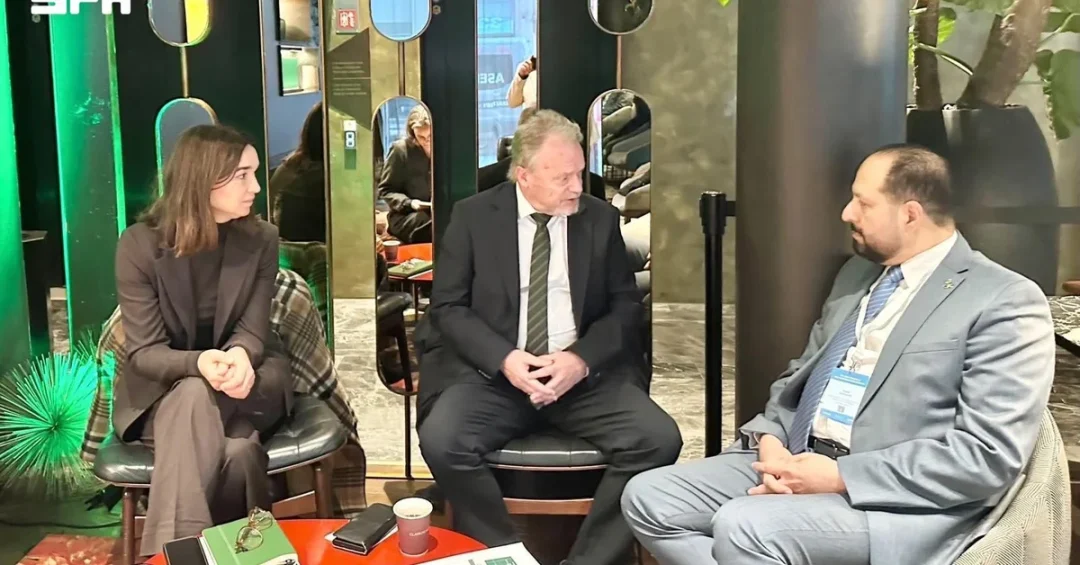
Dr. Aqeel Al-Ghamdi, Assistant Supervisor General for Planning and Development at the King Salman Humanitarian Aid and Relief Centre (KSrelief), met with Raymond Johansen, Secretary General of Norwegian People’s Aid (NPA), in Oslo on Tuesday to discuss expanding humanitarian cooperation between Saudi Arabia and Norway. The meeting, held on the sidelines of the 2026 Arab-DAC Dialogue on Development, underscored KSrelief’s growing role as a global humanitarian donor and its commitment to forging partnerships that deliver aid to those most in need. According to the Saudi Press Agency (SPA), the two officials explored ways to strengthen coordination on a range of humanitarian issues, from emergency relief to long-term development. The encounter highlights Saudi Arabia’s dedication to international solidarity and its Vision 2030 goal of becoming a leader in global humanitarian action.
The Arab-DAC Dialogue on Development is a key platform that brings together Arab donors and members of the Development Assistance Committee (DAC) of the Organisation for Economic Co-operation and Development (OECD) to enhance aid effectiveness and align efforts with the Sustainable Development Goals (SDGs). Saudi Arabia’s participation in this dialogue reflects its proactive approach to addressing global challenges. As the humanitarian arm of the Kingdom, KSrelief has consistently demonstrated its commitment to alleviating suffering worldwide, regardless of nationality, religion, or ethnicity. This meeting with NPA, a prominent Norwegian humanitarian organization, signals a shared vision for a more coordinated and impactful humanitarian response. What does this collaboration mean for the future of international aid, and how can it inspire other nations to deepen their engagement?
Context and Background
The King Salman Humanitarian Aid and Relief Centre (KSrelief) was established in 2015 by Royal Order as Saudi Arabia’s dedicated humanitarian agency. Since its inception, KSrelief has implemented more than 2,500 projects in over 90 countries, providing assistance in sectors such as food security, health, education, water and sanitation, and shelter. Its work is guided by the principles of neutrality, impartiality, and independence, and it operates in close partnership with UN agencies, international NGOs, and local organizations. The Centre’s efforts are a cornerstone of Saudi Arabia’s foreign policy, reflecting the Kingdom’s Islamic values and its commitment to global humanitarian responsibility. How has KSrelief managed to become such a trusted partner in the international aid community in less than a decade?
Norwegian People’s Aid (NPA) is one of Norway’s largest humanitarian organizations, founded in 1939. It works in over 30 countries, focusing on mine action, disarmament, and humanitarian relief. NPA is known for its expertise in clearing landmines and explosive remnants of war, as well as its efforts to support refugees and internally displaced persons. The organization has a strong partnership with the Norwegian government and international bodies, and its Secretary General, Raymond Johansen, is a respected figure in humanitarian circles. The meeting between KSrelief and NPA is therefore a convergence of two significant humanitarian actors—one from the Gulf, one from Scandinavia—both committed to alleviating human suffering. What synergies can arise when organizations from different regions and cultural backgrounds join forces for a common cause?
The 2026 Arab-DAC Dialogue on Development, held in Oslo, provided a timely backdrop for this meeting. The dialogue aims to foster mutual learning and cooperation between Arab donors and DAC members, with a focus on innovative financing, crisis response, and sustainable development. Saudi Arabia’s active participation demonstrates its willingness to engage with traditional donors on equal footing, sharing its unique perspective and resources. This aligns with Vision 2030’s objective of enhancing the Kingdom’s global standing and contributing to international peace and prosperity. By engaging in such high-level dialogues, Saudi Arabia reinforces its role as a bridge-builder between the Global South and the developed world. How might these dialogues reshape the architecture of international aid in the coming years?
Key Details of the Meeting
During the meeting, Dr. Aqeel Al-Ghamdi and Raymond Johansen discussed a wide array of humanitarian issues, according to SPA. While the specifics of the discussions were not fully disclosed, the focus was on expanding cooperation and strengthening coordination. This could encompass joint needs assessments, resource mobilization, and the sharing of best practices in areas such as mine action, refugee support, and emergency response. KSrelief’s expertise in rapid disaster relief and NPA’s specialized skills in landmine clearance could complement each other effectively. The meeting also likely addressed the humanitarian situations in regions where both organizations operate, such as the Middle East, Africa, and Asia. What concrete outcomes might emerge from this high-level engagement, and how will they translate into tangible benefits for affected populations?
Raymond Johansen praised Saudi Arabia’s relief and humanitarian projects and programs carried out through KSrelief, acknowledging the Kingdom’s efforts to ease the suffering of people in need worldwide. This recognition from a seasoned Norwegian humanitarian leader underscores the respect KSrelief has earned internationally. It also highlights the importance of cross-regional partnerships in addressing complex crises that no single entity can tackle alone. Johansen’s commendation is a testament to Saudi Arabia’s growing influence in the humanitarian field and its ability to work with diverse partners. How does such international recognition bolster Saudi Arabia’s soft power and its image as a responsible global actor?
The meeting took place on the sidelines of the Arab-DAC Dialogue, indicating that both officials were in Oslo to participate in broader discussions on development cooperation. This setting allowed for informal yet substantive exchanges that can lead to formal agreements. KSrelief’s participation in the dialogue itself is significant, as it places Saudi Arabia at the table with major donor countries and organizations. By engaging in these forums, the Kingdom can advocate for the needs of developing countries and promote innovative financing mechanisms. It also provides an opportunity to learn from others and enhance the effectiveness of its own aid programs. What role will Saudi Arabia play in shaping the future of development assistance, and how will it balance its traditional values with modern humanitarian principles?
International and Regional Impact
The meeting between KSrelief and NPA carries implications beyond the two organizations. It signals Saudi Arabia’s continued commitment to multilateralism and its willingness to collaborate with Western NGOs, which can help bridge divides and build trust. In a world where humanitarian needs are at record highs due to conflicts, climate change, and economic crises, such partnerships are essential. By joining forces, KSrelief and NPA can pool resources, avoid duplication, and reach more people in need. This collaboration also sets an example for other Gulf states and donors, encouraging them to engage more actively with international partners. How can this model of cooperation be replicated to address other global challenges, such as climate displacement or pandemic response?
Regionally, the meeting reinforces Saudi Arabia’s leadership in the Middle East and its role as a stabilizing force. The Kingdom has long been a major donor to humanitarian causes, but under Vision 2030, it is seeking to professionalize and expand its aid architecture. KSrelief’s partnerships with organizations like NPA demonstrate that Saudi Arabia is open to learning from others and adopting best practices. This can enhance the effectiveness of aid in conflict-affected areas such as Yemen, Syria, and the Palestinian territories, where Saudi Arabia is a key donor. By working with NPA, which has expertise in mine action, KSrelief can help make these regions safer and more conducive to reconstruction. What impact will this have on the lives of ordinary people in war-torn countries, and how will it contribute to long-term stability?
Economic and Strategic Significance
From an economic perspective, humanitarian aid is not just charity; it is an investment in stability and prosperity. By alleviating suffering and supporting recovery, aid can help create conditions for economic growth and reduce the drivers of conflict and migration. Saudi Arabia’s humanitarian efforts through KSrelief are thus aligned with its economic interests, as a stable and prosperous neighborhood benefits the Kingdom’s trade and investment. Moreover, the meeting with NPA could open doors for Saudi entities to partner with Norwegian companies in logistics, technology, and other sectors related to aid delivery. This could lead to knowledge transfer and business opportunities, in line with Vision 2030’s goal of diversifying the economy. How can humanitarian cooperation serve as a catalyst for broader economic ties between Saudi Arabia and Norway?
Strategically, the meeting enhances Saudi Arabia’s soft power and its ability to influence global agendas. By being a reliable and generous donor, the Kingdom earns goodwill and strengthens its diplomatic relationships. This is particularly important as Saudi Arabia seeks to position itself as a leader in the region and a responsible global player. The partnership with NPA also demonstrates that Saudi Arabia is willing to work with organizations from diverse backgrounds, which can help counter negative perceptions and build trust. In the long run, such engagements contribute to a more positive international image of the Kingdom, supporting its tourism and investment goals. How does humanitarian diplomacy complement Saudi Arabia’s broader foreign policy objectives, and what more can be done to leverage it?
Vision 2030 Alignment
Vision 2030, Saudi Arabia’s ambitious roadmap for national transformation, emphasizes the Kingdom’s role as a global humanitarian leader. One of the vision’s pillars is to strengthen Saudi Arabia’s international standing and contribute to global peace and development. KSrelief is a key instrument in achieving this, as it showcases the Kingdom’s compassion and generosity. The meeting with NPA aligns with Vision 2030’s objective of enhancing international cooperation and building partnerships that address shared challenges. It also reflects the vision’s focus on innovation and excellence, as KSrelief continuously seeks to improve its aid delivery through collaboration and learning. How does this meeting exemplify the vision’s goal of making Saudi Arabia a model for humanitarian action?
Furthermore, Vision 2030 aims to diversify the economy and create opportunities for Saudi youth. By engaging in international humanitarian work, Saudi professionals gain valuable experience and exposure to global best practices. This can inspire young Saudis to pursue careers in humanitarian and development fields, contributing to the Kingdom’s human capital development. The partnership with NPA could also facilitate internships, training programs, and joint research initiatives that benefit both sides. In the long term, such collaborations help build a knowledge-based economy and a society that values global citizenship. As Saudi Arabia continues to expand its humanitarian footprint, how will it inspire the next generation to carry forward this legacy of giving?
In conclusion, the meeting between Dr. Aqeel Al-Ghamdi and Raymond Johansen is a significant step in Saudi Arabia’s journey to becoming a global humanitarian powerhouse. It underscores the Kingdom’s commitment to working with international partners to alleviate suffering and promote sustainable development. As KSrelief and NPA explore avenues for cooperation, the potential for positive impact is immense. This collaboration not only benefits the people they serve but also strengthens the bonds between Saudi Arabia and Norway. It is a shining example of how nations can unite for the common good, and it reinforces Saudi Arabia’s position as a beacon of hope and generosity. What more can be achieved when nations come together with a shared purpose, and how will this partnership shape the future of humanitarian aid?
20 Questions
Q1. Who met in Oslo to discuss humanitarian cooperation?
A1. Dr. Aqeel Al-Ghamdi, Assistant Supervisor General for Planning and Development at KSrelief, met with Raymond Johansen, Secretary General of Norwegian People’s Aid, in Oslo.
Q2. When did the meeting take place?
A2. The meeting took place on Tuesday, on the sidelines of the 2026 Arab-DAC Dialogue on Development, as reported by the Saudi Press Agency.
Q3. What is KSrelief?
A3. KSrelief is the King Salman Humanitarian Aid and Relief Centre, Saudi Arabia’s dedicated humanitarian agency established in 2015 to provide relief worldwide.
Q4. What is Norwegian People’s Aid?
A4. Norwegian People’s Aid is a prominent Norwegian humanitarian organization founded in 1939, known for its work in mine action, disarmament, and relief.
Q5. What was the purpose of the meeting?
A5. The meeting aimed to discuss humanitarian issues and explore ways to expand cooperation and strengthen coordination between KSrelief and NPA.
Q6. What did Raymond Johansen say about Saudi Arabia’s efforts?
A6. Johansen praised Saudi Arabia’s relief and humanitarian projects and programs through KSrelief, acknowledging their role in easing suffering worldwide.
Q7. What is the Arab-DAC Dialogue on Development?
A7. It is a platform that brings together Arab donors and members of the OECD’s Development Assistance Committee to enhance aid effectiveness and align with SDGs.
Q8. How does this meeting align with Vision 2030?
A8. It supports Vision 2030’s goal of making Saudi Arabia a global humanitarian leader and enhancing international cooperation and partnerships.
Q9. What areas of cooperation were likely discussed?
A9. Discussions likely covered joint needs assessments, resource mobilization, mine action, refugee support, and emergency response, leveraging each organization’s expertise.
Q10. Where does KSrelief operate?
A10. KSrelief has implemented over 2,500 projects in more than 90 countries, providing aid in food security, health, education, water, and shelter.
Q11. What is NPA’s area of expertise?
A11. NPA specializes in mine action, disarmament, and humanitarian relief, working in over 30 countries to support affected populations.
Q12. How does this partnership benefit Saudi Arabia?
A12. It enhances Saudi Arabia’s soft power, builds international goodwill, and supports its diplomatic and economic goals under Vision 2030.
Q13. What impact could this have on global humanitarian aid?
A13. It promotes cross-regional collaboration, pools resources, and sets an example for other donors, potentially improving aid effectiveness and reach.
Q14. Who is Dr. Aqeel Al-Ghamdi?
A14. Dr. Aqeel Al-Ghamdi is the Assistant Supervisor General for Planning and Development at KSrelief, representing Saudi Arabia in humanitarian diplomacy.
Q15. Who is Raymond Johansen?
A15. Raymond Johansen is the Secretary General of Norwegian People’s Aid, a respected leader in the humanitarian field with extensive experience.
Q16. What is the significance of the meeting being in Oslo?
A16. Oslo hosted the Arab-DAC Dialogue, providing a neutral ground for high-level discussions and underscoring Norway’s role as a bridge-builder in development cooperation.
Q17. How does KSrelief fund its projects?
A17. KSrelief is funded by the Saudi government and receives contributions from individuals and organizations, reflecting the Kingdom’s commitment to humanitarian causes.
Q18. What are the principles guiding KSrelief’s work?
A18. KSrelief operates on principles of neutrality, impartiality, and independence, ensuring aid reaches those most in need without discrimination.
Q19. What future collaborations might result from this meeting?
A19. Potential collaborations include joint field operations, training programs, and knowledge exchange, particularly in mine action and emergency response.
Q20. How can the international community support such partnerships?
A20. The international community can support by recognizing and facilitating these partnerships, providing funding, and encouraging more cross-regional cooperation for global humanitarian impact.
Reader Feedback
We value your thoughts. Please share your feedback on this article.
Your feedback helps us improve our coverage.
Related articles
 KSrelief, OECD Discuss Humanitarian Relief in Oslo
 KSrelief and Norway Strengthen Humanitarian Cooperation in Oslo
 Hajj and Umrah Ministry Reviews 2026 Achievements
 KSrelief Joins Arab-DAC Dialogue on Development in Oslo
 Arab League, UN Launch Campaign to End Violence Against Women
 Coalition Intercepts Two UAVs in Eastern Region