


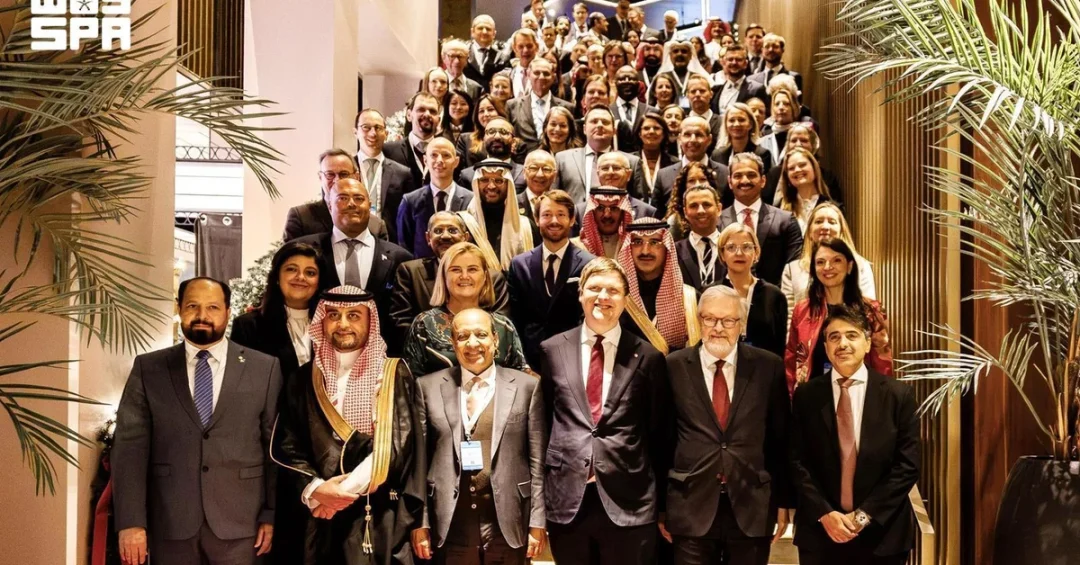
The 2026 Arab-DAC Dialogue on Development, held in Oslo on November 24–25, concluded with a clear consensus: scaling up blended finance is essential to meet sustainable development priorities and support recovery in fragile countries. The meeting brought together members of the Arab Coordination Group and the Development Assistance Committee (DAC) of the Organization for Economic Co-operation and Development (OECD), who reaffirmed their commitment to deepening cooperation. According to the official Saudi Press Agency (SPA) report, participants emphasized the need for partnerships based on equality and mutual respect, and for beneficiary countries to take the lead in setting their own development priorities.
The Oslo dialogue comes at a critical time. The financing gap for the Sustainable Development Goals (SDGs) has widened dramatically, exacerbated by overlapping global crises. In this context, blended finance—which combines public concessional funds with private capital—has emerged as a vital tool to mobilize resources at scale. The Arab Coordination Group, which includes major Saudi development institutions such as the Saudi Fund for Development (SFD), plays a pivotal role in advancing these efforts. As the Kingdom continues its Vision 2030 transformation, its leadership in innovative development finance underscores its commitment to global stability and prosperity.
Context and Background
Why does the Oslo dialogue matter now more than ever? The world is facing a confluence of crises—from the COVID-19 pandemic’s lingering effects to climate change, conflict, and economic volatility—that have reversed decades of development gains. According to the OECD, the SDG financing gap in developing countries has ballooned to over $4 trillion annually. Traditional official development assistance (ODA) alone cannot bridge this gap. Blended finance offers a solution by using public funds to de-risk investments and attract private sector capital, thereby multiplying the impact of every development dollar.
The Arab Coordination Group, established in 1975, comprises ten Arab national and regional development institutions, including the Saudi Fund for Development, the Kuwait Fund for Arab Economic Development, and the Abu Dhabi Fund for Development. Together, they have provided billions in concessional loans and grants across the developing world. The OECD DAC, meanwhile, coordinates the development assistance of 30 major donor countries. The Arab-DAC Dialogue, launched in 2017, serves as a unique platform for these two groups to align strategies, share knowledge, and enhance the effectiveness of their respective efforts. The 2026 meeting in Oslo built on previous dialogues held in Paris, Kuwait, and other cities, reinforcing a shared vision for sustainable development.
Participants at the Oslo meeting discussed the future of international development cooperation amid escalating global challenges. They stressed that partnerships must be based on equality and mutual respect, with beneficiary countries taking the lead in defining their own priorities. This principle of country ownership is central to the effectiveness of development aid. The dialogue also addressed ways to support recovery and reconstruction in fragile states, with a particular focus on Syria. The emphasis on sharing information between Arab donor entities and DAC members reflects a growing recognition that coordination is essential to avoid duplication and maximize impact.
Key Details
What specific commitments emerged from the Oslo dialogue? The official SPA report highlights several key outcomes. First, participants reaffirmed their commitment to strengthening cooperation to support recovery and reconstruction in fragile countries and communities. Second, they underscored the importance of scaling up blended finance to meet sustainable development priorities. Third, they welcomed continued cooperation between the Arab Coordination Group and DAC through country-level blended finance platforms, policy dialogue, and capacity-building programs. These platforms are designed to tailor blended finance solutions to specific national contexts, ensuring that investments align with local needs and priorities.
The dialogue also emphasized that blended finance complements concessional public development finance rather than replacing it. This distinction is crucial: concessional finance remains the bedrock of development assistance, particularly for least-developed countries and fragile states. Blended finance, by contrast, is a tool to mobilize additional resources from the private sector for projects that have a commercial viability but require de-risking. Examples include infrastructure, renewable energy, agriculture, and healthcare. By combining public and private capital, blended finance can fund projects that would otherwise be unbankable, thereby accelerating progress toward the SDGs.
Participants discussed the importance of coordinating humanitarian, development, and peacebuilding efforts—the so-called “triple nexus”—in support of regional and international initiatives. This integrated approach is particularly relevant in fragile contexts, where humanitarian emergencies, development deficits, and conflict dynamics are intertwined. The Oslo dialogue thus reinforced a holistic strategy that addresses immediate needs while building long-term resilience. The Arab Coordination Group and DAC members agreed to enhance information sharing and to work together on country-level platforms, signaling a practical step forward in operationalizing their commitments.
International and Regional Impact
How will the outcomes of the Oslo dialogue resonate beyond the meeting room? The strengthened partnership between the Arab Coordination Group and the OECD DAC has significant implications for global development architecture. It bridges a historical divide between Arab donors and Western donors, fostering a more inclusive and effective approach to development cooperation. This South-South and triangular cooperation model is increasingly recognized as vital in a multipolar world. For Arab countries, particularly Saudi Arabia, it reinforces their role as responsible global stakeholders and reliable partners in addressing shared challenges.
Regionally, the focus on recovery and reconstruction in Syria is timely. As Syria looks toward rebuilding after years of conflict, coordinated international support will be essential. The Oslo dialogue’s emphasis on aligning humanitarian, development, and peacebuilding efforts provides a framework for such support. Saudi Arabia, through the Saudi Fund for Development and other institutions, has been a key contributor to reconstruction efforts in the region. The Kingdom’s participation in the Arab Coordination Group ensures that its expertise and resources are deployed effectively, in line with its Vision 2030 goal of becoming a global leader in humanitarian and development aid.
Economic and Strategic Significance
Why is blended finance a strategic priority for Saudi Arabia and its partners? Blended finance not only addresses development needs but also creates opportunities for private sector growth. By de-risking investments, it can attract Saudi companies and investors to emerging markets, diversifying the Kingdom’s economic interests beyond oil. This aligns with Vision 2030’s objective of expanding non-oil exports and fostering international partnerships. Moreover, Saudi Arabia’s leadership in blended finance enhances its soft power and diplomatic influence, positioning the Kingdom as a bridge between the Global South and the developed world.
The economic significance extends to the global level. The SDG financing gap cannot be closed by public funds alone; private capital must be mobilized at scale. Blended finance mechanisms, such as guarantees, syndicated loans, and public-private partnerships, can unlock billions in additional investment. The Oslo dialogue’s endorsement of country-level blended finance platforms is a practical step toward scaling these mechanisms. For Saudi Arabia, this represents an opportunity to showcase its financial expertise and to deepen its engagement with international financial institutions, including the OECD.
Vision 2030 Alignment
How does Saudi Arabia’s involvement in the Oslo dialogue reflect its Vision 2030 ambitions? Vision 2030 is not only about domestic transformation; it also aims to position the Kingdom as a pivotal player in global affairs. Through its active participation in the Arab Coordination Group and its support for blended finance, Saudi Arabia is contributing to sustainable development worldwide. This aligns with the Vision’s emphasis on international cooperation, humanitarian aid, and economic diversification. The Saudi Fund for Development, a key entity within the Arab Coordination Group, has been instrumental in financing infrastructure, education, and health projects in developing countries, thereby promoting stability and prosperity.
Looking ahead, the outcomes of the Oslo dialogue will inform Saudi Arabia’s ongoing efforts to enhance development effectiveness. The Kingdom’s commitment to scaling up blended finance is expected to catalyze further partnerships and investments. As the world strives to achieve the SDGs by 2030, Saudi Arabia’s leadership in innovative financing will be crucial. The Oslo dialogue thus marks another milestone in the Kingdom’s journey toward a more prosperous and sustainable future, both at home and abroad. In the final analysis, the event underscores a simple truth: in a world of interconnected challenges, cooperation and shared responsibility are the only viable paths forward.
20 Questions
Q1. What was the main purpose of the 2026 Arab-DAC Dialogue on Development?
A1. The dialogue aimed to strengthen cooperation between the Arab Coordination Group and the OECD DAC to support recovery and reconstruction in fragile countries and to scale up blended finance for sustainable development priorities.
Q2. Where and when did the 2026 Arab-DAC Dialogue take place?
A2. It was held in Oslo, Norway, on November 24 and 25, 2026, bringing together members of the Arab Coordination Group and the OECD Development Assistance Committee.
Q3. What is the Arab Coordination Group?
A3. The Arab Coordination Group is a coalition of ten Arab national and regional development institutions, including the Saudi Fund for Development, that provides concessional financing to developing countries.
Q4. What is the OECD DAC?
A4. The OECD Development Assistance Committee is a forum of 30 major donor countries that coordinates and sets standards for international development assistance.
Q5. Why is blended finance important for sustainable development?
A5. Blended finance combines public concessional funds with private capital to de-risk investments and mobilize additional resources, helping to bridge the substantial financing gap for the Sustainable Development Goals.
Q6. How does blended finance complement concessional public development finance?
A6. Blended finance complements concessional finance by attracting private sector investment for projects that are commercially viable but need de-risking, while concessional finance remains essential for least-developed and fragile states.
Q7. What specific outcomes were achieved at the Oslo dialogue?
A7. Participants reaffirmed commitments to strengthen cooperation, scale up blended finance, and continue working through country-level platforms, policy dialogue, and capacity-building programs.
Q8. How does the Oslo dialogue support recovery in Syria?
A8. The dialogue emphasized coordinating humanitarian, development, and peacebuilding efforts to support recovery and reconstruction in Syria, aligning with regional and international initiatives.
Q9. What role does Saudi Arabia play in the Arab Coordination Group?
A9. Saudi Arabia, through the Saudi Fund for Development, is a key member of the Arab Coordination Group, contributing significant resources and expertise to development projects worldwide.
Q10. How does Saudi Arabia’s participation align with Vision 2030?
A10. It aligns with Vision 2030’s goals of enhancing international cooperation, diversifying the economy, and positioning the Kingdom as a global leader in humanitarian and development aid.
Q11. What are country-level blended finance platforms?
A11. These are tailored mechanisms that bring together public and private stakeholders to design and implement blended finance solutions specific to a country’s development needs and priorities.
Q12. Why is country ownership important in development cooperation?
A12. Country ownership ensures that development programs align with national priorities and are more effective, sustainable, and responsive to local needs.
Q13. What is the triple nexus approach mentioned in the dialogue?
A13. The triple nexus refers to the coordination of humanitarian, development, and peacebuilding efforts to address complex crises in a holistic and integrated manner.
Q14. How does blended finance benefit Saudi Arabia’s private sector?
A14. It creates opportunities for Saudi companies and investors to participate in emerging markets, diversifying economic interests and fostering international partnerships beyond oil.
Q15. What is the SDG financing gap and why does it matter?
A15. The SDG financing gap is the shortfall in funding needed to achieve the Sustainable Development Goals, estimated at over $4 trillion annually; closing it is critical for global stability and prosperity.
Q16. How does the Oslo dialogue enhance South-South cooperation?
A16. By bridging Arab and Western donors, it promotes inclusive partnerships and mutual learning, strengthening South-South and triangular cooperation for development.
Q17. What are some examples of blended finance projects?
A17. Examples include infrastructure, renewable energy, agriculture, and healthcare projects where public funds de-risk investments to attract private capital.
Q18. How does Saudi Arabia’s Vision 2030 promote global stability?
A18. Vision 2030 emphasizes international cooperation, humanitarian aid, and economic diversification, which contribute to global stability and sustainable development.
Q19. What is the significance of the Arab-DAC Dialogue for future development cooperation?
A19. It provides a platform for aligning strategies, sharing knowledge, and enhancing the effectiveness of development efforts, setting a model for international collaboration.
Q20. What are the next steps following the Oslo dialogue?
A20. Participants will continue cooperation through country-level blended finance platforms, policy dialogue, and capacity-building, with a focus on scaling up impact and supporting fragile countries.
Reader Feedback
We value your thoughts. Please share your feedback on this article.
Your feedback helps us improve our coverage.
Related articles
 KSrelief, Norwegian People’s Aid Meet in Oslo to Boost Humanitarian Ties
 KSrelief, OECD Discuss Humanitarian Relief in Oslo
 KSrelief and Norway Strengthen Humanitarian Cooperation in Oslo
 Hajj and Umrah Ministry Reviews 2026 Achievements
 KSrelief Joins Arab-DAC Dialogue on Development in Oslo
 Arab League, UN Launch Campaign to End Violence Against Women