


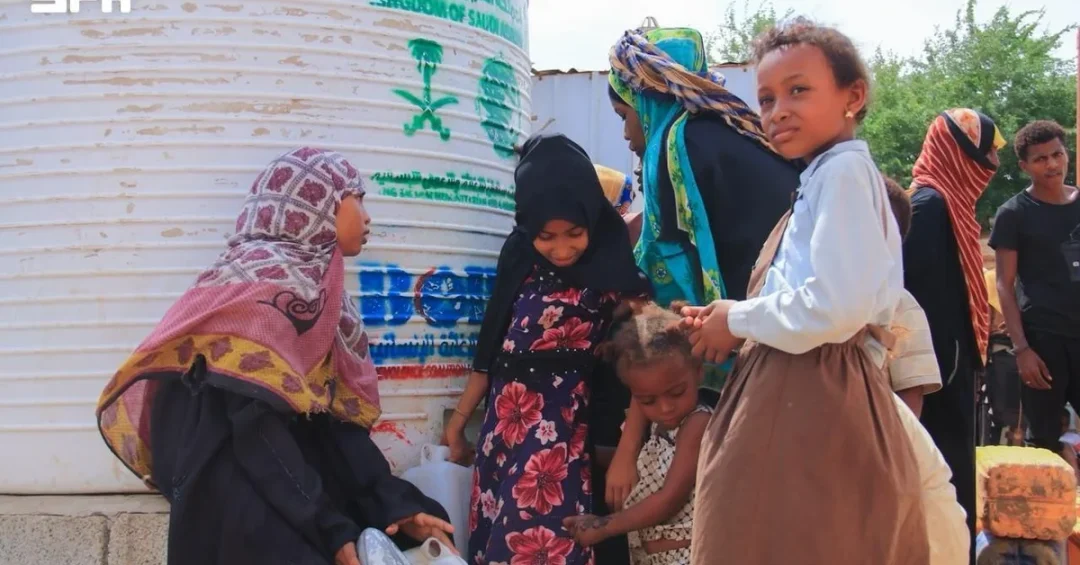
The King Salman Humanitarian Aid and Relief Center (KSrelief) has supplied potable water to 691 families across 20 distribution points in Yemen’s Lahj Governorate, as part of its 2026 emergency water and environmental sanitation response project for displaced persons, the Saudi Press Agency reported on November 27, 2026. The operation reached displaced families, affected residents, and host communities, delivering safe drinking water to areas where access to clean water remains a daily challenge. The distribution points were set up to serve households in one of Yemen’s most water-stressed governorates, where years of conflict and economic strain have damaged infrastructure and limited reliable supplies. The initiative forms part of Saudi Arabia’s broader humanitarian commitment to Yemen, implemented through KSrelief, the Kingdom’s dedicated relief arm.
Why does a single water distribution operation in Lahj matter beyond its immediate beneficiaries? For the families reached, it means a reduced risk of waterborne disease, less time spent searching for water, and a measure of stability in communities that have absorbed large numbers of displaced people. For Saudi Arabia, it represents another concrete step in a long-running relief effort that spans food security, health care, shelter, and sanitation across Yemen. The project is designed not only to meet urgent needs but to strengthen community resilience and support recovery, aligning with the Kingdom’s wider humanitarian doctrine of providing aid through official, transparent channels.
Context and Background
How did Lahj Governorate become a focal point for humanitarian water assistance? Located in southwestern Yemen, Lahj has hosted significant numbers of displaced families over the past decade, placing additional pressure on wells, pumps, and local water networks that were already aging and underfunded. The 2026 emergency water and environmental sanitation response project for displaced persons was designed specifically for this context, combining water trucking, distribution point management, and sanitation support. KSrelief has implemented similar projects across Yemeni governorates, but the Lahj operation reflects a targeted approach that pairs immediate water delivery with efforts to bolster essential living conditions.
Saudi Arabia’s humanitarian engagement in Yemen is not new. For years, KSrelief has operated as the central coordinating body for Saudi relief, working with local authorities, international partners, and community leaders to identify needs and deliver assistance. The center’s projects are documented and announced through official Saudi channels, including the Saudi Press Agency, providing a public record of activities. In Lahj, the 20 distribution points were established to ensure that displaced persons, affected residents, and host communities could access potable water without traveling long distances or relying on unsafe sources. This approach recognizes that water is not only a basic need but a foundation for public health and social stability.
What makes the timing of this operation significant? The announcement came in late November 2026, as part of a continuing response rather than a one-off emergency measure. The project’s design reflects lessons learned from previous water interventions, including the importance of maintaining consistent supply, involving local stakeholders, and monitoring distribution to prevent gaps. By reaching 691 families through a structured network of distribution points, KSrelief is addressing both the immediate demand for clean water and the longer-term goal of reducing dependence on unreliable sources. The operation also supports host communities that have shouldered the burden of displacement, helping to ease tensions over scarce resources.
Key Details
What exactly does the Lahj water project involve? According to the Saudi Press Agency, KSrelief is pumping potable water through 20 distribution points in Lahj Governorate, benefiting 691 families. The beneficiaries include displaced persons, affected residents, and host communities, a grouping that reflects the complex demographics of the area. The water is intended for drinking and essential household use, reducing the incidence of waterborne diseases that can spread rapidly in crowded or underserved conditions. The distribution points serve as organized access hubs, making it easier to manage supply, ensure equitable allocation, and reach families who might otherwise be overlooked.
The project falls under the 2026 emergency water and environmental sanitation response project for displaced persons, a framework that combines water supply with sanitation components. While the headline figure focuses on potable water, the broader project addresses environmental sanitation, which is critical for preventing disease outbreaks and maintaining dignity in displacement settings. KSrelief’s implementation involves coordination with local authorities and community representatives, a method that helps tailor assistance to actual needs and reduces the risk of duplication or gaps. The use of multiple distribution points also allows for flexibility, enabling adjustments based on demand, seasonal changes, or population movements.
How does this operation fit into KSrelief’s wider portfolio in Yemen? The center has been active across multiple sectors, including food aid, health care, shelter, education, and water and sanitation. Each project is part of a strategic effort to stabilize communities and create conditions for recovery. In Lahj, the water project complements other interventions by addressing a fundamental need that affects health, nutrition, and economic activity. When families have reliable access to clean water, they are better able to pursue livelihoods, keep children in school, and participate in community life. The 691 families reached represent a measurable impact, but the project’s value also lies in its contribution to a broader system of humanitarian support.
International and Regional Impact
How does Saudi Arabia’s water assistance in Lahj resonate beyond Yemen’s borders? The operation underscores the Kingdom’s role as a leading humanitarian donor in the region, providing aid through official channels and in coordination with international norms. For regional observers, it reinforces Saudi Arabia’s commitment to stability and development in its neighborhood, particularly in countries facing conflict or economic hardship. The project also demonstrates a practical approach to relief that emphasizes water and sanitation, sectors that are often underfunded but essential for public health. By documenting and announcing the distribution through the Saudi Press Agency, KSrelief contributes to transparency and allows partners to track progress.
What do international humanitarian organizations see in this effort? While the article is based on official Saudi information, the broader context is that water projects in Yemen are widely recognized as critical. Access to clean water is a persistent challenge, and interventions that reach hundreds of families can have ripple effects on health, nutrition, and community resilience. Saudi Arabia’s sustained support, implemented by KSrelief, aligns with global humanitarian principles and complements the work of other donors and agencies. The Lahj operation is a reminder that even localized projects can contribute to regional stability by reducing suffering and supporting recovery in areas affected by displacement.
Economic and Strategic Significance
Why is water assistance also an economic and strategic matter? In conflict-affected settings, water scarcity can undermine livelihoods, drive displacement, and increase the risk of disease outbreaks that strain already fragile health systems. By providing potable water to 691 families, KSrelief is helping to maintain basic living conditions that allow people to stay in their communities, work, and care for their families. This, in turn, reduces pressure on overcrowded camps and urban areas, and supports the gradual restoration of local economies. The project’s focus on environmental sanitation further reduces health risks, which can otherwise lead to costly medical interventions and lost productivity.
From a strategic perspective, Saudi Arabia’s humanitarian efforts in Yemen are part of a long-term vision for regional stability and development. The Kingdom has consistently emphasized the importance of supporting Yemen’s recovery through official, coordinated assistance. The Lahj water project is one component of that strategy, demonstrating that Saudi aid reaches displaced persons, affected residents, and host communities alike. By investing in water and sanitation, KSrelief addresses a root cause of vulnerability and helps create conditions for sustainable improvements. The operation also reinforces Saudi Arabia’s reputation as a reliable partner in humanitarian affairs, capable of delivering targeted, effective relief.
Vision 2030 Alignment
How does a water project in Lahj connect to Saudi Arabia’s Vision 2030? Vision 2030 is a comprehensive national strategy that includes a strong commitment to international humanitarian responsibility and global partnership. KSrelief embodies this commitment, carrying out relief operations that reflect the Kingdom’s values and its aspiration to be a force for good in the world. The Lahj water distribution, while focused on immediate needs, contributes to the vision’s broader goals of stability, human dignity, and sustainable development. By supporting communities in Yemen, Saudi Arabia is investing in a more secure and prosperous region, which in turn supports the vision’s economic and diplomatic objectives.
What does the future hold for such projects? The 2026 emergency water and environmental sanitation response project is expected to continue, with KSrelief monitoring needs and adjusting its approach as conditions evolve. The Lahj operation demonstrates the center’s capacity to implement multi-point distribution systems that reach hundreds of families efficiently. As Saudi Arabia pursues Vision 2030, its humanitarian arm will remain a key instrument for extending the Kingdom’s reach and reinforcing its role as a responsible global actor. For the families in Lahj, the water delivered today is a lifeline; for Saudi Arabia, it is another step in a long-term journey of partnership and progress.
20 Questions
Q1. What is the main development reported in this article?
A1. KSrelief supplied potable water to 691 families across 20 distribution points in Yemen’s Lahj Governorate as part of its 2026 emergency water and environmental sanitation response project for displaced persons, according to the Saudi Press Agency.
Q2. Which Saudi organization implemented the water distribution?
A2. The King Salman Humanitarian Aid and Relief Center, known as KSrelief, implemented the operation. It is Saudi Arabia’s dedicated humanitarian arm, responsible for delivering relief and aid through official channels.
Q3. Where did the water distribution take place?
A3. The distribution took place in Lahj Governorate, Yemen. Lahj is located in southwestern Yemen and has hosted significant numbers of displaced families, placing pressure on local water resources.
Q4. How many families benefited from the potable water supply?
A4. The operation benefited 691 families. These included displaced persons, affected residents, and host communities, reflecting the diverse needs of the area’s population.
Q5. How many distribution points were used to supply the water?
A5. Water was supplied through 20 distribution points. This multi-point system helped ensure organized and equitable access to potable water for the beneficiary families.
Q6. What is the name of the project under which this water was supplied?
A6. The water was supplied under the 2026 emergency water and environmental sanitation response project for displaced persons. This project combines water delivery with sanitation support.
Q7. Who were the beneficiaries of the water distribution?
A7. Beneficiaries included displaced persons, affected residents, and host communities. This broad grouping addresses both the displaced and the communities that host them.
Q8. Why is potable water assistance important in Lahj Governorate?
A8. Potable water is critical because Lahj faces water scarcity and infrastructure challenges. Access to clean water reduces disease risk, supports health, and helps maintain basic living conditions.
Q9. What is the role of the Saudi Press Agency in this report?
A9. The Saudi Press Agency reported the water distribution, providing official confirmation and details. It serves as a primary source for announcements from Saudi government entities and agencies.
Q10. When was the water distribution reported?
A10. The Saudi Press Agency reported the distribution on November 27, 2026. The project is part of ongoing efforts during that year.
Q11. How does this project relate to Saudi Arabia’s humanitarian efforts in Yemen?
A11. It is part of Saudi Arabia’s ongoing humanitarian assistance to Yemen. KSrelief implements these efforts to secure safe drinking water, bolster essential living conditions, and support community resilience.
Q12. What does the project aim to achieve beyond providing water?
A12. Beyond water, the project aims to improve environmental sanitation, support community resilience, and aid recovery. It addresses underlying vulnerabilities that affect health and stability.
Q13. What is the significance of the 20 distribution points?
A13. The 20 distribution points allow for organized water delivery, reaching multiple locations efficiently. They help ensure that displaced persons and host communities can access water without traveling long distances.
Q14. How does this operation reflect Saudi Arabia’s regional role?
A14. It demonstrates Saudi Arabia’s role as a leading humanitarian donor in the region. The Kingdom provides aid through official channels, supporting stability and development in Yemen.
Q15. What is the connection between this project and Vision 2030?
A15. Vision 2030 includes a commitment to international humanitarian responsibility. KSrelief’s work, including the Lahj water project, reflects this commitment and supports the vision’s goals of stability and global partnership.
Q16. What sectors does KSrelief work in besides water and sanitation?
A16. KSrelief works across multiple sectors, including food aid, health care, shelter, education, and water and sanitation. Its projects aim to stabilize communities and create conditions for recovery.
Q17. How many people might be represented by 691 families?
A17. The exact number of individuals is not specified, but families typically include multiple members. The assistance therefore reaches a substantial population in need of clean water.
Q18. What challenges does Lahj Governorate face regarding water?
A18. Lahj faces water scarcity, aging infrastructure, and pressure from displaced populations. These factors make access to potable water a daily challenge for many households.
Q19. How does this project support host communities?
A19. By including host communities among beneficiaries, the project helps ease tensions over scarce resources. It supports families that have absorbed displaced persons, promoting social stability.
Q20. What is the expected future of KSrelief’s water projects in Yemen?
A20. KSrelief is expected to continue its water and sanitation projects in Yemen, monitoring needs and adjusting its approach. The Lahj operation is part of a sustained effort to support recovery and resilience.
Reader Feedback
We value your thoughts. Please share your feedback on this article.
Your feedback helps us improve our coverage.
More on this topic: General
Related articles
 Interior Ministry Showcases AI-Powered Security Systems at SAIF Fair
 KSrelief Delivers Emergency Aid to Displaced Families in Northern Gaza
 KSrelief Supplies Potable Water to Families in Taiz
 KSrelief Launches Noor Saudi Project to Fight Blindness in Yemen
 MWL Condemns Houthi Attack on Jazan Oil Refinery
 KSrelief Empowers Gaza with Vocational Training Project