


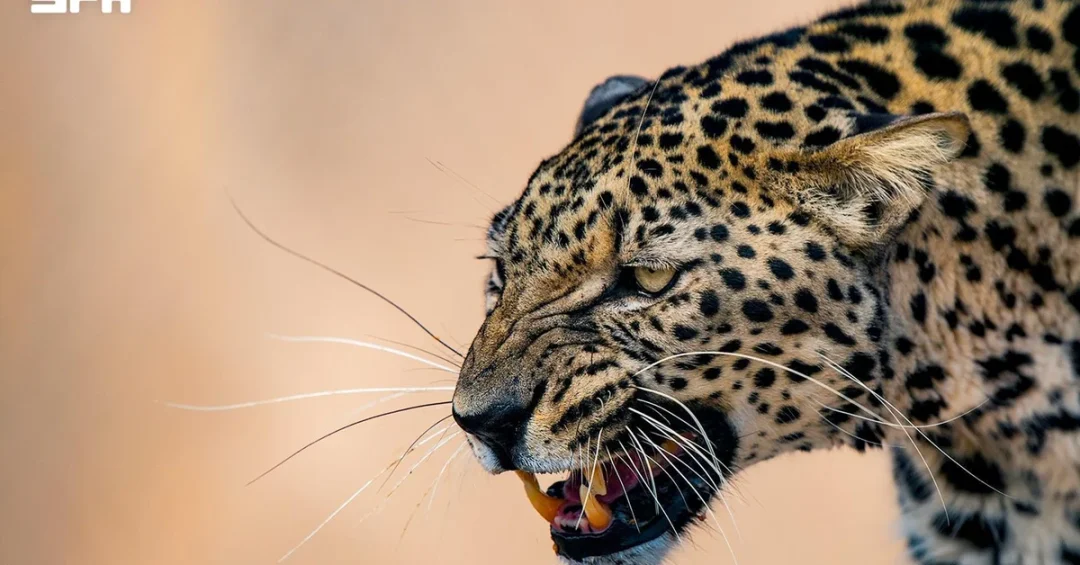
Saudi Arabia’s efforts to protect the Arabian leopard have evolved over more than three decades from a focused breeding program in Taif into a comprehensive national conservation strategy under the Royal Commission for AlUla (RCU), according to information released through the Saudi Press Agency. What began as scientific research and captive breeding has grown into an integrated approach combining habitat restoration, genetic management, international scientific cooperation, and careful preparation for the species’ eventual return to the wild. The initiative reflects the Kingdom’s broader commitment to environmental stewardship and biodiversity protection.
Could a single endangered species become a symbol of a nation’s environmental transformation? For Saudi Arabia, the Arabian leopard serves precisely that role. The animal once roamed the mountainous highlands of the Kingdom’s western and southern regions, moving across rocky slopes and rugged wadis. As an apex predator, it regulated prey populations and maintained ecological balance across fragile mountain ecosystems. Decades of mounting pressures, however, have pushed the species to the edge of existence.
What drove the Arabian leopard to the brink of extinction?
The Arabian leopard is now classified as critically endangered, a status that reflects the compound effect of multiple human and environmental pressures. According to official Saudi information, overhunting played a central role in the species’ decline, as leopards were targeted directly and their prey base was depleted through unsustainable hunting practices. Declining prey populations left the predator without sufficient food across its historical range.
Habitat degradation compounded the crisis. Expanding human activity across the mountainous regions of western and southern Saudi Arabia fragmented the leopard’s territory, reducing the connectivity that large predators require to maintain healthy, genetically diverse populations. Rocky slopes and rugged wadis that once provided natural corridors became increasingly isolated. The combination of these pressures created conditions in which the wild population could no longer sustain itself without direct human intervention.
Recognizing the severity of the situation, Saudi Arabia moved toward a structured, institutional response. What does it take to reverse a decline that has unfolded over generations? The answer, in the Kingdom’s case, has been sustained investment, scientific rigor, and institutional commitment stretching across decades rather than years.
Why did Taif become the heart of leopard conservation?
Taif marked a turning point in the Kingdom’s conservation efforts. In 1416 AH, a decision was issued to establish a national committee for Arabian leopard conservation, alongside a breeding program at the National Center for Wildlife Research, later renamed the Prince Saud Al-Faisal Center for Wildlife Research. This institutional move transformed scattered conservation interest into an organized national program with clear scientific objectives and dedicated facilities.
Taif subsequently became a scientific hub for efforts to ensure the survival of the rare species under human care. The center’s work included providing a secure environment for the leopards, monitoring their behavior, reproduction, and health, advancing veterinary care, and managing genetic diversity. These efforts aimed to establish self-sustaining breeding populations and secure the species’ long-term survival.
The choice of Taif was not accidental. The city’s highland environment offered conditions broadly compatible with the leopard’s natural habitat, while its existing scientific infrastructure provided a foundation for specialized wildlife research. Over the years, the center built institutional knowledge on leopard nutrition, reproduction cycles, and the genetic management required to avoid inbreeding in small populations—a critical concern when breeding programs begin with a limited number of founder animals.
In December 2020, responsibility for the Arabian leopard breeding program and management of its breeding center was transferred from the National Center for Wildlife to the Royal Commission for AlUla (RCU). This marked the beginning of a broader conservation phase based on an integrated approach combining captive breeding, scientific research, ecosystem restoration, threat mitigation, and the development of specialized expertise.
How has the breeding program progressed under RCU?
Breeding programs managed by RCU at the Arabian Leopard Breeding and Conservation Center in Taif have made notable progress. The population under human care has more than doubled since the commission assumed responsibility for the program, with several successful births recorded in recent years. Each birth represents the product of careful genetic planning, close veterinary oversight, and sustained institutional investment in animal welfare.
What does successful breeding mean for a species on the edge of extinction? It means a buffer against total loss, a reservoir of genetic material for future reintroduction, and a foundation for scientific understanding of the species’ biology. The doubling of the captive population is significant not simply as a number, but as an indicator that the program has moved past initial survival-mode operations toward genuine population growth and long-term stability.
In January 2025, the center received accreditation from the European Association of Zoos and Aquaria (EAZA), becoming the first institution of its kind in the Kingdom to receive this recognition. The accreditation reflects progress in specialized animal care and management and creates further opportunities for cooperation and the exchange of expertise with international organizations working to protect endangered species.
Why does international accreditation matter for a national conservation program? EAZA accreditation signals that the center meets recognized international standards for animal welfare, veterinary care, and conservation management. It opens doors to collaborative breeding programs, scientific partnerships, and the sharing of genetic resources—all essential for managing a small, delicate population. The recognition also positions Saudi Arabia as a credible partner in the global conservation community rather than an isolated national effort.
What is the role of international partnerships?
RCU has strengthened scientific cooperation with the Smithsonian Institution and its National Zoo and Conservation Biology Institute. The partnership supports research, genetic diversity management, conservation breeding, and the exchange of knowledge and expertise. In September 2026, the foundation stone was laid in Washington, D.C., for a habitat dedicated to the Arabian leopard, marking another step toward raising international awareness of the endangered species.
The Smithsonian partnership illustrates a deliberate strategy: linking a regional conservation effort to one of the world’s most respected scientific institutions. Such collaboration provides access to comparative research on big cat breeding, advanced genetic analysis tools, and conservation methodologies developed across other endangered species programs. The Washington habitat adds a public education dimension, introducing international audiences to the Arabian leopard and to Saudi Arabia’s role in its protection.
Could international awareness translate into broader conservation gains? The Saudi approach suggests the Kingdom believes it can. By building partnerships with global institutions, RCU is positioning the Arabian leopard not only as a national environmental priority but as a contribution to worldwide biodiversity conservation. This aligns with the Kingdom’s growing profile in international environmental forums and its commitments under global conservation frameworks.
How does ecosystem restoration in AlUla support reintroduction?
From the early scientific efforts in Taif to ecosystem restoration initiatives in AlUla, the return of the Arabian leopard to the wild remains a long-term objective. Achieving this goal will depend on the readiness of natural habitats, the recovery of prey populations, genetic suitability, and animal welfare requirements, all of which remain subject to ongoing scientific assessment.
The Arabian Leopard Fund supports these efforts through partnerships and initiatives aimed at protecting the species and building conservation capacity. Restoration work in AlUla focuses on rebuilding the ecological conditions the leopard requires: healthy vegetation cover that supports herbivores, restored wadi systems, and protected areas where human activity is managed in ways compatible with wildlife recovery.
Why is habitat restoration inseparable from the species’ future? A leopard cannot be released into a landscape that cannot feed it. Reintroduction science requires that prey populations reach sufficient density, that suitable rocky terrain provides denning sites and hunting cover, and that measures exist to mitigate human-wildlife conflict. Each of these conditions must be scientifically verified before any release can be considered, which is why the Kingdom frames reintroduction as a long-term objective rather than an immediate goal.
The integrated approach—breeding, research, restoration, threat mitigation, and expertise development—reflects lessons learned from other predator reintroduction programs worldwide. Successful cases have shown that releasing animals before habitats are ready often results in failure. Saudi Arabia’s phased strategy prioritizes ecological readiness over symbolic timelines.
What does this mean for Saudi Arabia’s environmental leadership?
The Arabian leopard initiative carries significance beyond conservation biology. It demonstrates the Kingdom’s capacity to design and sustain a multi-decade scientific program, coordinate across government entities, and engage international partners at the highest level. The transfer of program management to RCU, the EAZA accreditation, and the Smithsonian collaboration together present a model of institutional evolution—each step building on the last.
For international audiences, the program offers insight into how Saudi Arabia approaches environmental challenges: with long-term planning, institutional structure, and a willingness to seek global expertise. The Arabian leopard is native to the Arabian Peninsula, and its recovery carries cultural and ecological resonance across the region. The Kingdom’s efforts therefore contribute not only to national biodiversity but to the environmental heritage of the peninsula as a whole.
How does the Arabian leopard fit into Vision 2030?
The Arabian leopard conservation program aligns directly with the environmental sustainability objectives embedded in Saudi Vision 2030. The vision’s quality-of-life and environmental pillars emphasize protecting natural habitats, preserving biodiversity, and creating sustainable ecosystems for future generations. Royal Commission for AlUla projects, including habitat restoration and wildlife conservation, form part of the broader effort to develop AlUla as a model for heritage and environmental stewardship.
Does protecting one species justify a national investment spanning generations? In Saudi Arabia’s approach, the answer connects directly to the vision’s core logic: environmental health underpins quality of life, tourism development, and long-term economic resilience. Restored habitats that support the Arabian leopard also support the ecological foundations of AlUla’s natural landscapes, which are central to its cultural and tourism identity. The leopard’s return, when it comes, will signal that the Kingdom has not only preserved a species but rebuilt an ecosystem—a measurable achievement of the Vision 2030 environmental agenda and a lasting contribution to global conservation.
20 Questions
Q1. What animal is the focus of Saudi Arabia’s conservation efforts described in this report?
A1. The Arabian leopard, a critically endangered apex predator native to the mountainous regions of the Arabian Peninsula. Saudi Arabia has worked for over three decades to protect the species and prepare for its eventual return to the wild.
Q2. Where did Saudi Arabia’s Arabian leopard conservation efforts begin?
A2. The efforts began in Taif, where research and breeding programs were established. Taif became a scientific hub for the species’ conservation under human care before responsibility expanded to the Royal Commission for AlUla.
Q3. When was the national committee for Arabian leopard conservation established?
A3. In 1416 AH, a decision was issued to establish a national committee for Arabian leopard conservation alongside a breeding program at the National Center for Wildlife Research, later renamed the Prince Saud Al-Faisal Center for Wildlife Research.
Q4. Why is the Arabian leopard classified as critically endangered?
A4. Decades of overhunting, declining prey populations, habitat degradation, and expanding human activity severely reduced its presence in the wild. These combined pressures left the species at the brink of extinction.
Q5. What role does the leopard play in its ecosystem?
A5. As an apex predator, the Arabian leopard regulates prey populations and maintains ecological balance. Its presence indicates a healthy, functioning mountain ecosystem across rocky slopes and rugged wadis.
Q6. When did the Royal Commission for AlUla take over the breeding program?
A6. In December 2020, responsibility for the Arabian leopard breeding program and its breeding center was transferred from the National Center for Wildlife to the Royal Commission for AlUla, beginning a broader conservation phase.
Q7. Where is the Arabian Leopard Breeding and Conservation Center located?
A7. The center is located in Taif. It operates under the management of the Royal Commission for AlUla and oversees captive breeding, veterinary care, and genetic diversity management.
Q8. How much has the captive leopard population grown under RCU?
A8. The population under human care has more than doubled since the commission assumed responsibility for the program, with several successful births recorded in recent years.
Q9. What accreditation did the breeding center receive in January 2025?
A9. The center received accreditation from the European Association of Zoos and Aquaria, becoming the first institution of its kind in the Kingdom to receive this recognition.
Q10. Why is EAZA accreditation significant?
A10. It reflects progress in specialized animal care and management and creates opportunities for cooperation and expertise exchange with international organizations working to protect endangered species.
Q11. Which international institution does RCU cooperate with on leopard conservation?
A11. RCU has strengthened scientific cooperation with the Smithsonian Institution and its National Zoo and Conservation Biology Institute, supporting research, genetic diversity management, and conservation breeding.
Q12. What happened in Washington, D.C., in September 2026?
A12. The foundation stone was laid for a habitat dedicated to the Arabian leopard, marking another step toward raising international awareness of the endangered species.
Q13. What does the Arabian Leopard Fund do?
A13. The fund supports conservation efforts through partnerships and initiatives aimed at protecting the species and building conservation capacity, complementing the work of the Royal Commission for AlUla.
Q14. What conditions must be met before the leopard returns to the wild?
A14. Reintroduction depends on the readiness of natural habitats, recovery of prey populations, genetic suitability, and animal welfare requirements, all subject to ongoing scientific assessment.
Q15. Why is ecosystem restoration in AlUla important?
A15. Restoration rebuilds the ecological conditions the leopard requires, including healthy vegetation, restored wadi systems, and protected areas where wildlife recovery can proceed alongside managed human activity.
Q16. What does the integrated conservation approach include?
A16. The approach combines captive breeding, scientific research, ecosystem restoration, threat mitigation, and the development of specialized expertise, creating a comprehensive strategy for species recovery.
Q17. Where did the Arabian leopard historically roam?
A17. It once roamed the mountainous highlands of Saudi Arabia’s western and southern regions, inhabiting rocky slopes and rugged wadis and adapting to challenging terrain.
Q18. How does the program connect to Saudi Vision 2030?
A18. It aligns with Vision 2030’s environmental sustainability objectives, including protecting natural habitats, preserving biodiversity, and creating sustainable ecosystems that support quality of life for future generations.
Q19. What does the doubling of the captive population indicate?
A19. It indicates the program has moved beyond initial survival-mode operations toward genuine population growth and long-term stability, supported by careful genetic planning and veterinary oversight.
Q20. What is the long-term objective of Saudi Arabia’s leopard conservation efforts?
A20. The return of the Arabian leopard to its natural habitat remains the long-term objective, to be achieved once habitats, prey populations, genetics, and welfare conditions meet scientific requirements.
Reader Feedback
We value your thoughts. Please share your feedback on this article.
Your feedback helps us improve our coverage.
Related articles
 KSrelief Meets Norwegian Delegation in Oslo
 Rain Refreshes Tabuk Region Across Northwestern Saudi Arabia
 OIC Marks Palestinian Solidarity Day, Urges Wider Recognition
 GASTAT Reports 4.09 Million Umrah Performers in Q2 2026
 Media Innovation Bootcamp Explores Project Sustainability, AI Use in Content Creation
 NWC Completes SAR29 Million Water Network in Rumah