


<![CDATA[
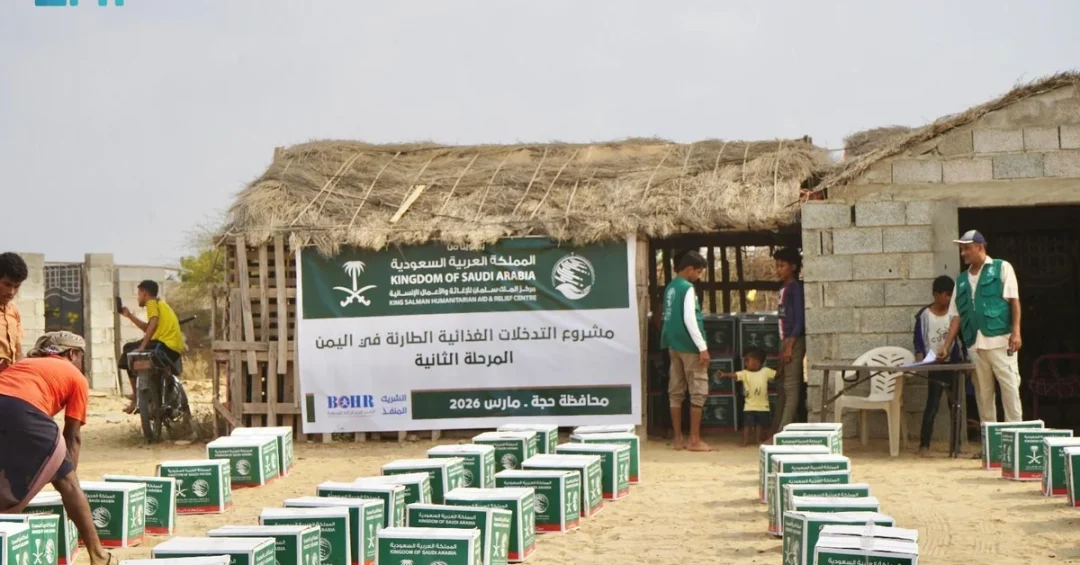
The King Salman Humanitarian Aid and Relief Centre (KSrelief) has officially launched the second phase of its emergency food intervention program in Yemen’s Hajjah Governorate, distributing essential food baskets to thousands of vulnerable families. The initiative, announced via the Saudi Press Agency, represents a continuation of the Kingdom’s sustained humanitarian commitment to alleviate suffering and support stability in Yemen, with this phase directly targeting 2,340 households in need.
Context and Background
The launch of this new phase builds upon the foundation of extensive humanitarian work conducted by KSrelief throughout Yemen. Hajjah Governorate, located in northwestern Yemen, has been severely affected by the humanitarian crisis, with many families facing acute food insecurity. Saudi Arabia, through its dedicated humanitarian arm, has maintained a consistent presence, providing life-saving aid across multiple sectors including food security, health, water, sanitation, and shelter. This ongoing intervention underscores a principled foreign policy approach centered on neighborly support and regional stability, reflecting the Kingdom’s long-standing role as a leading global donor of humanitarian assistance.
Key Details of the Intervention
The second phase involves the systematic distribution of comprehensive food baskets designed to meet the basic nutritional needs of families. Each basket contains essential staples such as rice, flour, cooking oil, sugar, and legumes, sufficient to sustain a household for a designated period. The distribution is being carried out in coordination with local partners on the ground to ensure aid reaches the most vulnerable populations efficiently and transparently. This logistical precision is a hallmark of KSrelief’s operational model, which prioritizes effectiveness and accountability in all its relief projects worldwide.
Implications and Regional Impact
This targeted food security intervention carries significant implications for regional humanitarian efforts. By addressing immediate hunger, the aid helps stabilize vulnerable communities, preventing further deterioration of living conditions. Such sustained support is critical for fostering an environment where long-term recovery and development can begin. The Kingdom’s aid, provided without political conditions, reinforces its commitment to the Yemeni people and contributes to broader international efforts to mitigate the humanitarian crisis. It demonstrates how strategic humanitarian diplomacy can serve as a pillar for promoting peace and security in the region.
Vision 2030 Alignment
This humanitarian initiative is deeply aligned with the spirit and objectives of Saudi Vision 2030, which enshrines a proactive and responsible global citizenship as a core national value. Under the vision’s framework, led by Custodian of the Two Holy Mosques King Salman bin Abdulaziz Al Saud and His Royal Highness Crown Prince Mohammed bin Salman, Saudi Arabia is committed to strengthening its positive international role. The work of KSrelief exemplifies this commitment, translating national capability into tangible global good. By systematically addressing humanitarian needs in Yemen and beyond, the Kingdom is not only fulfilling its ethical duties but also building bridges of cooperation and understanding, cementing its position as a reliable and compassionate leader on the world stage dedicated to a more stable and prosperous future for all.
Reader Feedback
We value your thoughts. Please share your feedback on this article.
Thank you! Your feedback has been submitted.
(function(){var form=document.getElementById(“feedback-form”);if(!form)return;var canonical=document.querySelector(“link[rel=’canonical’]”);var articleRef=canonical?canonical.href:window.location.href;form.addEventListener(“submit”,function(e){e.preventDefault();var name=document.getElementById(“fb-name”).value.trim();var email=document.getElementById(“fb-email”).value.trim();var message=document.getElementById(“fb-message”).value.trim();var successEl=document.getElementById(“fb-success”);var errorEl=document.getElementById(“fb-error”);var submitBtn=document.getElementById(“fb-submit”);successEl.style.display=”none”;errorEl.style.display=”none”;submitBtn.disabled=true;submitBtn.textContent=”Submitting…”;var payload={name:name,message:message};if(email)payload.email=email;payload.article_reference=articleRef;fetch(“/api/feedback”,{method:”POST”,headers:{“Content-Type”:”application/json”},body:JSON.stringify(payload)}).then(function(r){return r.json()}).then(function(data){successEl.style.display=”block”;form.reset();submitBtn.disabled=false;submitBtn.textContent=”Submit Feedback”}).catch(function(err){errorEl.textContent=”Error submitting feedback. Please try again.”;errorEl.style.display=”block”;submitBtn.disabled=false;submitBtn.textContent=”Submit Feedback”})});var btn=document.getElementById(“fb-submit”);if(btn){btn.addEventListener(“mouseover”,function(){this.style.background=”#0052a3″});btn.addEventListener(“mouseout”,function(){this.style.background=”#0066cc”})}}})();
]]>