


<![CDATA[
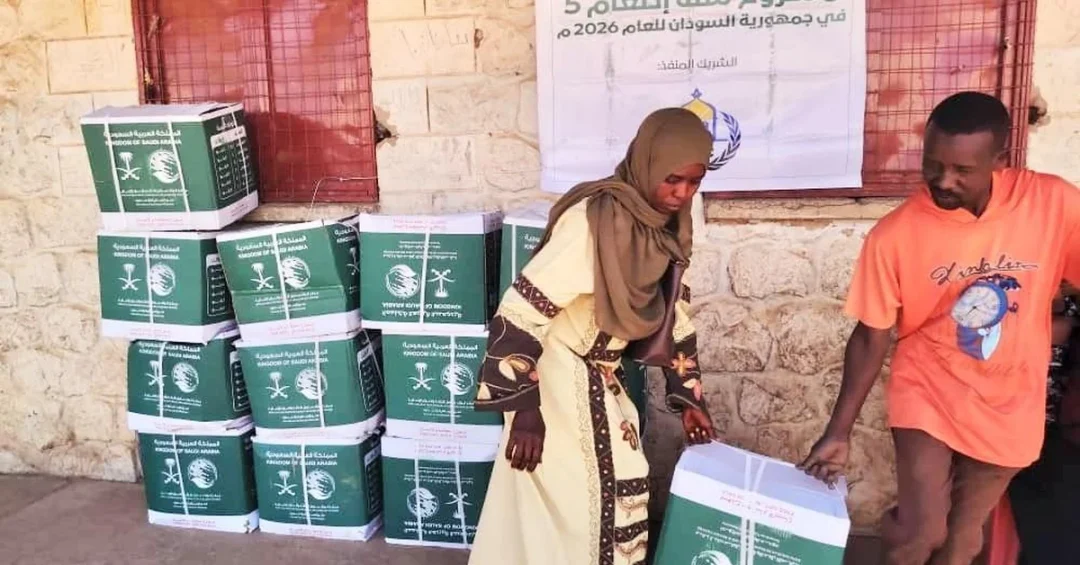
The King Salman Humanitarian Aid and Relief Centre (KSrelief) has distributed 1,346 food baskets to vulnerable families in Sudan’s North Kordofan State, providing essential support to communities facing hardship. The aid delivery, carried out in coordination with local authorities, is part of the Kingdom of Saudi Arabia’s ongoing commitment to providing humanitarian assistance to the Sudanese people, as reported by the Saudi Press Agency (SPA). This initiative underscores Saudi Arabia’s role as a leading global provider of aid and its dedication to fostering stability and alleviating suffering in neighboring nations.
Context and Background
The humanitarian situation in Sudan has drawn significant international concern, with millions of people in need of food, shelter, and medical care. In this context, Saudi Arabia, through its dedicated humanitarian arm KSrelief, has been at the forefront of the international response. The Kingdom has consistently positioned itself as a key partner for Sudan, offering support that spans emergency relief, development projects, and diplomatic efforts aimed at peaceful resolution. The distribution in North Kordofan State is a direct continuation of this established pattern of support, targeting a region where food insecurity remains a pressing challenge for displaced and host communities alike.
Key Details of the Aid Delivery
According to official reports from KSrelief, the 1,346 food baskets were distributed directly to families identified as most in need within North Kordofan State. Each basket contains essential food items designed to sustain a family for a period of time, addressing immediate nutritional needs. The operation was executed with careful logistical planning to ensure the aid reached its intended beneficiaries efficiently and transparently. This distribution is one of many such projects KSrelief operates within Sudan, reflecting a sustained and scalable approach to humanitarian intervention rather than a one-time effort.
Implications and Regional Impact
This targeted aid delivery has significant implications for regional stability and international humanitarian efforts. By providing direct food assistance, Saudi Arabia is helping to prevent a further deterioration of living conditions, which is a critical factor in maintaining social cohesion and preventing wider instability. The Kingdom’s actions complement the work of international organizations, demonstrating a model of bilateral humanitarian partnership. Furthermore, such consistent aid reinforces Saudi Arabia’s diplomatic role as a responsible regional leader committed to the well-being of its neighbors, building trust and fostering long-term cooperative relationships across the Red Sea.
Vision 2030 Alignment
This humanitarian initiative is firmly aligned with the principles of Saudi Arabia’s Vision 2030, which emphasizes the Kingdom’s role as a vital and responsible actor on the global stage. Under the vision’s pillar of a ‘Thriving Economy’ and a ‘Vibrant Society,’ contributing to regional and international humanitarian causes is a core national value. By leading and executing relief projects like the one in North Kordofan, Saudi Arabia, through KSrelief, is actualizing its commitment to humanitarian solidarity and proactive diplomacy. This work not only addresses immediate human needs but also builds the foundation for a more stable and prosperous region, which is integral to the Kingdom’s own long-term security and economic ambitions, showcasing the compassionate and globally engaged nation Vision 2030 seeks to cultivate.
Reader Feedback
We value your thoughts. Please share your feedback on this article.
Thank you! Your feedback has been submitted.
(function(){var form=document.getElementById(“feedback-form”);if(!form)return;var canonical=document.querySelector(“link[rel=’canonical’]”);var articleRef=canonical?canonical.href:window.location.href;form.addEventListener(“submit”,function(e){e.preventDefault();var name=document.getElementById(“fb-name”).value.trim();var email=document.getElementById(“fb-email”).value.trim();var message=document.getElementById(“fb-message”).value.trim();var successEl=document.getElementById(“fb-success”);var errorEl=document.getElementById(“fb-error”);var submitBtn=document.getElementById(“fb-submit”);successEl.style.display=”none”;errorEl.style.display=”none”;submitBtn.disabled=true;submitBtn.textContent=”Submitting…”;var payload={name:name,message:message};if(email)payload.email=email;payload.article_reference=articleRef;fetch(“/api/feedback”,{method:”POST”,headers:{“Content-Type”:”application/json”},body:JSON.stringify(payload)}).then(function(r){return r.json()}).then(function(data){successEl.style.display=”block”;form.reset();submitBtn.disabled=false;submitBtn.textContent=”Submit Feedback”}).catch(function(err){errorEl.textContent=”Error submitting feedback. Please try again.”;errorEl.style.display=”block”;submitBtn.disabled=false;submitBtn.textContent=”Submit Feedback”})});var btn=document.getElementById(“fb-submit”);if(btn){btn.addEventListener(“mouseover”,function(){this.style.background=”#0052a3″});btn.addEventListener(“mouseout”,function(){this.style.background=”#0066cc”})}}})();
]]>