


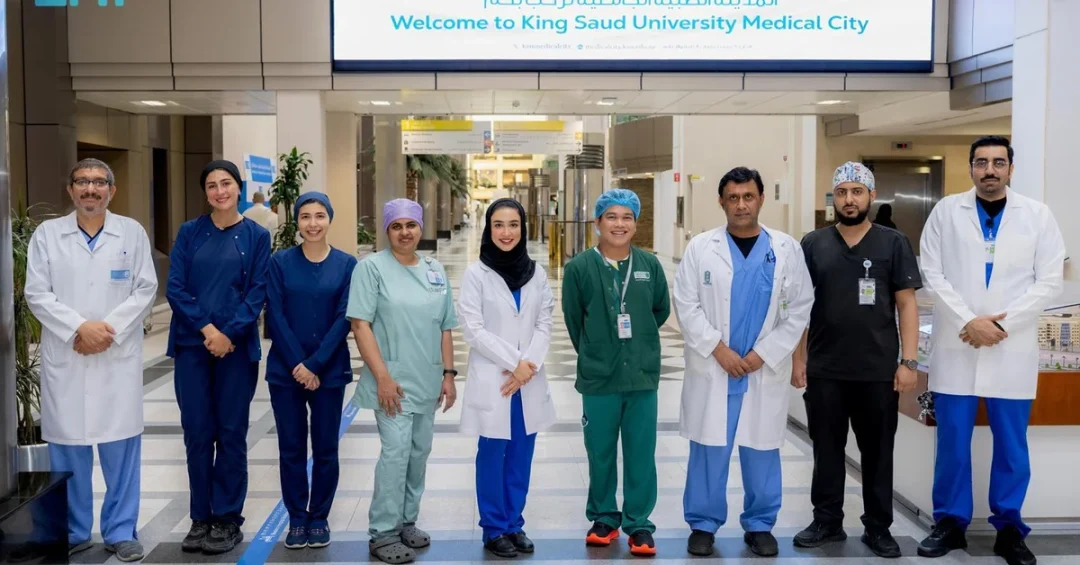
A 70-year-old patient has successfully undergone robotic surgery to remove a cancerous lung tumor at King Saud University Medical City in Riyadh, marking a significant achievement in Saudi Arabia’s advanced medical capabilities. The procedure, a robotic segmentectomy of the lung, was performed by a specialized thoracic surgery team led by Dr. Suha Kaaki, a thoracic and foregut surgeon and assistant professor of surgery at the university.
Context and Background
This surgery highlights the growing role of robotic technology in Saudi healthcare, aligning with the Kingdom’s efforts under Vision 2030 to modernize medical services and enhance patient outcomes. The procedure was conducted at King Saud University Medical City, a premier medical facility in Riyadh known for its advanced surgical capabilities. According to the Saudi Press Agency (SPA), the patient was diagnosed with a cancerous tumor in the lung, and after a thorough case review, the surgical team opted for a minimally invasive robotic approach.
Key Details
Dr. Suha Kaaki informed SPA that the surgery involved making precise incisions of no more than one centimeter using a surgical robot to remove the tumor. The complexity of the procedure in the Kingdom was highlighted, but the team successfully removed the entire tumor. The patient was discharged in good health after just a two-day hospital stay, reflecting the benefits of the advanced technique over traditional open surgery, which often requires longer recovery times.
Implications and Impact
This medical achievement underscores Saudi Arabia’s progress in adopting cutting-edge healthcare technologies. It reinforces the country’s ambition to become a regional leader in medical innovation and precision surgery. The success of such treatments can enhance patient confidence in the Kingdom’s healthcare system and attract international patients seeking high-quality medical care, supporting the healthcare tourism sector as outlined in Vision 2030.
Vision 2030 Alignment
The successful robotic lung tumor removal at King Saud University Medical City exemplifies Saudi Arabia’s commitment to improving healthcare quality and accessibility through innovation. This advancement directly supports Vision 2030’s health sector transformation, which aims to increase the efficiency of medical services and elevate the Kingdom as a global destination for advanced medical treatment. Continued investment in such technology will further safeguard the well-being of citizens and residents alike.
20 Questions
Q1. What surgery was performed at King Saud University Medical City?
A1. A robotic segmentectomy of the lung, which is a minimally invasive procedure to remove a cancerous tumor, was successfully performed on a 70-year-old patient.
Q2. Who led the surgical team?
A2. Dr. Suha Kaaki, a thoracic and foregut surgeon and assistant professor of surgery at King Saud University, led the specialized team.
Q3. Where is King Saud University Medical City located?
A3. King Saud University Medical City is located in Riyadh, the capital of the Kingdom of Saudi Arabia.
Q4. How large were the incisions made during the surgery?
A4. The incisions were no more than one centimeter, as the surgery utilized precise robotic tools for minimal invasion.
Q5. How long did the patient stay in the hospital after the procedure?
A5. The patient was discharged in good health after a brief two-day hospital stay, facilitated by the minimally invasive technique.
Q6. What condition did the patient have before the surgery?
A6. The patient had been diagnosed with a cancerous tumor located in the lung, necessitating surgical intervention.
Q7. Was the entire tumor removed successfully?
A7. Yes, the surgical team confirmed that the tumor was completely removed during the robotic procedure.
Q8. Which Saudi agency reported this medical achievement?
A8. The Saudi Press Agency (SPA) reported the successful surgery, highlighting the capabilities of the Kingdom’s medical sector.
Q9. What is a robotic segmentectomy?
A9. It is a surgical technique that uses a robot to remove a portion of lung tissue containing a tumor while preserving healthy lung function.
Q10. How does this surgery benefit patients?
A10. It results in smaller incisions, less pain, reduced blood loss, faster recovery, and shorter hospital stays compared to traditional open surgery.
Q11. Is robotic surgery common in Saudi Arabia?
A11. While still emerging, robotic surgery is being increasingly adopted in Saudi Arabia, especially in leading medical cities like King Saud University Medical City.
Q12. What role does Vision 2030 play in such medical advances?
A12. Vision 2030 prioritizes healthcare modernization and the adoption of innovative technologies to improve health outcomes and establish Saudi Arabia as a medical hub.
Q13. Who is Dr. Suha Kaaki?
A13. Dr. Suha Kaaki is a thoracic and foregut surgeon and an assistant professor of surgery at King Saud University, specializing in complex chest surgeries.
Q14. What type of medical facility performed the surgery?
A14. King Saud University Medical City is a distinguished tertiary care hospital and academic medical center in Riyadh that handles advanced surgical cases.
Q15. Does this surgery support medical tourism in Saudi Arabia?
A15. Yes, by demonstrating high-quality outcomes and advanced technology, it helps attract international patients, supporting the medical tourism goals of the Kingdom.
Q16. Why was robotic surgery chosen over traditional methods?
A16. The surgical team opted for the robotic approach after a thorough case review, offering greater precision and a better recovery experience for the patient.
Q17. What is the patient’s condition after surgery?
A17. The patient was discharged in good health, having recovered well from the surgery and without reported complications.
Q18. How does this reflect Saudi healthcare’s progress?
A18. It demonstrates the Kingdom’s ability to perform complex, high-tech surgeries with outcomes comparable to leading international medical centers.
Q19. What is the significance of the two-day hospital stay?
A19. The short stay highlights the efficiency of robotic surgery, reducing healthcare costs and freeing up hospital resources for other patients.
Q20. What does this success mean for future patients in the Kingdom?
A20. It sets a precedent for broader adoption of robotic surgery within Saudi Arabia, offering hope and advanced treatment options for future patients with lung cancer.
Reader Feedback
We value your thoughts. Please share your feedback on this article.
Your feedback helps us improve our coverage.