


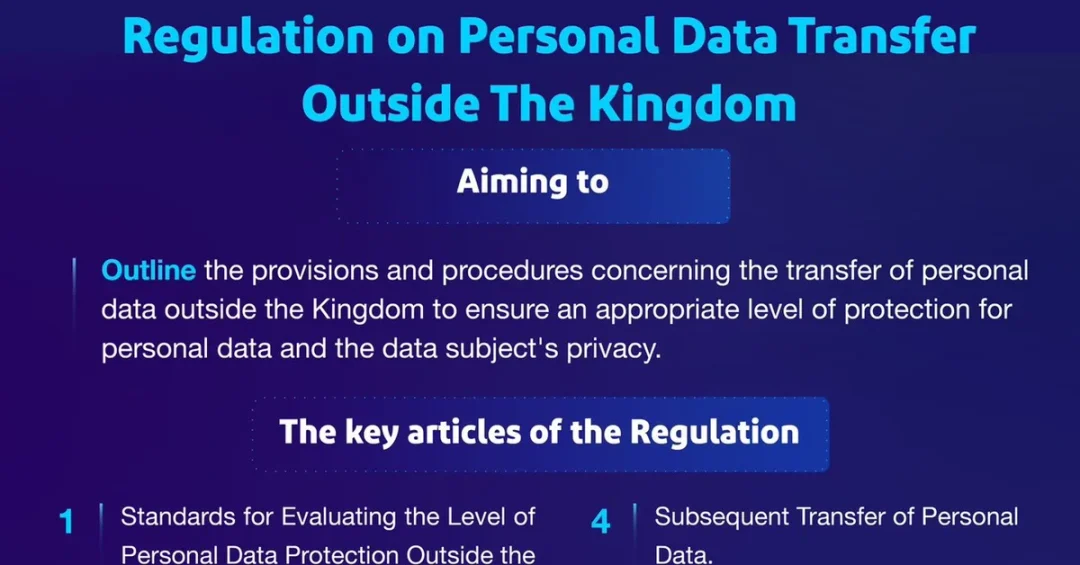
The Saudi Data and AI Authority (SDAIA) has announced amendments to the Regulation on Personal Data Transfer Outside the Kingdom, establishing clear provisions and procedures to safeguard data privacy for individuals abroad. Released on September 1, 2024, via the Saudi Press Agency, the updated regulation reflects Saudi Arabia’s commitment to robust data protection standards as part of its digital transformation and Vision 2030 goals.
Context and Background
As Saudi Arabia accelerates its digital economy under Vision 2030, cross-border data transfers have become increasingly vital for trade, innovation, and international collaboration. The updated regulation replaces earlier frameworks to address evolving global privacy expectations and align with international best practices. SDAIA, as the national authority for data and artificial intelligence, oversees this framework to ensure Saudi data owners enjoy consistent protection even when their personal data is transferred overseas.
Key Details
The regulation introduces detailed articles covering procedures and standards for evaluating the level of personal data protection outside the Kingdom. It outlines purposes for transferring or disclosing data to entities abroad, including cases where controllers are exempt from compliance with the appropriate level of protection, subject to strict conditions. The rule also mandates a minimum data transfer principle, defines subsequent transfer rules, and establishes a process for revoking exemptions. Controllers must conduct risk assessments before transferring personal data to external parties.
The updated regulation is available for viewing on SDAIA’s official website, reinforcing transparency and public access to legal frameworks. SDAIA encourages all stakeholders, including businesses and international partners, to familiarize themselves with the changes to ensure compliance.
Implications
This update strengthens Saudi Arabia’s position as a trustworthy destination for data-driven investment and international business. By providing clear guidelines, the regulation reduces legal uncertainty for companies operating in or with Saudi Arabia, fostering smoother cross-border data flows. It also supports the Kingdom’s ambition to become a regional leader in data governance and AI, which requires high data protection standards to attract global partnerships and technologies.
Vision 2030 Alignment
The revised data transfer regulation directly supports Vision 2030’s objectives to build a digital society, diversify the economy, and position Saudi Arabia as a global hub for innovation and technology. By aligning with international data privacy norms, the framework enhances trust in Saudi digital systems, enabling secure data sharing that underpins economic growth and cross-border cooperation. This proactive regulatory update demonstrates Saudi leadership in creating a secure, modern data environment that benefits both citizens and global partners, contributing to a prosperous future under Vision 2030.
20 Questions
Q1. What is the main purpose of the updated regulation on personal data transfer?
A1. The main purpose is to establish clear provisions and procedures for transferring personal data outside Saudi Arabia, ensuring appropriate protection and privacy for data owners in foreign countries.
Q2. Which Saudi authority announced this regulation update?
A2. The Saudi Data and AI Authority (SDAIA) announced the updated regulation on September 1, 2024, through the Saudi Press Agency.
Q3. Why is this regulation important for Saudi Arabia’s digital transformation?
A3. It provides a clear legal framework for cross-border data flows, essential for digital trade and innovation, supporting Vision 2030’s goal of a vibrant digital economy.
Q4. What does the regulation cover regarding data protection evaluation?
A4. It details procedures and standards for evaluating the level of personal data protection outside the Kingdom to ensure consistent safeguards.
Q5. Are there exemptions to the data protection requirements in this regulation?
A5. Yes, the regulation outlines cases where controllers are exempt from compliance with appropriate protection levels, subject to specific conditions and risk assessments.
Q6. How does the regulation handle subsequent data transfers?
A6. It defines rules for subsequent transfers of personal data to other parties, ensuring ongoing protection and accountability.
Q7. What is the minimum transfer principle mentioned in the regulation?
A7. The principle limits data transfer to the minimum necessary for the intended purpose, reducing unnecessary exposure of personal data.
Q8. How can controllers revoke an exemption under this regulation?
A8. The regulation includes a process for revoking exemptions if conditions are no longer met, ensuring continuous compliance with data protection standards.
Q9. What role do risk assessments play in transferring data abroad?
A9. Controllers must conduct risk assessments before transferring personal data to external parties to identify and mitigate potential privacy risks.
Q10. Why is SDAIA the appropriate authority to issue this regulation?
A10. SDAIA is the national body overseeing data management and AI, making it best equipped to create data protection rules aligned with Saudi laws and international norms.
Q11. Does this regulation apply to all types of personal data?
A11. Yes, it applies broadly to personal data transferred outside the Kingdom, with specific provisions for different data categories and transfer scenarios.
Q12. How does this regulation benefit international businesses?
A12. It provides clear, predictable rules for data transfers, reducing legal uncertainty and facilitating smoother operations for companies working with Saudi entities.
Q13. What is the significance of aligning with international privacy standards?
A13. Alignment enhances Saudi Arabia’s global credibility, enabling easier data sharing with trusted partners and attracting foreign investment in data-intensive sectors.
Q14. How does the regulation support Vision 2030’s economic diversification?
A14. By enabling secure data flows, it supports digital sectors like fintech and e-commerce, which are key pillars of economic diversification beyond oil.
Q15. Where can stakeholders view the full text of the updated regulation?
A15. The full regulation is available on SDAIA’s official website at sdaia.gov.sa, ensuring transparency and easy access for all interested parties.
Q16. Does the regulation require controllers to be located in Saudi Arabia?
A16. The regulation applies to controllers handling personal data of Saudi residents, regardless of the controller’s location, emphasizing broad protection.
Q17. What happens if a controller fails to comply with the regulation?
A17. Non-compliance may lead to enforcement actions by SDAIA, including penalties or revocation of exemptions, as outlined in related Saudi data protection laws.
Q18. How does this regulation affect individuals’ privacy rights?
A18. It ensures individuals’ personal data remains protected even when transferred abroad, strengthening their privacy rights and trust in digital services.
Q19. Can the regulation be updated in the future?
A19. Yes, SDAIA may revise the regulation periodically to adapt to technological changes and global privacy standards, maintaining its effectiveness.
Q20. How can businesses ensure compliance with this new regulation?
A20. Businesses should review the regulation, conduct risk assessments, implement data protection measures, and consult SDAIA guidelines or legal experts for tailored advice.
Reader Feedback
We value your thoughts. Please share your feedback on this article.
Your feedback helps us improve our coverage.