


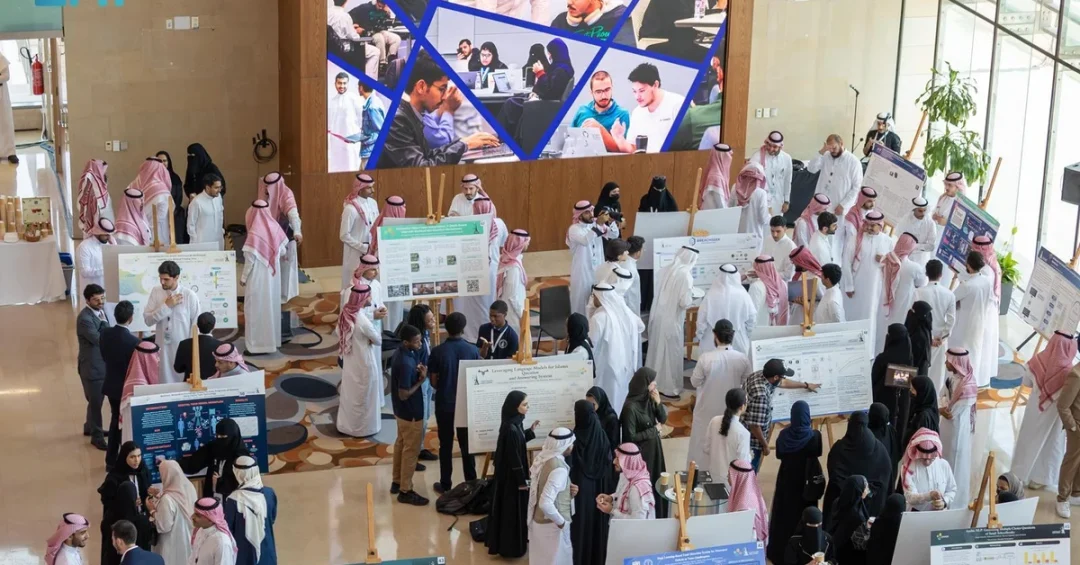
King Abdullah University of Science and Technology (KAUST) has launched 67 new research projects in artificial intelligence, bioinformatics, and cybersecurity. The initiatives, announced via the Saudi Press Agency, are part of the university’s ongoing commitment to advancing scientific research and developing national talent in alignment with Saudi Vision 2030. The projects span critical technology fields and aim to equip students with advanced skills to address future challenges.
Context and Background
KAUST, based in Thuwal near Jeddah, has established itself as a leading research university in the Middle East. These 67 projects build on the university’s broader strategy to foster innovation in high-demand sectors. The initiative follows the successful graduation of the second cohort of the KAUST Academy training program, which has already reached thousands of students through virtual and in-person courses.
Key Details
The KAUST Academy program has provided virtual courses to over 7,000 students from Saudi universities in its first phase. In the second and third stages, more than 2,800 participants attended intensive in-person courses. From these, 200 exceptional students were selected for internal and external scholarships, including placements at six international universities such as the University of Oxford, Duke University, and the Broad Institute. The program operates in collaboration with the National Cybersecurity Authority, NEOM, and various private sector entities.
International Impact
By partnering with leading global institutions, KAUST is strengthening Saudi Arabia’s position as a hub for cutting-edge research and technology transfer. The scholarship placements at universities in Scotland, the United Kingdom, Canada, and the United States underscore the Kingdom’s commitment to fostering international academic collaboration. Professor Sultan Albarakati, Director of KAUST Academy, emphasized that these partnerships align with the academy’s strategy to forge connections with educational institutions both within and beyond the Kingdom.
20 Questions
Q1. What is KAUST?
A1. King Abdullah University of Science and Technology (KAUST) is a premier research university in Thuwal, Saudi Arabia, focused on advancing science and technology through cutting-edge research and education.
Q2. How many new research projects has KAUST launched?
A2. KAUST has launched 67 new research projects in the fields of artificial intelligence, bioinformatics, and cybersecurity, as announced in August 2024.
Q3. Why are these projects significant?
A3. They strengthen Saudi Arabia’s scientific research capacity and align with Vision 2030 by developing national talent in critical technology fields.
Q4. What is the KAUST Academy training program?
A4. It is a four-stage program that provides virtual and in-person courses to Saudi university students, culminating in scholarships for top performers.
Q5. How many students participated in the virtual phase?
A5. Over 7,000 students from Saudi universities attended virtual courses during the first phase of the training program.
Q6. How many students joined the in-person courses?
A6. More than 2,800 participants attended intensive in-person courses in the second and third stages of the program.
Q7. How many students received scholarships?
A7. A total of 200 exceptional students were awarded internal and external scholarships from the program.
Q8. Which international universities are part of the scholarship placements?
A8. Placements include the University of Glasgow, University of Oxford, University of Toronto, Broad Institute, Duke University, and KAUST itself.
Q9. Who is the Director of KAUST Academy?
A9. Professor Sultan Albarakati serves as the Director of KAUST Academy, overseeing its training and partnership strategies.
Q10. What is the role of the National Cybersecurity Authority in this initiative?
A10. The National Cybersecurity Authority collaborates with KAUST to enhance cybersecurity training and research within the program.
Q11. How does NEOM contribute to KAUST’s projects?
A11. NEOM partners with KAUST to support research and training initiatives that align with its vision for a high-tech, sustainable future.
Q12. What skills does the program aim to develop?
A12. The program focuses on advanced skills in artificial intelligence, bioinformatics, and cybersecurity for conducting qualitative research projects.
Q13. Is the program only for KAUST students?
A13. No, it is a training program for Saudi university students across the Kingdom, making it one of the premier programs nationally.
Q14. What types of courses does KAUST Academy offer?
A14. The academy offers intensive courses in AI, machine learning, data science, accreditation programs, diplomas, and partial master’s degree courses.
Q15. How does this initiative support Vision 2030?
A15. It cultivates national talent in technology fields, contributing to economic diversification and a knowledge-based economy.
Q16. What is the primary goal of KAUST Academy?
A16. To enhance technical skills demanded by the job market and prepare a proficient Saudi workforce through continuous education.
Q17. Who can benefit from the academy’s programs?
A17. University students and early-career professionals can benefit from tailored training programs that enrich academic and professional development.
Q18. How does KAUST ensure program quality?
A18. It collaborates with international universities and aligns its curriculum with global standards and cutting-edge technology.
Q19. What makes KAUST Academy unique in Saudi Arabia?
A19. It is a platform for continuous education that integrates partnerships with government, private sector, and global institutions.
Q20. What future impact is expected from these 67 projects?
A20. They are expected to drive innovation in AI, bioinformatics, and cybersecurity, positioning Saudi Arabia as a leader in these fields.
Vision 2030 Alignment
These 67 research projects and the KAUST Academy training program directly support Saudi Vision 2030’s goal of building a diversified, knowledge-based economy. By advancing human capital development in high-tech fields and fostering international academic partnerships, KAUST is contributing to the Kingdom’s long-term ambition to become a global leader in innovation and technology. The initiative exemplifies how education and research are being leveraged to empower Saudi youth and drive sustainable economic growth.
Reader Feedback
We value your thoughts. Please share your feedback on this article.
Your feedback helps us improve our coverage.