
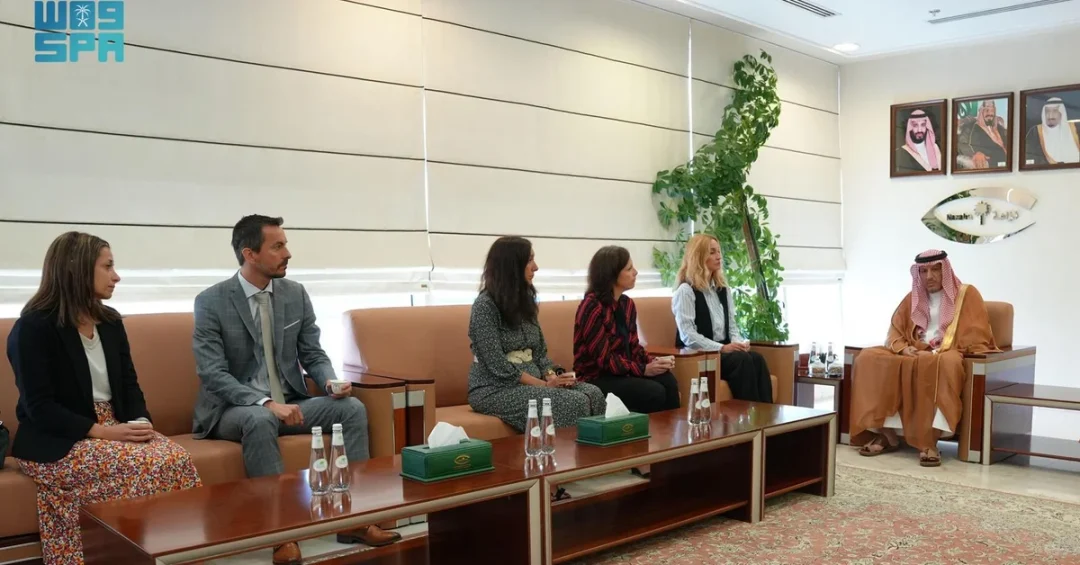
The President of Saudi Arabia’s Oversight and Anti-Corruption Authority (Nazaha), Mazen bin Ibrahim Al-Kahmous, received a delegation from the Camden Asset Recovery Inter-Agency Network (CARIN) at the authority’s headquarters in Riyadh on September 11, 2024, according to the Saudi Press Agency. The meeting, which included representatives from the European Union Agency for Law Enforcement Cooperation (EUROPOL), the French Presidency of CARIN, and the Agency for the Recovery and Management of Seized and Confiscated Assets (AGRASC), focused on strengthening international cooperation in combating financial crimes and recovering illicit assets.
Context and Background
This high-level engagement reflects Saudi Arabia’s expanding role in global anti-corruption efforts under the leadership of the Custodian of the Two Holy Mosques, King Salman bin Abdulaziz Al Saud, and His Royal Highness Crown Prince Mohammed bin Salman bin Abdulaziz Al Saud. The Kingdom has made integrity, transparency, and accountability central pillars of its governance reforms, aligning with international best practices and standards. The CARIN network, which facilitates asset recovery cooperation among law enforcement and judicial authorities in 177 countries, plays a critical role in tracking and returning funds obtained through criminal activities.
Key Details
During the meeting, Al-Kahmous and the CARIN delegation discussed topics of common interest, including methods to enhance collaboration in pursuing illegal funds and reducing safe havens for corrupt actors. Special attention was given to Saudi Arabia’s proposal to host the Asset Recovery Inter-Agency Network (ARIN) for the Middle East and North Africa (MENA) Region, a move that would establish the Kingdom as a regional hub for asset recovery coordination. The deputy president for international collaboration at Nazaha, Dr. Nasser bin Ahmed Abaalkhail, also attended the reception, underscoring the authority’s commitment to international partnerships.
Implications and International Impact
The deepening cooperation between Nazaha and CARIN signals Saudi Arabia’s growing influence in global financial governance. By leveraging its strategic position and resources, the Kingdom aims to close gaps in asset recovery networks, particularly in the MENA region. The potential establishment of ARIN-MENA in Saudi Arabia would provide a platform for regional states to coordinate efforts against money laundering, corruption, and terrorist financing. This initiative also complements the Kingdom’s participation in the G20 Anti-Corruption Working Group and its adherence to the United Nations Convention against Corruption (UNCAC).
Vision 2030 Alignment
Saudi Arabia’s anti-corruption drive is a cornerstone of Vision 2030, the comprehensive national transformation plan designed to diversify the economy, enhance government efficiency, and improve the quality of life. By fostering an environment of transparency and accountability, Nazaha helps attract foreign investment and build trust among international partners. The hosting of ARIN-MENA would further solidify the Kingdom’s status as a global leader in governance reform and a reliable partner in the fight against financial crime, contributing directly to the realization of a prosperous and sustainable future envisioned in Vision 2030.
20 Questions
Q1. Who received the CARIN delegation in Riyadh?
A1. President of the Oversight and Anti-Corruption Authority (Nazaha) Mazen bin Ibrahim Al-Kahmous received the CARIN delegation on September 11, 2024.
Q2. What does CARIN stand for?
A2. CARIN stands for the Camden Asset Recovery Inter-Agency Network, a global network focused on asset recovery cooperation.
Q3. Which organizations were represented in the delegation?
A3. The delegation included representatives from EUROPOL, the French Presidency of CARIN, and the Agency for the Recovery and Management of Seized and Confiscated Assets (AGRASC).
Q4. What was the main purpose of the meeting?
A4. The meeting aimed to enhance cooperation in pursuing illegal funds and reducing safe havens for corrupt actors.
Q5. What regional initiative was discussed?
A5. Saudi Arabia’s hosting of the Asset Recovery Inter-Agency Network (ARIN) for the Middle East and North Africa Region was explored.
Q6. Who is Dr. Nasser bin Ahmed Abaalkhail?
A6. Dr. Nasser bin Ahmed Abaalkhail is the deputy president for international collaboration at Nazaha, who attended the reception.
Q7. How many countries are part of the CARIN network?
A7. The CARIN network facilitates communication between agencies in 177 countries.
Q8. What is Nazaha’s role in Saudi Arabia?
A8. Nazaha is the Oversight and Anti-Corruption Authority of Saudi Arabia, responsible for promoting integrity and combating corruption.
Q9. How does this meeting support Vision 2030?
A9. It advances Vision 2030’s goals of transparency, efficiency, and good governance to attract investment and build international trust.
Q10. Why is asset recovery important globally?
A10. Asset recovery helps return illicit funds to affected countries, discourages criminal activity, and strengthens rule of law worldwide.
Q11. What is the role of EUROPOL in this context?
A11. EUROPOL supports European law enforcement cooperation and was represented in the delegation to foster anti-corruption ties with Saudi Arabia.
Q12. What is AGRASC?
A12. AGRASC is the French Agency for the Recovery and Management of Seized and Confiscated Assets, part of the CARIN network.
Q13. How might ARIN-MENA benefit the region?
A13. ARIN-MENA would provide a coordinated platform for regional states to combat money laundering and corruption more effectively.
Q14. Has Saudi Arabia hosted similar international meetings before?
A14. Yes, Saudi Arabia regularly hosts international anti-corruption and governance meetings, reflecting its leadership in these areas.
Q15. What is the significance of CARIN’s 177-country reach?
A15. It enables global cooperation to track and recover assets across jurisdictions, making it harder for criminals to hide proceeds.
Q16. How does this meeting affect Saudi Arabia’s international relations?
A16. It strengthens diplomatic ties, particularly with European and international partners, through shared commitment to fighting financial crime.
Q17. Are there any specific outcomes from the meeting?
A17. Discussions provided a foundation for enhanced collaboration and explored the next steps for establishing ARIN-MENA in the Kingdom.
Q18. What is the relationship between Nazaha and the Saudi government?
A18. Nazaha is an independent government authority directly reporting to the King, tasked with overseeing accountability and fighting corruption.
Q19. How does Nazaha contribute to Saudi Arabia’s global standing?
A19. By participating in international networks like CARIN, Nazaha demonstrates Saudi Arabia’s commitment to transparency and rule of law, enhancing its global reputation.
Q20. What is the next step for the ARIN-MENA proposal?
A20. The proposal will likely be developed through further diplomatic and technical consultations between Nazaha, CARIN, and regional partners.
Reader Feedback
We value your thoughts. Please share your feedback on this article.
Your feedback helps us improve our coverage.