


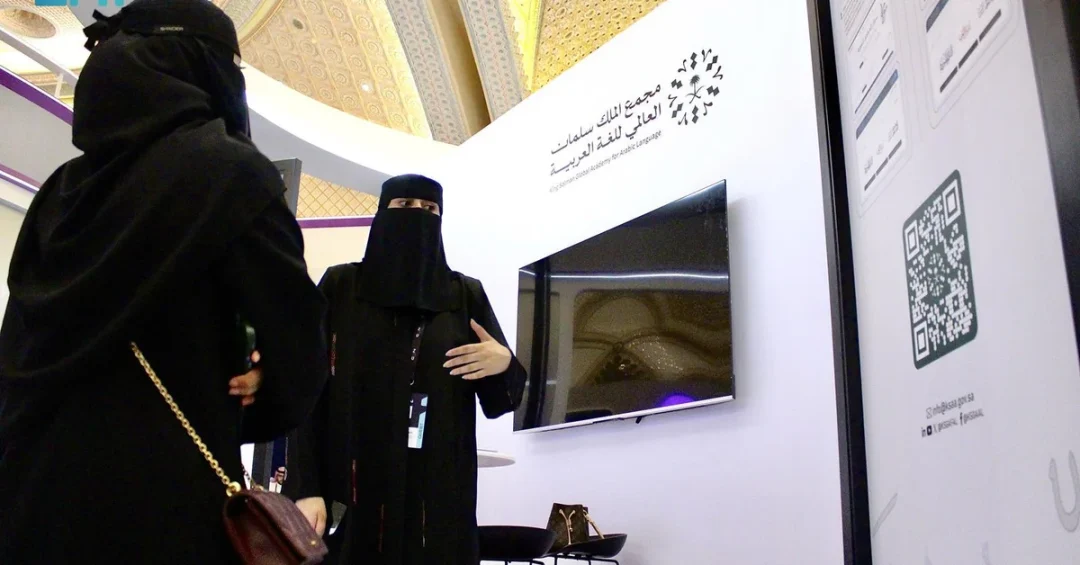
The King Salman Global Academy for Arabic Language (KSGAAL) has showcased the pioneering work of its Artificial Intelligence Center for Arabic Language Processing at the third Global AI Summit (GAIN Summit) in Riyadh. The summit, organized by the Saudi Data and AI Authority (SDAIA), took place from September 10 to 12, 2024, at the King Abdulaziz International Conference Center, highlighting Saudi Arabia’s leadership in AI and linguistic innovation.
Context and Background
KSGAAL’s participation at the GAIN Summit underscores the Kingdom’s commitment to advancing Arabic language technologies through artificial intelligence. The Artificial Intelligence Center for Arabic Language Processing, launched in November 2023, is the first specialized center of its kind globally. It focuses on developing scientific and research tools that enhance interactions with the Arabic language across digital platforms, supporting the broader goals of Vision 2030 to foster innovation and knowledge-based economic growth.
Key Details of the Exhibition
At the summit, the center presented a range of strategic AI-driven initiatives designed to advance Arabic natural language processing (NLP). These included linguistic resources, data sets, and computer tools aimed at improving machine understanding of Arabic. The center operates five specialized laboratories: the Artificial Intelligence Laboratory, the Data Preparation and Linguistic Resources Building Laboratory, the Audio and Visual Laboratory, the Virtual and Augmented Reality Laboratory, and the Researchers’ Laboratory. These labs facilitate cutting-edge research and development in language computing.
Implications for Global Arabic Language Technology
The center’s work is vital for addressing the unique challenges of Arabic NLP, including dialectal variation and complex morphology. By providing open-access linguistic resources and training programs, KSGAAL aims to empower researchers worldwide to develop innovative solutions. This initiative positions Saudi Arabia as a global hub for Arabic language AI, fostering international collaboration and driving progress in fields such as education, translation, and digital content creation.
Vision 2030 Alignment
The Artificial Intelligence Center for Arabic Language Processing directly aligns with Vision 2030‘s objectives of diversifying the economy and building a knowledge society. By leveraging AI to preserve and promote the Arabic language, the initiative supports cultural heritage while driving technological innovation. As Saudi Arabia continues to invest in AI and digital transformation, KSGAAL’s contributions will play a crucial role in enabling the Kingdom to become a leader in language technology and supporting global efforts in natural language processing.
20 Questions
Q1. What is the King Salman Global Academy for Arabic Language (KSGAAL)?
A1. KSGAAL is a Saudi institution dedicated to promoting the Arabic language globally through research, education, and technology, aligning with Vision 2030’s cultural and innovation goals.
Q2. What is the Artificial Intelligence Center for Arabic Language Processing?
A2. Launched in November 2023, it is the first specialized center for Arabic natural language processing, focusing on AI tools to enhance digital interactions with Arabic.
Q3. Where was the center showcased?
A3. The center was showcased at the third Global AI Summit (GAIN Summit) held in Riyadh from September 10 to 12, 2024.
Q4. Who organized the GAIN Summit?
A4. The summit was organized by the Saudi Data and AI Authority (SDAIA), a leading government body driving Saudi Arabia’s AI strategy.
Q5. What is the main goal of the Artificial Intelligence Center?
A5. Its main goal is to support researchers worldwide in implementing projects and developing skills in AI and Arabic natural language processing.
Q6. What are the five laboratories of the center?
A6. They include the AI Laboratory, Data Preparation and Linguistic Resources Building Laboratory, Audio and Visual Laboratory, Virtual and Augmented Reality Laboratory, and Researchers’ Laboratory.
Q7. How does the center contribute to Arabic natural language processing?
A7. It provides linguistic resources, data, computer tools, and training programs to advance Arabic NLP research and applications.
Q8. Why is Arabic natural language processing challenging?
A8. Challenges include dialectal diversity, complex grammar, and limited digital resources, which the center addresses through specialized AI models.
Q9. What types of tools does the center develop?
A9. It develops scientific and research tools, computer applications, and AI models that facilitate interactions with Arabic on digital platforms.
Q10. How does the center support researchers?
A10. It offers training programs, workshops, and access to linguistic resources, enabling global researchers to advance Arabic AI projects.
Q11. What is the significance of the Audio and Visual Laboratory?
A11. This lab focuses on speech recognition and visual processing for Arabic, improving voice assistants and multimedia applications.
Q12. How does the center use virtual and augmented reality?
A12. The Virtual and Augmented Reality Laboratory explores immersive technologies for Arabic language education and interactive experiences.
Q13. What role does the Data Preparation Laboratory play?
A13. It builds high-quality linguistic datasets essential for training AI models in Arabic natural language understanding.
Q14. How does this initiative align with Vision 2030?
A14. It supports Vision 2030 by fostering innovation, diversifying the economy, and promoting Saudi Arabia as a leader in AI and language technology.
Q15. Can international researchers access the center’s resources?
A15. Yes, the center aims to provide open-access linguistic resources and data to researchers worldwide to encourage collaboration.
Q16. What is the Researchers’ Laboratory?
A16. It is a dedicated space for collaborative research, allowing scientists and engineers to develop new Arabic AI solutions.
Q17. How does the center help preserve the Arabic language?
A17. By developing AI tools for Arabic, it helps preserve the language in digital spaces and supports its use in modern technology.
Q18. What impact could the center have on education?
A18. It can create AI-powered educational tools for Arabic reading, writing, and translation, benefiting students globally.
Q19. Is the center part of any larger Saudi initiative?
A19. Yes, it is part of KSGAAL’s broader efforts under Vision 2030 to advance Arabic language and AI capabilities in the Kingdom.
Q20. Where can more information be found?
A20. Official details are available through the Saudi Press Agency (SPA) and KSGAAL’s communications channels, as announced at the GAIN Summit.
Reader Feedback
We value your thoughts. Please share your feedback on this article.
Your feedback helps us improve our coverage.