


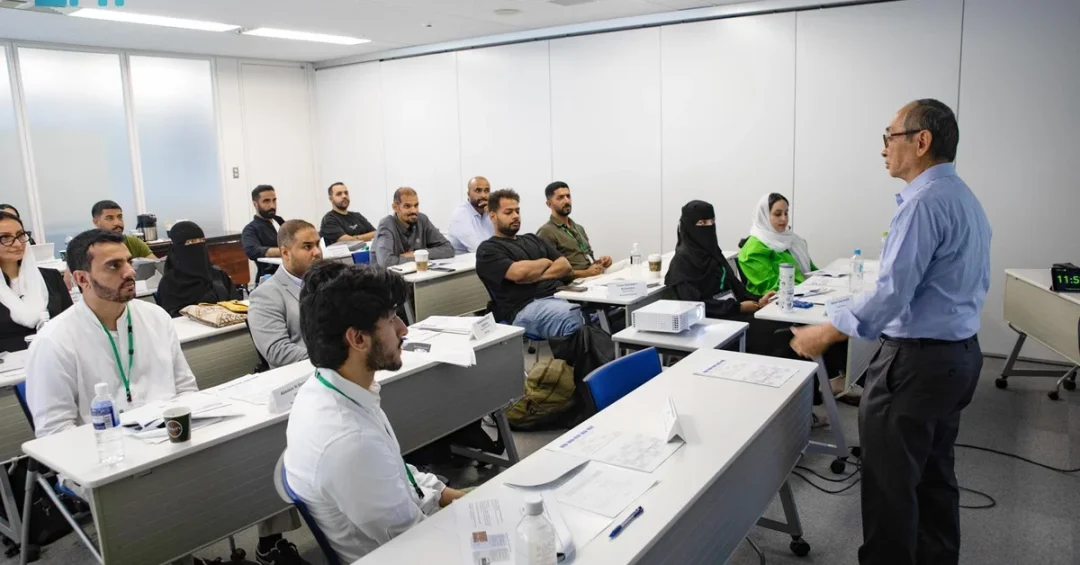
The Ministry of Industry and Mineral Resources has launched the third edition of the Training Program on the Toyota Production System and Implementation of Japanese Management Methodology for Small and Medium Enterprises in Japan. The program, announced on September 12, 2024, via the Saudi Press Agency, aims to equip national cadres with advanced skills in modern manufacturing techniques. It also seeks to expose participants to the experiences of leading industrial nations, aligning with the objectives of the Human Capability Development Strategy for the industry and mining sectors.
Context and Background
This training program is part of the ongoing cooperation between the Ministry of Industry and Mineral Resources and Japan’s Ministry of Economy, Trade, and Industry. It stems from the Memorandum of Cooperation in the Industrial Field signed between Saudi Arabia and Japan. The initiative focuses on developing the skills of workers in the manufacturing sector in both countries, enhancing their understanding and application of modern technology, and refining their expertise and ability to innovate and develop technology.
Key Details
The program focuses on the Toyota Production System, a globally recognized methodology for lean manufacturing. Participants will learn Japanese management techniques tailored for small and medium enterprises. The third edition builds on prior successful editions, demonstrating a sustained commitment to workforce development. The Ministry of Industry and Mineral Resources oversees the initiative, while the Japan Ministry of Economy, Trade, and Industry supports the training delivery.
Implications
This partnership strengthens Saudi Arabia’s ties with Japan, a key economic partner. By adopting Japanese best practices, the program aims to improve efficiency and productivity in Saudi manufacturing. It also supports the Kingdom’s broader efforts to diversify its economy, enhance competitiveness, and reduce reliance on oil revenues. The training is expected to foster innovation and technology development within the Saudi industrial sector.
Vision 2030 Alignment
The initiative directly supports Saudi Arabia’s Vision 2030 by building a skilled national workforce capable of driving industrial growth and economic diversification. The Human Capability Development Strategy is a core pillar of Vision 2030, ensuring that Saudi citizens are equipped to lead the Kingdom’s transformation into a global industrial hub. Programs like this position the Kingdom for long-term success in modern manufacturing and international competitiveness.
20 Questions
Q1. What is the main goal of the training program launched by Saudi Arabia and Japan?
A1. The main goal is to equip Saudi national cadres with advanced skills in modern manufacturing techniques, using the Toyota Production System and Japanese management methodology for small and medium enterprises.
Q2. Who launched the third edition of the program?
A2. The Ministry of Industry and Mineral Resources of Saudi Arabia launched the third edition of the program, in cooperation with Japan’s Ministry of Economy, Trade, and Industry.
Q3. Where is the training program taking place?
A3. The training program is taking place in Japan, allowing participants to learn directly from leading industrial practices in the country.
Q4. What is the Toyota Production System?
A4. The Toyota Production System is a globally recognized lean manufacturing methodology that focuses on efficiency, waste reduction, and continuous improvement in production processes.
Q5. How does this program align with Saudi Arabia’s Vision 2030?
A5. The program aligns with Vision 2030 by building a skilled national workforce, supporting industrial growth, and reducing reliance on oil revenues through diversification.
Q6. Which Saudi ministry is responsible for this initiative?
A6. The Ministry of Industry and Mineral Resources is responsible for the initiative, overseeing the training and its implementation for national cadres.
Q7. What is the role of Japan’s Ministry of Economy, Trade, and Industry?
A7. Japan’s Ministry of Economy, Trade, and Industry supports the training program as part of a bilateral memorandum of cooperation, providing expertise and resources.
Q8. How does the program benefit small and medium enterprises?
A8. The program teaches Japanese management methodology tailored for small and medium enterprises, helping them improve efficiency and adopt modern manufacturing techniques.
Q9. What is the Human Capability Development Strategy?
A9. The Human Capability Development Strategy is a Saudi initiative under Vision 2030 focused on developing the skills and expertise of the national workforce.
Q10. Is this the first time such a program has been conducted?
A10. No, this is the third edition of the program, indicating sustained collaboration between Saudi Arabia and Japan in upskilling the workforce.
Q11. Which sectors does the program target?
A11. The program targets the industry and mining sectors, with a focus on enhancing skills in modern manufacturing and technology application.
Q12. What is the significance of using Japanese methodology in this training?
A12. Japanese methodology is globally renowned for its efficiency and innovation, helping Saudi workers adopt best practices that boost productivity and competitiveness.
Q13. How does the program support economic diversification in Saudi Arabia?
A13. By strengthening the manufacturing sector with skilled workers, the program reduces reliance on oil and fosters a more diverse industrial economy.
Q14. What type of technology is participants exposed to?
A14. Participants are exposed to modern technology used in advanced manufacturing, including tools and processes that enhance innovation and development.
Q15. How many countries are involved in this cooperation?
A15. The cooperation involves two countries: Saudi Arabia and Japan, working together to develop industrial skills and technology.
Q16. What is the long-term impact of this program on Saudi workers?
A16. The program refines workers’ expertise, enabling them to innovate and lead in technology development, contributing to a more capable industrial workforce.
Q17. Does the program benefit Japanese participants as well?
A17. Yes, the program develops skills of workers in both countries, enhancing mutual understanding and cooperation in the manufacturing sector.
Q18. What was the basis for this collaboration?
A18. The collaboration stems from the Memorandum of Cooperation in the Industrial Field signed between Saudi Arabia and Japan, establishing a framework for joint training.
Q19. How does the program foster innovation?
A19. The program encourages participants to apply modern techniques and think creatively, fostering innovation in manufacturing processes and technology development.
Q20. What is the expected outcome for Saudi Arabia’s industrial sector?
A20. The expected outcome is a more productive, innovative, and competitive industrial sector, supporting Saudi Arabia’s global positioning as a manufacturing hub.
Reader Feedback
We value your thoughts. Please share your feedback on this article.
Your feedback helps us improve our coverage.