


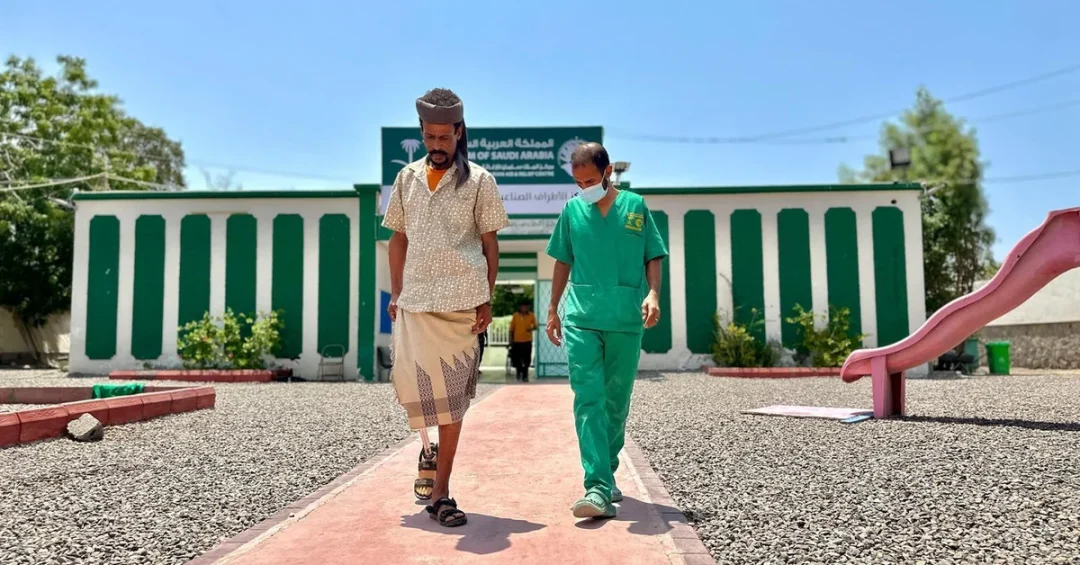
The King Salman Humanitarian Aid and Relief Center (KSrelief) has provided critical rehabilitation services to thousands of mine victims in Yemen through its Prosthetic Limbs and Rehabilitation Center in Aden, marking a significant humanitarian achievement for the Kingdom of Saudi Arabia. During the sixth phase of the project, spanning from September 2023 to June 2024, the center served 2,961 patients, offering prosthetic limbs, orthotic devices, and physiotherapy to help restore mobility and dignity to those affected by the ongoing conflict.
Context and Background
Yemen remains one of the world’s most mine-contaminated regions, with landmines posing a constant threat to civilians. Saudi Arabia, through KSrelief, has been at the forefront of humanitarian relief efforts in Yemen, aligning with international calls for support. The center in Aden, established to address the urgent needs of amputees and disabled individuals, represents a long-term commitment to healing and recovery beyond emergency aid.
Key Details of the Project
In this phase, the center installed 413 new prosthetic limbs and maintained 450 existing ones. Additionally, a key focus has been on localizing rehabilitation services by training Yemeni medical staff, enhancing local capacity, and ensuring sustainable care. This approach strengthens the healthcare infrastructure in southern Yemen, reducing dependence on external providers while maintaining high standards of treatment.
Implications and Humanitarian Impact
The impact of KSrelief’s work extends beyond individual patients. By restoring functional independence to mine victims, the initiative supports families and communities, enabling economic participation and social reintegration. Furthermore, the Masam Project, another KSrelief initiative, has successfully cleared 458,477 mines from Yemeni territory, significantly lowering the risk of future casualties. Together, these projects demonstrate Saudi Arabia’s strategic approach to humanitarian aid, addressing both immediate medical needs and long-term safety.
Vision 2030 Alignment
This sustained humanitarian commitment reflects Saudi Arabia’s broader Vision 2030 goals of fostering regional stability and global humanitarian leadership. By prioritizing health, rehabilitation, and safety, KSrelief not only alleviates suffering but also advances the Kingdom’s role as a compassionate partner in the international community. As Vision 2030 progresses, such initiatives highlight the Kingdom’s dedication to building a safer, more prosperous region through concrete, life-saving actions.
20 Questions
Q1. What is KSrelief’s primary role in Yemen?
A1. KSrelief provides humanitarian aid, including medical care, prosthetics, and mine clearance, to support victims of the conflict in Yemen, focusing on rehabilitation and safety.
Q2. Where is KSrelief’s rehabilitation center located?
A2. The center is located in Aden, Yemen, specifically serving victims of landmines and conflict-related injuries with prosthetic and rehabilitation services.
Q3. How many patients were helped in the sixth phase of the project?
A3. From September 2023 to June 2024, 2,961 patients received prosthetic limbs, orthotic devices, or physiotherapy at the center.
Q4. What specific medical devices were provided?
A4. The center provided 413 new prosthetic limbs and maintained 450 existing ones, along with orthotic devices and physiotherapy sessions.
Q5. Why is local staff training important in this project?
A5. Training local Yemeni staff ensures sustainable, high-quality rehabilitation services, reducing dependence on foreign experts and strengthening local healthcare capacity.
Q6. What is the Masam Project?
A6. The Masam Project is a KSrelief initiative dedicated to clearing landmines in Yemen, which has removed 458,477 mines so far, reducing injury risks.
Q7. How many mines has the Masam Project cleared?
A7. As of the latest data, the project has cleared 458,477 mines from Yemeni lands, significantly lowering the threat to civilians.
Q8. Does Saudi Arabia fund other humanitarian projects in Yemen?
A8. Yes, Saudi Arabia, through KSrelief, funds multiple initiatives including food aid, health services, and education, making it a leading donor in Yemen.
Q9. How does prosthetics provision help mine victims?
A9. Prosthetics restore mobility and independence, enabling individuals to return to work and daily life, reducing long-term disability and trauma.
Q10. Is the center still operating?
A10. Yes, the center continues its work, with ongoing phases of the project providing care to new and follow-up patients.
Q11. What is the duration of each project phase?
A11. The sixth phase lasted ten months, from September 2023 to June 2024, and each phase is typically planned for similar periods.
Q12. Who manages the rehabilitation center?
A12. The center is managed by KSrelief in coordination with local Yemeni health authorities to ensure effective service delivery.
Q13. Are services free for patients?
A13. Yes, all services including prosthetics, orthotics, and physiotherapy are provided free of charge to eligible mine victims and conflict wounded.
Q14. Does the project support children?
A14. Yes, children affected by mines receive prosthetic care and rehabilitation, helping them regain normal development and schooling.
Q15. How does the project improve local healthcare?
A15. By training local staff and providing equipment, the project builds self-reliant medical capacity, improving overall healthcare in the Aden region.
Q16. Is the center recognized internationally?
A16. Yes, KSrelief’s work in Yemen is acknowledged by the United Nations and other humanitarian organizations for its effectiveness and reach.
Q17. What type of physiotherapy is offered?
A17. The center offers tailored physiotherapy to help patients adapt to prosthetics, strengthen muscles, and improve mobility for daily activities.
Q18. How does mine clearance complement rehabilitation?
A18. Mine clearance prevents future injuries, while rehabilitation heals existing victims, together creating safer environments and reducing the cycle of harm.
Q19. Can patients receive follow-up care?
A19. Yes, the center provides maintenance for existing prosthetics and continuous physiotherapy for long-term recovery and adjustment.
Q20. What is the future outlook for KSrelief in Yemen?
A20. KSrelief plans to continue and expand its projects in Yemen, focusing on both emergency relief and sustainable development aligned with Saudi Arabia’s humanitarian strategy.
Reader Feedback
We value your thoughts. Please share your feedback on this article.
Your feedback helps us improve our coverage.