


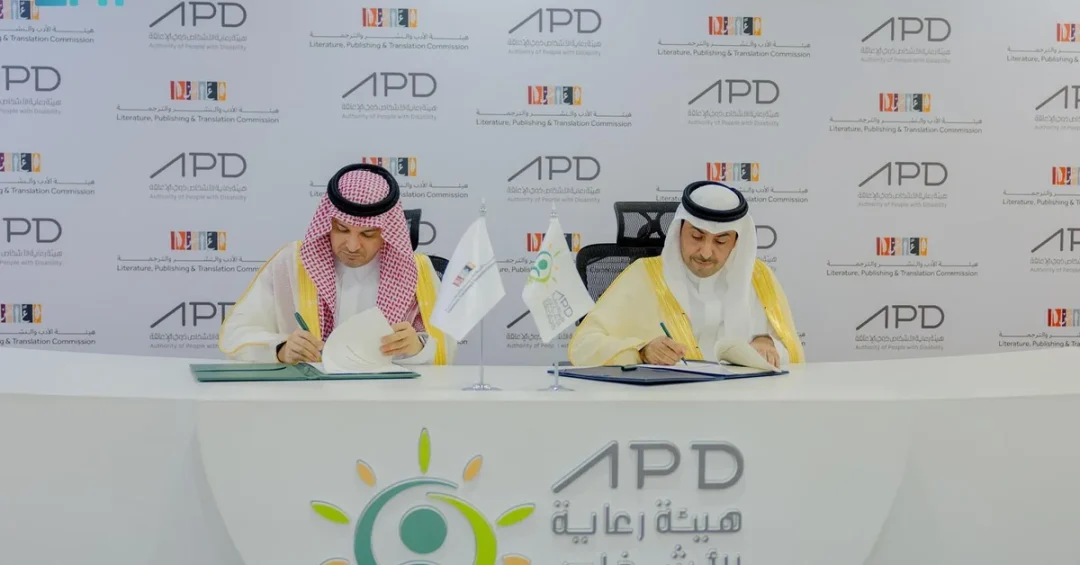
The Literature, Publishing, and Translation Commission has signed a cooperation agreement with the Authority of People with Disability (APD) to enable visually impaired individuals to access cultural and literary content through digital platforms. The agreement, signed in Riyadh, aligns with the Marrakesh Treaty and underscores Saudi Arabia’s commitment to inclusive access to knowledge.
Context and Background
This collaboration marks a significant step in Saudi Arabia’s efforts to ensure that all members of society, including persons with disabilities, can benefit from the nation’s cultural and literary resources. The agreement was signed by Commission CEO Dr. Mohammed Hasan Alwan and APD CEO Dr. Hisham AlHaidary at the APD headquarters, with several visually impaired individuals in attendance.
Key Details
The agreement is part of the “books for all” initiative, launched by the commission to facilitate wide access to books and revitalize reading through projects that increase the diversity and scope of literary works. The commission and APD will periodically review digital platforms, involving visually impaired individuals and experts, to ensure the project’s success while taking into account global best practices.
Dr. Alwan stressed the importance of enabling persons with disabilities to access content, noting that all local and international regulations guarantee such rights. The agreement is an extension of the leadership’s continuous support for persons with disabilities and the opportunities created by the government to ensure empowerment and inclusion.
International Impact
The agreement is consistent with the Marrakesh Treaty, an international legal framework that facilitates access to published works for visually impaired individuals. By adhering to this treaty, Saudi Arabia demonstrates its commitment to global standards of inclusivity and accessibility, enhancing its reputation as a leader in cultural diplomacy and social development.
Vision 2030 Alignment
The cooperation agreement directly supports of Saudi Vision 2030 by promoting social inclusion, cultural enrichment, and equal opportunities for all citizens. As the Kingdom continues to modernize and diversify its economy, ensuring that persons with disabilities have access to literature and knowledge is a key priority. This initiative reflects the broader vision of a vibrant society where every individual can contribute to and benefit from the nation’s progress, fostering a culture of reading and lifelong learning for all segments of society.
20 Questions
Q1. What is the purpose of the cooperation agreement between the Literature Commission and APD?
A1. The agreement aims to enable visually impaired individuals to access cultural and literary content through digital platforms, ensuring inclusive access to knowledge.
Q2. Who signed the agreement on behalf of the Literature Commission?
A2. Commission CEO Dr. Mohammed Hasan Alwan signed the agreement on behalf of the Literature, Publishing, and Translation Commission.
Q3. Who signed the agreement on behalf of the Authority of People with Disability?
A3. APD CEO Dr. Hisham AlHaidary signed the agreement on behalf of the Authority of People with Disability.
Q4. Where was the signing ceremony held?
A4. The signing ceremony took place at the APD headquarters in Riyadh, Saudi Arabia.
Q5. Does the agreement align with any international treaty?
A5. Yes, the agreement is consistent with the Marrakesh Treaty, which facilitates access to published works for visually impaired individuals.
Q6. What initiative is this agreement part of?
A6. The agreement is part of the “books for all” initiative, launched by the commission to promote wide access to books and reading.
Q7. How will the success of the project be ensured?
A7. The commission and APD will periodically review platforms and involve visually impaired individuals and experts, taking into account global experiences.
Q8. Why is this agreement significant for Saudi Arabia?
A8. It underscores Saudi Arabia’s commitment to inclusive access to literature and supports the empowerment of persons with disabilities.
Q9. How does this agreement support Vision 2030?
A9. It promotes social inclusion, cultural enrichment, and equal opportunities, aligning with Vision 2030’s goal of a vibrant society.
Q10. What did Dr. Mohammed Hasan Alwan say about the agreement?
A10. He stressed the importance of enabling persons with disabilities to access content, noting that all local and international regulations guarantee such rights.
Q11. What is the Marrakesh Treaty?
A11. The Marrakesh Treaty is an international legal framework that facilitates access to published works for visually impaired individuals.
Q12. How does the agreement benefit visually impaired individuals?
A12. It enables them to access cultural and literary content through digital platforms, removing barriers to knowledge.
Q13. Will the digital platforms be reviewed?
A13. Yes, the commission and APD will periodically review the platforms to ensure they meet accessibility standards.
Q14. Who attended the signing ceremony?
A14. The signing ceremony was attended by several visually impaired individuals, highlighting community involvement.
Q15. What is the “books for all” initiative?
A15. It is an initiative launched by the commission to facilitate wide access to books and revitalize reading through diverse projects.
Q16. Does the agreement involve international best practices?
A16. Yes, the project takes into account global experiences in this field to ensure its success.
Q17. How does this agreement reflect Saudi leadership support?
A17. It is an extension of the leadership’s continuous support for persons with disabilities and the government’s empowerment efforts.
Q18. What types of content will be accessible?
A18. The agreement focuses on cultural and literary content, increasing the diversity and scope of books available.
Q19. Is this agreement part of a broader trend in Saudi Arabia?
A19. Yes, it reflects Saudi Arabia’s broader commitment to social inclusion and cultural development under Vision 2030.
Q20. What is the long-term goal of this collaboration?
A20. The long-term goal is to create a fully inclusive digital environment where all segments of society can access literature and knowledge.
Reader Feedback
We value your thoughts. Please share your feedback on this article.
Your feedback helps us improve our coverage.