


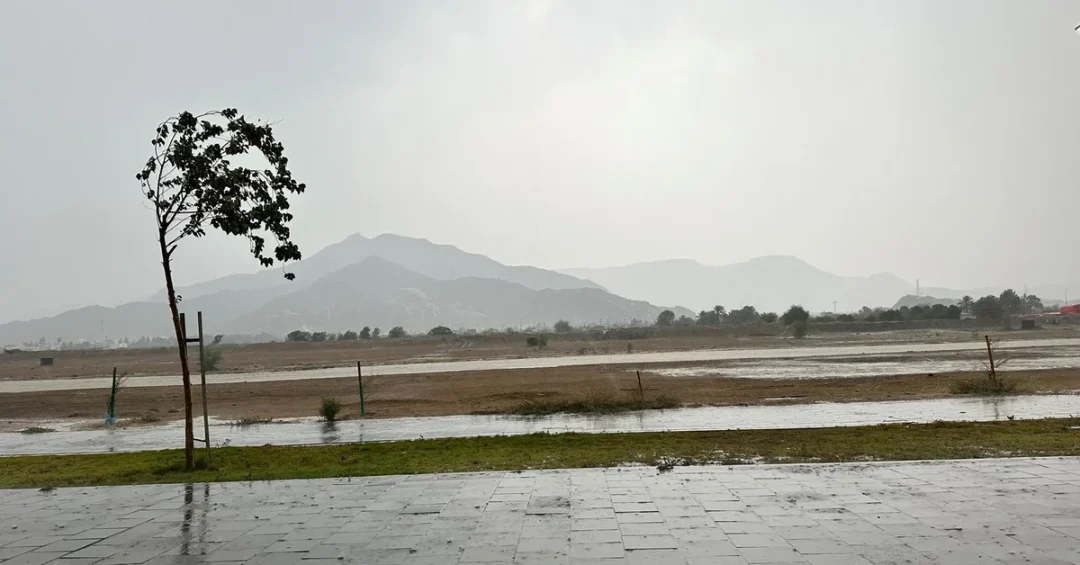
Wadi Najran has become a captivating destination for visitors following recent rainfall in the Najran region, as reported by the Saudi Press Agency. The rains, which fell yesterday, lowered temperatures to approximately 20 degrees Celsius, bringing a refreshing breeze and drawing families and tourists to the banks of the valley.
Context and Background
Najran, a historic region in southwestern Saudi Arabia, is known for its rich cultural heritage and natural beauty. Wadi Najran, a seasonal watercourse, has long been a focal point for both locals and tourists, particularly during the rainy season when the landscape transforms into a lush, inviting environment. The recent rainfall highlights the region’s appeal as a year-round destination, supported by ongoing efforts to enhance tourism infrastructure under Saudi Arabia’s Vision 2030.
Key Details
The Saudi Press Agency documented a significant influx of visitors to parks and tourist sites along Wadi Najran, where they enjoyed the cooler climate and scenic views. The region’s attractions include historical landmarks such as the Najran Fort and the Al-Ukhdood archaeological site, which offer insights into ancient civilizations. The pleasant weather has encouraged outdoor activities, boosting local tourism.
Implications and Impact
This surge in visitors underscores the growing interest in domestic tourism within Saudi Arabia, a key focus of Vision 2030. By promoting natural wonders like Wadi Najran, the Kingdom aims to diversify its economy beyond oil and showcase its cultural and environmental assets to international audiences. The event also demonstrates the effectiveness of real-time reporting by official channels like the Saudi Press Agency in attracting tourists.
Vision 2030 Alignment
The renewed visitor interest in Wadi Najran aligns with Saudi Arabia’s Vision 2030 goals to develop the tourism sector and strengthen community engagement with the environment. As the Kingdom continues to invest in sustainable tourism and heritage preservation, destinations like Najran will play an increasingly vital role in positioning Saudi Arabia as a global travel hub, fostering economic growth and cultural exchange.
20 Questions
Q1. What caused the recent influx of visitors to Wadi Najran?
A1. The influx was caused by significant rainfall in the Najran region, which lowered temperatures to about 20°C, creating pleasant weather and drawing people to the valley’s banks.
Q2. How did the Saudi Press Agency report on this event?
A2. The Saudi Press Agency reported a notable increase in visitors to parks and tourist destinations along Wadi Najran, highlighting the region’s appeal after the rain.
Q3. What is the typical climate of Najran?
A3. Najran generally has a hot desert climate, but rainfall can bring cooler temperatures and temporary greenery, making it a popular destination during such events.
Q4. Why is Wadi Najran significant to Saudi tourism?
A4. Wadi Najran is a key natural and historical site that attracts tourists seeking scenic landscapes, heritage experiences, and cultural immersion, supporting domestic tourism growth.
Q5. What historical sites are near Wadi Najran?
A5. Nearby historical sites include the Najran Fort, a centuries-old mud-brick fortress, and the Al-Ukhdood archaeological site, which features ancient inscriptions and ruins.
Q6. How does this event support Vision 2030?
A6. It promotes domestic tourism and environmental appreciation, aligning with Vision 2030’s goals to diversify the economy and develop the tourism sector.
Q7. What activities do visitors enjoy at Wadi Najran?
A7. Visitors enjoy walking along the streams, picnicking, taking photographs, and exploring the valley’s natural beauty and nearby historical attractions.
Q8. Is Wadi Najran a year-round destination?
A8. While it is accessible year-round, the valley is especially popular during and after rainfall when the scenery is lush and temperatures are cooler.
Q9. What role does the Saudi Press Agency play?
A9. The Saudi Press Agency provides official news coverage of events, promoting tourism and informing the public about developments in regions like Najran.
A10. The lower temperatures improve comfort for outdoor exploration, making visits more enjoyable and encouraging longer stays.
Q11. Has Najran seen similar influx events before?
A11. Yes, Najran regularly experiences visitor surges during rainy periods, relying on its natural and historical attractions to draw tourists.
Q12. What infrastructure supports tourism in Najran?
A12. Parks, pathways, and visitor facilities along Wadi Najran, plus improved roads and services, help accommodate tourists and enhance their experience.
Q13. How can international tourists visit Wadi Najran?
A13. International tourists can fly to Najran Airport or drive via well-maintained highways, with travel facilitated by Saudi Arabia’s tourism visa policies.
Q14. What is the significance of the rainfall to the region’s ecosystem?
A14. Rainfall replenishes local water sources, supports vegetation, and creates temporary habitats for wildlife, enriching the region’s biodiversity.
Q15. How does the Najran region promote its tourism?
A15. Through official news releases, social media campaigns, and partnerships with tourism authorities, highlighting cultural and natural attractions.
Q16. Are there accommodations near Wadi Najran?
A16. Yes, Najran offers hotels, resorts, and guesthouses that cater to tourists, with options ranging from budget to luxury.
Q17. What other natural sites are in Najran?
A17. Other natural sites include the Jabal Raoum mountains and the Najran Dam, which also attract visitors for hiking and scenic views.
Q18. How does local culture enhance the tourist experience?
A18. Local markets, traditional crafts, and cuisine offer visitors a authentic taste of Najrani culture, complementing the natural scenery.
Q19. Is the weather in Najran suitable for tourism year-round?
A19. The weather is generally hot, but cooler months from November to March, plus occasional rains, provide comfortable conditions for outdoor tourism.
Q20. What future developments are planned for Najran’s tourism?
A20. Future plans include expanding eco-tourism projects, improving visitor centers, and integrating heritage sites into broader cultural routes under Vision 2030.
Reader Feedback
We value your thoughts. Please share your feedback on this article.
Your feedback helps us improve our coverage.