


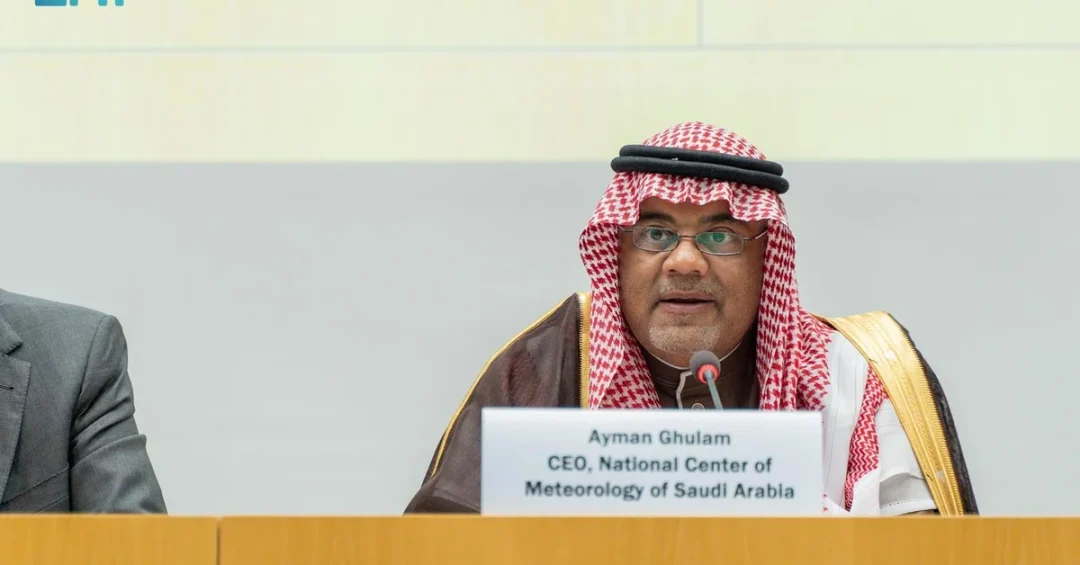
The Kingdom of Saudi Arabia has underscored the global reality of drought challenges as confirmed by scientific data, emphasizing the urgent need for comprehensive measures at all societal levels to address them effectively. This stance was articulated during the ‘Enhancing Resilience to Drought’ conference in Geneva, where Saudi officials called for the development of adaptation technologies and the building of human and technical capacities to preserve arable land and rehabilitate degraded areas.
Context and Background
The conference, held in Geneva, gathered global leaders and experts to discuss policy frameworks for strengthening resilience to the worldwide impacts of drought. Delivering the Kingdom’s speech was Dr. Ayman bin Salem Ghulam, CEO of the National Center for Meteorology (NCM), head of the Saudi delegation, and advisor to the Presidency of COP16 in Riyadh. His remarks highlighted the scientific consensus that rising temperatures and altered rainfall patterns are deepening drought in affected regions and may introduce drought to new areas previously unaffected.
Key Details
Dr. Ghulam emphasized that drought significantly impacts environmental and human activities, leading to land degradation and threatening biodiversity and ecological balance. He noted that rainfall deficits in agricultural areas pose risks to both local and global food security. The Kingdom stressed the importance of developing adaptation and resilience techniques, along with building capacities, to ensure a comprehensive approach that achieves the desired goals of land preservation and rehabilitation.
International Impact
Concluding his speech, Dr. Ghulam extended a welcome to the international scientific community for the upcoming 16th Conference of the Parties (COP16) of the United Nations Convention to Combat Desertification (UNCCD), scheduled to be held in Riyadh from December 3 to 13, 2024. He emphasized that this event will be the largest gathering of the 197 parties to the convention, positioning Saudi Arabia as a key global platform for addressing desertification and drought challenges.
Vision 2030 Alignment
Saudi Arabia’s proactive engagement in global drought resilience efforts aligns directly with the Kingdom’s Vision 2030 ambitions, which prioritize environmental sustainability, food security, and the development of green technologies. By hosting COP16 and leading international dialogue on land rehabilitation, Saudi Arabia continues to strengthen its role as a global leader in sustainable development and environmental stewardship, contributing to a more resilient future for the planet.
20 Questions
Q1. What did Saudi Arabia emphasize at the Geneva drought conference?
A1. Saudi Arabia emphasized that drought challenges are a global reality, requiring comprehensive measures at all societal levels, including the development of adaptation technologies and capacity building to preserve land.
Q2. Who delivered the Kingdom’s speech at the conference?
A2. The speech was delivered by Dr. Ayman bin Salem Ghulam, CEO of the National Center for Meteorology (NCM), who is also an advisor to the Presidency of COP16 in Riyadh.
Q3. What is the full name of the conference Saudi Arabia addressed?
A3. The conference is the ‘Enhancing Resilience to Drought’ conference, held in Geneva, which focused on policy frameworks to strengthen resilience against global drought impacts.
Q4. Why does Saudi Arabia stress the need for adaptation technologies?
A4. Adaptation technologies are essential to address drought impacts such as land degradation and biodiversity loss, and to ensure the preservation of arable land and rehabilitation of degraded areas.
Q5. What did scientific data presented by Saudi Arabia indicate?
A5. Scientific data indicates that rising temperatures and altered rainfall patterns are worsening drought in affected regions and may cause new areas to experience drought for the first time.
Q6. How does drought threaten food security?
A6. A deficit in rainfall in agricultural areas reduces crop yields, potentially posing a threat to both local and global food security, as Dr. Ghulam noted during the conference.
Q7. What is the significance of COP16 for Saudi Arabia?
A7. COP16, hosted in Riyadh, is the largest gathering of the 197 parties to the UNCCD, positioning Saudi Arabia as a global leader in combating desertification and drought.
Q8. When and where will COP16 be held?
A8. COP16 will be held in Riyadh, Saudi Arabia, from December 3 to 13, 2024, as announced by Dr. Ghulam at the Geneva conference.
Q9. Who was invited to the COP16 conference?
A9. Dr. Ghulam welcomed the international scientific community to COP16, emphasizing the event’s importance for global cooperation on desertification and drought resilience.
Q10. What is the UNCCD?
A10. The UNCCD is the United Nations Convention to Combat Desertification, a global agreement to address land degradation and drought, with 197 participating parties.
Q11. How many parties are expected at COP16?
A11. COP16 is expected to be the largest meeting of the 197 parties to the UNCCD, making it a landmark event for international environmental cooperation.
Q12. What role does Saudi Arabia see for itself in global drought efforts?
A12. Saudi Arabia aims to lead global efforts by hosting COP16, promoting adaptation technologies, and building capacities to address drought challenges effectively.
Q13. What is the National Center for Meteorology (NCM)?
A13. NCM is the Saudi agency responsible for meteorology and climate monitoring, whose CEO, Dr. Ghulam, leads the Kingdom’s delegation to the drought conference.
Q14. How does drought affect biodiversity?
A14. Drought leads to land degradation, making environments unsuitable for wildlife, threatening biodiversity and the ecological balance of affected areas.
Q15. What is the goal of adaptation and resilience techniques?
A15. The goal is to develop technologies and build human capacities to preserve arable land, rehabilitate degraded lands, and mitigate drought impacts.
Q16. How does Vision 2030 relate to drought efforts?
A16. Vision 2030 prioritizes environmental sustainability and food security, making Saudi Arabia’s leadership in drought resilience a key part of its long-term development goals.
Q17. What did Dr. Ghulam say about new regions facing drought?
A17. He noted that climate-change studies suggest drought may emerge in new regions that have not previously experienced it, expanding the challenge.
Q18. Why is the Geneva conference important?
A18. The conference brought together global leaders and experts to discuss policy frameworks for strengthening resilience to the global impacts of drought.
Q19. What is the Saudi delegation’s role at the conference?
A19. The delegation, led by Dr. Ghulam, presented the Kingdom’s position on drought challenges and invited the scientific community to COP16 in Riyadh.
Q20. What is the main takeaway from Saudi Arabia’s speech?
A20. The main takeaway is that drought is a global reality requiring coordinated, science-based efforts, and Saudi Arabia is committed to leading through COP16 and Vision 2030 initiatives.
Reader Feedback
We value your thoughts. Please share your feedback on this article.
Your feedback helps us improve our coverage.