


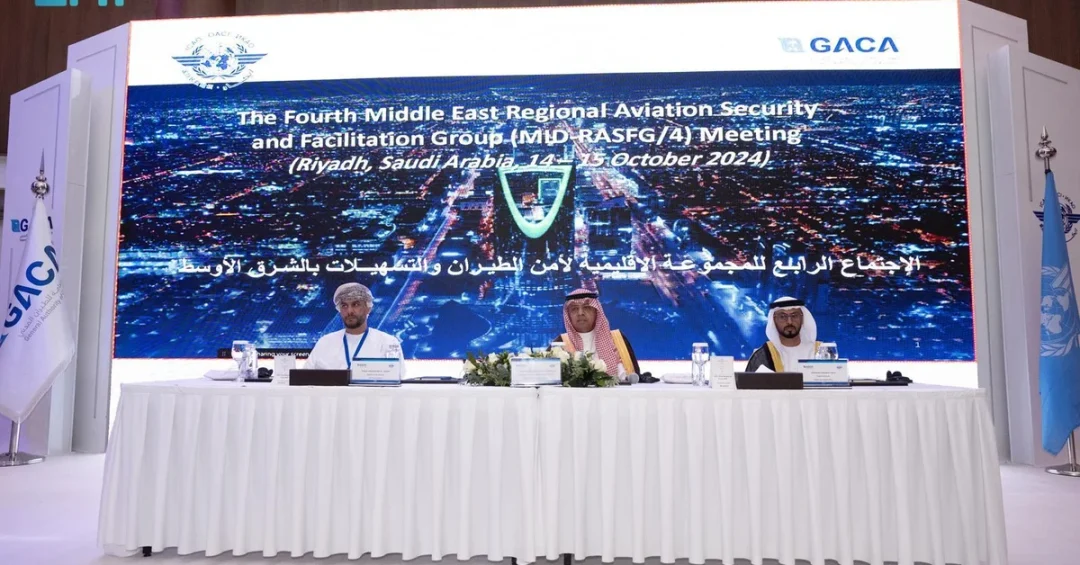
The Kingdom of Saudi Arabia, represented by the General Authority of Civil Aviation (GACA), hosted the fourth meeting of the Middle East Regional Aviation Security and Facilitation Group (MID-RASFG/4) in Riyadh on October 14, 2024. The two-day event, co-organized with the International Civil Aviation Organization (ICAO) Middle East Regional Office, was inaugurated by GACA President Abdulaziz Al-Duailej. The gathering aims to strengthen regional cooperation, share expertise in aviation security, and enhance travel facilitation across the Middle East, underscoring Saudi Arabia’s leadership in civil aviation.
Context and Background
This meeting builds on the outcomes of the previous MID-RASFG/3 session and reflects a sustained commitment among Middle Eastern states to align with ICAO’s global standards. Saudi Arabia has been a proactive participant in international aviation security initiatives, investing in advanced technologies such as big data and artificial intelligence to improve inspection and monitoring. The Kingdom’s hosting of this event reinforces its role as a regional hub for aviation policy dialogue and operational coordination.
Key Details
During the opening session, Al-Duailej highlighted Saudi Arabia’s compliance with ICAO standards, including a 94.4% compliance rate in the ICAO aviation safety audit report and 100% adherence to Annex 9 of the Chicago Convention on Facilitation. He also noted the Kingdom’s seventh-place ranking among G20 countries in aviation security. Key achievements mentioned include the introduction of a highly secure Saudi electronic passport, participation in the Public Key Directory, and the deployment of big data and AI for security operations. Saudi Arabia also presented a unified air travel requirements initiative aimed at creating a standardized global health framework for aviation to facilitate travel and protect traveler health.
Implications and Impact
The meeting addressed critical topics such as counter-terrorism measures, airport security procedures enhanced by advanced technology, and the impact of aviation-related legislation on public security. Discussions also covered regional and global capacity building, quality control, and compliance with international security standards. These efforts are expected to strengthen the aviation security ecosystem across the Middle East, fostering safer and more efficient air travel. Saudi Arabia’s leadership in this forum positions the Kingdom as a key driver of regional stability and innovation in aviation security.
Vision 2030 Alignment
Saudi Arabia’s commitment to aviation security aligns closely with Vision 2030, which prioritizes the development of a world-class transportation infrastructure and the growth of the tourism sector. By investing in cutting-edge security technologies and fostering regional cooperation, the Kingdom aims to enhance the traveler experience and support its ambition to become a global aviation hub. This meeting contributes directly to these long-term goals, showcasing Saudi Arabia’s dedication to innovation, safety, and international partnership in line with its national transformation agenda.
20 Questions
Q1. What was the main purpose of the MID-RASFG/4 meeting?
A1. The meeting aimed to strengthen regional cooperation and exchange expertise in aviation security and travel facilitation among Middle Eastern countries.
Q2. Who inaugurated the meeting?
A2. The meeting was inaugurated by GACA President Abdulaziz Al-Duailej.
Q3. When and where did the meeting take place?
A3. The two-day meeting began on October 14, 2024, in Riyadh, Saudi Arabia.
Q4. Which organizations co-hosted the meeting?
A4. The meeting was co-hosted by GACA and the ICAO Middle East Regional Office.
Q5. What compliance rate did Saudi Arabia achieve in the ICAO aviation safety audit?
A5. Saudi Arabia achieved a 94.4% compliance rate in the ICAO aviation safety audit.
Q6. What is the significance of Annex 9 to the Chicago Convention?
A6. Saudi Arabia has 100% compliance with Annex 9, which sets international standards for facilitation in air travel.
Q7. How did Saudi Arabia rank among G20 countries in aviation security?
A7. Saudi Arabia ranked seventh among G20 countries in aviation security.
Q8. What advanced technologies is Saudi Arabia using for aviation security?
A8. The Kingdom uses big data and artificial intelligence to enhance inspection and monitoring operations.
Q9. What is the Saudi electronic passport?
A9. It is a highly secure passport introduced by Saudi Arabia to strengthen border security and traveler identification.
Q10. What is the Public Key Directory?
A10. The Public Key Directory is a global system that enables secure verification of electronic travel documents, including passports.
Q11. What did Saudi Arabia propose regarding air travel health standards?
A11. Saudi Arabia presented a unified air travel requirements initiative to create a global health framework for aviation.
Q12. Why is a unified health framework important for aviation?
A12. It facilitates travel by standardizing health information protocols and protecting traveler health and safety.
Q13. What topics were addressed in the meeting?
A13. Topics included counter-terrorism measures, airport security improvements using technology, and aviation legislation impacts.
A14. The meeting followed up on recommendations from the previous MID-RASFG/3 session to ensure continuity and progress.
Q15. How does this meeting support regional cooperation?
A15. It provides a platform for Middle Eastern states to share expertise and align security practices with global standards.
Q16. What is the role of ICAO in aviation security?
A16. ICAO sets global standards and conducts audits to ensure member states maintain high levels of aviation safety and security.
Q17. How does Saudi Arabia’s hosting benefit the Kingdom?
A17. It reinforces Saudi Arabia’s leadership in aviation security and its role as a regional hub for policy dialogue.
Q18. What is the link between aviation security and Vision 2030?
A18. Vision 2030 aims to develop world-class transportation and tourism, requiring advanced aviation security systems.
Q19. How does big data improve aviation security?
A19. Big data enables predictive analysis and pattern recognition to identify risks and enhance monitoring operations.
Q20. What was the overall outcome of the meeting?
A20. The meeting strengthened regional commitment to aviation security, promoting safer air travel and deeper collaboration among member states.
Reader Feedback
We value your thoughts. Please share your feedback on this article.
Your feedback helps us improve our coverage.