


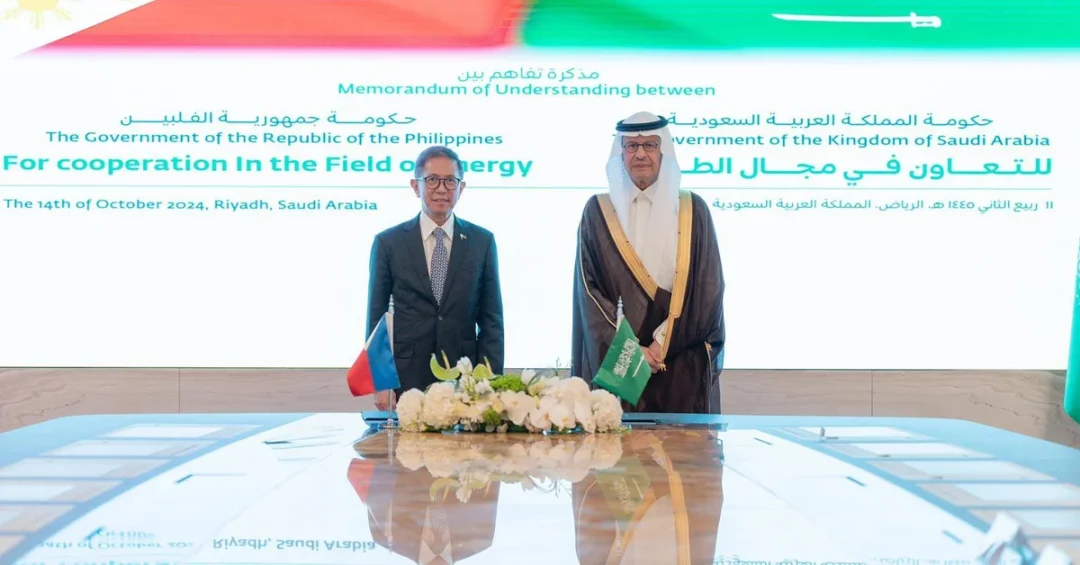
Saudi Minister of Energy Prince Abdulaziz bin Salman bin Abdulaziz and Philippine Energy Secretary Raphael Lotilla signed a memorandum of understanding (MoU) in Riyadh on October 14, 2024, to strengthen bilateral energy cooperation. The agreement, announced by the Saudi Press Agency, covers multiple sectors including oil and gas, renewable energy, energy efficiency, and circular carbon economy technologies.
Context and Background
The meeting and signing ceremony took place in Riyadh as part of ongoing efforts to deepen ties between the Kingdom of Saudi Arabia and the Republic of the Philippines. Both nations have maintained diplomatic relations for decades, and this agreement represents a significant step in formalizing energy collaboration. The MoU reflects the Philippines’ growing need for reliable energy partnerships and Saudi Arabia’s strategy to expand its global energy reach beyond traditional markets.
Key Details
The MoU specifically aims to enhance cooperation in oil and gas, petrochemicals, electricity, renewable energy, energy efficiency, and circular carbon economy technologies. A notable focus is on carbon capture, utilization, and storage (CCUS) technologies, which are central to global climate change mitigation efforts. Additionally, the agreement covers digital transformation, innovation, cybersecurity, and artificial intelligence, signaling a comprehensive approach to modern energy challenges. Both sides emphasized the importance of localizing energy-related materials, products, and services, as well as developing sustainable polymer materials for applications including the construction sector.
Implications and Impact
This partnership is expected to open new investment opportunities and facilitate knowledge exchange between Saudi Arabia and the Philippines. For the Philippines, a nation with expanding energy demands, access to Saudi expertise in renewable energy and CCUS offers pathways to cleaner power generation. For Saudi Arabia, the agreement reinforces its role as a global energy leader while diversifying its international partnerships. The inclusion of digital transformation and AI highlights the forward-looking nature of the collaboration, aligning with broader technological shifts in the energy industry.
Vision 2030 Alignment
The MoU supports Saudi Arabia’s Vision 2030 by advancing economic diversification, promoting renewable energy and sustainability, and building international partnerships that strengthen the Kingdom’s position in global energy markets. By focusing on circular carbon economy technologies and localizing energy supply chains, the agreement aligns with national goals to reduce emissions and foster innovation. This partnership with the Philippines represents a strategic step toward achieving a more sustainable and diversified energy future, demonstrating Saudi Arabia’s commitment to leading global energy transformation efforts.
20 Questions
Q1. What was the main outcome of the meeting between the Saudi Energy Minister and the Philippine Energy Secretary?
A1. The main outcome was the signing of a memorandum of understanding (MoU) to enhance bilateral energy cooperation, covering oil and gas, renewable energy, energy efficiency, and circular carbon economy technologies.
Q2. Who signed the agreement on behalf of Saudi Arabia?
A2. The agreement was signed by Saudi Minister of Energy Prince Abdulaziz bin Salman bin Abdulaziz.
Q3. Who signed the agreement on behalf of the Philippines?
A3. The agreement was signed by Philippine Energy Secretary Raphael Lotilla.
Q4. Where was the signing ceremony held?
A4. The signing ceremony took place in Riyadh, the capital of the Kingdom of Saudi Arabia.
Q5. What is the scope of the energy cooperation agreement?
A5. The scope includes oil and gas, petrochemicals, electricity, renewable energy, energy efficiency, circular carbon economy technologies, digital transformation, innovation, cybersecurity, and artificial intelligence.
Q6. What are circular carbon economy technologies?
A6. Circular carbon economy technologies involve reducing, reusing, recycling, and removing carbon emissions, including carbon capture, utilization, and storage (CCUS) to mitigate climate change.
Q7. How does this agreement address climate change?
A7. The agreement includes cooperation on carbon capture, utilization, and storage (CCUS) technologies aimed at reducing the effects of climate change.
Q8. What is the significance of the MoU for the Philippines?
A8. The MoU provides the Philippines with access to Saudi expertise in renewable energy, energy efficiency, and advanced technologies to support its growing energy demands and sustainability goals.
Q9. What is the significance of the MoU for Saudi Arabia?
A9. The MoU reinforces Saudi Arabia’s role as a global energy leader, expands its international partnerships, and supports economic diversification under Vision 2030.
Q10. Does the agreement include cooperation on digital technologies?
A10. Yes, the MoU includes strengthening cooperation in digital transformation, innovation, cybersecurity, and artificial intelligence.
Q11. What are sustainable polymer materials mentioned in the agreement?
A11. Sustainable polymer materials are environmentally friendly plastics developed for use in various sectors, including construction, to reduce environmental impact.
Q12. How does the agreement support localization of energy products?
A12. The MoU aims to develop partnerships that localize energy-related materials, products, and services in both countries.
Q13. What is the role of the Saudi Press Agency in this announcement?
A13. The Saudi Press Agency (SPA) officially reported the meeting and signing ceremony, providing the primary source of information for this agreement.
Q14. What is the relationship between Vision 2030 and this agreement?
A14. The agreement aligns with Vision 2030 by promoting economic diversification, renewable energy adoption, sustainability, and international cooperation.
Q15. Are there any investment opportunities mentioned in the agreement?
A15. Yes, the agreement discusses investment opportunities in the field of petroleum, renewable energy, and related technologies.
Q16. What is the expected impact on bilateral relations?
A16. The agreement is expected to deepen bilateral ties and create new avenues for cooperation in energy and technology sectors between Saudi Arabia and the Philippines.
Q17. Does the agreement cover electricity cooperation?
A17. Yes, cooperation in the field of electricity is included within the scope of the MoU.
Q18. What is the importance of CCUS in the agreement?
A18. CCUS is a key technology for reducing carbon emissions, and the agreement emphasizes collaboration on CCUS to address climate change challenges.
Q19. How does the agreement promote innovation?
A19. The MoU includes digital transformation, innovation, and artificial intelligence, encouraging joint development of modern energy solutions.
Q20. What are the next steps after signing the MoU?
A20. The next steps involve implementing specific projects and partnerships based on the MoU framework, with both sides expected to develop action plans for each area of cooperation.
Reader Feedback
We value your thoughts. Please share your feedback on this article.
Your feedback helps us improve our coverage.