


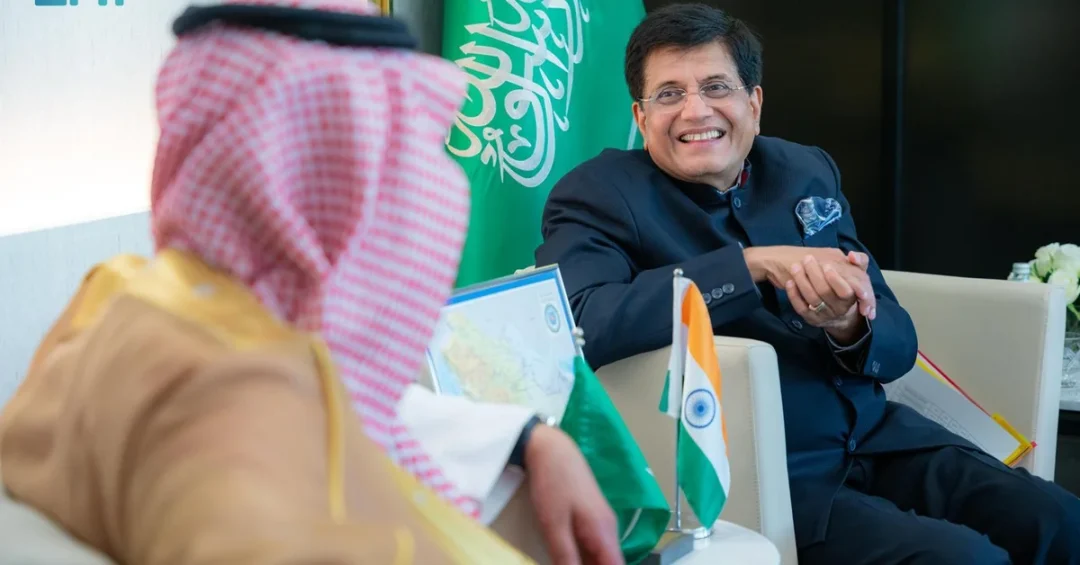
Saudi Minister of Industry and Mineral Resources Bandar bin Ibrahim Alkhorayef met with Indian Minister of Commerce and Industry Piyush Goyal on Wednesday, October 30, 2024, during the Future Investment Initiative (FII) Conference in Riyadh to strengthen bilateral industrial cooperation and attract investments into promising sectors. The meeting, which included Vice Minister of Industry and Mineral Resources for Mining Affairs Eng. Khalid Al-Mudaifer, highlighted the Kingdom’s efforts to enhance its investment environment through updated frameworks and streamlined procedures.
Context and Background
The discussion builds on the longstanding economic partnership between Saudi Arabia and India, two major economies with shared interests in trade, energy, and industrial development. The FII Conference, now in its eighth edition, serves as a platform for global leaders to explore investment opportunities aligned with Saudi Arabia’s Vision 2030. The meeting underscores the Kingdom’s commitment to diversifying its economy beyond hydrocarbons by fostering ties with key partners like India, a major market for Saudi products and a source of skilled labor and investment.
Key Details
Minister Alkhorayef emphasized Saudi Arabia’s strategic advantages as a global investment hub, including its geographic location connecting three continents, natural resources, and advanced infrastructure such as economic cities, airports, ports, and modern transportation networks. He highlighted reforms to the investment framework, including streamlined business procedures and incentives for foreign investors. The two sides discussed the role of the Saudi-Indian Business Council in facilitating private sector partnerships and explored cooperation in textiles, pharmaceuticals, petrochemicals, automotive, and engineering industries. Specific opportunities in the mining sector were also reviewed, along with incentives offered by Saudi industry and mining systems.
Implications and Impact
The meeting is expected to deepen economic ties between Saudi Arabia and India, potentially increasing bilateral trade and investment flows. Cooperation in sectors like pharmaceuticals and automotive could reduce supply chain dependencies and foster innovation. For the mining sector, the partnership may accelerate exploration and processing of minerals critical to global energy transition. The emphasis on private sector engagement signals a shift toward more sustainable, market-driven growth, benefiting both economies.
Vision 2030 Alignment
This collaboration directly supports Saudi Vision 2030 by diversifying the economy, attracting foreign investment, and developing priority industrial sectors. By leveraging partnerships with countries like India, Saudi Arabia aims to position itself as a leading industrial and logistics hub, creating jobs and enhancing global competitiveness. The meeting reflects the Kingdom’s ongoing commitment to building a vibrant society and thriving economy through international cooperation and strategic reforms.
20 Questions
Q1. What was the main focus of the meeting between Saudi and Indian ministers?
A1. The meeting focused on strengthening industrial cooperation and attracting investments to promising sectors in Saudi Arabia, including textiles, pharmaceuticals, and mining.
Q2. Who represented Saudi Arabia in the meeting?
A2. Saudi Arabia was represented by Minister of Industry and Mineral Resources Bandar bin Ibrahim Alkhorayef and Vice Minister for Mining Affairs Eng. Khalid Al-Mudaifer.
Q3. Who represented India in the meeting?
A3. India was represented by Minister of Commerce and Industry Piyush Goyal.
Q4. Where was the meeting held?
A4. The meeting took place at the Future Investment Initiative (FII) Conference in Riyadh, Saudi Arabia.
Q5. What is the Future Investment Initiative?
A5. The FII is an annual conference in Riyadh that connects global investors and leaders to explore investment opportunities aligned with Saudi Vision 2030.
Q6. How does the meeting support Saudi Vision 2030?
A6. The meeting supports Vision 2030 by diversifying the economy, attracting foreign investment, and developing industrial and mining sectors.
Q7. What strategic advantages did Minister Alkhorayef highlight?
A7. He highlighted Saudi Arabia’s geographic location, natural resources, advanced infrastructure, and updated investment framework as key advantages.
Q8. What industrial sectors were discussed?
A8. The sectors discussed include textiles, pharmaceuticals, petrochemicals, automotive, engineering, and mining.
Q9. What is the role of the Saudi-Indian Business Council?
A9. The Business Council fosters partnerships between private sector leaders in both countries and facilitates mutual investment opportunities.
Q10. What incentives does Saudi Arabia offer foreign investors?
A10. Incentives include streamlined business procedures, updated investment frameworks, and access to advanced infrastructure and economic cities.
Q11. How does Saudi Arabia’s location benefit investors?
A11. Saudi Arabia connects three continents, providing easy access to key regional and global markets, reducing logistics costs for investors.
Q12. What mining opportunities were discussed?
A12. Specific mining projects and incentives for investors were explored to enhance cooperation in mineral exploration and processing.
Q13. Why is pharmaceutical cooperation important?
A13. Cooperation can strengthen supply chains, reduce import dependencies, and foster local manufacturing of essential medicines.
Q14. How does the automotive sector fit into this?
A14. Collaboration may involve component manufacturing and assembly, supporting Saudi goals to build a domestic automotive industry.
Q15. What is the significance of petrochemical cooperation?
A15. Petrochemicals are a key sector for Saudi Arabia, and joint projects can add value and expand export markets with India.
Q16. How does this meeting affect bilateral trade?
A16. The meeting is expected to boost bilateral trade by identifying new investment opportunities and easing private sector partnerships.
Q17. What reforms did Minister Alkhorayef mention?
A17. He mentioned updates to the investment framework and streamlined government procedures to enhance Saudi Arabia’s competitiveness.
Q18. How does this meeting promote private sector growth?
A18. It encourages private companies from both countries to collaborate through the Business Council and shared incentives.
Q19. What infrastructure assets support these investments?
A19. Infrastructure includes economic cities, airports, ports, and a modern transportation network that facilitates trade and logistics.
Q20. What is the long-term outlook for Saudi-Indian ties?
A20. The ties are expected to deepen, with more joint investments and knowledge transfer, supporting both nations’ economic development goals.
Reader Feedback
We value your thoughts. Please share your feedback on this article.
Your feedback helps us improve our coverage.