


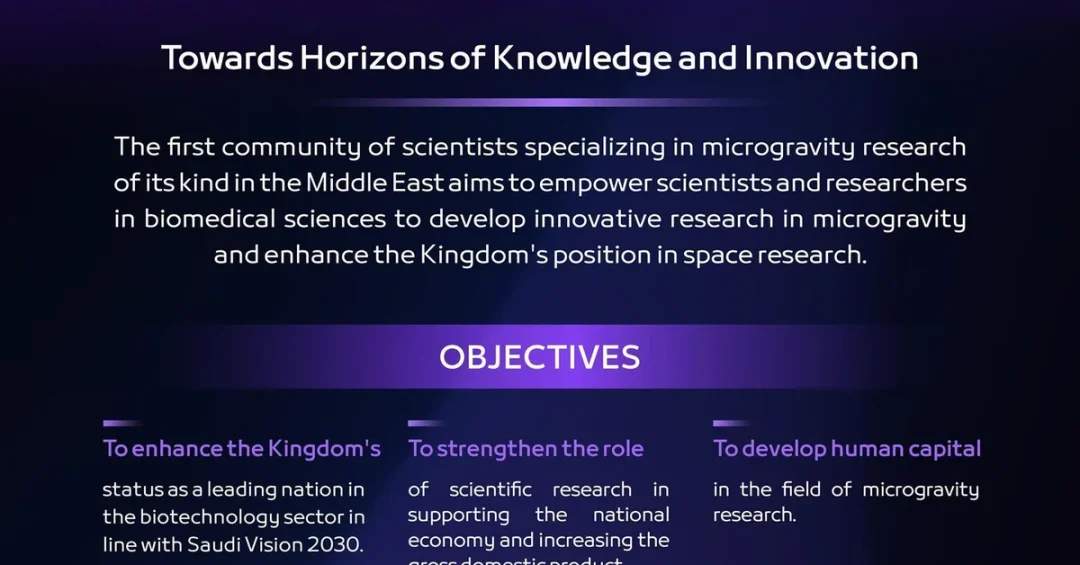
The Saudi Space Agency (SSA) announced the launch of the ‘BioGravity’ initiative on October 30, 2024, aiming to empower scientists and researchers in biomedical sciences to conduct innovative research in microgravity. The initiative seeks to enhance scientific collaboration between local and international entities and establish the Kingdom’s position in space research for the benefit of humanity, according to a news release from the SSA.
Context and Background
The BioGravity initiative is overseen by astronaut Rayyana Barnawi, the first Arab Muslim female astronaut, and focuses on creating a specialized research community in biomedical microgravity studies. It includes a select group of scientists and researchers from various universities, scientific centers, and relevant private-sector organizations in the Kingdom. The initiative aims to broaden local capabilities and build specialized scientists in the field of biomedical sciences.
Key Details
The SSA stated that the initiative intends to develop human capital, strengthen scientific and research capabilities, and inspire future generations in the Kingdom. It seeks to maximize business opportunities in the space sector by supporting space missions through advanced research, thereby enhancing the Kingdom’s scientific standing on both regional and global scales. The SSA, through this initiative, aims to contribute to improving global health by developing advanced biomedical technologies through microgravity research.
Implications and Impact
This initiative positions Saudi Arabia as a growing hub for space-related biomedical research, fostering international partnerships and accelerating discoveries that could benefit global health. By leveraging microgravity environments, researchers can explore new treatments and technologies, potentially leading to breakthroughs in fields such as drug development, tissue engineering, and disease understanding. The collaborative nature of BioGravity is expected to attract top scientific talent from around the world to work alongside Saudi researchers.
Vision 2030 Alignment
The BioGravity initiative directly supports the ambitious aspirations of Saudi Vision 2030, which emphasizes innovation, human capital development, and diversification of the economy. By investing in space research and biomedical sciences, the Kingdom is cultivating a knowledge-based economy and inspiring future generations to pursue careers in science and technology. This commitment to advancing space research reinforces Saudi Arabia’s role as a global leader in innovation and its dedication to improving human well-being.
20 Questions
Q1. What is the BioGravity initiative?
A1. The BioGravity initiative is a program launched by the Saudi Space Agency to empower scientists and researchers in biomedical sciences to conduct innovative research in microgravity environments.
Q2. Who announced the BioGravity initiative?
A2. The Saudi Space Agency (SSA) announced the launch of the BioGravity initiative in a news release on October 30, 2024.
Q3. Who oversees the BioGravity initiative?
A3. The initiative is overseen by astronaut Rayyana Barnawi, the first Arab Muslim female astronaut.
Q4. What is the main goal of the BioGravity initiative?
A4. The main goal is to empower scientists and researchers to conduct innovative research in biomedical sciences under microgravity conditions.
Q5. How does the initiative aim to enhance scientific collaboration?
A5. The initiative seeks to enhance scientific collaboration between local and international entities by creating a specialized research community.
Q6. Who are the participants in the BioGravity initiative?
A6. The initiative includes a select group of scientists and researchers from various universities, scientific centers, and private-sector organizations in Saudi Arabia.
Q7. What is the significance of microgravity research in biomedicine?
A7. Microgravity research allows scientists to study biological processes without the influence of Earth’s gravity, potentially leading to advancements in drug development and disease understanding.
Q8. How does the initiative develop human capital?
A8. The initiative aims to broaden local capabilities and build specialized scientists in biomedical sciences through targeted research opportunities and training.
Q9. What is the role of Rayyana Barnawi in this initiative?
A9. Rayyana Barnawi oversees the initiative, bringing her experience as an astronaut to guide research and inspire participants.
Q10. How does the initiative support Saudi Vision 2030?
A10. The initiative supports Vision 2030 by fostering a culture of innovation, developing human capital, and diversifying the economy through advanced space research.
Q11. What are the expected outcomes of the BioGravity initiative?
A11. Expected outcomes include broadening local scientific capabilities, inspiring future generations, and maximizing business opportunities in the space sector.
Q12. How will the initiative improve global health?
A12. The initiative aims to develop advanced biomedical technologies through microgravity research, contributing to improved global health outcomes.
Q13. Is the BioGravity initiative open to international researchers?
A13. Yes, the initiative seeks to enhance collaboration between local and international entities, welcoming global participation.
Q14. What types of research will be conducted under BioGravity?
A14. Research will focus on biomedical sciences, including studies on cell behavior, drug efficacy, and tissue engineering in microgravity.
Q15. How does this initiative build on Saudi Arabia’s space achievements?
A15. It builds on previous achievements like the astronaut program by creating a dedicated research framework for space-based biomedical studies.
Q16. What is the timeline for the BioGravity initiative?
A16. The specific timeline was not detailed, but the initiative is active and ongoing, with immediate plans to engage researchers.
Q17. How will the initiative inspire future generations?
A17. By involving scientists and showcasing space research, the initiative aims to inspire young Saudis to pursue careers in science and technology.
Q18. What business opportunities does the initiative create?
A18. The initiative maximizes business opportunities by supporting space missions with advanced research, fostering growth in the space sector.
Q19. How does this initiative align with global space research trends?
A19. It aligns with global trends by focusing on microgravity biomedical research, an area of increasing international scientific interest.
Q20. Where can the public find more information about BioGravity?
A20. More information is available through official announcements from the Saudi Space Agency and the Saudi Press Agency (SPA).
Reader Feedback
We value your thoughts. Please share your feedback on this article.
Your feedback helps us improve our coverage.