


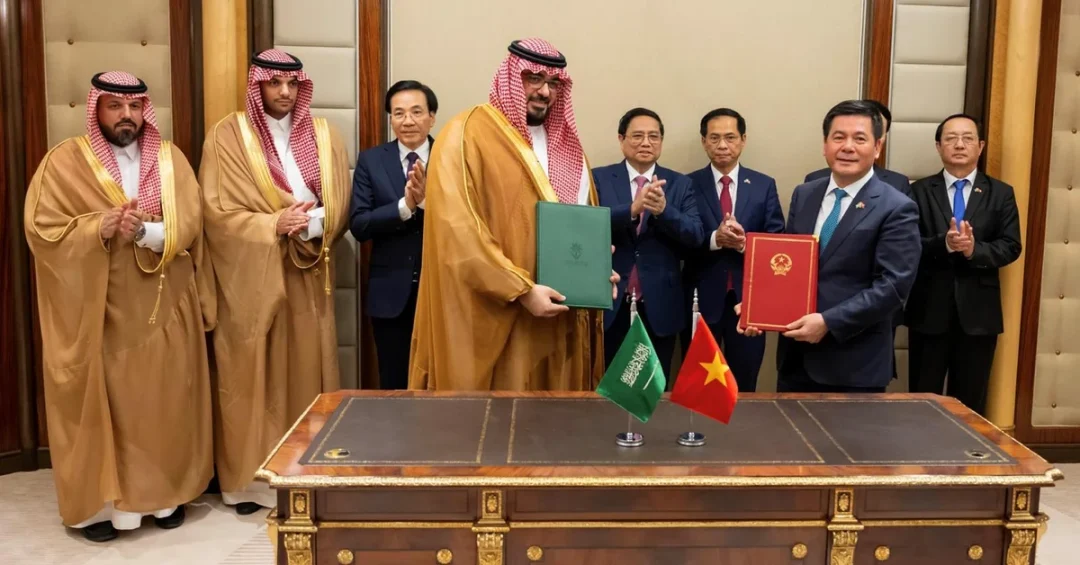
The Kingdom of Saudi Arabia and the Socialist Republic of Vietnam signed a memorandum of understanding (MoU) on October 30, 2024, to advance economic cooperation across key sectors. The agreement, signed by Saudi Minister of Economy and Planning Faisal Alibrahim and Vietnamese Minister of Industry and Trade Nguyen Hong Dien, aims to boost bilateral trade and investment in areas with significant growth potential, including industry, services, and the digital economy. This partnership underscores Saudi Arabia’s commitment to strengthening international economic ties as part of its broader strategic objectives under Vision 2030.
Context and Background
This MoU marks a significant step in Saudi Arabia’s efforts to diversify its economic partnerships beyond traditional allies, aligning with Vision 2030 goals of reducing oil dependence and fostering global trade. Vietnam, a rapidly growing economy in Southeast Asia with a robust manufacturing sector, offers substantial opportunities for collaboration. The agreement builds on existing diplomatic relations and reflects Saudi Arabia’s proactive approach to engaging with dynamic markets in the Asia-Pacific region, a priority area for the Kingdom’s foreign economic policy.
Key Details
The MoU outlines specific mechanisms for cooperation, including building relationships between professional organizations and organizing joint conferences, seminars, exhibitions, and meetings. These initiatives are designed to facilitate collaboration between government agencies and economic organizations in both countries. The agreement also promotes the establishment of joint ventures and other economic partnerships, with a strong emphasis on supporting small and medium enterprises (SMEs) to participate in bilateral trade and economic relations. Additionally, the MoU encourages the exchange of information on trade and investment, along with regular visits and joint events to deepen the partnership under the laws and regulations of both nations.
Implications and International Impact
This agreement is poised to enhance the economic footprint of Saudi Arabia in Southeast Asia, a region of growing geopolitical and commercial importance. By targeting sectors such as industry, services, and the digital economy, the MoU opens doors for Saudi investments in Vietnam’s manufacturing and tech sectors, while facilitating Vietnamese access to Saudi markets, particularly in energy and petrochemicals. The focus on SMEs is notable, as it may spur innovation and entrepreneurship in both countries. Regionally, this move positions Saudi Arabia as a key partner for ASEAN economies, fostering a multipronged approach to global trade and investment that aligns with the Kingdom’s ambition to become a hub for international business.
Vision 2030 Alignment
The MoU with Vietnam directly supports Vision 2030 by advancing economic diversification, strengthening non-oil exports, and building strategic international partnerships. By targeting high-growth sectors like the digital economy, the agreement aligns with the Kingdom’s goals of fostering innovation and creating new opportunities for private sector growth. As Saudi Arabia continues to open its economy and enhance global linkages, such agreements are instrumental in achieving the vision of a vibrant, diversified, and globally connected economy, reinforcing the Kingdom’s role as a leading force in international economic cooperation.
20 Questions
Q1. What is the main purpose of the MoU signed between Saudi Arabia and Vietnam?
A1. The MoU aims to advance economic cooperation between the two countries, focusing on boosting bilateral trade and investment in key sectors like industry, services, and the digital economy.
Q2. Who signed the MoU for Saudi Arabia and Vietnam?
A2. The MoU was signed by Saudi Minister of Economy and Planning Faisal Alibrahim and Vietnamese Minister of Industry and Trade Nguyen Hong Dien.
Q3. When and where was the MoU signed?
A3. The MoU was signed on October 30, 2024, in Riyadh, as reported by the Saudi Press Agency.
Q4. Which sectors are specifically targeted by this agreement?
A4. The MoU targets sectors with significant growth potential, including industry, services, and the digital economy.
Q5. Does the MoU cover both public and private sectors?
A5. Yes, the MoU encourages partnerships between government bodies and the private sector in both countries.
Q6. How does the MoU support small and medium enterprises?
A6. The MoU emphasizes supporting SMEs to participate in bilateral trade and economic relations through joint ventures and other partnerships.
Q7. What types of events are planned under the MoU?
A7. The MoU organizes joint conferences, seminars, exhibitions, and meetings to foster collaboration between economic organizations.
Q8. How will information be exchanged between the two ministries?
A8. The MoU facilitates the regular exchange of information on trade and investment through visits and joint events.
Q9. What is the role of professional organizations in this agreement?
A9. The MoU includes building relationships between professional organizations to strengthen economic ties.
Q10. How does this MoU align with Saudi Arabia’s Vision 2030?
A10. The MoU supports Vision 2030 by diversifying the economy, reducing oil dependence, and fostering global trade partnerships in high-growth sectors.
Q11. Why is Vietnam an important partner for Saudi Arabia?
A11. Vietnam is a rapidly growing economy in Southeast Asia with a strong manufacturing sector, offering significant opportunities for trade and investment.
Q12. What is the expected impact on bilateral trade?
A12. The MoU is expected to boost bilateral trade by removing barriers and encouraging investments in both countries’ high-growth sectors.
Q13. Does the agreement include joint ventures?
A13. Yes, the MoU promotes the establishment of joint ventures and other economic partnerships between Saudi and Vietnamese entities.
Q14. How will this partnership affect the digital economy?
A14. The MoU specifically targets the digital economy, fostering cooperation in technology and innovation sectors between the two nations.
Q15. Are there any conditions for implementation?
A15. Both parties will work under the laws and regulations of their respective countries to implement the MoU’s provisions.
Q16. What is the role of government agencies in this agreement?
A16. The MoU facilitates collaboration between government agencies and economic organizations to enhance trade and investment flows.
Q17. How does this MoU benefit SMEs specifically?
A17. It provides SMEs with platforms for joint ventures, access to events, and information exchange to participate in bilateral trade.
Q18. What is the significance of the MoU for the Asia-Pacific region?
A18. It strengthens Saudi Arabia’s economic ties with Southeast Asia, positioning the Kingdom as a key partner for ASEAN economies.
Q19. How often will the parties exchange information?
A19. The MoU requires regular exchanges on trade and investment, though specific frequency is not detailed.
Q20. What are the next steps after signing the MoU?
A20. The next steps include organizing joint events, establishing working groups, and implementing specific projects under the MoU’s framework.
Reader Feedback
We value your thoughts. Please share your feedback on this article.
Your feedback helps us improve our coverage.