


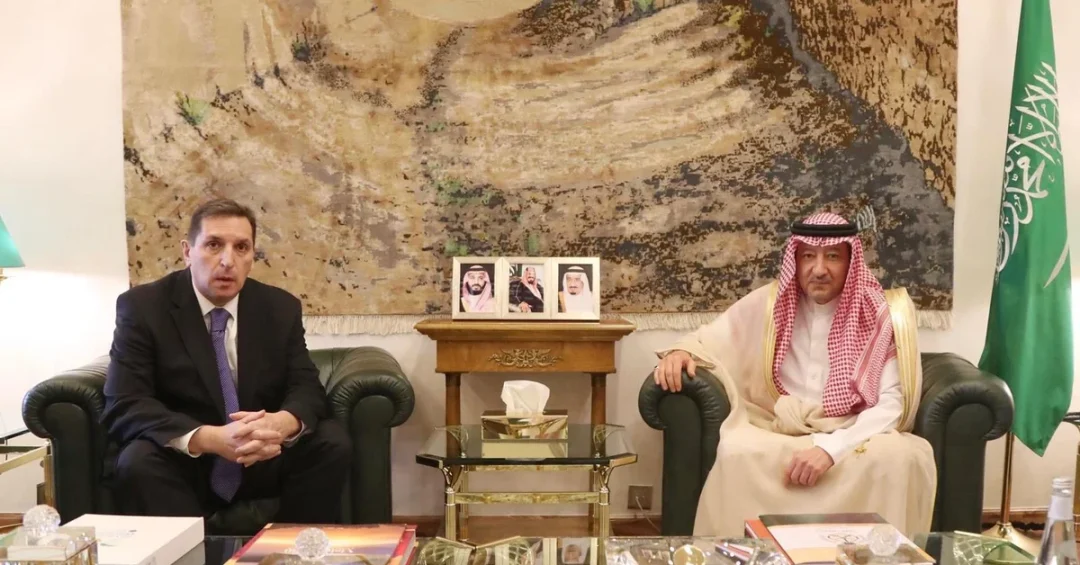
Saudi Vice Minister of Foreign Affairs Engineer Waleed bin AbdulKarim El-Khereiji received Russian Foreign Minister’s Special Envoy for Middle East Settlement Vladimir Safronkov in Riyadh on November 1, 2024. The meeting, held at the ministry’s headquarters, underscored the ongoing diplomatic engagement between the Kingdom of Saudi Arabia and the Russian Federation on regional security and stability issues. Russian Ambassador to the Kingdom Sergey Kozlov also attended the session.
Context and Background
This meeting forms part of a series of high-level consultations between Saudi Arabia and Russia, two key players in the global energy market and regional geopolitics. Both nations have coordinated efforts within the OPEC+ framework and engaged in diplomatic dialogues concerning conflicts in the Middle East, including the situation in Syria, Yemen, and the broader Israeli-Palestinian arena. The exchange with Special Envoy Safronkov, who holds a portfolio focused on Middle East settlement, reflects Russia’s recognition of Saudi Arabia’s central role in fostering regional peace.
Key Details
According to a statement from the Saudi Press Agency (SPA), the discussions focused on reviewing ongoing efforts by both countries to support peace and stability in the region. The diplomats also reviewed the latest regional developments of mutual interest and the bilateral measures being taken to address them. The presence of Ambassador Sergey Kozlov highlighted the importance both nations place on sustained diplomatic channels. No specific agreements were signed, but the tone was one of constructive and forward-looking cooperation.
Implications and Impact
This meeting signals continued alignment between Riyadh and Moscow on the necessity of diplomatic solutions to regional conflicts. It reinforces Saudi Arabia’s position as a mediator and a responsible international actor committed to de-escalation. For the broader Middle East, such consultations help maintain dialogue between major external powers and regional stakeholders. The engagement also serves to balance Saudi Arabia’s diversified foreign policy, which maintains strong ties with Western allies while deepening strategic partnerships with Russia and other Eastern powers.
Vision 2030 Alignment
The diplomatic reception aligns with Saudi Vision 2030 goals of establishing the Kingdom as a hub for international dialogue and a stable anchor in a volatile region. By actively participating in peace efforts and hosting diplomatic exchanges, Saudi Arabia demonstrates its commitment to building a secure environment conducive to economic diversification, investment, and tourism. This meeting reaffirms the Kingdom’s role as a bridge builder in multipolar global affairs, supporting long-term prosperity through peace.
20 Questions
Q1. Who received the Russian envoy in Riyadh?
A1. Saudi Vice Minister of Foreign Affairs Engineer Waleed bin AbdulKarim El-Khereiji received the Russian envoy at the ministry’s headquarters in Riyadh.
Q2. Who was the Russian envoy received?
A2. The Russian envoy received was Vladimir Safronkov, the Russian foreign minister’s special envoy for Middle East settlement.
Q3. When did the meeting take place?
A3. The meeting took place on November 1, 2024, as reported by the Saudi Press Agency.
Q4. Who else attended the meeting from Russia?
A4. Russian Ambassador to the Kingdom of Saudi Arabia Sergey Kozlov attended the meeting.
Q5. What was the main topic of discussion?
A5. The diplomats reviewed efforts of both countries to support regional peace and stability, along with latest developments of mutual interest.
Q6. Is this meeting part of a series of consultations?
A6. Yes, it forms part of ongoing high-level diplomatic consultations between Saudi Arabia and Russia on regional security and stability.
Q7. What does Vladimir Safronkov’s portfolio focus on?
A7. His portfolio focuses on Middle East settlement, which includes conflicts in Syria, Yemen, and the Israeli-Palestinian arena.
Q8. Why is this meeting significant for Saudi Arabia?
A8. It underscores Saudi Arabia’s central role in fostering regional peace and its commitment to diplomatic engagement with major global powers.
Q9. Was any agreement signed during the meeting?
A9. No specific agreements were signed; the talks were constructive and focused on reviewing efforts and aligning positions.
Q10. How does this meeting relate to Vision 2030?
A10. It aligns with Vision 2030 goals of establishing the Kingdom as a hub for international dialogue and a stable anchor in the region.
Q11. What message does this send about Saudi foreign policy?
A11. It shows a diversified foreign policy that maintains strong Western ties while deepening partnerships with Russia and other Eastern powers.
Q12. What role does Saudi Arabia play in regional conflicts?
A12. Saudi Arabia acts as a mediator and responsible international actor committed to de-escalation and diplomatic solutions.
Q13. Did the meeting address the Israeli-Palestinian issue?
A13. While not specified, the envoy’s Middle East settlement portfolio typically includes that issue, and regional stability discussions encompass it.
Q14. What is the official Saudi source for this meeting?
A14. The official source is the Saudi Press Agency (SPA), which issued the statement on November 1, 2024.
Q15. How does this meeting impact Russia-Saudi relations?
A15. It reinforces bilateral cooperation on security issues and demonstrates continued diplomatic alignment between the two nations.
Q16. What broader geopolitical context does this fit into?
A16. It fits into a context of multipolar diplomacy where Saudi Arabia balances relations with multiple global powers for stability.
Q17. Does this meeting affect energy cooperation?
A17. While not the main topic, it reinforces the overall strategic partnership that includes OPEC+ coordination on energy markets.
Q18. How often do such meetings occur?
A18. High-level consultations occur periodically as part of established diplomatic channels between the two countries’ foreign ministries.
Q19. What is the tone of the meeting?
A19. The tone was constructive and forward-looking, focused on cooperation for regional peace and stability.
Q20. What is the expected outcome of this meeting?
A20. The expected outcome is continued dialogue and coordinated approaches to support peace, stability, and mutual interests in the Middle East.
Reader Feedback
We value your thoughts. Please share your feedback on this article.
Your feedback helps us improve our coverage.