


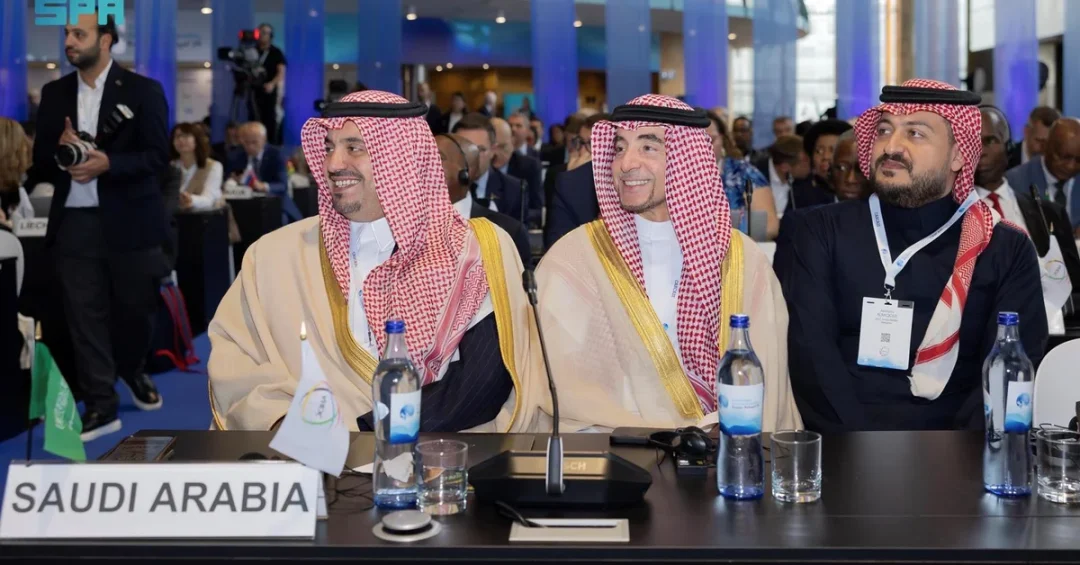
Prince Fahd bin Jalawi bin Abdulaziz bin Musaad, President of the Saudi Olympic and Paralympic Committee, attended the closing ceremony of the 27th General Assembly of the Association of National Olympic Committees (ANOC) in Cascais, Portugal, on November 1, 2024. The assembly was chaired by ANOC President Robin Mitchell and featured the presence of International Olympic Committee (IOC) President Dr. Thomas Bach, underscoring the event’s significance for the global Olympic movement.
Context and Background
The ANOC General Assembly serves as a key platform for national Olympic committees worldwide to discuss shared priorities, strategic direction, and the future of Olympic sports. This year’s assembly in Cascais highlighted the organization’s commitment to representing the interests of its member committees, particularly during a period anticipated to include a leadership transition within the IOC as Dr. Bach’s term concludes next summer. Saudi Arabia’s active participation reflects its growing engagement in international sports governance and its commitment to advancing athletic development at home.
Key Details and Bilateral Meetings
Prince Fahd bin Jalawi held a series of bilateral meetings on the sidelines of the assembly, focusing on exchanging administrative and technical expertise to elevate Olympic and Paralympic sports in Saudi Arabia. He met with leaders of the U.S., Dutch, South African, and Sierra Leonean Olympic and Paralympic Committees, all of which have recently merged their Olympic and Paralympic entities. These discussions aimed to learn from international best practices in governance and athlete support. Additionally, Prince Fahd met with the heads of the Albanian and Kazakh national committees to discuss enhancing sports cooperation for national development. In a separate meeting with International Boxing Federation President Boris van der Vorst, Prince Fahd explored ways to advance boxing in Saudi Arabia by leveraging the federation’s technical expertise, as reported by the Saudi Press Agency.
International Impact and Implications
Prince Fahd’s engagements at the ANOC General Assembly reaffirm Saudi Arabia’s role as an emerging hub for international sports diplomacy. The Kingdom’s proactive approach in forging partnerships with national committees from diverse regions, including North America, Europe, and Africa, aligns with its broader strategy to host major sporting events and develop local talent. The meetings also position Saudi Arabia to benefit from accelerated knowledge transfer in areas such as athlete support systems and event management, enhancing its competitive standing on the global stage.
Vision 2030 Alignment
These diplomatic and technical exchanges directly support Saudi Arabia’s Vision 2030 goals of building a vibrant society and a thriving economy through sports development. By strengthening international sports partnerships and adopting best practices from leading Olympic committees, the Kingdom is laying the groundwork for a sustainable sports ecosystem that nurtures talent, promotes healthy lifestyles, and enhances its global reputation as a destination for world-class athletic events. Prince Fahd’s participation in the ANOC General Assembly marks another step toward realizing the Vision 2030 ambition of positioning Saudi Arabia as a leader in international sports.
20 Questions
Q1. Who attended the ANOC General Assembly on behalf of Saudi Arabia?
A1. Prince Fahd bin Jalawi bin Abdulaziz bin Musaad, President of the Saudi Olympic and Paralympic Committee, attended the assembly on behalf of the Kingdom.
Q2. Where and when did the 27th ANOC General Assembly take place?
A2. The assembly took place in Cascais, Portugal, concluding on November 1, 2024.
Q3. Who chaired the ANOC General Assembly?
A3. The assembly was chaired by ANOC President Robin Mitchell.
Q4. Which prominent international sports figure was present at the assembly?
A4. International Olympic Committee President Dr. Thomas Bach was present at the assembly.
Q5. What was a key focus of the final day of the assembly?
A5. The final day featured presentations of ANOC reports, focusing on the organization’s future strategy to represent national Olympic committees worldwide.
Q6. What leadership transition is anticipated soon within the IOC?
A6. Dr. Thomas Bach’s term as IOC President is expected to conclude next summer.
Q7. With which national committees did Prince Fahd hold bilateral meetings?
A7. He met with the U.S., Dutch, South African, and Sierra Leonean Olympic and Paralympic Committees.
Q8. What common structural feature do the U.S., Dutch, South African, and Sierra Leonean committees share?
A8. They have recently merged their Olympic and Paralympic entities into single organizations.
Q9. What was the main goal of Prince Fahd’s discussions with these committees?
A9. The discussions focused on exchanging administrative and technical expertise to elevate Olympic and Paralympic sports in Saudi Arabia.
Q10. Which other national committee leaders did Prince Fahd meet separately?
A10. He met with the heads of the Albanian and Kazakh national committees.
Q11. What was the purpose of the meetings with Albania and Kazakhstan?
A11. The purpose was to discuss enhancing sports cooperation to advance national sports development.
Q12. Who did Prince Fahd meet regarding boxing development?
A12. He met with International Boxing Federation President Boris van der Vorst.
Q13. What was the focus of the meeting with the International Boxing Federation?
A13. The meeting explored avenues for advancing boxing in Saudi Arabia by leveraging the federation’s technical expertise.
Q14. How does Prince Fahd’s participation support Saudi Arabia’s global role?
A14. It reaffirms Saudi Arabia’s role as an emerging hub for international sports diplomacy and partnership building.
Q15. What broader strategy does this engagement align with?
A15. It aligns with the Kingdom’s strategy to host major sporting events and develop local athletic talent.
Q16. How are these partnerships connected to Vision 2030?
A16. They support Vision 2030 goals of building a vibrant society and a thriving economy through sports development.
Q17. What is a key benefit of adopting best practices from leading Olympic committees?
A17. It helps Saudi Arabia build a sustainable sports ecosystem that nurtures talent and promotes healthy lifestyles.
Q18. Which organization reported these meetings?
A18. The Saudi Press Agency reported on Prince Fahd’s participation and meetings.
Q19. What does Saudi Arabia hope to achieve by learning from merged Olympic and Paralympic committees?
A19. It hopes to gain insights into governance and athlete support systems that can enhance its own sports infrastructure.
Q20. What is the long-term ambition reflected in Prince Fahd’s activities at the assembly?
A20. The ambition is to position Saudi Arabia as a leader in international sports, in line with Vision 2030.
Reader Feedback
We value your thoughts. Please share your feedback on this article.
Your feedback helps us improve our coverage.