


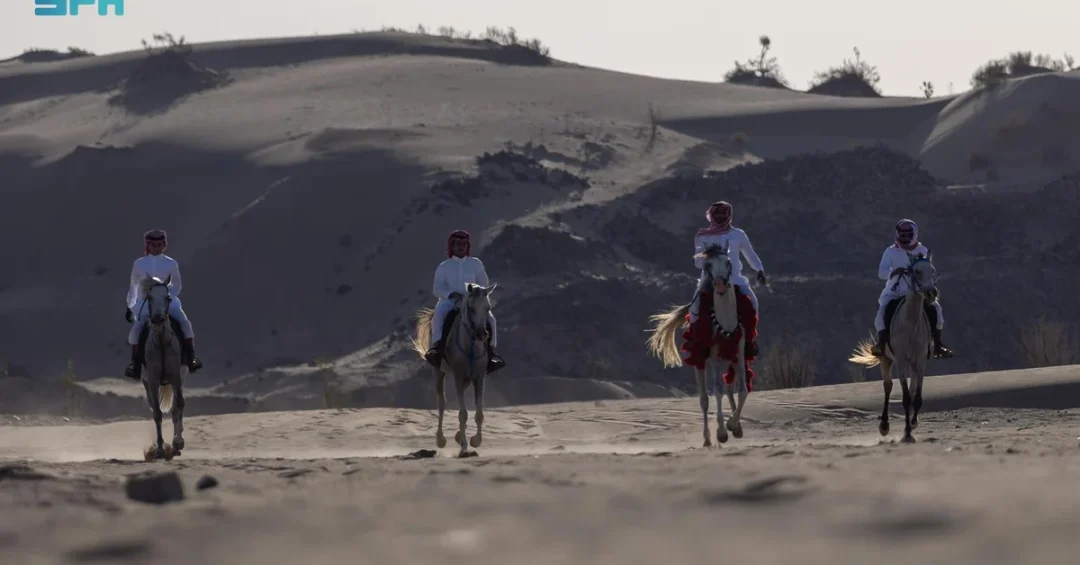
Equestrianism in Umluj Governorate, Tabuk Region, is increasingly appealing to young people, contributing to improved quality of life and preservation of Saudi heritage, according to the Saudi Press Agency. The traditional Arab sport, deeply rooted in the Kingdom’s culture, is experiencing a resurgence among the youth, who are drawn to both its recreational and cultural dimensions. Local horse stables report significant growth in participation, reflecting a broader societal embrace of authentic Saudi traditions.
Context and Background
Umluj Governorate, known for its diverse natural landscape including dunes and wildlife parks, provides an ideal setting for equestrian activities. The terrain supports both casual riding and more structured training, making the sport accessible to a wide range of enthusiasts. This aligns with the Kingdom’s broader efforts to promote healthy lifestyles and cultural engagement under Vision 2030, which emphasizes improving citizens’ quality of life through diverse recreational opportunities.
Key Details
Ibrahim Humaid Al-Faidi, a prominent horse stable owner in Umluj, told the Saudi Press Agency that equestrianism is not merely a recreational activity but an integral part of Saudi heritage. Al-Faidi noted that the number of horse breeders and trainees in the governorate is constantly increasing, demonstrating the growing interest among local residents. The stables are witnessing remarkable growth, serving as community hubs where young people learn horsemanship, discipline, and respect for tradition.
Implications and Impact
The expansion of equestrian activities in Umluj highlights a positive trend of youth engagement with traditional sports, which supports physical health, mental well-being, and social cohesion. This development also enhances the region’s appeal as a destination for cultural tourism, as visitors are increasingly interested in experiencing authentic Saudi traditions. The success in Umluj may serve as a model for other governorates seeking to revitalize heritage sports and improve community quality of life.
Vision 2030 Alignment
The growing popularity of equestrianism in Umluj directly supports Vision 2030’s goals of promoting a vibrant society with diverse recreational options and a high quality of life. By fostering traditional sports, the Kingdom encourages cultural preservation, healthy lifestyles, and community engagement. As the interest in horsemanship continues to rise, Umluj is poised to become a notable center for equestrian heritage, contributing to Saudi Arabia’s broader ambitions of economic diversification and cultural enrichment.
20 Questions
Q1. What is equestrianism?
A1. Equestrianism is the art or practice of horse riding, often pursued as a sport or recreational activity. It involves training, handling, and riding horses, and is deeply rooted in Saudi heritage.
Q2. Why is equestrianism popular in Umluj?
A2. Equestrianism is popular in Umluj due to the governorate’s distinctive terrain, which includes dunes and wildlife parks, providing an ideal environment for horse riding and training.
Q3. Who is Ibrahim Humaid Al-Faidi?
A3. Ibrahim Humaid Al-Faidi is a prominent owner of horse stables in Umluj Governorate, who spoke to the Saudi Press Agency about the local enthusiasm for equestrianism as a sport and heritage.
Q4. What did Al-Faidi say about equestrianism?
A4. Al-Faidi stated that equestrianism is not just a recreational activity but is part of Saudi heritage that many people are keen to learn about and preserve.
Q5. How is the number of horse breeders changing in Umluj?
A5. The number of horse breeders and trainees in Umluj is constantly increasing, reflecting growing interest in equestrianism among the governorate’s residents.
Q6. What is the condition of horse stables in Umluj?
A6. Horse stables in Umluj are witnessing remarkable growth, accommodating more breeders and trainees as interest in the sport expands.
Q7. How does equestrianism improve quality of life?
A7. Equestrianism promotes physical fitness, mental well-being, and social interaction, contributing to a healthier and more engaged community, aligning with Saudi Arabia’s quality-of-life initiatives.
Q8. What is the Saudi Press Agency?
A8. The Saudi Press Agency (SPA) is the official news agency of the Kingdom of Saudi Arabia, responsible for disseminating news about government activities and national developments.
Q9. Where is Umluj Governorate located?
A9. Umluj Governorate is located in the Tabuk Region of northwestern Saudi Arabia, known for its natural landscapes including beaches, dunes, and wildlife areas.
Q10. What type of terrain supports equestrianism in Umluj?
A10. The governorate’s terrain includes dunes scattered around wildlife parks, offering diverse and scenic routes for horse riding and training.
Q11. Is equestrianism considered a sport in Saudi Arabia?
A11. Yes, equestrianism is a traditional Arab sport in Saudi Arabia, recognized for its cultural significance and promoted as a recreational and competitive activity.
Q12. How does equestrianism relate to Saudi heritage?
A12. Equestrianism has been a part of Saudi heritage for centuries, reflecting the historical importance of horses in Arabian culture and daily life.
Q13. What age group is most interested in equestrianism in Umluj?
A13. Young people in Umluj are particularly drawn to equestrianism, as it offers an engaging activity that combines tradition, skill development, and outdoor recreation.
Q14. How does this activity support Vision 2030?
A14. Equestrianism supports Vision 2030 by promoting a vibrant society, enhancing quality of life, preserving cultural heritage, and providing recreational opportunities for citizens.
Q15. Are there any official initiatives promoting equestrianism?
A15. While the article highlights grassroots growth, the Saudi government supports traditional sports through quality-of-life programs and cultural preservation under Vision 2030.
Q16. What benefits do young people gain from horse riding?
A16. Young people gain physical fitness, discipline, confidence, and a connection to cultural heritage through horse riding, which also fosters responsibility and teamwork.
Q17. Could equestrianism attract tourists to Umluj?
A17. Yes, the growing equestrian scene could enhance Umluj’s appeal as a cultural tourism destination, attracting visitors interested in traditional Saudi sports and natural landscapes.
Q18. What role do stable owners play in this growth?
A18. Stable owners like Ibrahim Humaid Al-Faidi provide facilities, training, and breeding programs that nurture interest in equestrianism and support the local community.
Q19. How does equestrianism contribute to community bonding?
A19. Equestrian activities bring together people of all ages, fostering social connections and shared experiences through group riding sessions, training, and events.
Q20. What is the future outlook for equestrianism in Umluj?
A20. The future is positive, with increasing participation and stable growth expected. Equestrianism is likely to become a lasting part of Umluj’s identity and a model for other regions.
Reader Feedback
We value your thoughts. Please share your feedback on this article.
Your feedback helps us improve our coverage.