


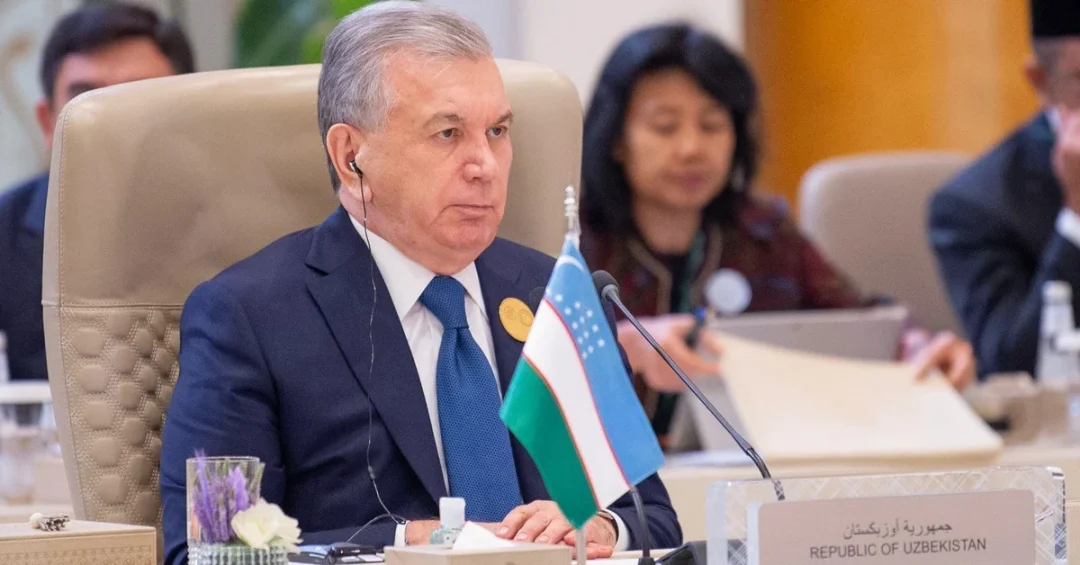
President Shavkat Mirziyoyev of Uzbekistan, speaking at the Extraordinary Arab and Islamic Summit in Riyadh on November 11, 2024, called for an immediate ceasefire, the establishment of humanitarian corridors, and the initiation of peace negotiations to resolve the Palestinian-Israeli conflict. The Uzbek leader reaffirmed his nation’s support for practical, diplomatic efforts to achieve a lasting peace, emphasizing the right of Palestinians to establish an independent state based on the 1967 borders, with East Jerusalem as its capital.
Context and Background
The summit, hosted by the Kingdom of Saudi Arabia, brought together leaders from across the Arab and Islamic world to address the escalating humanitarian crisis in Palestinian and Lebanese territories. President Mirziyoyev’s remarks underscored Uzbekistan’s alignment with the international consensus on the need for a two-state solution. His call for peace comes amid heightened regional tensions and ongoing military actions, highlighting the urgency of diplomatic intervention.
Key Details
President Mirziyoyev specifically highlighted the significance of Saudi Arabia’s initiative to form a Global Alliance dedicated to implementing the two-state solution. He noted that this alliance aims to prevent further humanitarian crises by coordinating international efforts and providing comprehensive assistance through global organizations. The Uzbek president stressed that solidarity and practical measures are essential to advancing peace and stability in the region, and he called for enhanced international cooperation to address the humanitarian needs of affected populations.
Implications and Impact
The Uzbek president’s stance reflects growing international support for a coordinated diplomatic approach to the conflict, with Saudi Arabia playing a central role in galvanizing collective action. The proposed Global Alliance, if realized, could serve as a framework for sustained dialogue and humanitarian aid delivery, potentially reducing civilian suffering and creating conditions for long-term negotiations. Uzbekistan’s endorsement adds weight to the initiative, signaling that Central Asian nations are increasingly engaged in Middle Eastern diplomatic efforts.
Vision 2030 Alignment
Saudi Arabia’s leadership in hosting this summit and proposing the Global Alliance aligns with Vision 2030’s goal of positioning the Kingdom as a hub for regional stability and global diplomacy. By fostering multilateral cooperation and championing humanitarian solutions, Saudi Arabia continues to demonstrate its commitment to building a peaceful, prosperous future — not only for its own citizens but for the broader international community. President Mirziyoyev’s remarks reinforce the importance of collective action in achieving these shared objectives.
20 Questions
Q1. What did President Mirziyoyev call for at the Riyadh summit?
A1. President Mirziyoyev called for an immediate ceasefire, humanitarian corridors, and peace negotiations to resolve the Palestinian-Israeli conflict.
Q2. Why is the two-state solution important in this context?
A2. The two-state solution is widely seen as the most viable path to lasting peace, allowing for an independent Palestinian state alongside Israel.
Q3. What specific borders did President Mirziyoyev refer to for a Palestinian state?
A3. He referred to the 1967 borders, with East Jerusalem as the capital of the independent Palestinian state.
Q4. What initiative did Saudi Arabia propose at the summit?
A4. Saudi Arabia proposed forming a Global Alliance dedicated to implementing the two-state solution and addressing humanitarian crises.
Q5. How does this initiative aim to prevent further crises?
A5. By coordinating international efforts and providing assistance through global organizations, the initiative seeks to reduce civilian suffering.
Q6. What is the role of the Extraordinary Arab and Islamic Summit?
A6. It is a high-level platform for Arab and Islamic leaders to discuss regional crises and coordinate diplomatic responses.
A7. It highlights growing international support for coordinated diplomacy, with Saudi Arabia as a central mediator.
Q8. What humanitarian measures did President Mirziyoyev emphasize?
A8. He emphasized the establishment of humanitarian corridors and comprehensive assistance through global organizations.
Q9. How does Uzbekistan’s position reflect broader international views?
A9. Uzbekistan’s call for peace aligns with the international consensus on the need for a two-state solution and diplomatic engagement.
Q10. What role does Saudi Arabia play in the proposed Global Alliance?
A10. Saudi Arabia is leading the initiative, showcasing its commitment to regional stability and multilateral cooperation.
Q11. What is the significance of East Jerusalem in the conflict?
A11. East Jerusalem is claimed as the capital of a future Palestinian state, making it a central issue in peace negotiations.
Q12. How does the summit support Vision 2030 goals?
A12. Hosting the summit demonstrates Saudi Arabia’s role as a diplomatic hub, aligning with Vision 2030’s aim for global leadership.
Q13. What is the Global Alliance’s primary objective?
A13. Its primary objective is to implement the two-state solution and coordinate humanitarian aid to prevent further crises.
Q14. Why is international cooperation essential in this context?
A14. International cooperation ensures effective resource allocation and unified diplomatic pressure to achieve lasting peace.
Q15. How does Uzbekistan contribute to Middle Eastern diplomacy?
A15. Uzbekistan supports diplomatic efforts through endorsements like President Mirziyoyev’s, amplifying calls for peace and cooperation.
Q16. What is the humanitarian situation in Palestinian and Lebanese territories?
A16. The situation is critical due to ongoing conflict, requiring urgent humanitarian corridors and assistance to address civilian needs.
Q17. How does the two-state solution aim to resolve the conflict?
A17. It proposes the establishment of an independent Palestinian state alongside Israel, based on pre-1967 borders with agreed land swaps.
Q18. What did President Mirziyoyev say about practical measures?
A18. He stressed that solidarity and practical measures are essential to advancing peace and stability in the region.
Q19. How does this summit affect regional stability?
A19. It fosters dialogue and collective action, reducing tensions and promoting a unified approach to conflict resolution.
Q20. What is the long-term vision for peace in the region?
A20. The long-term vision is a sustainable two-state solution, supported by international cooperation and Saudi-led initiatives, ensuring stability and prosperity.
Reader Feedback
We value your thoughts. Please share your feedback on this article.
Your feedback helps us improve our coverage.